Digital Dependence: When Technology Becomes Emotional Support
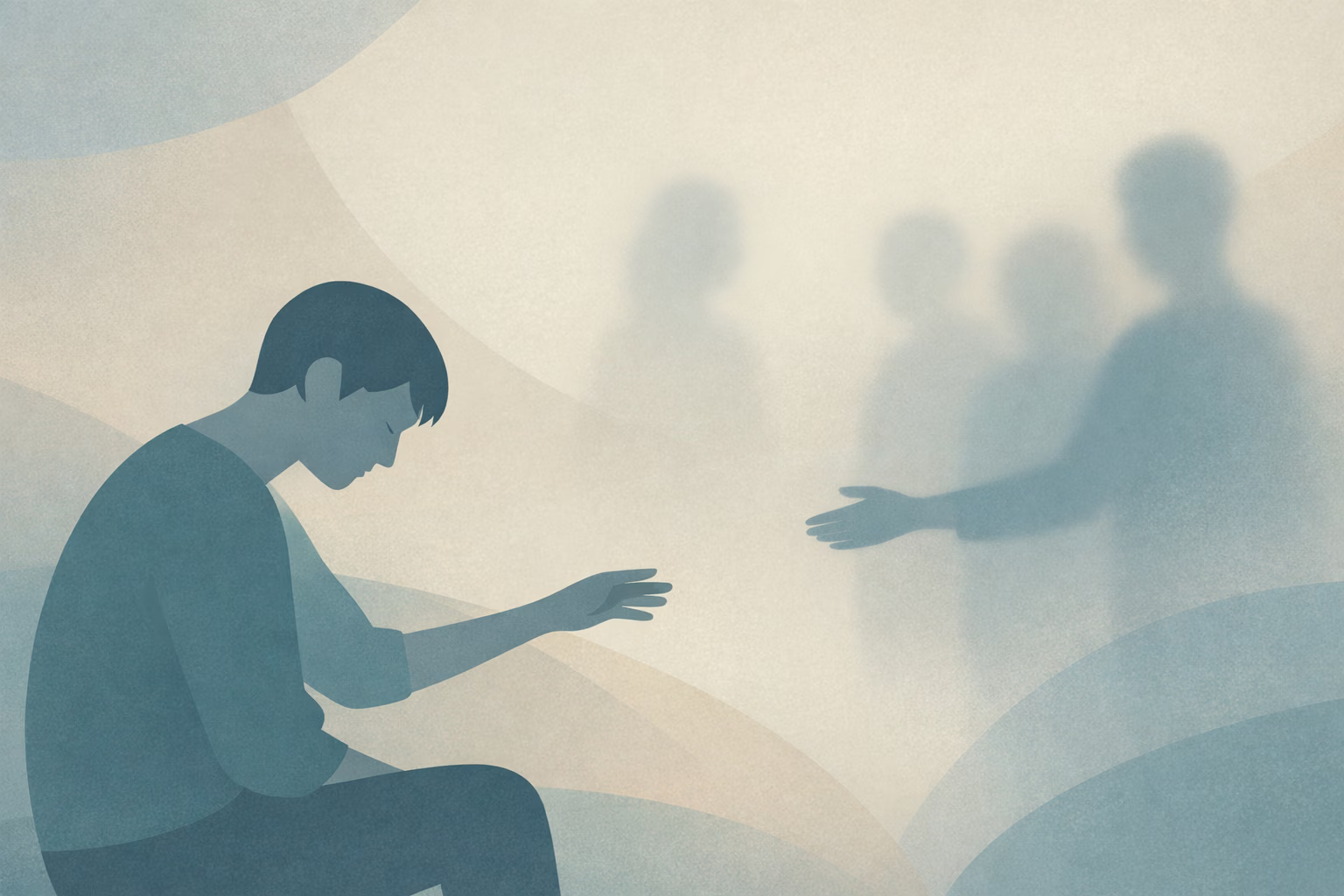
In short: “Emotional outsourcing” describes a pattern where your internal state feels manageable mainly when someone else provides the calming signal—reassurance, attention, agreement, closeness, or immediate repair. It’s not a character flaw.
“Emotional outsourcing” describes a pattern where your internal state feels manageable mainly when someone else provides the calming signal—reassurance, attention, agreement, closeness, or immediate repair. It’s not a character flaw. It’s often what a social nervous system does when load is high and completion signals are scarce.
What if the issue isn’t that you’re “too much,” but that your system keeps getting stuck mid-loop—waiting for an external green light to stand down?
This topic can show up in many relationships: romantic partners, friends, family, coworkers, even online communities. The experience is often subtle: a constant sense that you can’t fully land until someone else responds “the right way.”
In emotional outsourcing, the hardest moments are often the gaps: when a message goes unanswered, a partner seems distracted, a friend is busy, or a conversation ends without clear resolution. The nervous system reads that gap as “not finished yet,” and arousal stays online.
That can look like agitation, spiraling thoughts, or a flat emptiness—sometimes all in the same day. There may also be guilt (“Why can’t I just be normal?”) alongside resentment (“Why aren’t they helping?”). Those reactions aren’t moral signals; they’re signs of a system that has learned to use another person as the primary regulator. [Ref-1]
When closure depends on someone else, every pause can feel like a threat to stability.
Human regulation is layered. We have fast circuits that mobilize under uncertainty, and slower circuits that help the body return to baseline once a situation is complete. When relief repeatedly arrives only through someone else’s response, the internal “completion-to-settling” pathway gets fewer chances to run its full sequence.
This isn’t about lacking insight or being unaware. It’s about practice at the level of physiology and wiring: fewer repetitions of self-generated downshifting, fewer experiences of “I moved through this and it ended.” Over time, the prefrontal systems that support perspective, impulse buffering, and flexible attention can be recruited mainly as tools to secure external calming—rather than to support internal closure. [Ref-2]
We are born needing co-regulation. Infants don’t self-soothe because their nervous systems are not yet equipped to do so; another person’s voice, face, and touch help organize physiology. This is the social system doing what evolution built it to do: stabilize through connection. [Ref-3]
The difficulty begins when that early template becomes the main adult strategy under chronic stress or fragmentation. Instead of “connection as a bridge,” it becomes “connection as the only brake.” In that state, relationships stop being places where life is shared and start being places where the body tries to complete unfinished internal loops.
External comfort can reduce stress fast: a soothing tone, a clear “we’re okay,” a hug, a repair text, a promise. Those cues can signal safety to the nervous system, allowing heart rate, muscle tension, and threat scanning to decrease. That rapid downshift is real biology, not weakness. [Ref-4]
But quick relief is not the same as completion. Relief changes state in the moment; completion provides a “done” signal that lets the system stand down even when the external cue is absent next time. When the body relies on reassurance to settle, the momentary calm can unintentionally train the system to treat uncertainty as intolerable.
Emotional outsourcing often feels like closeness. It can even look like “good communication” on the surface: frequent check-ins, repeated discussions, constant clarification. Yet the felt experience underneath is often precarious—because stability depends on another person being available, attuned, and consistent.
In healthy development, co-regulation supports self-regulation over time: the external cue helps the system learn how to return to baseline and carry that capacity forward. When the bridge never becomes a bridge—when it stays a lifeline—growth gets delayed, not because you’re failing, but because the environment keeps rewarding immediate calming over gradual internal closure. [Ref-5]
In an avoidance loop, the system finds the quickest path away from sustained activation. Emotional outsourcing can function as that shortcut: instead of staying with uncertainty long enough for internal completion to occur, the loop exits through another person’s reassurance or involvement.
The brain learns from what reduces load. If reaching outward reliably drops tension, the system tags that behavior as “effective.” The cost is subtle: fewer opportunities for the internal sequence—activation → processing → completion → settling—to finish on its own. Over time, the threshold for distress lowers, and the urgency to externalize regulation increases. [Ref-6]
Emotional outsourcing isn’t always dramatic. It can look like ordinary relationship behavior—just intensified, repeated, and load-driven. The person providing reassurance may feel confused: “I answered that already,” while the person seeking reassurance feels equally confused: “But it didn’t land.”
Common patterns include: [Ref-7]
Why doesn’t reassurance “stick”?
Because the nervous system is seeking completion, not information. The mind may understand the reassurance, while the body still reads “unfinished.”
When another person becomes the main regulator, both sides can lose flexibility. The reassurance-giver may start scanning for potential triggers, preemptively soothing, or avoiding honest feedback to prevent dysregulation. The reassurance-seeker may lose confidence in their ability to recover without immediate external input.
This can slowly erode relational balance: fewer neutral moments, less spaciousness, more “management.” Over time, the relationship becomes a site of continuous stabilization work rather than a place where two people can be real, separate, and connected at once. Co-regulation is meant to support capacity, not replace it. [Ref-8]
When a nervous system has learned that calm arrives from outside, self-regulation can start to feel unfamiliar—or even unreal. It’s not that you “don’t want” agency. It’s that the body has evidence that agency doesn’t reliably reduce load, while external reassurance does.
That learning is reinforced in small, everyday moments: the quick drop in tension after a reply, the settling after a promise, the immediate quieting when someone takes responsibility for your discomfort. The problem isn’t connection; it’s that connection becomes the only completion cue. In that setup, independence can feel like abandonment even when nothing is wrong. [Ref-9]
One of the most stabilizing reframes is structural rather than personal: emotional outsourcing is often the body’s attempt to finish an unfinished sequence. The urge to reach out isn’t “neediness” as an identity; it’s a regulatory strategy that became dominant under certain conditions.
This is also where meaning enters: the shift from chasing the right response to recognizing what the system is organizing around—safety cues, predictability, repair, belonging. Not as a self-improvement project, but as an orientation: “This is my social nervous system trying to land.” Over time, when completion happens internally as well as relationally, reassurance stops being a drug and returns to being nourishment. [Ref-10]
When you name the loop, you’re not fixing it—you’re giving it a coherent map so it can eventually resolve.
Healthy co-regulation isn’t one person managing another person’s state. It’s a mutual process where each person remains responsible for their own nervous system while offering cues of steadiness: clarity, presence, repair, respectful boundaries.
When relationships slip into “accommodation,” reassurance can become a ritual that temporarily quiets distress but keeps the loop active—because it prevents the system from learning that distress can peak and subside without the same external sequence every time. This dynamic is well documented in patterns of reassurance-seeking and family accommodation: comfort is real, but the long-term effect can be more dependence and more checking. [Ref-11]
Balanced dynamics tend to feel different: less urgency, fewer tests, more room for difference, and fewer conversations that exist solely to neutralize activation.
As internal capacity returns, relationships often become less “high-stakes.” Not because you care less, but because your baseline becomes less contingent on immediate external signals. There’s more tolerance for normal delays, imperfect tone, and ordinary misunderstandings.
Reassurance, when it comes, tends to land more fully—because it meets a system that can already begin settling. This is one reason compulsive reassurance-seeking can decrease when the nervous system stops treating uncertainty as an emergency. [Ref-12]
When emotional outsourcing loosens, a surprising amount of energy becomes available. That energy used to go into monitoring, explaining, checking, replaying, and negotiating for stability. With more closure, it can return to life: curiosity, creativity, work, friendship, play, and deeper intimacy that isn’t built on emergency repair.
In Meaning Density terms, this is an identity-level shift: you begin to experience yourself as someone who can carry your own internal weather while staying connected. Not perfectly, not constantly—just enough that your relationships stop being a life support system and become a shared world again. Overcontrol and craving for reassurance tend to soften when the system trusts completion is possible. [Ref-13]
Emotional outsourcing is often a signal of under-supported internal capacity, not a sign that you’re broken or “too dependent.” When life has been loud, fast, uncertain, or relationally inconsistent, it makes sense that your nervous system would reach for the most reliable calming cue it knows: another person.
Agency tends to return as coherence returns—when experiences reach closure, when safety cues are present but not compulsory, and when your sense of self isn’t continually negotiated through someone else’s immediate response. In that light, the pattern isn’t something to judge; it’s something to understand as a loop that formed for a reason, and can soften when conditions allow completion. [Ref-14]
Humans are designed for connection, and co-regulation will always matter. The shift is not from “needing people” to “needing no one,” but from requiring someone else to settle you to being able to meet connection as a choice rather than a necessity.
When feelings are regulated from within first, relationships tend to become steadier and more satisfying—because closeness is no longer tasked with proving safety every moment. It becomes a place where safety can be shared, not manufactured. [Ref-15]
From theory to practice — meaning forms when insight meets action.
Because emotional outsourcing trains the nervous system to use another person's response as the primary completion cue. Co-regulation is human nature — we're born needing it. The difficulty starts when that early template becomes the main adult strategy. Instead of connection as a bridge, it becomes connection as the only brake. When relief repeatedly arrives only through someone else's attunement, the internal stand-down pathway gets fewer chances to run. The body has evidence that external reassurance reduces load, while self-regulation feels unfamiliar — sometimes even unreal.
Because the nervous system is seeking completion, not information. The mind can understand the reassurance perfectly while the body still reads 'unfinished.' Quick external comfort is real biology — it changes state in the moment. But state change isn't the same as a Done Signal that lets the system stand down even when the cue is absent next time. So you may keep repeating the same question in new forms, escalating after delays, scanning tone and read receipts. It's not 'neediness as identity'; it's a regulatory strategy that became dominant under certain conditions.
Yes, structurally. The system finds the quickest path away from sustained activation. Instead of staying with uncertainty long enough for internal completion, the loop exits through another person's reassurance. The brain learns from what reduces load — if reaching outward reliably drops tension, the system tags the behavior as effective. The cost is subtle: fewer chances for the internal sequence (activation → processing → completion → settling) to finish on its own. Over time, threshold for distress lowers and urgency to externalize regulation grows, in both directions of the relationship.
Relationships become less high-stakes. Not because you care less, but because your baseline becomes less contingent on immediate external signals. There's more tolerance for normal delays and ordinary misunderstandings. Reassurance lands more fully because it meets a system that can already begin settling. A surprising amount of energy returns — energy that used to go into monitoring, explaining, replaying. This isn't isolation. Resilience is having an internal place to land. Closeness stops proving safety every moment and becomes a place where safety can be shared, not manufactured.
From Science to Art.
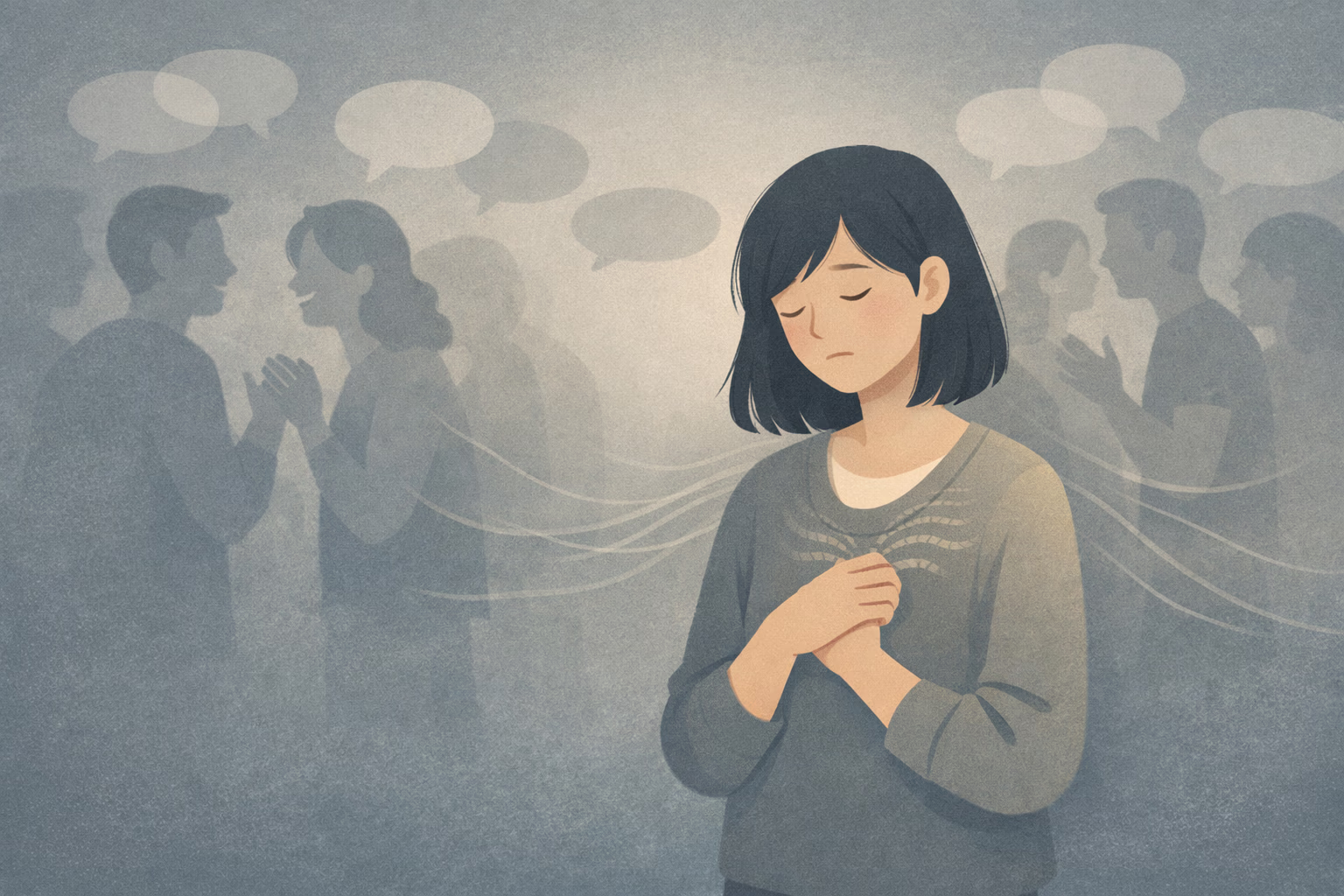
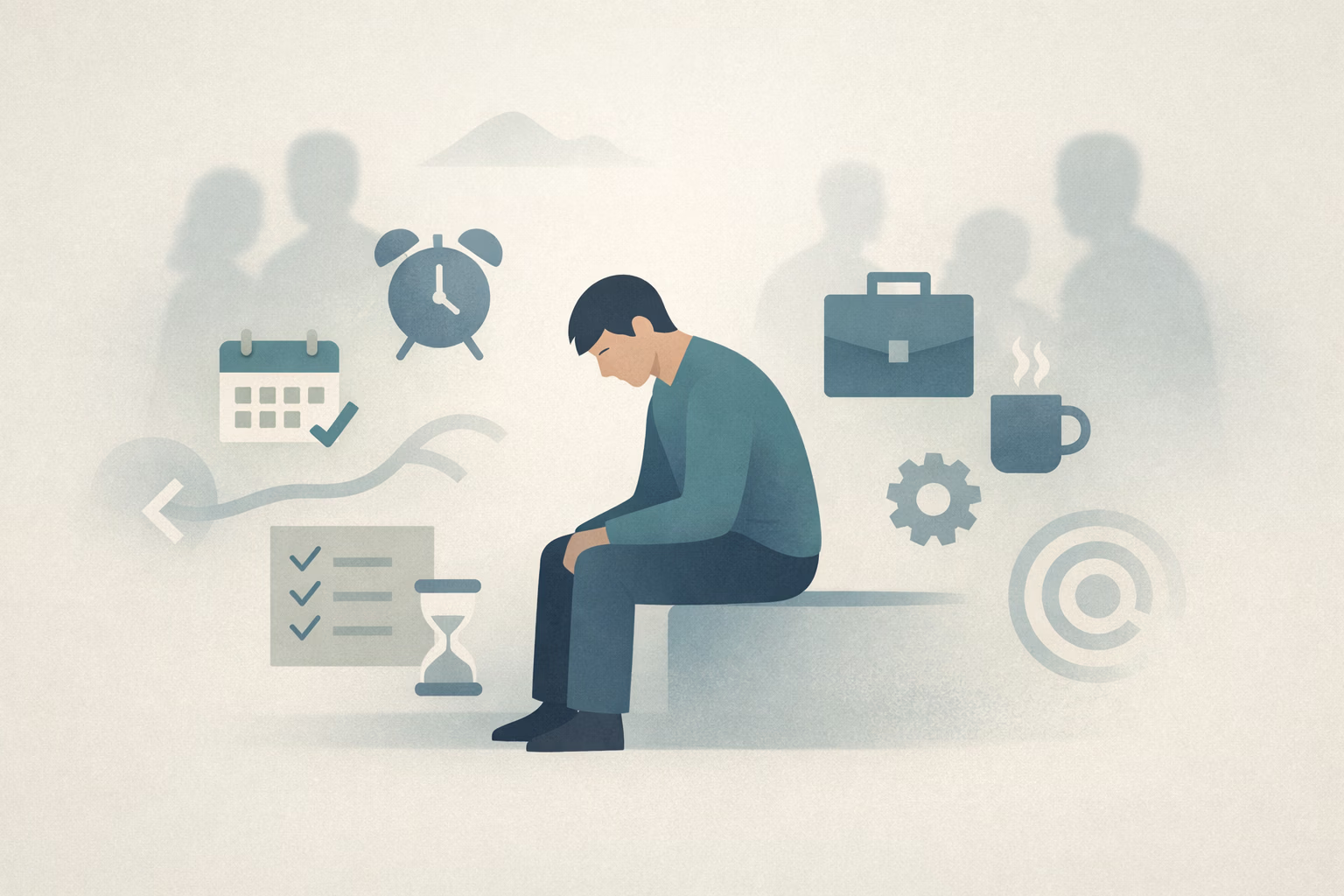
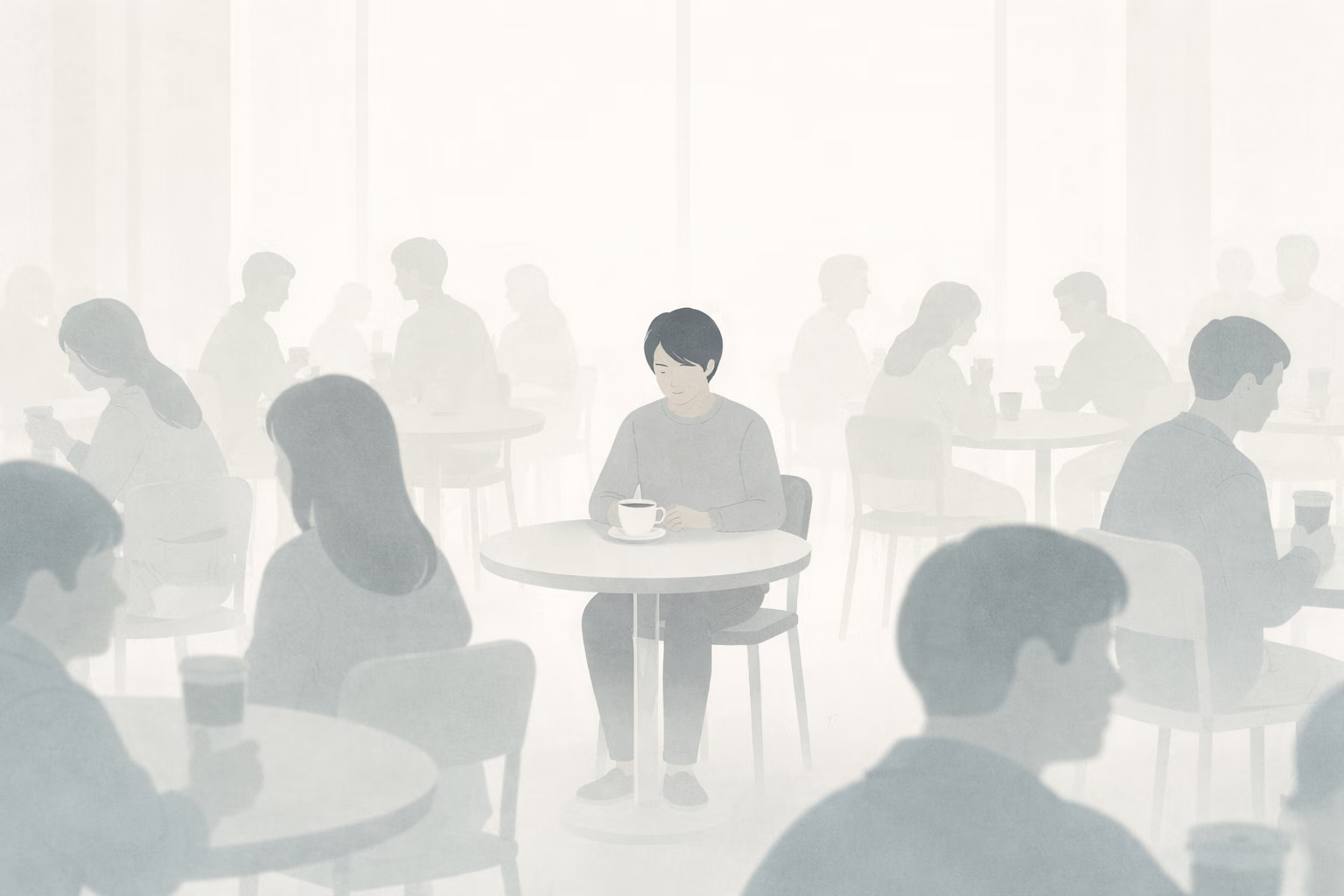
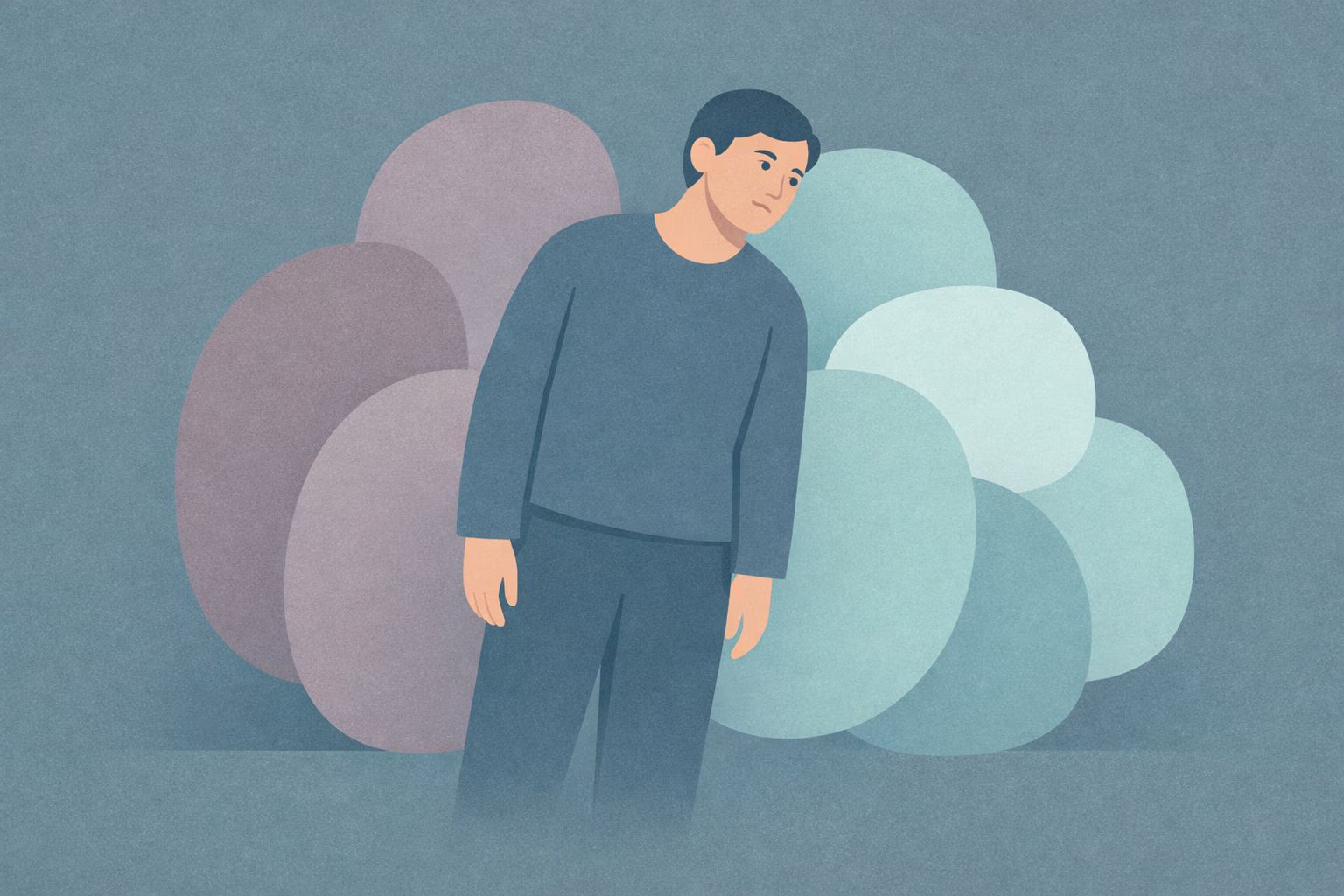
Understanding explains what is happening. Art allows you to feel it—without fixing, judging, or naming. Pause here. Let the images work quietly. Sometimes meaning settles before words do.
One Quiet Window, one insight, one reflection — every Sunday