

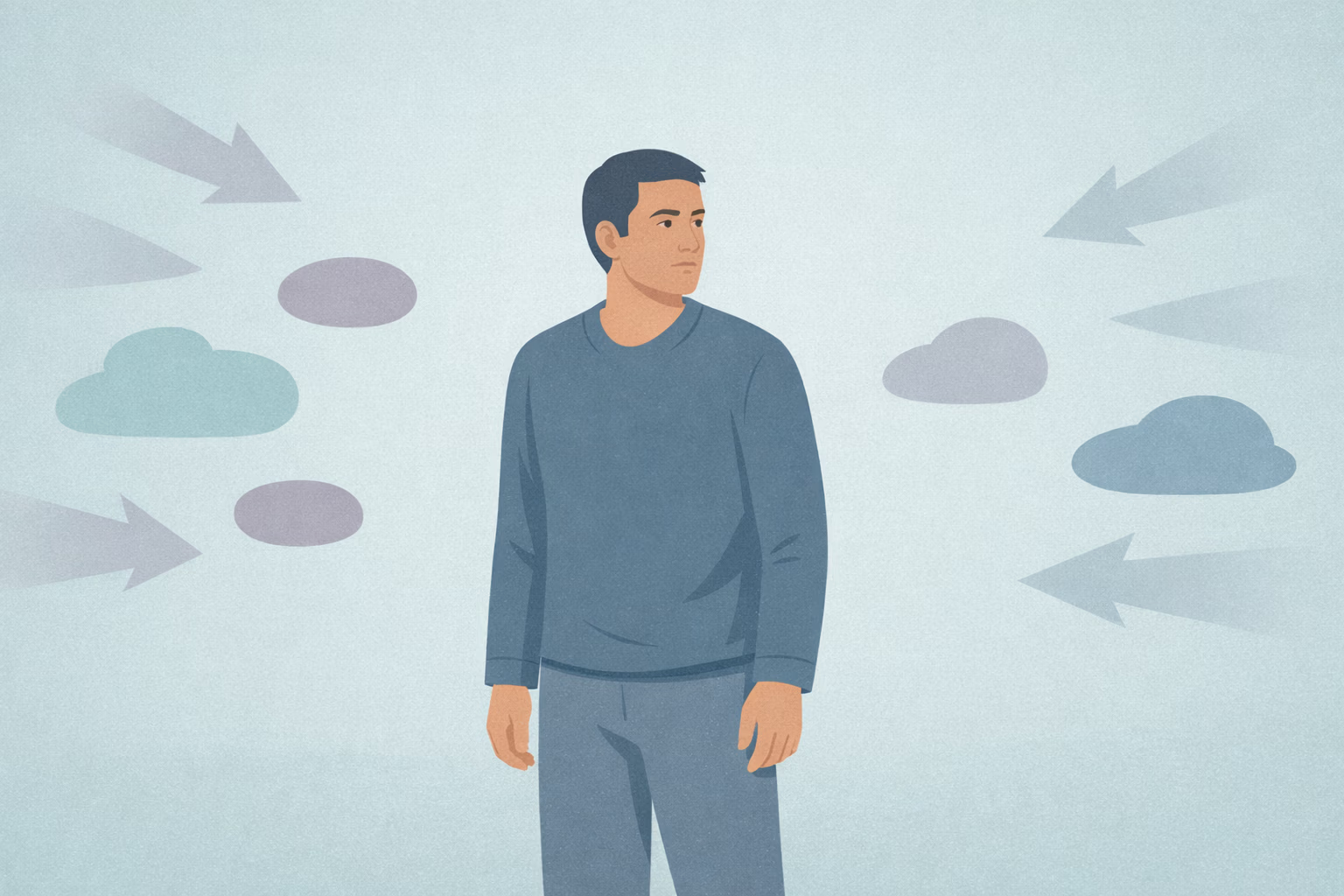
Lack of Tribe & Chronic Threat Activation
Understand nervous system stress caused by missing tribe cues.
In context: Distance is often reframed as a “structural stable-state.“ In this model, distance isn't a deficit of love; it's the presence of “room to breathe.“ When a relationship feels stable despite distance, it means both identities are coherent and don't require constant “merging“ to feel safe.

Distance holds steady instead of stretching or collapsing.
You feel how space can be balanced, not empty.
Nothing rushes to close the gap.
Nothing threatens to widen it.
Stability replaces tension, and the distance becomes part of the relationship rather than a problem to solve.
Reframe distance with DojoWell.
Explore DojowellArticles exploring the psychology behind these patterns.
Understand nervous system stress caused by missing tribe cues.
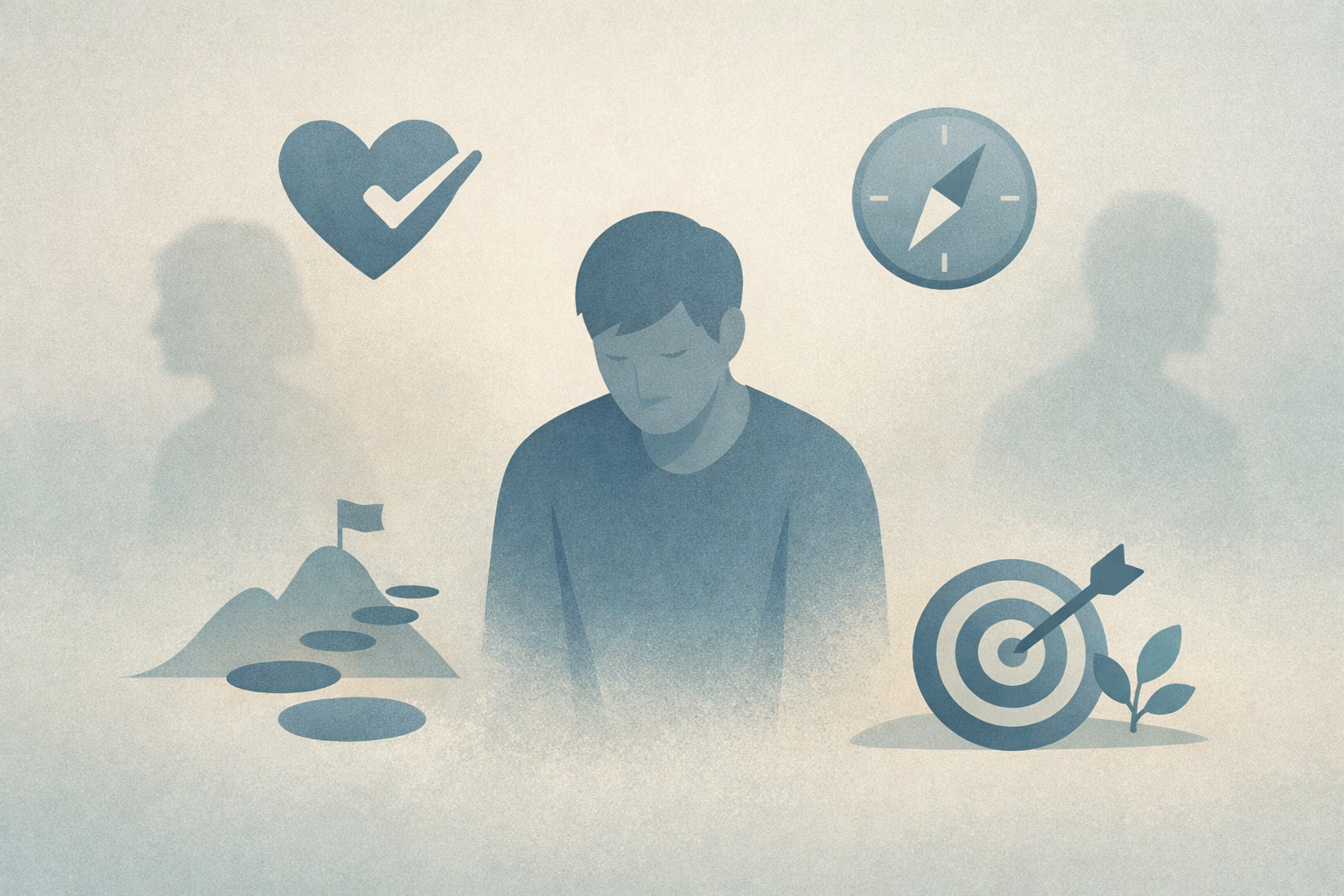
Explore what emotional safety truly means and how to cultivate it.

Learn why hyper-independence forms and how it limits emotional intimacy.
Distance is often reframed as a "structural stable-state." In this model, distance isn't a deficit of love; it’s the presence of "room to breathe." When a relationship feels stable despite distance, it means both identities are coherent and don't require constant "merging" to feel safe. This "wide-loop" connection is high-density because it respects the individual's need for integration space, preventing the friction and burnout that come from forced closeness.
Yes, if the distance is recognized as a functional choice rather than a failure. A "stable distance" allows for long-term sustainability. It prevents the Threat system from feeling "intruded upon" and the Reward system from becoming "over-saturated." By valuing this stability, you create a relational architecture that can withstand life’s stresses, as both people have the space required to process their own experiences before bringing them back to the shared center.
One Quiet Window, one insight, one reflection — every Sunday