

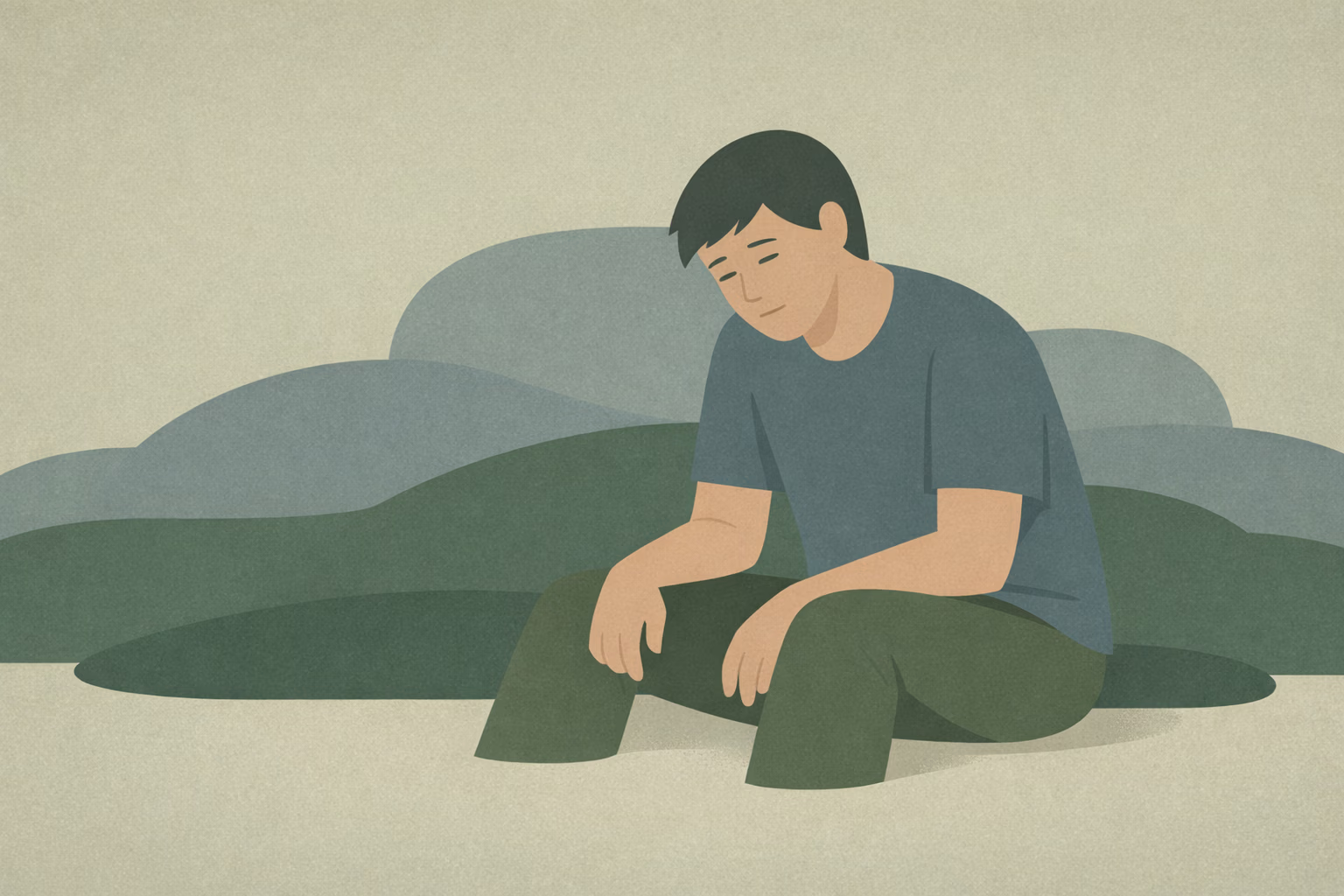
Low Motivation & Emotional Shutdown
Understand why low motivation often signals nervous system exhaustion—not laziness.
In context: Your “Effort has Turned Inward.“ When the external world becomes too overwhelming to navigate, the Status & Control system shifts its energy to “Internal Management.“ You are working incredibly hard just to “hold“ yourself together and prevent a collapse. In the Meaning Density Model™, “holding“ is a high-metabolic-cost action.
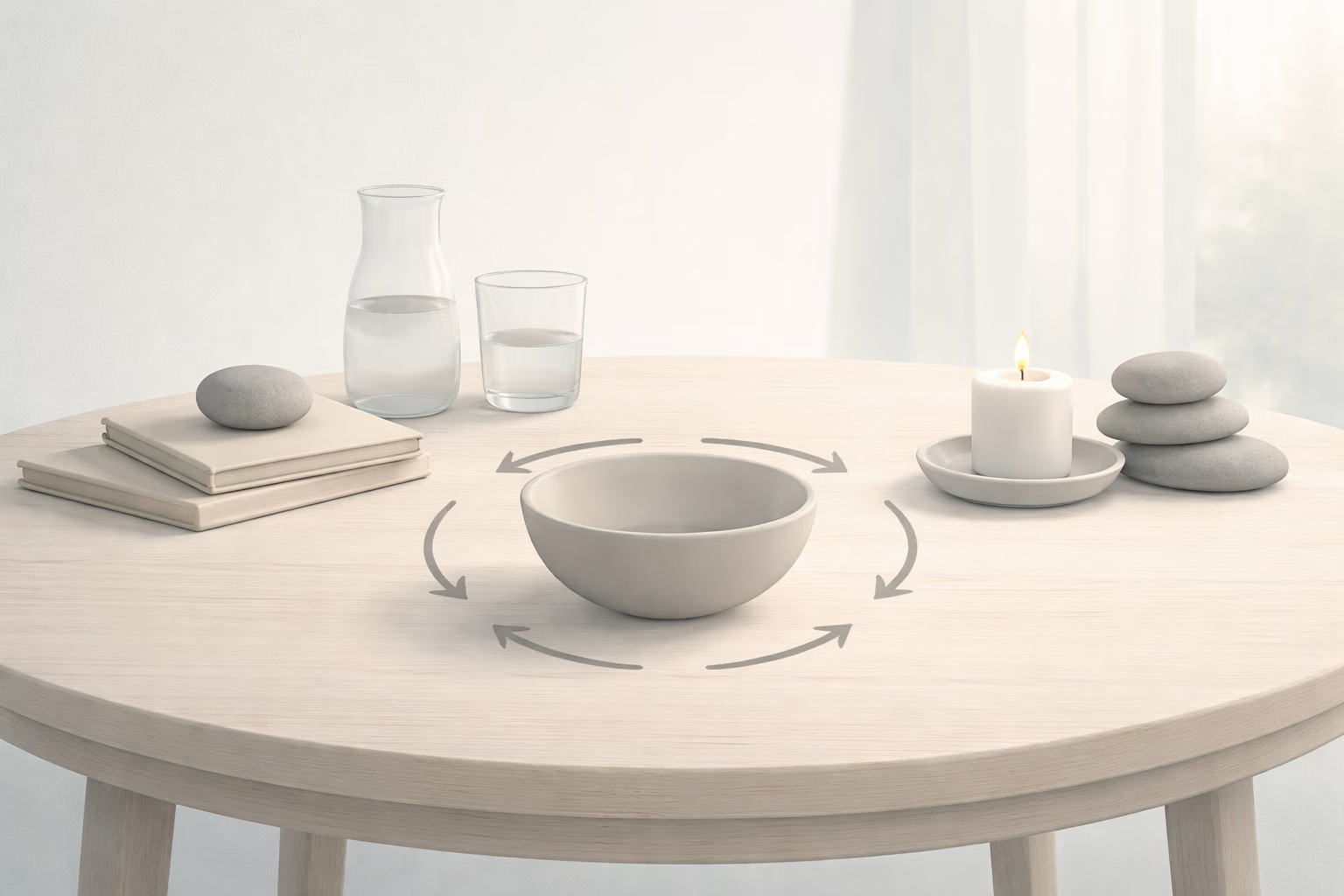
Effort once aimed outward slowly turned inward.
Action became holding.
Movement became containment.
This shift is not stagnation.
It is adaptation.
When outward action would overload the system, effort redirects to preservation.
Naming this restores clarity.
You are still expending energy, just differently.
Recognition allows effort to soften without demanding motion.
Understand inward-directed effort with DojoWell.
Explore DojowellArticles exploring the psychology behind these patterns.
Understand why low motivation often signals nervous system exhaustion—not laziness.

Understand the signs and causes of cognitive overload.
Understand how chronic stress becomes invisible and shapes behavior.
Your "Effort has Turned Inward." When the external world becomes too overwhelming to navigate, the Status & Control system shifts its energy to "Internal Management." You are working incredibly hard just to "hold" yourself together and prevent a collapse. In the Meaning Density Model™, "holding" is a high-metabolic-cost action. You feel exhausted because you are essentially performing a "structural isometric" inside your own nervous system.
You must first acknowledge that "holding" is a valid form of work. Don't shame yourself for not being "productive"; you are currently being "preservative." To shift the effort, you need to prove to your Safety system that it can "let go" of the internal bracing. Start by closing one very small external loop. As the external world becomes more "finishable," your system will feel safe enough to move its energy from "internal containment" back to "external engagement."
One Quiet Window, one insight, one reflection — every Sunday