

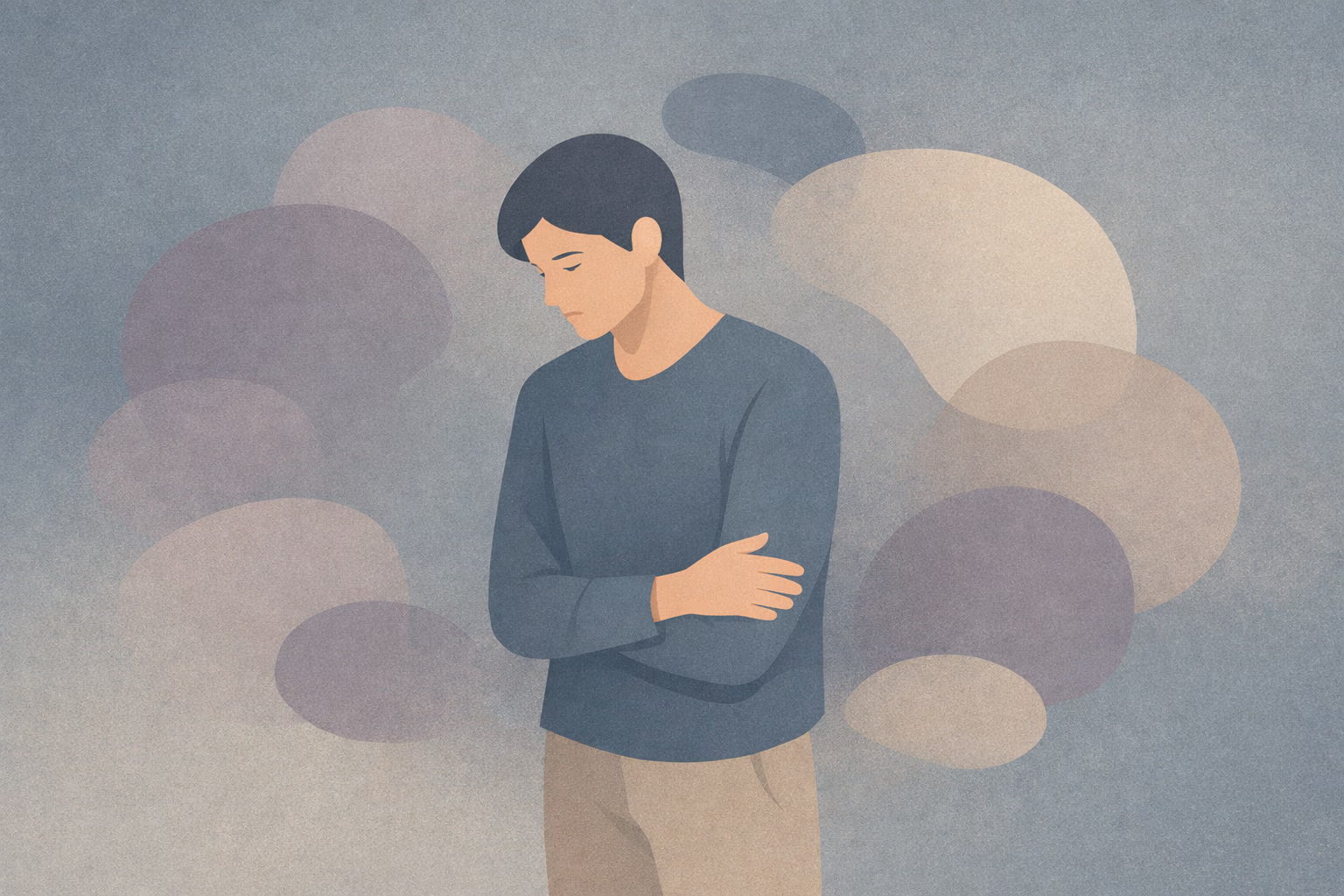
Guilt, Shame & Decision-Making
Learn how guilt and shame influence decisions and why they evolved as social survival tools.
In context: Yes. Guilt “shapes“ your behavior and movement into a “Submissive Posture.“ It can make your movements hesitant, your breathing shallow, or your gaze downward. This is your Status system signaling that it is “minimizing its footprint“ to avoid further judgment. Recognizing how guilt shapes your movement allows you to address it physically by intentionally reclaiming your natural, neutral posture.

When guilt shapes how you move, paths narrow.
Choices adjust quietly.
You step carefully, avoid edges, limit range.
This isn’t hesitation; it’s adaptation.
Seeing how guilt directs movement brings clarity without blame.
Understand guilt-driven behavior with DojoWell.
Explore DojowellArticles exploring the psychology behind these patterns.
Learn how guilt and shame influence decisions and why they evolved as social survival tools.
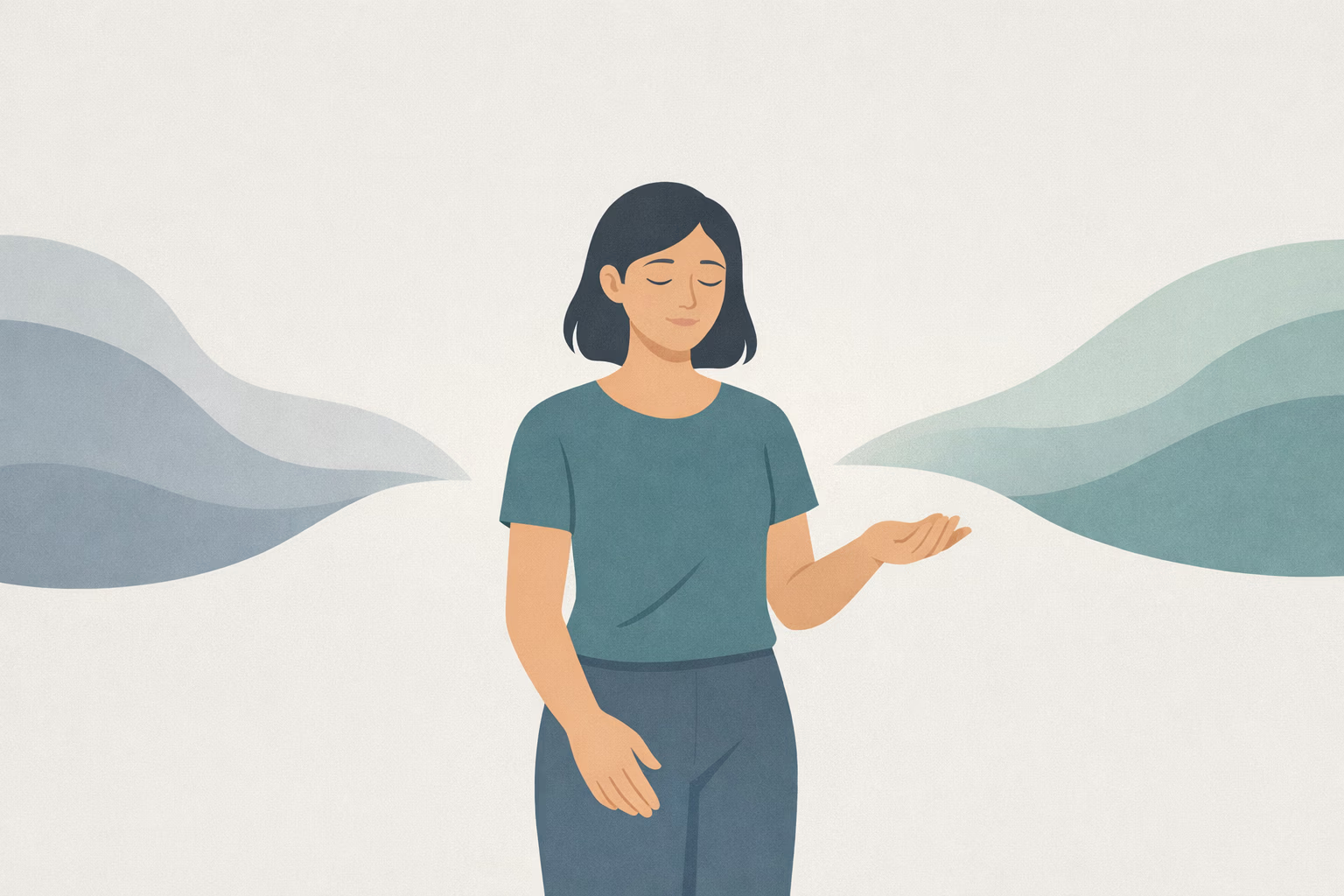
Discover the “freedom gap” where conscious choice lives.

Learn why hyper-independence forms and how it limits emotional intimacy.
Yes. Guilt "shapes" your behavior and movement into a "Submissive Posture." It can make your movements hesitant, your breathing shallow, or your gaze downward. This is your Status system signaling that it is "minimizing its footprint" to avoid further judgment. Recognizing how guilt shapes your movement allows you to address it physically by intentionally reclaiming your natural, neutral posture.
Practice "Structural Expansion." Notice when you are "shrinking" in response to a guilt signal. Slowly straighten your spine and allow your breath to reach your belly. By changing the physical "shape" of the guilt, you send a counter-signal to the Threat & Safety system. You are showing your brain that you are safe to occupy space, which disrupts the "shame loop" and restores your physical agency.
One Quiet Window, one insight, one reflection — every Sunday