


Cognitive Tightness & Compressed Thinking
Learn why thinking feels rigid and compressed.
In context: This is Compressed Immobility. When ideas are packed too tightly in the Narrative system, they lose their “fluidity.“ They can't “move“ or evolve because there is no “internal gap“ for change. Naming this compression helps you realize you don't need “better“ ideas; you need “more room.
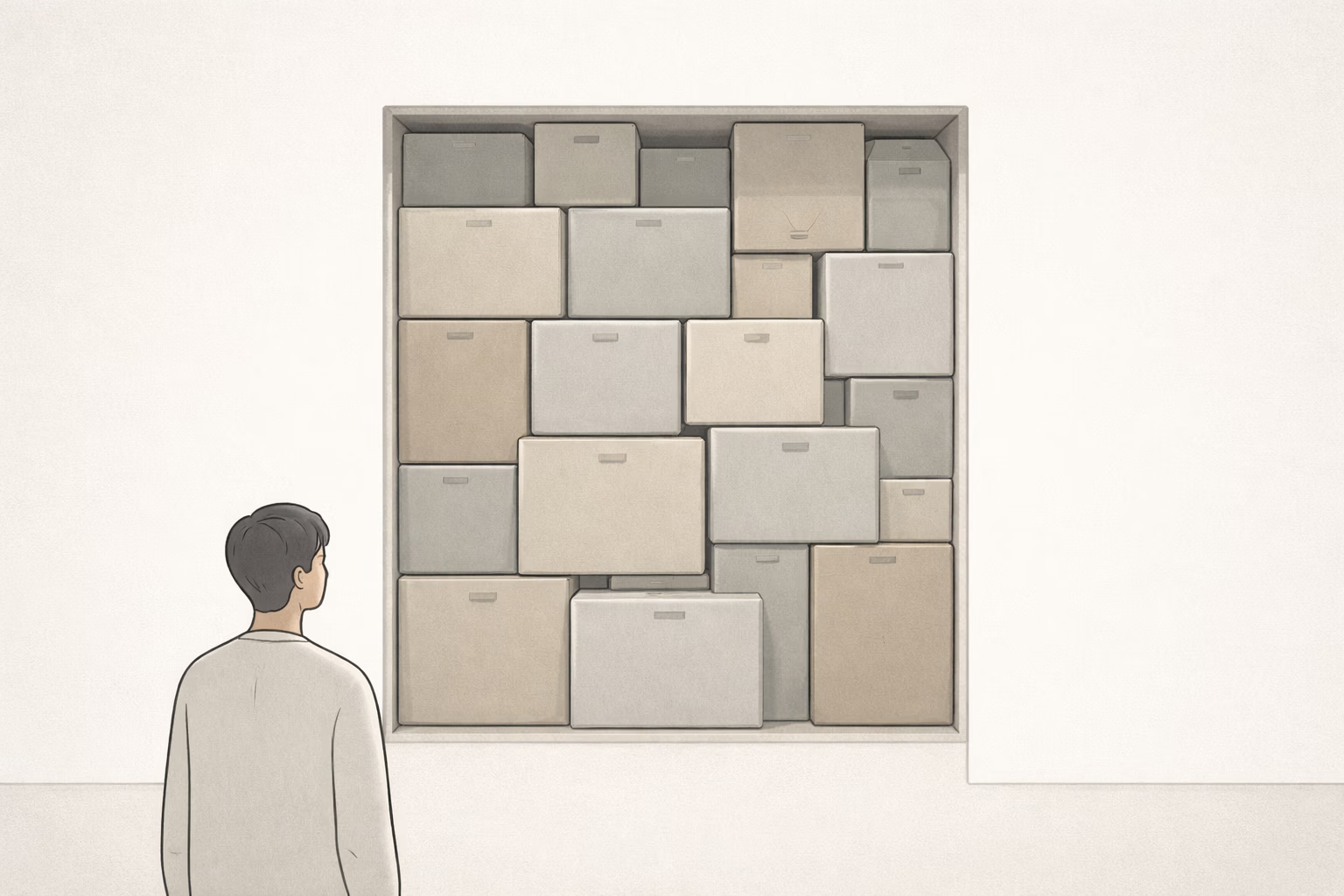
Ideas sit close together, unable to shift or rearrange themselves.
Movement feels restricted, not because anything is wrong, but because space is limited.
This window does not try to make room or force clarity.
It acknowledges the stillness inside thought, letting immobility exist without pressure to resolve it.
Recognize immobility with DojoWell.
Explore DojowellArticles exploring the psychology behind these patterns.
This is Compressed Immobility. When ideas are packed too tightly in the Narrative system, they lose their "fluidity." They can’t "move" or evolve because there is no "internal gap" for change. Naming this compression helps you realize you don't need "better" ideas; you need "more room." By stepping away from the subject entirely, you allow the compression to vent, giving your ideas the space they need to breathe and shift.
You practice "Cognitive Dispersion." Engage in a task that uses a completely different part of the brain—like rhythmic movement or sensory focus. This "spreads" the energy. In the Meaning Density Model™, space is created by "non-thinking." When you stop the pursuit, the ideas naturally "settle" into their own places, restoring the fluidity and creativity that compression had blocked.
One Quiet Window, one insight, one reflection — every Sunday