


Emotional Ambivalence & Inner Confusion
Learn why ambivalence happens and how to navigate emotional contradiction.
In context: This is “Internal Fragmentation,“ often caused by the different demands of the Four Behavioral Systems. Your Reward system wants one thing, while your Safety system wants another. When “Pieces Still Recognize Each Other,“ the conflict softens. You realize these aren't “broken“ parts of you, but different “functional modes“ of a single system.

When pieces still recognize each other, fragmentation softens.
Parts may feel distant, but they align when noticed together.
There is familiarity across them, a shared tone.
This recognition reduces fear that something essential has been lost.
Coherence exists without forcing unity.
Gently integrate parts with DojoWell.
Explore DojowellArticles exploring the psychology behind these patterns.
Learn why ambivalence happens and how to navigate emotional contradiction.
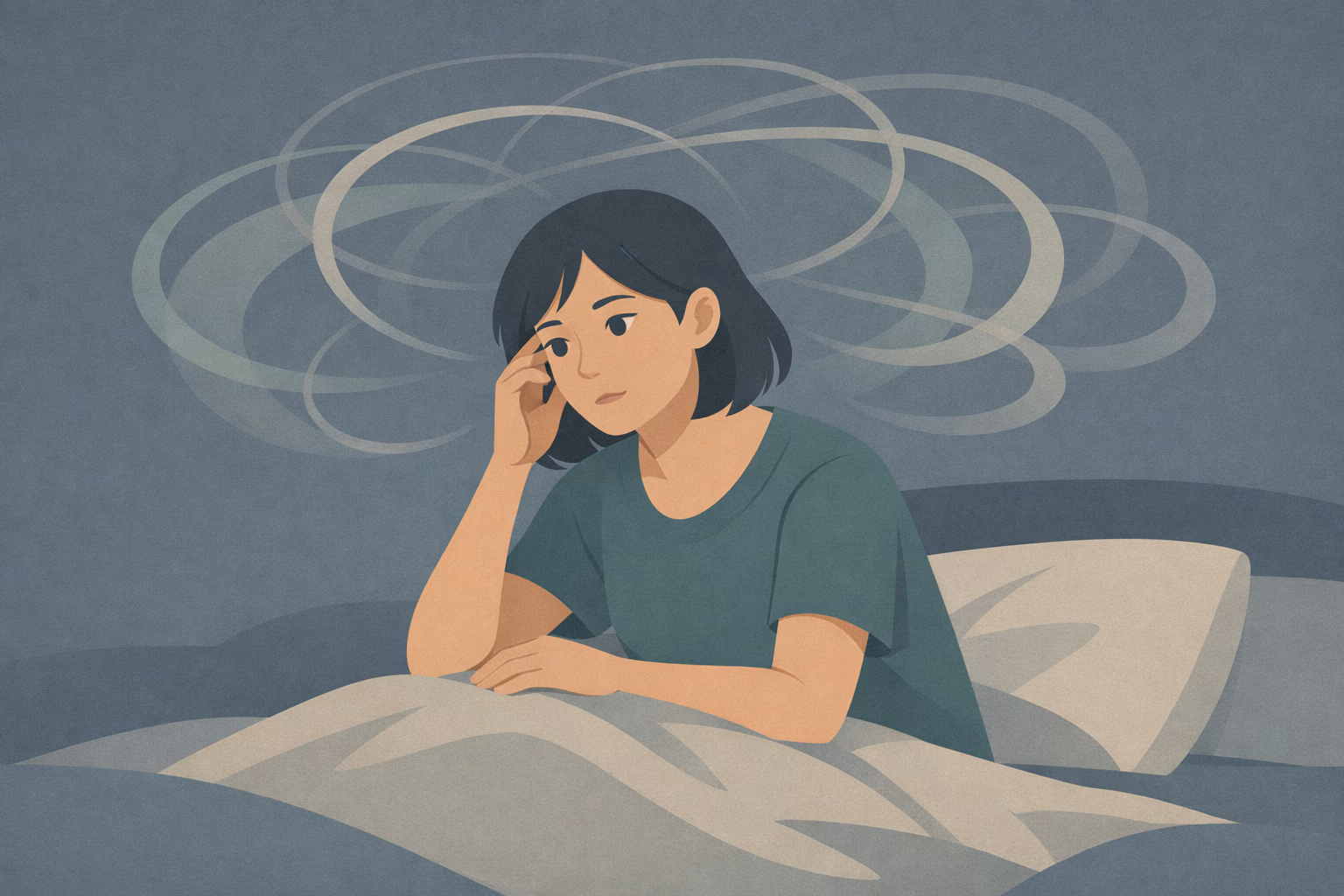
Discover why your mind races at night and how unresolved stress keeps your brain on high alert.

Learn how aligning daily actions with core values restores meaning and emotional stability.
This is "Internal Fragmentation," often caused by the different demands of the Four Behavioral Systems. Your Reward system wants one thing, while your Safety system wants another. When "Pieces Still Recognize Each Other," the conflict softens. You realize these aren't "broken" parts of you, but different "functional modes" of a single system. This recognition reduces the fear of internal collapse and allows for integration.
Use "Non-Judgmental Witnessing." When you feel a conflict, acknowledge both sides: "The part of me that wants rest is here, and the part of me that feels pressure is also here." By being the "space" where both exist, you act as the Integrator. You aren't choosing a side; you are providing the container that allows them to coexist until they naturally find a state of "Lived Coherence."
One Quiet Window, one insight, one reflection — every Sunday