

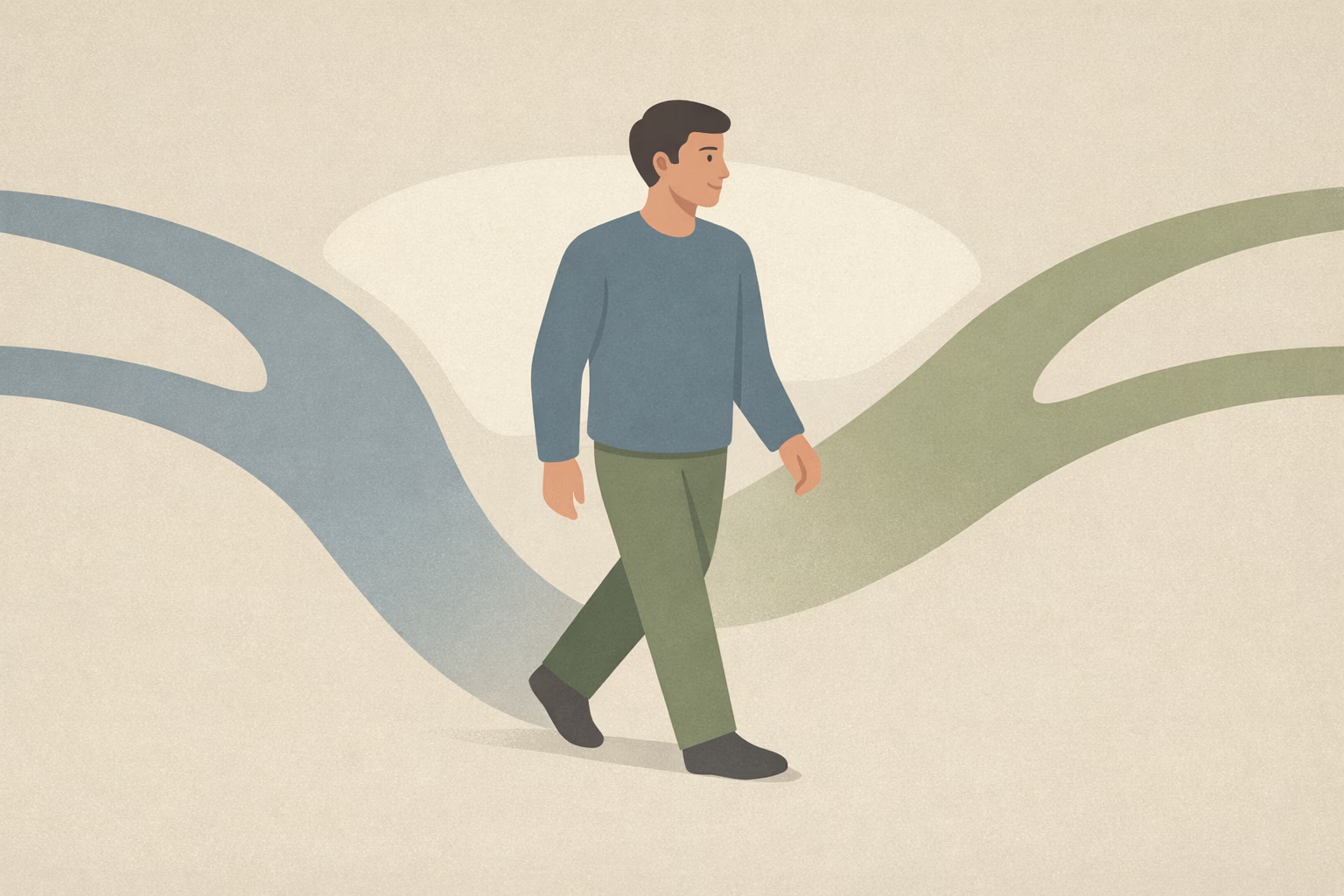
The Neuroscience of Avoidance
Learn why avoidance is neurologically rewarding and how to break the cycle.
In context: “Progress is Meeting Friction.“ In the Meaning Density Model™, friction is “Neutral Information.“ It's a “Sensor“ telling you that your “Adjustment“ is off. Maybe you're moving too fast, or the task is too “Thick“ for your current state. Friction isn't a sign to stop; it's a sign to “Tune.“ It's your system asking for a “Lower-Velocity“ or a “Different Angle.“

Progress meets friction and slows.
This texture is not failure; it’s feedback.
Friction asks for adjustment, not retreat.
Let the surface be felt.
Movement becomes wiser when it adapts.
Read friction signals with DojoWell.
Explore DojowellArticles exploring the psychology behind these patterns.
Learn why avoidance is neurologically rewarding and how to break the cycle.

Learn why controlling everything backfires and how internal flexibility reduces suffering.
Discover the “freedom gap” where conscious choice lives.
"Progress is Meeting Friction." In the Meaning Density Model™, friction is "Neutral Information." It’s a "Sensor" telling you that your "Adjustment" is off. Maybe you’re moving too fast, or the task is too "Thick" for your current state. Friction isn't a sign to stop; it’s a sign to "Tune." It’s your system asking for a "Lower-Velocity" or a "Different Angle."
"Add Lubrication" by lowering the stakes. Break the task into even smaller "Micro-loops." If the grinding continues, it means you need to "De-saturate" your environment before continuing. DojoWell suggests that "Friction is a Teacher." By listening to where the "Grind" is, you can identify exactly which part of your architecture needs "Maintenance" or "Space" to move freely again.
One Quiet Window, one insight, one reflection — every Sunday