The Paradox of Control
Learn why controlling everything backfires and how internal flexibility reduces suffering.
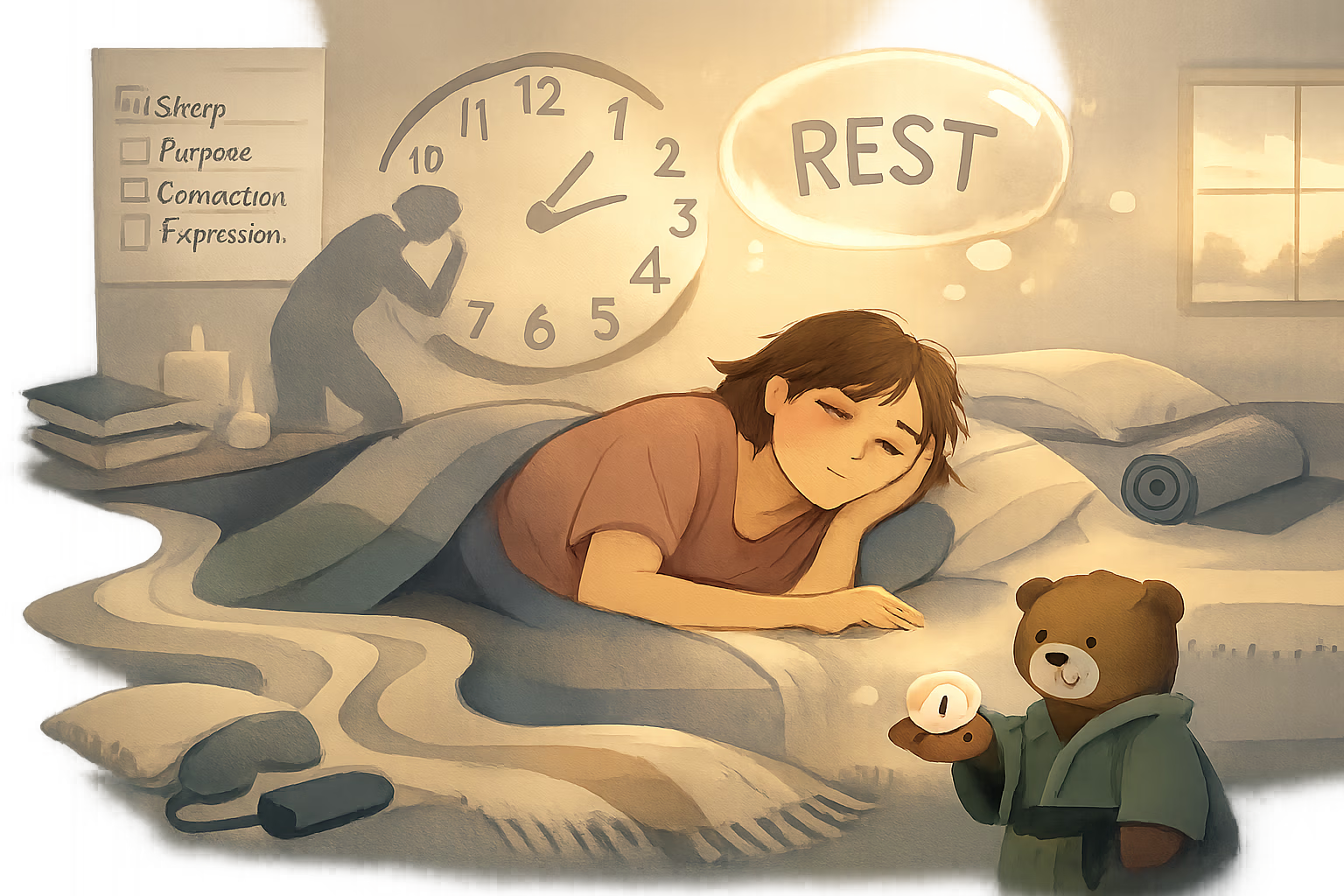
In context: This is the Stillness Tightening Reflex. When the “noise“ of tasks and triggers stops, the Threat system becomes suspicious. It interprets “stillness“ as “vulnerability“ or “the calm before a storm,“ and it orders a protective “brace.“ Recognizing this as a reflex—rather than a sign that something is actually wrong—is crucial.

Stillness arrives and something tightens.
The system braces, preparing to act, correct, or manage.
You notice how calm can trigger readiness rather than rest.
This moment names that reflex without interpreting it as failure.
Notice tightening reflex with DojoWell.
Explore DojowellArticles exploring the psychology behind these patterns.
This is the Stillness Tightening Reflex. When the "noise" of tasks and triggers stops, the Threat system becomes suspicious. It interprets "stillness" as "vulnerability" or "the calm before a storm," and it orders a protective "brace." Recognizing this as a reflex—rather than a sign that something is actually wrong—is crucial. It allows you to stay in the stillness without "believing" the tightening, eventually habituating your system to the safety of quiet.
You name the reflex: "My system is tightening because it’s quiet." Then, stay oriented to a physical "done" signal, like your breath or the weight of your body. Don't try to "relax" the tightness; just witness it. By not restarting a pursuit loop to "escape" the stillness, you prove to your brain that quiet is a "stable state." Over time, the reflex will weaken, and the stillness will move from being a "trigger" to being a "settlement zone."
One Quiet Window, one insight, one reflection — every Sunday