

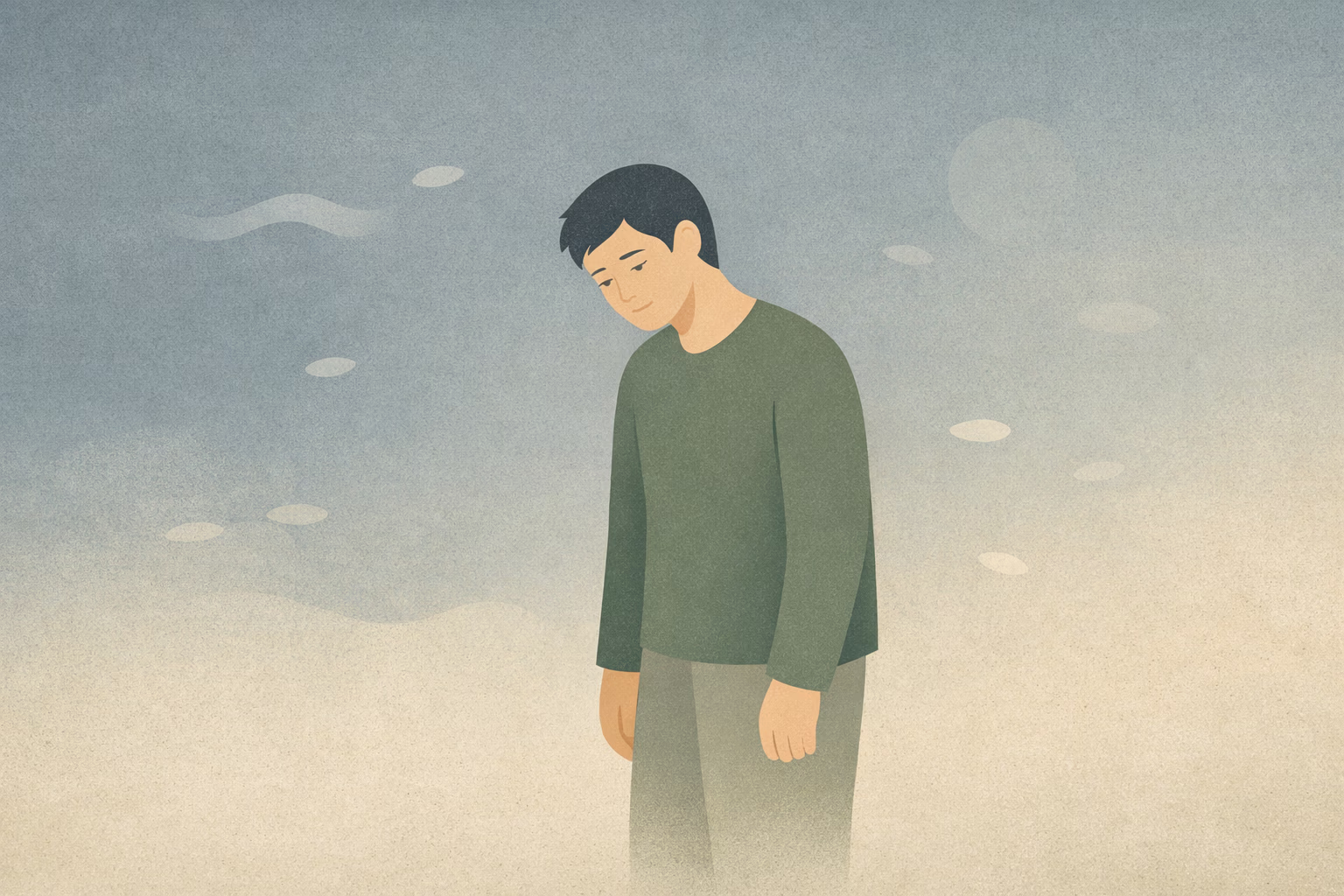
Dopamine Withdrawal & Emotional Crash
Understand dopamine withdrawal and how overstimulation causes emotional crashes.
In context: Soft crashes are subtle drops in state that don't feel like a total collapse but leave you feeling “gray.“ The model encourages you to normalize these drops. They are often the result of small loops closing—like finishing a podcast or a work email.

The drop arrives quietly.
No alarm sounds.
Mood lowers a floor or two.
This subtlety makes it easy to miss.
Naming it restores orientation.
Let the descent complete without rushing back up.
Normalize subtle crashes with DojoWell.
Explore DojowellArticles exploring the psychology behind these patterns.
Understand dopamine withdrawal and how overstimulation causes emotional crashes.
Learn why overstimulation withdrawal mimics depressive symptoms.
Understand emotional exhaustion and how to rebuild capacity.
Soft crashes are subtle drops in state that don't feel like a total collapse but leave you feeling "gray." The model encourages you to normalize these drops. They are often the result of small loops closing—like finishing a podcast or a work email. By acknowledging the subtle drop as a predictable part of your "nervous system rhythm," you prevent yourself from searching for a problem that isn't there.
If you don't normalize them, you might misinterpret the gray feeling as "sadness" or "loss of purpose." This triggers the Narrative system to create a story about why you feel bad, which keeps you in a loop of over-analysis. Normalizing the drop keeps it at the physiological level—a simple dip in arousal—allowing your system to recover without the added weight of an emotional crisis.
One Quiet Window, one insight, one reflection — every Sunday