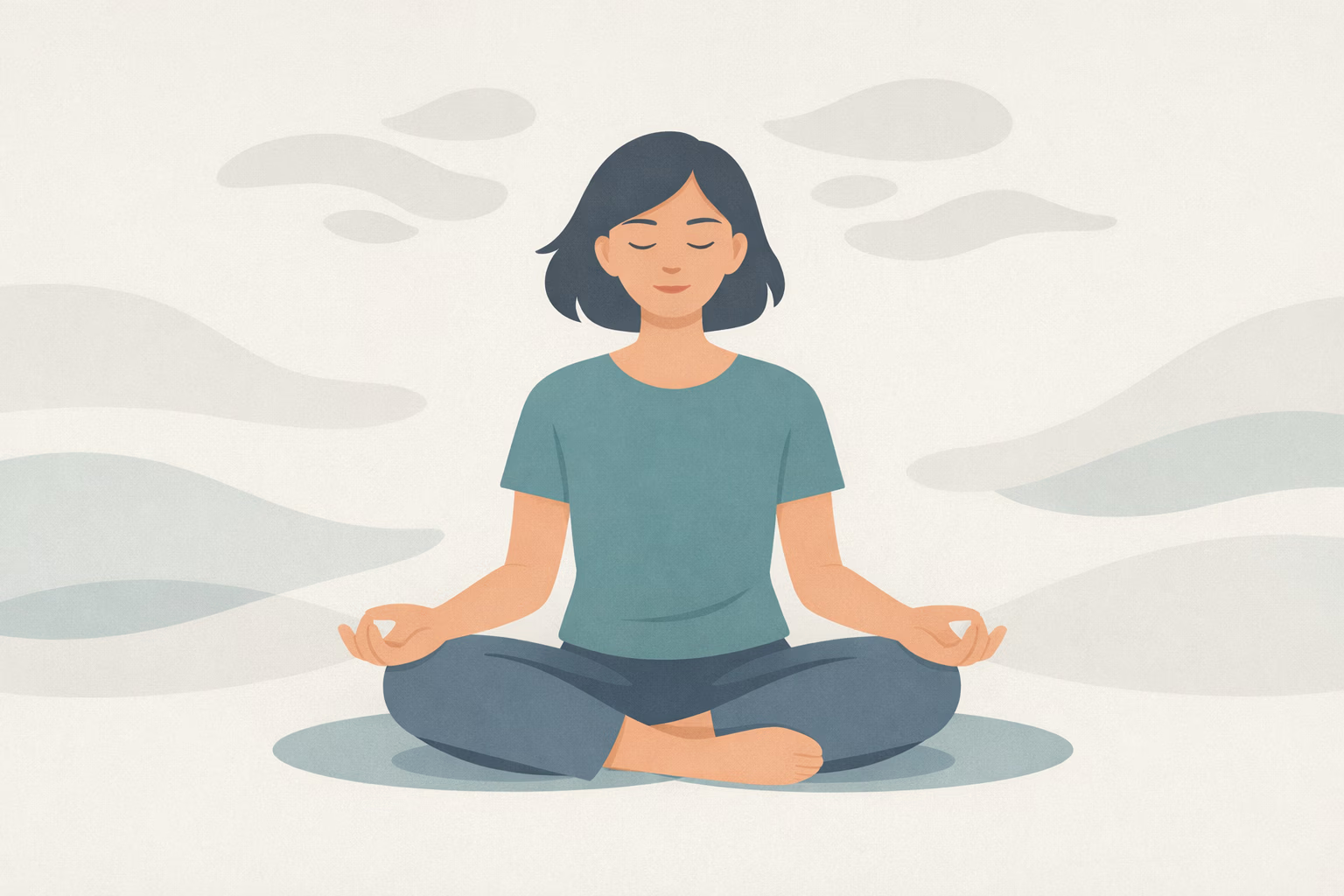
Internal Stillness: Finding Silence in a Loud Inner World
Explore how to find inner stillness despite mental noise.
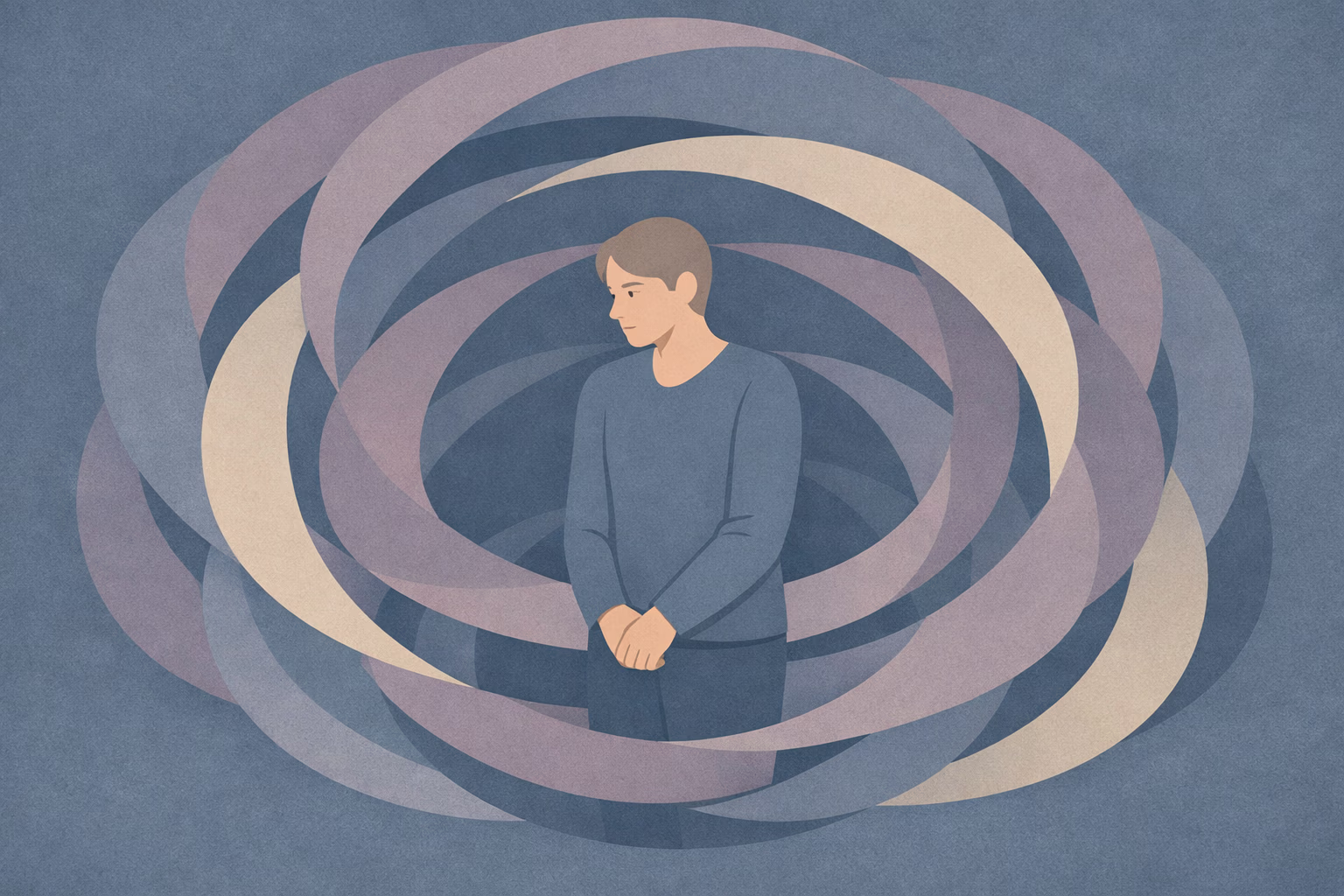
In context: In the model, this is the suspension of the Status & Control system's audit. When the inner voice goes quiet, it means your nervous system no longer feels “on trial.“ This silence isn't a lack of thought; it's a form of structural relief.

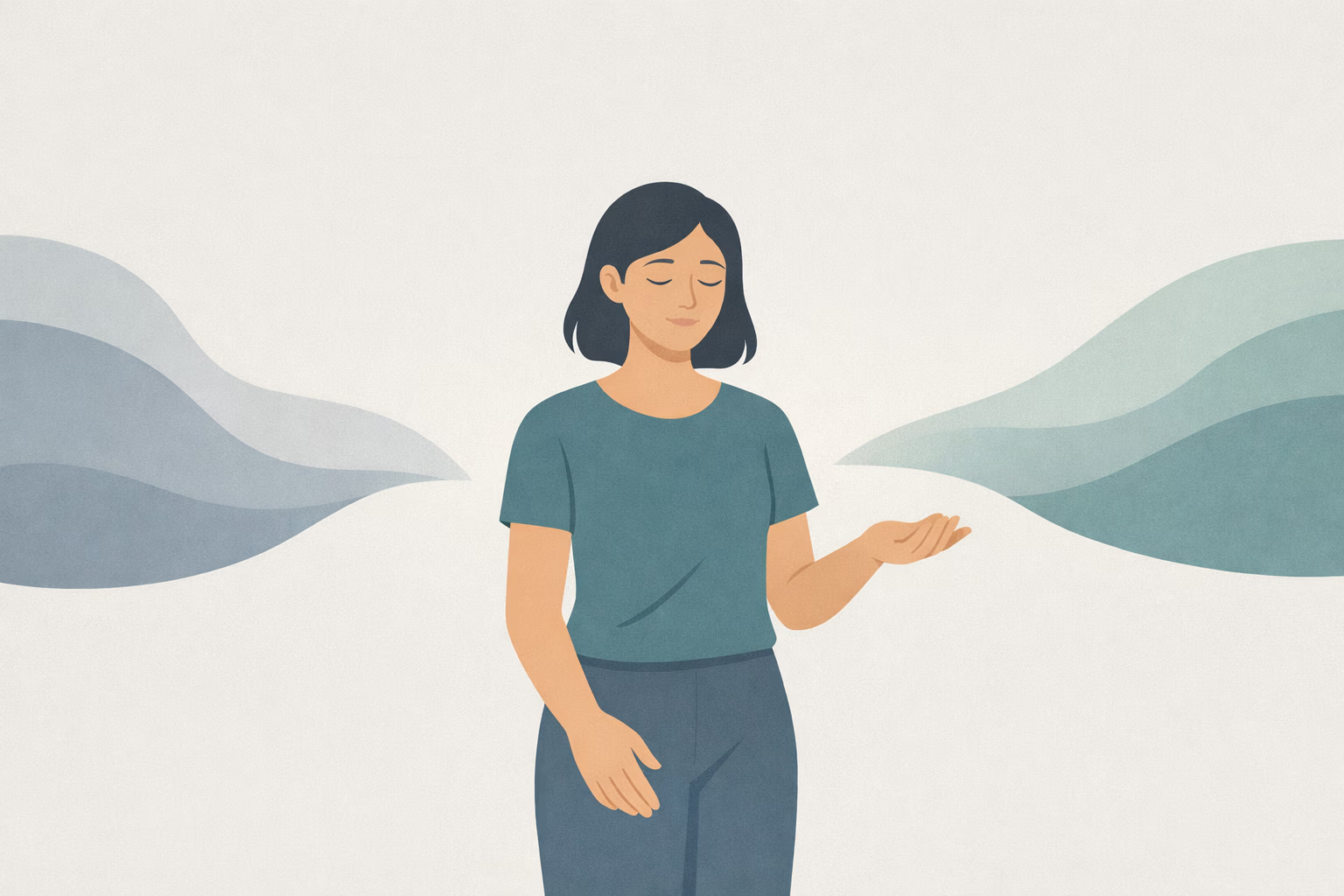
The inner voice goes quiet, not because it was silenced, but because it found nothing to comment on.
The space holds without commentary.
Thoughts still move, but none demand judgment.
The body notices the absence before the mind does.
There is no narration, no correction, no verdict forming in the background.
Just experience, unaccompanied, allowed to exist without interpretation or score.
Experience non-judgment with DojoWell.
Explore DojowellArticles exploring the psychology behind these patterns.
In the model, this is the suspension of the Status & Control system’s audit. When the inner voice goes quiet, it means your nervous system no longer feels "on trial." This silence isn't a lack of thought; it’s a form of structural relief. It allows your energy to move away from constant self-evaluation and back into direct experience, which is the only state where true integration and settlement can occur.
By reducing the "evaluation density" of your environment. When you stop measuring every action against a result, the inner critic loses its data source. You don't "fight" the voice; you simply remove the metrics it uses to speak. As you provide your body with more "unrated" time, the Narrative system eventually learns that it doesn't need to provide a constant commentary to keep you safe.
One Quiet Window, one insight, one reflection — every Sunday