Emotional Logistics & Inner Organization
Learn how to organize emotional responsibilities like tasks.
In context: Overload often deletes the “integration phase,“ removing the structural places where you are allowed to pause. In modern life, loops are engineered to be continuous, so your Status & Control system feels that stopping is a risk or an error. You aren't lacking willpower; you are living in a structure that lacks “built-in endings“.

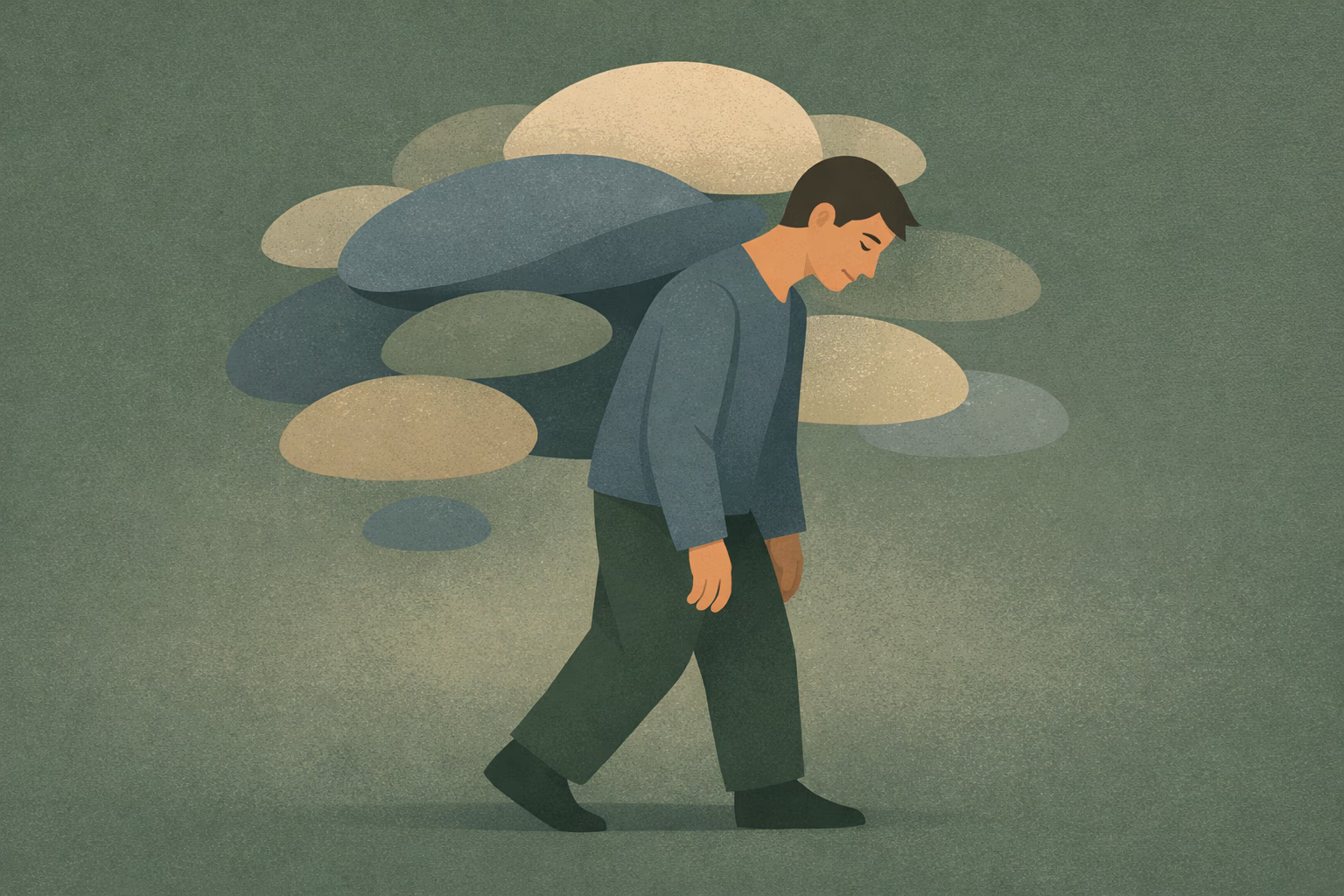
There is nowhere to set things down.
Everything must be carried, even briefly.
This creates strain that goes unnamed.
Permission to pause does not require release.
It only requires acknowledgment that holding is happening.
Seeing the absence of a resting place softens the grip.
The table does not need to be used yet.
Knowing it exists is enough for now.
Restore permission to pause with DojoWell.
Explore DojowellArticles exploring the psychology behind these patterns.
Overload often deletes the "integration phase," removing the structural places where you are allowed to pause. In modern life, loops are engineered to be continuous, so your Status & Control system feels that stopping is a risk or an error. You aren't lacking willpower; you are living in a structure that lacks "built-in endings". When every pause is interrupted by a notification or an evaluation, the nervous system never receives the "done" signal required for real rest.
You must manually create "closure-respecting" boundaries. Permission is restored when you define a "stop point" that doesn't require further action. DojoWell suggests choosing one small window of time where all loops are intentionally left "unresolved" but safe. By proving to your Safety system that nothing collapses when you stop, you regain the agency to exist without constant "doing". This "stopping without action" is a vital structural repair.
One Quiet Window, one insight, one reflection — every Sunday