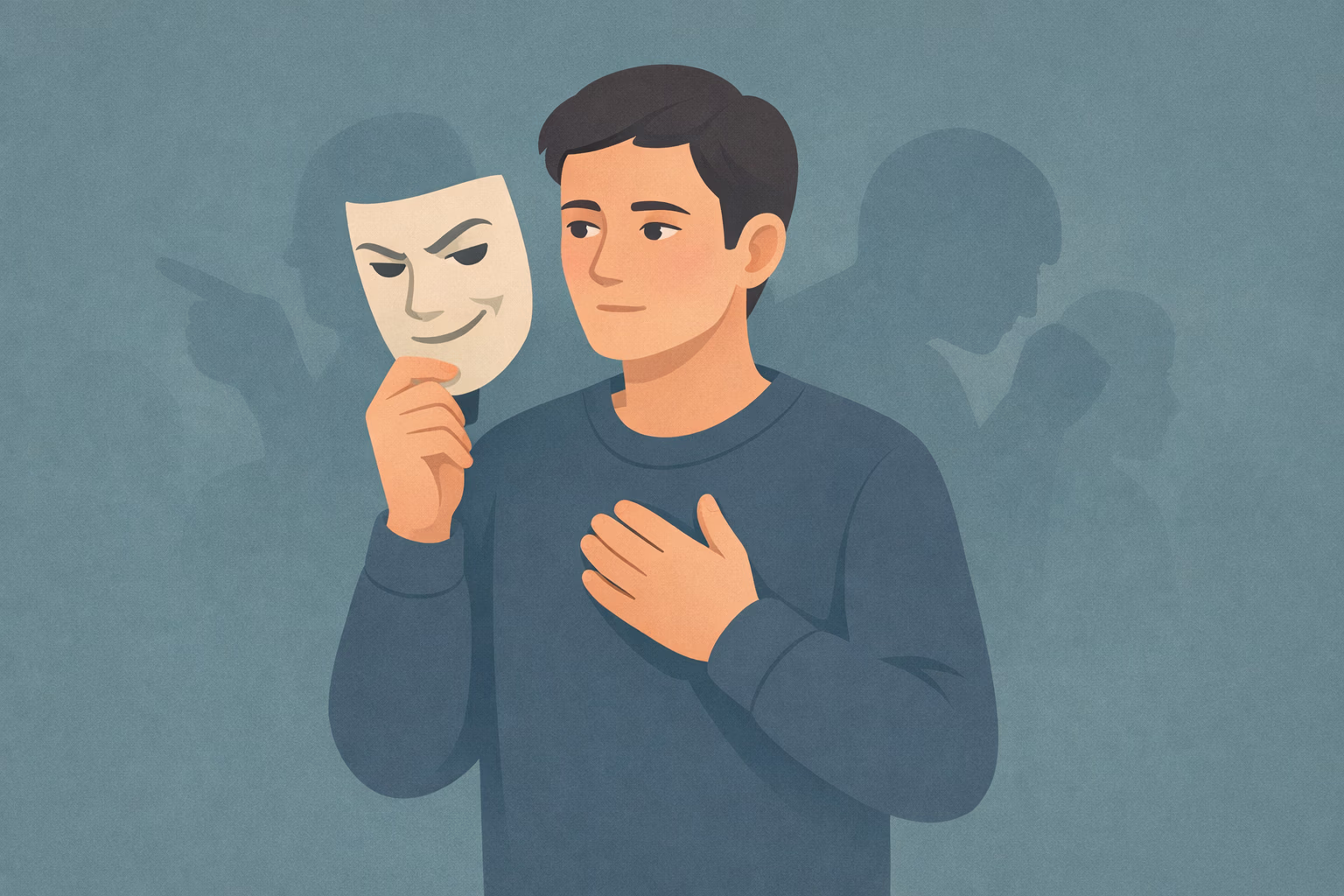
The Mask of Self-Righteousness: Hidden Insecurity
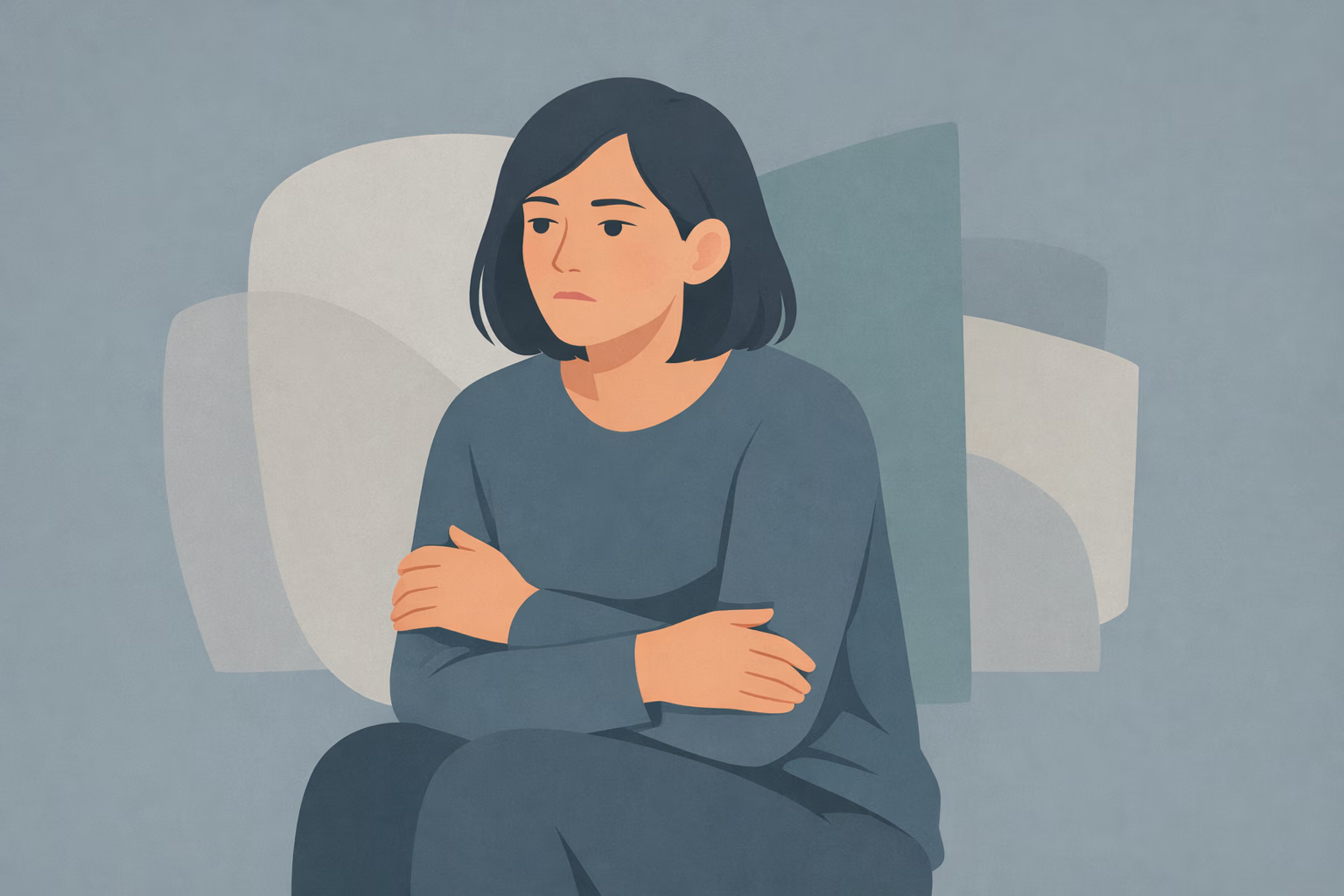
In short: Cynicism often gets mislabeled as “just being realistic.” But for many people, it functions more like emotional armor: a way to reduce exposure to disappointment by lowering expectation, dampening care, and keeping distance. This isn’t a character flaw.
Cynicism often gets mislabeled as “just being realistic.” But for many people, it functions more like emotional armor: a way to reduce exposure to disappointment by lowering expectation, dampening care, and keeping distance.
This isn’t a character flaw. It’s a regulatory response that can appear after repeated letdowns, broken promises, social friction, or long stretches where effort didn’t translate into safety or reward. When the system learns that reaching is costly, it starts conserving.
What if cynicism isn’t who you are—what if it’s how your nervous system learned to stop bleeding?
Cynicism can feel like emotional distance paired with mental sharpness. You might notice yourself watching life rather than joining it, commenting rather than participating, scanning for what won’t work rather than what could.
Often there’s a muted version of hope—less bright, less motivating. Sometimes there’s a faint sense of superiority (“I see through it”), and sometimes it’s more like numb resignation (“it doesn’t matter anyway”). Both can coexist. [Ref-1]
Underneath the tone, cynicism is often doing a very practical job: limiting emotional investment. If you don’t expect much, you don’t have to gear up. If you don’t care too much, you don’t have to recover as hard when things disappoint.
This narrowing isn’t “suppression” in a moral sense. It’s more like an automatic budgeting system—reducing bandwidth, tightening the range of engagement, and prioritizing predictability over possibility. The inner message is structural: fewer open loops, fewer stakes, fewer hits. [Ref-2]
When caring has felt expensive, not caring can start to feel like safety.
Humans evolved in environments where repeated negative outcomes usually meant something important: danger, scarcity, social instability, or unreliable cooperation. After enough misses, the system shifts toward loss-minimization and resource conservation.
Cynicism can be one expression of that shift. It gives the mind a sense of control: if you assume the worst early, you feel less blindsided later. It can also create a clean storyline—“people are selfish,” “nothing changes”—which reduces uncertainty and the nervous system effort of staying open. That clarity can feel smart, even soothing, especially when life has been unpredictable. [Ref-3]
Cynicism often functions like an internal contract: “I won’t be surprised again.” By lowering expectations, the body avoids the upshift of anticipation—because anticipation can be followed by a hard downshift.
Importantly, the goal isn’t to feel worse. The goal is to avoid the whiplash of hope collapsing. Detachment reduces the amplitude of the emotional swing. Less peak, less crash. In the short term, that can genuinely reduce strain. [Ref-4]
What if the “problem” isn’t negativity—but the cost your system associates with caring?
Armor works. It reduces impact. Cynicism can bring immediate relief: fewer disappointments, fewer awkward risks, less vulnerability to other people’s unpredictability.
But armor also limits movement. Over time, the same distance that protects you can create stagnation: fewer chances for good surprise, less room for play, and a steady flattening of emotional range. This is one reason cynicism is often discussed alongside burnout and chronic depletion—when the system chooses disconnection to survive demand. [Ref-5]
An avoidance loop doesn’t require dramatic fear. It can be quieter: bypassing friction, stepping back before anything can ask more of you, choosing commentary over commitment.
Cynicism fits that pattern. It replaces engagement with withdrawal. It substitutes “not buying in” for the messy work of staying in contact with real outcomes. The loop can feel rational because it reduces immediate load, but it also prevents the kinds of experiences that would create closure and restore trust in your own participation. [Ref-6]
Cynicism rarely announces itself as “I’m protecting myself.” It shows up as style: humor, edge, realism, bluntness, or a constant eye-roll at the world.
These patterns can serve a nervous-system purpose: they keep the body from gearing up. They cut off the rise of investment before it becomes costly. In high-demand contexts, cynicism and detachment are also recognized as classic burnout signals—ways the system reduces contact to conserve. [Ref-7]
Meaning isn’t built from intensity; it’s built from completed experiences that settle into identity. When cynicism reduces participation, fewer experiences reach completion. Fewer moments become “done,” integrated, and dependable.
Over time, this can erode trust—both interpersonal trust and self-trust (“my efforts matter”). Creativity also suffers because creativity requires tolerating uncertainty long enough for something real to form. When everything is pre-labeled as pointless, the nervous system doesn’t stay present long enough for novelty to consolidate. [Ref-8]
Distance can feel like control, but it often costs the very nutrients that make life feel worth inhabiting.
Cynicism is self-reinforcing because it reduces the very inputs that could revise it. If you don’t show up, you don’t receive the “safe enough” signals that come from being met, being helped, being surprised, or watching something work out after all.
Even positive events can fail to register when the system is braced. They may happen, but they don’t land with the physiological “done” signal that allows the body to update. The result is a life that contains occasional good moments that don’t consolidate into increased trust or openness.
Research discussions also link higher cynicism with worse health and wellbeing markers, which fits the broader picture: a system oriented toward threat and mistrust often carries higher chronic load. [Ref-9]
Cynicism isn’t the absence of care; it’s often care that couldn’t find a safe home. It’s the residue of investment that didn’t get closure—effort without return, loyalty without protection, hope without follow-through.
That’s why forced optimism rarely helps. It asks the system to leap before it has the conditions for stand-down. What changes cynicism isn’t positive thinking; it’s the gradual return of emotional safety and self-trust—enough stability that caring doesn’t feel like stepping into an open wound. [Ref-10]
Not “be more hopeful,” but: “Is it safe enough for hope to be metabolized here?”
Human nervous systems regulate in relationship. Not through performance or endless self-improvement, but through consistent cues: reliability, mutual regard, repair after rupture, and the sense that your presence matters.
In workplaces and communities, cynicism often increases when people feel unseen, unfairly evaluated, or treated as interchangeable. Conversely, authentic connection can soften the defensive edge—not by demanding vulnerability, but by offering repeated evidence of reciprocity. When contact is mutual, the system doesn’t have to stay armored to stay intact. [Ref-11]
As load decreases and more experiences reach completion, many people notice subtle shifts: curiosity flickers again, responsiveness returns, and the body tolerates a little more closeness to meaning without immediately pulling away.
This isn’t a dramatic transformation. It’s often cautious and ordinary. You may still be discerning, still protective of your time, still allergic to empty promises—but you’re not forced into distance as the only form of safety. That’s when care can reappear as a choice rather than a liability. [Ref-12]
Growth doesn’t require constant striving. It requires coherence: actions that align with values, experiences that complete, and a nervous system that receives enough closure to stand down.
When cynicism softens, people often regain a sense of agency that isn’t fueled by pressure. They can invest in what matters and let what doesn’t matter fall away—without needing contempt to hold the boundary. As defensiveness reduces, meaning becomes less of an idea and more of a lived orientation: “This is who I am, and this is what I’m willing to be part of.” [Ref-13]
If cynicism has been living in your voice, it may be signaling something precise: a history of incomplete loops—effort without payoff, care without safety, belonging without protection. The armor formed for reasons.
And still, armor is not the same thing as identity. A person can be discerning without being sealed off. A life can be realistic without being flattened. Grounded hope isn’t a mood; it’s what can emerge when the system has enough safety and closure to risk caring again. [Ref-14]
There is a version of growth that doesn’t require you to abandon your intelligence or your boundaries. It simply doesn’t require distance as the price of staying safe.
When life begins to offer steadier cues—reliability, repair, mutuality—cynicism no longer has to do so much work. Not because you forced yourself into optimism, but because the nervous system can finally afford to let meaning back in, one completed experience at a time. [Ref-15]
From theory to practice — meaning forms when insight meets action.
It often gets that label, but the article reframes it as emotional armor. Cynicism is a way to reduce exposure to disappointment by lowering expectation, dampening care, and keeping distance. It's not a character flaw — it's a regulatory response that appears after repeated letdowns, broken promises, or long stretches where effort didn't translate into safety or reward. When the system learns that reaching is costly, it starts conserving. The 'realism' is real, but the function is protective: fewer open loops, fewer stakes, fewer hits. Caring became expensive, so the body chose distance as a way to stop bleeding.
Because it offers fast certainty in an uncertain environment. The article notes that assuming the worst early reduces the upshift of anticipation — and the hard downshift that follows when hope collapses. Detachment lowers the amplitude of emotional swing: less peak, less crash. It also creates a clean storyline ('people are selfish,' 'nothing changes') which the nervous system finds soothing because it removes ambiguity. That clarity feels intelligent. The cost is that the same armor reducing impact also limits movement — fewer chances for good surprise, less room for play, and a steady flattening of emotional range over time.
Because it asks the system to leap before it has the conditions for stand-down. The article makes this clear: cynicism isn't the absence of care — it's care that couldn't find a safe home. Effort without return, loyalty without protection, hope without follow-through. Telling that system to be more hopeful misreads the problem. What changes the pattern isn't positive thinking; it's the gradual return of emotional safety and self-trust through co-regulation, repair, and mutuality — enough stability that caring doesn't feel like stepping into an open wound. The right question is whether it's safe enough for hope to be metabolized here.
Cautious and ordinary, mostly. The article describes subtle shifts: less reflexive eye-roll, more 'let's see.' More room for appreciation without suspicion. A willingness to be pleasantly surprised. Engagement that doesn't immediately feel costly. You may still be discerning, still protective of your time, still allergic to empty promises — but distance is no longer the only form of safety available. As more experiences reach completion and meaning gets to land in identity, care can reappear as a choice rather than a liability. Caution stays; the armor just stops doing all the work.
From Science to Art.
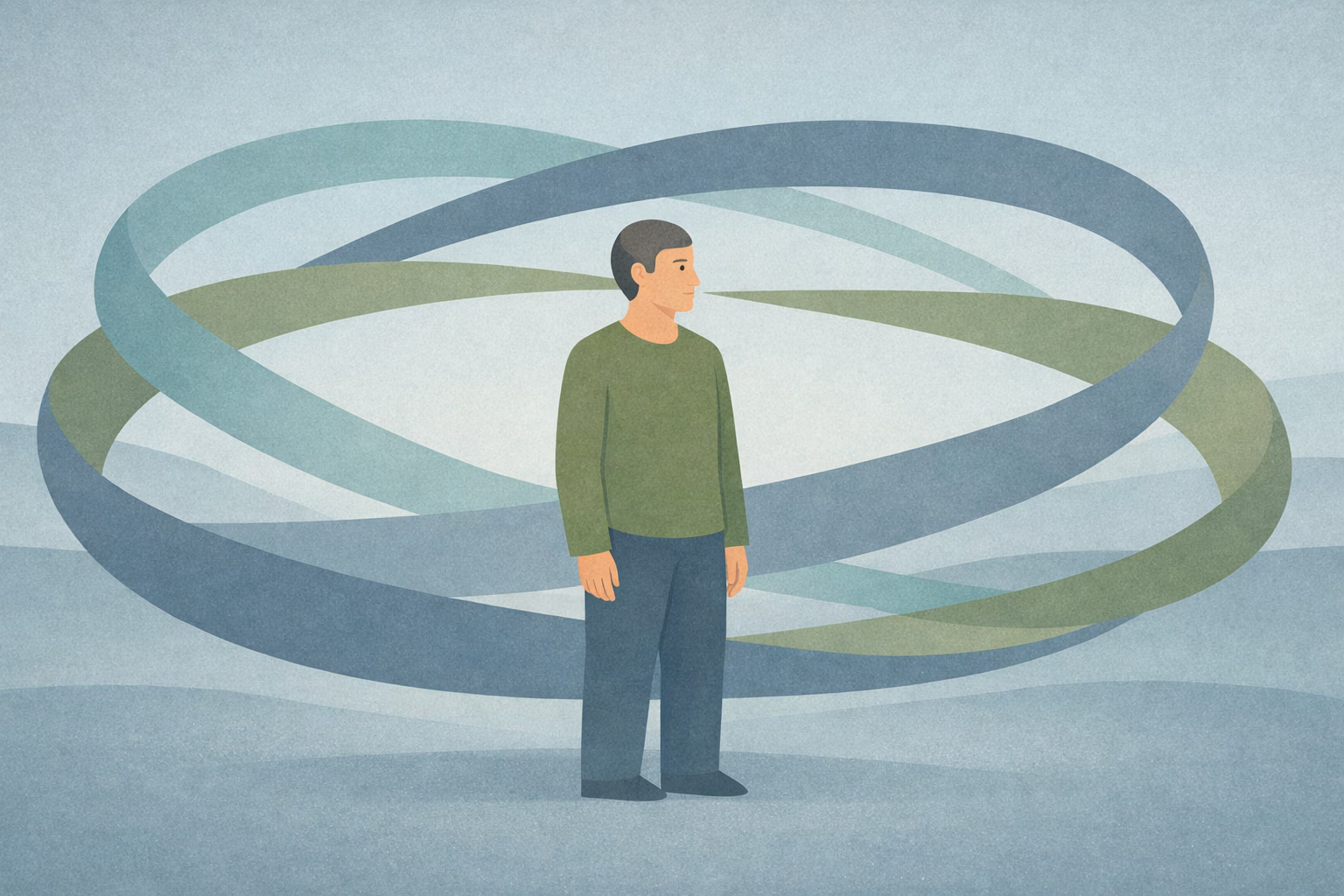
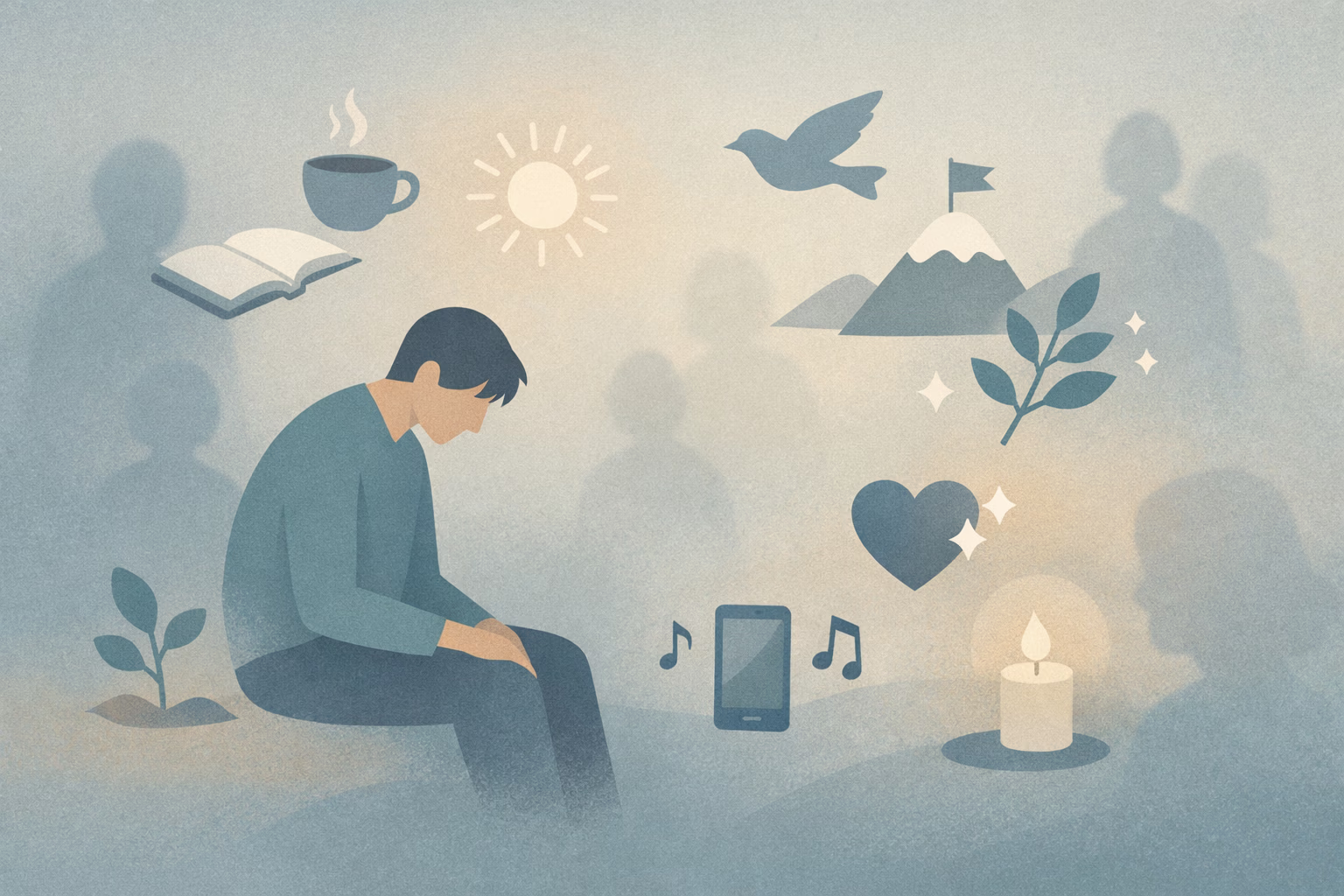
Understanding explains what is happening. Art allows you to feel it—without fixing, judging, or naming. Pause here. Let the images work quietly. Sometimes meaning settles before words do.
One Quiet Window, one insight, one reflection — every Sunday