
Digital Detox Resistance: Why Your Brain Fights Abstaining

In short: Fewer distractions, more focus, more calm. And sometimes they do create a brief feeling of relief—like someone finally put a railing on a slippery staircase.
Digital detox apps often arrive with a promise that sounds deeply reasonable: fewer distractions, more focus, more calm. And sometimes they do create a brief feeling of relief—like someone finally put a railing on a slippery staircase.
But many people notice an odd twist: the very tool meant to reduce screen engagement becomes another interface to check, another set of signals to manage, another storyline about whether you’re “doing it right.” The result can feel like being tethered to the phone in a new way—quieter on the surface, busier underneath.
What if the real issue isn’t screen time alone, but the kind of attention loop your day keeps asking your body to run?
Installing a detox app can feel like stepping toward freedom—and also like putting a supervisor inside your pocket. Suddenly there are dashboards, timers, streaks, lock screens, exceptions, and the subtle tension of “Did I mess it up?”
That tension isn’t a character flaw. It’s what happens when a system already carrying digital load gets a new set of cues to process. Instead of reducing interfaces, the detox layer can become another micro-environment to orient to—one more place where attention lands, evaluates, and reorients.
Sometimes the phone isn’t the problem; it’s the constant need to check where you stand with the phone.
For many nervous systems, that ongoing evaluation keeps the loop open: not finished, not settled, not “done.”
Attention systems are built to treat signals as meaningful—especially signals that look like safety, progress, or threat. A reminder to “stay off your phone,” a weekly report, or a lockout countdown can become a highly salient cue: something to resolve, comply with, or negotiate.
This is part of why some detox apps can paradoxically increase preoccupation. Even if total minutes decrease, the mind may keep circling the topic. The phone becomes the site of regulation itself, so the body keeps checking for updates: How am I doing? What’s allowed? What changed? [Ref-2]
In other words, the app can turn “screen time” into a constant signal stream—keeping the brain’s orienting response on standby instead of allowing a genuine stand-down.
When life feels noisy, the executive system naturally reaches for structure: clear rules, visible metrics, and a sense of control. This is not about being “weak.” It’s a normal response to overload—like grabbing a handrail when the ground is moving.
Detox apps are good at offering that handrail. They package control as a clickable object: set limits, see graphs, earn badges, adjust settings. They also offer novelty—new screens, new challenges, new features—because novelty is a built-in attention magnet.
The nervous system often settles not through more cognitive supervision, but through reduced signal density and clearer completion points. When the regulation tool itself stays stimulating, the system can remain partially activated, even when intentions are calm.
Many people feel immediate relief after turning on blockers or timers. Something important happens: the environment becomes more predictable. Predictability is a safety cue, and safety cues reduce internal negotiation.
There’s also a sense of “I’m doing something.” That matters because overwhelm often includes a missing “done” signal—nothing ever fully completes, so the system keeps scanning. A detox app can create a crisp boundary that mimics completion: time’s up, access blocked, session ended. [Ref-4]
That initial settling can be real. The complication is that the closure is sometimes outsourced to the app, not integrated into a broader identity-level orientation about what technology is for in your life.
Some detox setups reduce time inside certain apps but increase total signaling: alerts about limits, warnings about violations, summaries about usage, prompts to reflect, nudges to return to plan. The day can become punctuated by micro-interruptions that keep attention fragmented.
Fragmentation isn’t only about “too much content.” It’s also about frequent state shifts—tiny moments of startle, evaluation, or rerouting. These mini surges can resemble a low-grade fight-or-flight pattern even when you’re not consciously stressed. [Ref-5]
So the surface metric (minutes) can improve while the deeper experience (coherence) stays strained. A calmer relationship with tech typically requires fewer internal switches, not just different ones.
An Avoidance Loop doesn’t need dramatic emotion to run. Structurally, it’s what happens when something uncomfortable or unfinished remains unclosed, and the system finds a substitute target that provides immediate relief or control.
In digital life, the unfinished thing is often not a single feeling—it’s a buildup of incomplete micro-experiences: half-read messages, open tabs, social comparison, ambient urgency, and constant availability. The body carries these as ongoing load.
A detox app can become the substitute target: instead of the feed, you check the streak; instead of the comments, you check the timer. Relief arrives, but the deeper closure—“My attention is mine, and my day makes sense”—doesn’t always land. Continuous notification ecosystems are known to elevate stress load and disrupt attention even when intentions are good. [Ref-6]
None of the patterns below mean you’re addicted to the detox app. They usually mean the nervous system is still looking for a stable “done” signal, and the app has become the easiest place to look for it.
Many detox apps include blocking, tracking, Pomodoro-style cycles, and alerts—features that can unintentionally create another attention object to manage. [Ref-7]
Detox tools can quietly teach the nervous system that calm depends on external enforcement. If the app is off, the system anticipates loss of control; if the app is on, the system monitors compliance. Either way, attention keeps orbiting the phone.
Over time, this can reinforce a particular identity story: “I can’t be trusted without a tool watching.” That story increases pressure. Pressure increases monitoring. Monitoring increases fragmentation. And fragmentation makes the phone feel even more necessary as a regulation object.
Many popular detox apps feature progress charts, focus modes, and gamified tracking. Those elements aren’t inherently harmful; they can just keep the mind in measurement mode—an active state that doesn’t always allow closure to settle. [Ref-8]
Digital platforms are skilled at using variable reinforcement: unpredictable rewards, quick feedback, and social visibility. Detox apps sometimes borrow these same mechanics—streaks, badges, leaderboards, shareable progress—because they “work” for engagement.
But what works for engagement isn’t always what works for restoration. When your limits become a game, your attention can stay looped around outcomes: maintaining a streak, avoiding a drop in stats, proving improvement. The system remains oriented toward the phone as the scoreboard.
Many detox app roundups highlight features like reports, nudges, and gamification while also noting that tools can’t fully resolve the underlying pull. [Ref-9]
It can help to distinguish two experiences that look similar from the outside. One is restriction: access is reduced, but the mind stays keyed up, negotiating and monitoring. The other is closure: the day has clearer endpoints, and attention can stand down because it trusts what’s next.
Detox apps are generally built for restriction. Closure tends to arrive through self-authored boundaries and offline reinforcement—when “not checking” is no longer a battle but a coherent part of who you are and how your day is organized. That’s less about insight and more about completion: a settled sense that the loop has ended.
Some digital detox resources acknowledge this gap: apps can support limits, but the deeper shift is about how rules and rituals are held in life, not on a screen. [Ref-10]
When you imagine a truly rested relationship with your phone, does it feel like enforcement—or like clarity?
Attention is not regulated in isolation. Much of our checking behavior is a response to social uncertainty: Will someone need me? Am I missing something important? Did I respond fast enough? These are not “fears” to defeat; they are unresolved social loops that keep the system scanning.
When peers, family, or cohabitants share expectations—when norms are explicit rather than implied—the nervous system gets fewer ambiguous signals. That reduces the need for constant monitoring. In that context, an app becomes a small aid rather than the main container for safety and closure.
Many detox app lists emphasize blocking and nudging, but real-world boundaries often stabilize most when the social environment supports them—through clarity, predictability, and mutual respect. [Ref-11]
Many people expect a detox to feel like dramatic calm. More often, restoration shows up as something subtler: fewer internal pivots, less vigilance, and more ability for attention to return to one thing without being yanked back by a metric or a notification.
That return is not just psychological—it’s physiological. When information streams and monitoring demands decrease, cognitive control and sleep-related settling can improve, and the mind can feel less “on call.” Research on information overload in health apps suggests that excessive monitoring and data can heighten vigilance and fatigue, which is a useful parallel for detox tracking as well. [Ref-12]
In other words, the nervous system may not need a better score. It may need fewer cues insisting that something remains unfinished.
A coherent digital life tends to organize around purpose: communication that completes, information that serves a lived value, entertainment that lands and ends. When purpose is clear, the phone becomes a tool again—not a place where identity and safety are continuously negotiated.
Many modern apps intensify monitoring culture—especially in health and self-tracking—where “more data” can mean more vigilance rather than more stability. Some researchers have raised concerns that excessive monitoring can contribute to fatigue and anxiety-like strain. [Ref-13]
Meaning-driven engagement isn’t about perfection. It’s about your attention having a home base: an internal sense of what matters, what is complete, and what can wait without cost.
It makes sense to want a tool when the environment is designed to capture attention. Tools can reduce friction. The question is whether they reduce overall signaling—or add a new layer of it.
Frequent notifications are associated with reduced cognitive control and lower well-being, suggesting that fewer interruptions—not just different ones—may be a key ingredient in feeling more steady. [Ref-14]
When detox becomes less about managing a scoreboard and more about restoring completion—finishing loops, clarifying expectations, and letting the nervous system stand down—agency often returns as a felt reality, not a motivational project.
If a detox app helps create breathing room, that can be a legitimate form of support. If it becomes another object of checking, that’s not hypocrisy—it’s your system doing what systems do under load: seeking cues of control and completion.
Lasting freedom with technology usually isn’t delivered by a stricter gatekeeper. It’s what emerges when attention aligns with purpose and the day contains real endpoints—moments that register as finished. Community conversations about digital minimalism often echo this: tools can assist, but they don’t replace the deeper shift in orientation. [Ref-15]
In a world built to keep you activated, even a small increase in coherence is a meaningful kind of rest.
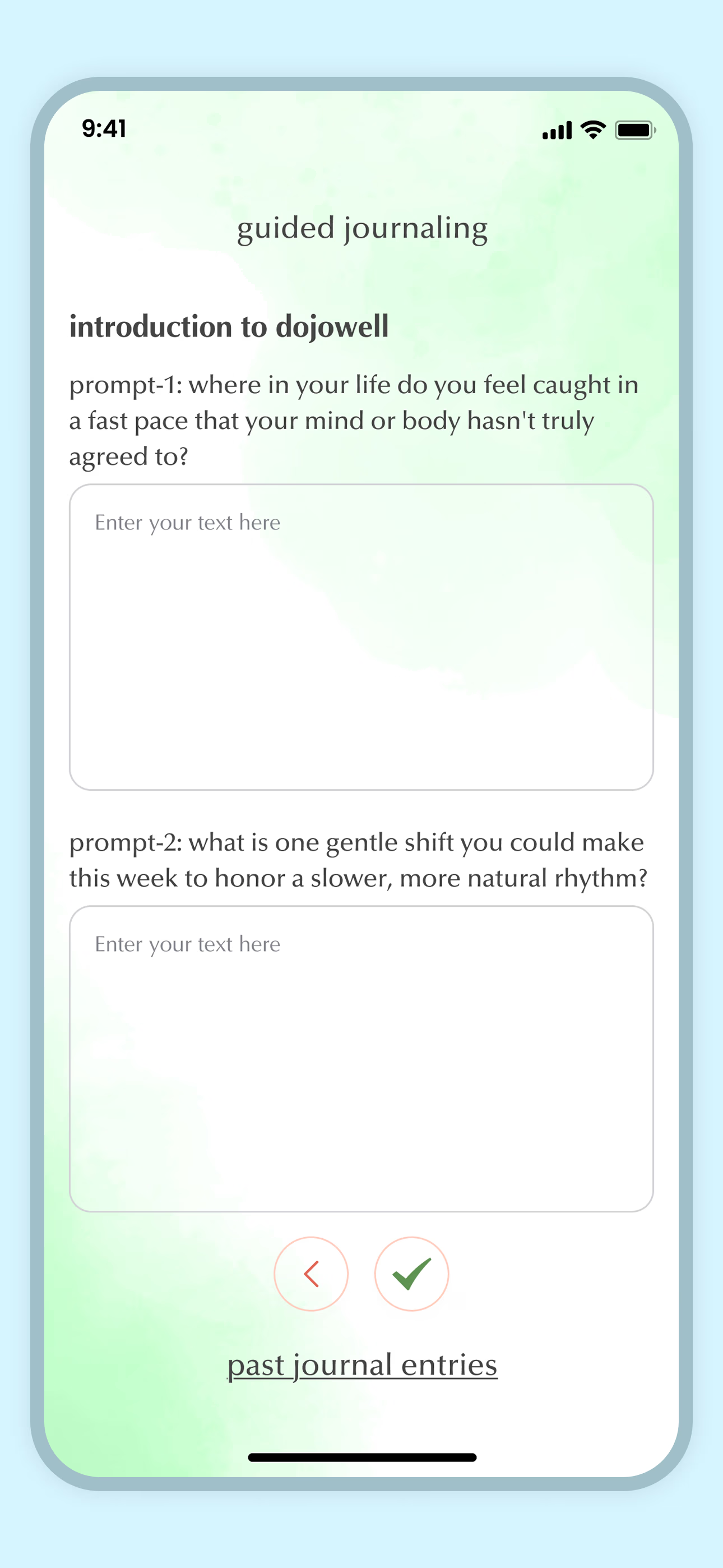
From theory to practice — meaning forms when insight meets action.
Because it adds another layer of signals to track. The article describes the irony directly: dashboards, timers, streaks, lockouts, and exceptions become micro-environments your attention has to orient to. Even if total minutes decrease, the mind keeps circling the topic — How am I doing? What's allowed? Did I mess it up? The phone becomes the site of regulation itself, so the body keeps checking for updates. The orienting response stays on standby instead of standing down. Sometimes the phone isn't the problem; it's the constant need to check where you stand with the phone.
Because the initial relief comes from outsourced closure, not internal closure. The article distinguishes the two. When timers or blockers create crisp boundaries, the environment becomes more predictable, which is a real safety cue. There's also the satisfying sense of 'I'm doing something' — a Done Signal that overwhelm normally lacks. But the closure lives in the app, not in your identity-level orientation about what technology is for. When the app is off, the system anticipates loss of control; when it's on, the system monitors compliance. Either way, attention keeps orbiting the phone.
They can be, because they borrow the same mechanics that make platforms sticky. The article calls this out: variable reinforcement, quick feedback, and social visibility work for engagement, but engagement isn't the same as restoration. When your limits become a game, attention stays looped around outcomes — maintaining the streak, avoiding a stat drop, proving improvement. The system remains oriented toward the phone as scoreboard. The mind stays in measurement mode, which is an active state that doesn't always allow closure to settle. Tools that gamify discipline can keep the same engagement loop running with a different paint job.
Fewer open loops, not more discipline. The article lands here: lasting freedom usually isn't delivered by a stricter gatekeeper but emerges when attention aligns with purpose and the day contains real endpoints. Shared agreements help — when family, peers, or cohabitants make norms explicit, the nervous system gets fewer ambiguous social signals and stops scanning. Communication that completes, information serving a lived value, entertainment that lands and ends. In that state, the phone becomes a tool again rather than a place where identity and safety are continuously negotiated. An app can assist; it can't replace the orientation shift.
From Science to Art.
Understanding explains what is happening. Art allows you to feel it—without fixing, judging, or naming. Pause here. Let the images work quietly. Sometimes meaning settles before words do.
One Quiet Window, one insight, one reflection — every Sunday