Gig Economy Burnout: Freedom With No Safety
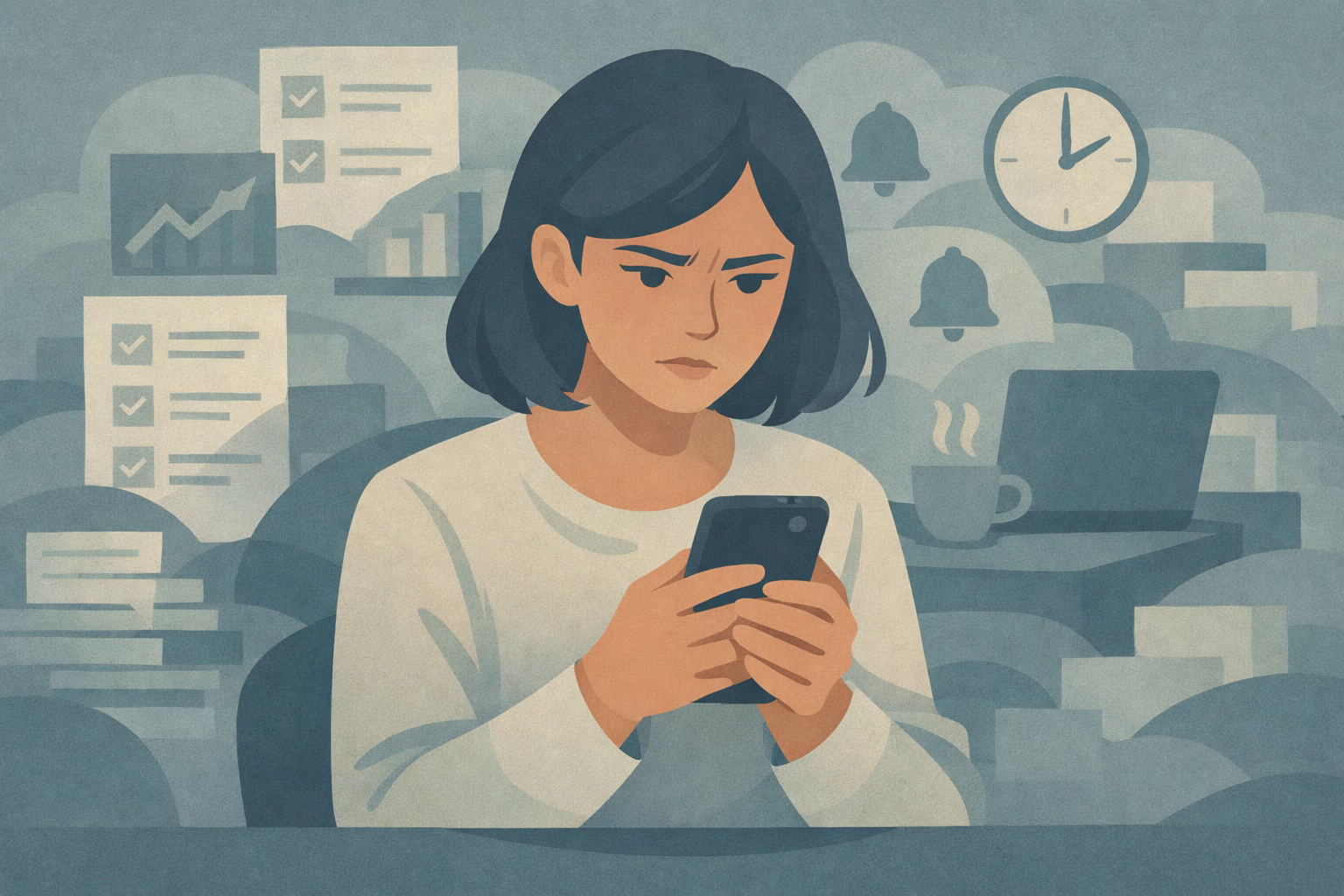
In short: You choose the work, the hours, the location, the direction. And sometimes it really does feel that way—at first. But many entrepreneurs eventually notice a quieter reality: the mind is rarely fully off.
Digital entrepreneurship is often sold as autonomy: you choose the work, the hours, the location, the direction. And sometimes it really does feel that way—at first.
But many entrepreneurs eventually notice a quieter reality: the mind is rarely fully off. Even during “breaks,” there’s a background scan for problems, opportunities, metrics, messages, and the next decision. That’s not a character flaw. It’s what can happen when self-direction becomes continuous cognitive engagement without reliable closure.
What if burnout here isn’t about weakness—what if it’s what happens when freedom arrives without edges?
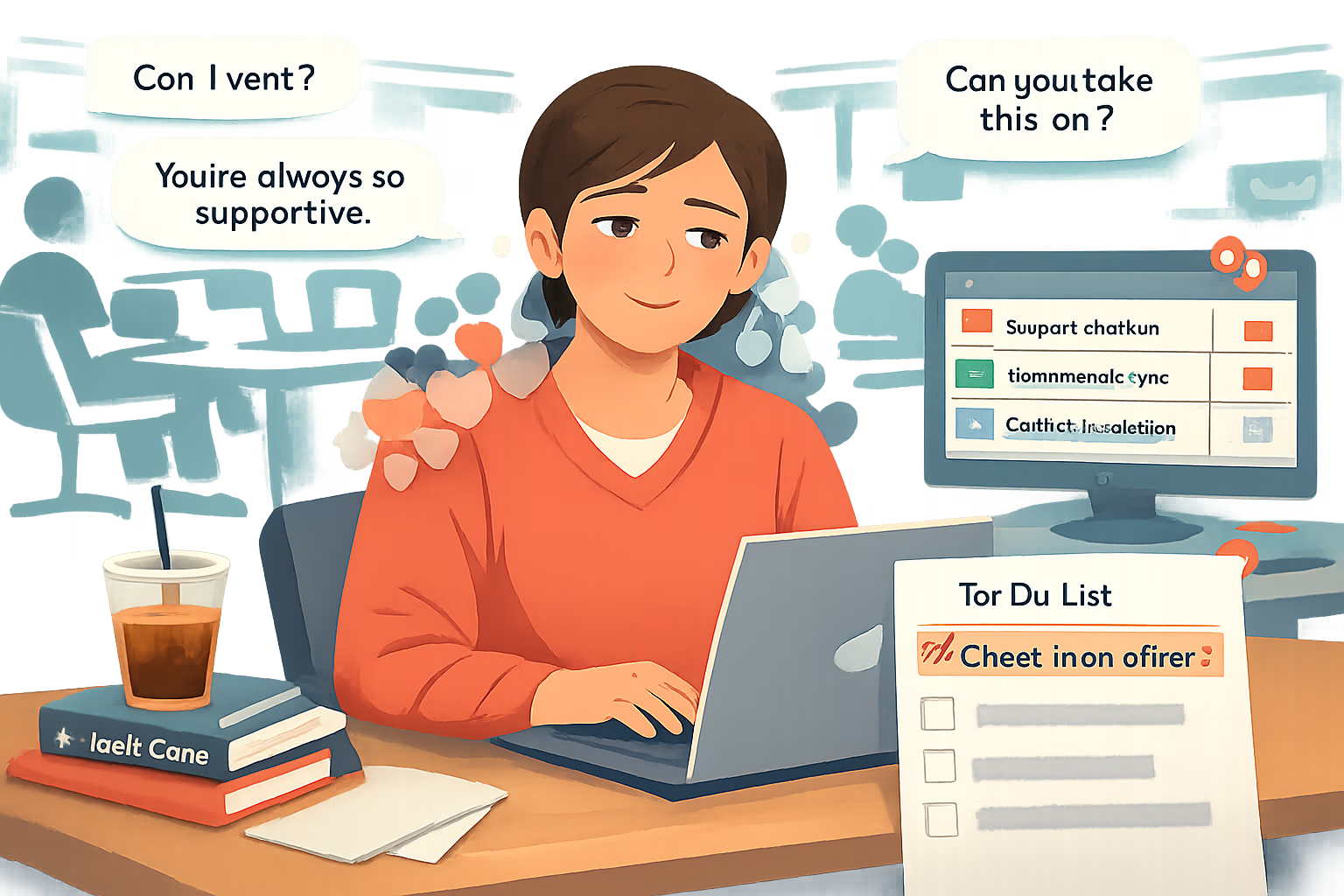
Entrepreneurship promises relief from external bosses, but it can replace them with something more immersive: internal, portable responsibility. When you are the planner, executor, marketer, customer support, product manager, and future forecaster, the system that used to end your day (a commute, a closed office, a manager saying “good work”) often disappears.
Without external endpoints, the nervous system can treat work as a living environment rather than a bounded task. The result isn’t always obvious stress; it can be a constant low-level “on” state—mentally occupied at dinner, scanning while resting, narrating what you should be doing while you’re technically not doing it. That paradox—freedom that doesn’t feel like rest—is a common entry point to burnout in self-directed work. [Ref-1]
Autonomy is regulating when it comes with structure: clear constraints, predictable expectations, and visible finish lines. Autonomy becomes destabilizing when everything is optional but nothing feels complete.
In digital entrepreneurship, the brain is frequently asked to hold open loops: unfinished outreach, unclear pricing, platform shifts, algorithm uncertainty, customer moods, cash-flow timing, and identity questions (“Is this working?” “Am I the kind of person who can do this?”). When there’s no stable container around those loops, the nervous system may stay partially mobilized—because the environment keeps signaling “not yet.”
This is one reason entrepreneurs can experience a kind of identity over-adhesion to the work: when the business is the primary source of direction and validation, the system treats business outcomes as personal outcomes, which raises the stakes of everything. [Ref-2]
Most human bodies are built around pulses: effort followed by recovery, attention followed by release, problem-solving followed by social settling. In older environments, “work” had built-in endpoints—nightfall, weather, season, or shared community routines that made stopping feel safe.
Digital work removes many of those natural brakes. The work is weightless, accessible, and never “closed” by the environment. That mismatch matters: when output is self-managed and unbounded, the nervous system can interpret the day as a single long demand signal rather than a series of completed cycles.
Entrepreneur mental strain is often discussed as an individual challenge, but it is also a systems challenge: the workload is not only tasks—it’s continuous self-regulation under uncertainty. [Ref-3]
Early-stage entrepreneurship often delivers powerful stabilizers: novelty, agency, rapid learning, visible impact, and a sense of ownership. There’s excitement in watching an idea become real. There can also be relief—no longer having to compress yourself to fit someone else’s structure.
That early lift isn’t imaginary. It’s a real state shift: high meaning, high engagement, high stimulation. The nervous system can run on the energizing signal of possibility for a while, especially when the identity story is coherent: “I’m building something that matters.” [Ref-4]
But state shifts are not the same as integration. Excitement can carry a system through a season without giving it the physiological “completion” it needs to stand down.
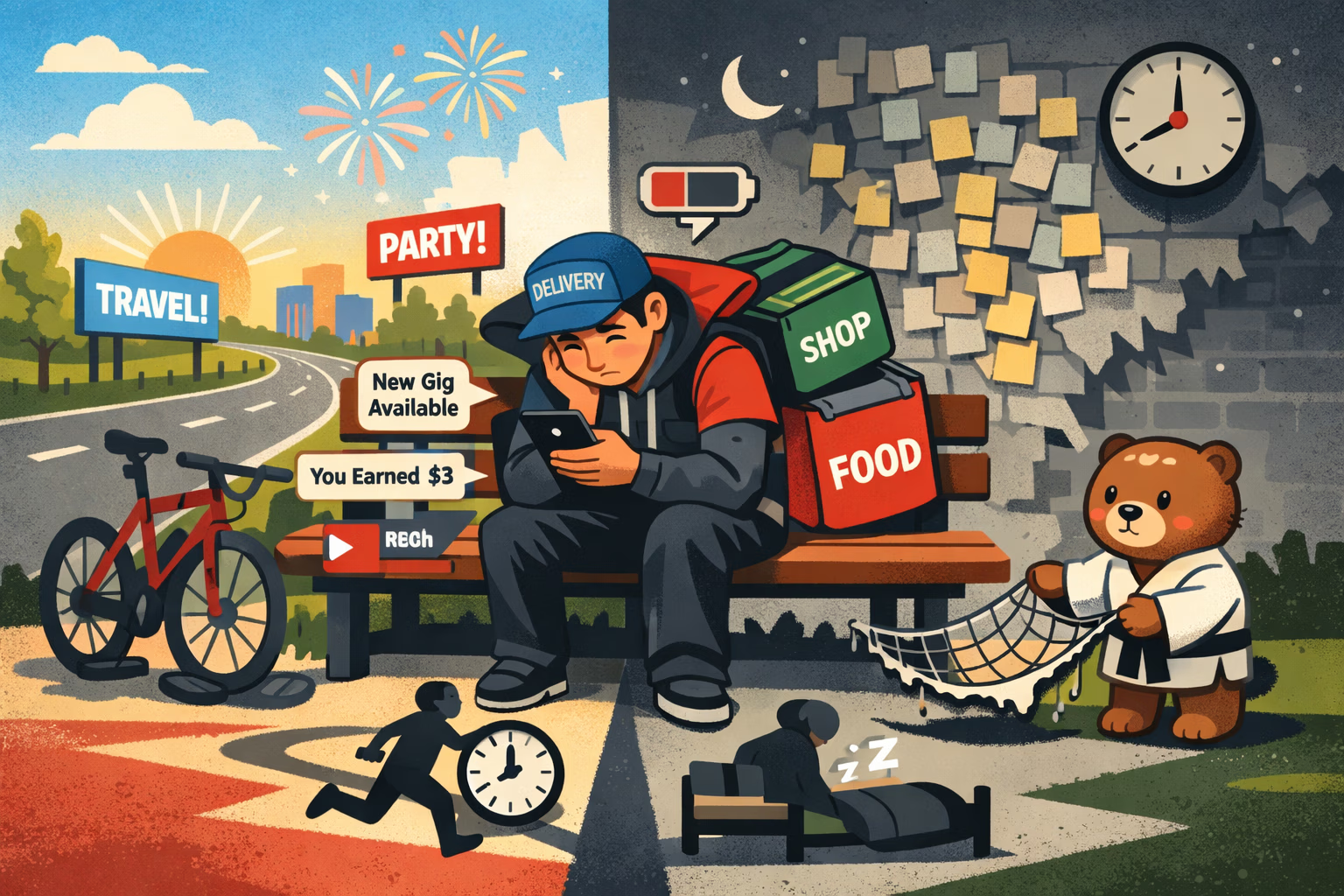
Flexibility sounds like: work whenever you want. In practice, many entrepreneurs end up working whenever they can. Because the business is always near (in your pocket, on your laptop, in your notifications), the boundary is no longer time or place—it becomes a moment-to-moment negotiation.
And negotiations cost energy. When every evening contains a choice (“Should I answer this?” “Should I post today?” “Should I fix the landing page?”), rest can start to feel like a decision you have to defend. Over time, the body learns that there is no protected “off,” only “not working yet.”
Entrepreneur burnout is increasingly recognized as a legitimate occupational risk—not merely a personal management issue—because the structure of the role can erase recovery by design. [Ref-5]
It can help to think of burnout here as a loop problem, not a personality problem. Digital entrepreneurship offers endless micro-engagements: checking analytics, refreshing inboxes, scanning competitors, tweaking copy, watching strategy content, “just one more” improvement. These behaviors can reduce uncertainty in the moment—even if they don’t meaningfully complete anything.
When a system is under load, it often prefers actions that provide quick state relief. Constant engagement is one of those actions. It creates a sense of movement, and it temporarily mutes the discomfort of incompleteness. But because the engagement rarely produces true closure, it keeps the system activated and looking for the next relief.
In workplaces built on continuous connection, this pattern is common: the loop is maintained by accessibility, speed, and the lack of a natural stopping signal. [Ref-6]
Digital entrepreneurship burnout often shows up less like dramatic collapse and more like a gradual narrowing of capacity. Not because you “can’t handle it,” but because the system has been running without enough complete cycles.
“I’m not working, but I’m still at work.”
These patterns are often adaptive: the mind stays engaged because there’s no external boundary strong enough to let it stand down. [Ref-7]
When activation becomes chronic, the brain can shift toward short-horizon thinking. Not because you’ve become shallow, but because the system is prioritizing immediate stability: reduce uncertainty, resolve the next problem, prevent the next drop.
Over time, this can degrade the very qualities entrepreneurship depends on: flexible thinking, discernment, social warmth, and the capacity to tolerate “not knowing” while building. Decision quality can become reactive. Creativity can become compulsive (always generating) or inert (hard to start). The body may also show the cost through sleep disturbance, tension, digestive disruption, or persistent fatigue—signals that load has exceeded recovery. [Ref-8]
When the system is overloaded, it doesn’t only feel tired—it loses its ability to register completion.
One of the most painful parts of burnout is that it can sabotage the exact boundaries that would have protected you earlier. When energy is lower, saying “not now” takes more effort. Choosing a stopping point takes more cognition. Separating urgent from important takes more clarity than the system can spare.
So work creeps: a “quick check” becomes a session, a weekend becomes “catch-up,” a late-night idea becomes a spiral. Not because you lack discipline, but because the nervous system defaults to the path of least resistance—especially in environments designed for constant re-entry.
Continuous connection doesn’t just increase workload; it lowers the friction to return to work, making closure harder to reach and exhaustion easier to deepen. [Ref-9]
There’s a quiet reframe that can reduce shame: the core problem is rarely “working too much.” It’s often “recovering too little,” because the role contains no guaranteed recovery windows. Autonomy, by itself, is not a resting place. It’s a steering wheel.
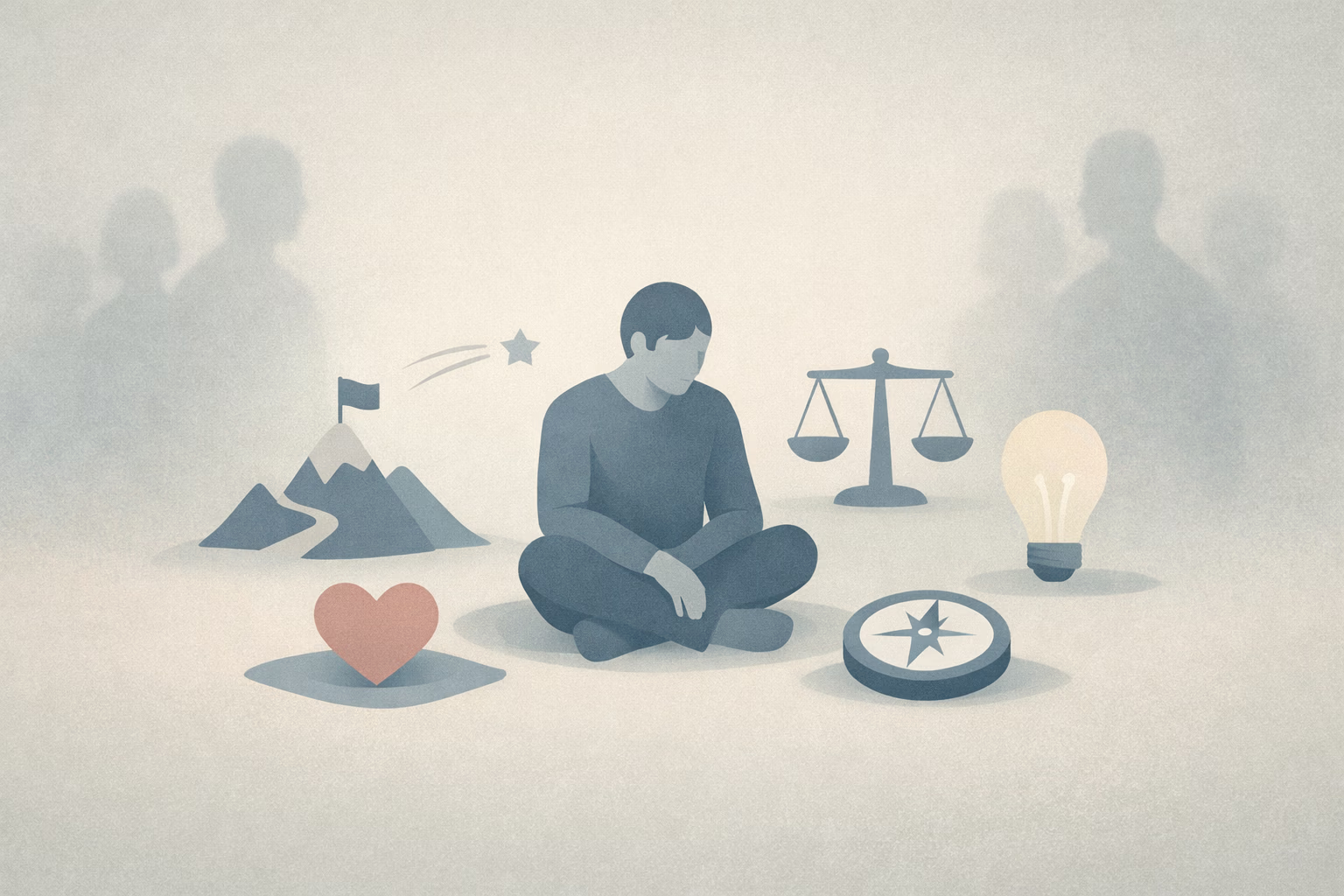
Many entrepreneurs also experience a tight bond between identity and business: the work isn’t just what you do; it can start to feel like who you are. When that fusion intensifies, the system treats every business fluctuation as a whole-self event, which keeps activation high and makes rest feel like risk. [Ref-10]
Rhythm is what makes autonomy livable: predictable transitions, real endpoints, and enough repetition that the body begins to trust “off” again—not as a moral choice, but as a reliable pattern in the environment.
Self-management is heavy because it asks one nervous system to be both the engine and the brakes. In many domains, humans regulate better with shared structures: mutual expectations, explicit boundaries, and community norms that make stopping feel permitted and real.
In entrepreneurship, this can look like accountability that isn’t about pushing harder, but about protecting coherence: clear shared language about availability, downtime that isn’t treated as a loophole, and social agreements that reduce the need for constant self-justification. When expectations become explicit, the body receives clearer safety cues—because the social environment confirms that “off” is legitimate.
This is one reason peer structures and explicit downtime agreements are often cited as supportive for entrepreneur wellbeing. [Ref-11]
When load decreases and closure becomes more available, the shift is often subtle before it’s dramatic. It can feel like more signal return: your attention comes back when you ask for it, decisions stop feeling like emergencies, and creativity returns as something you can meet rather than chase.
Importantly, this isn’t just “feeling better.” It’s the nervous system regaining the ability to complete cycles: effort resolves into done-ness, and done-ness is recognizable in the body. Many entrepreneurs describe steadier energy, less reactive checking, and a more sustainable kind of engagement—work that feels connected to life rather than competing with it. [Ref-12]
“I can care about my business without being inside it all day.”
Entrepreneurship becomes more sustainable when it sits inside a larger identity rather than replacing it. The business can matter deeply, but it functions best as one expression of values—not the sole container for worth, belonging, or future safety.
When capacity is regulated, you can relate to the business with more range: engagement without compulsion, ambition without constant activation, responsiveness without hypervigilance. Research on entrepreneurs suggests burnout and engagement can coexist in complex ways—especially when passion and self-investment are high—making structural protection of recovery essential. [Ref-13]
This is where meaning density grows: the work aligns with values, completes into lived identity, and leaves room for the rest of life to remain real.
It helps to name what’s happening plainly: digital entrepreneurship can be a high-demand ecosystem with weak closure cues. Burnout in this context is not a verdict on your grit. It’s a predictable response when one person must continuously generate direction, boundaries, and reassurance inside an always-accessible workplace.
Seen this way, entrepreneurship becomes a craft that must honor biology. Protection from burnout isn’t a luxury or a reward—it’s part of designing a workable human environment, especially for roles that blur life and labor. [Ref-14]
Agency returns when the story shifts from “What’s wrong with me?” to “What conditions would let my system finish cycles and stand down?” That question doesn’t demand hustle. It invites coherence.
The hidden cost of “be your own boss” is that you can become your own unending workplace. The hidden benefit, when things are designed to fit human rhythms, is that autonomy can become genuinely protective: a way of working that supports health, relationships, and long-range meaning.
Freedom isn’t constant choice. It’s the presence of reliable boundaries that let the nervous system register completion—so effort can resolve, and life can feel whole again. Entrepreneur burnout research increasingly points toward this same conclusion: sustainable entrepreneurship depends on recovery being real, not merely intended. [Ref-15]
From theory to practice — meaning forms when insight meets action.
Because the structures that used to end your day — a commute, a closed office, a manager saying good work — are gone, and nothing has replaced them. When you are planner, executor, marketer, support, and forecaster, the system that used to provide closure disappears. The nervous system stops reading work as a bounded task and starts reading it as a living environment, which keeps it in a constant low-grade 'on' state. The exhaustion isn't usually from working too much; it's from recovering too little, because the role contains no guaranteed recovery windows and no reliable Done Signal.
The article draws this distinction carefully. Autonomy is regulating when it comes with structure — clear constraints, predictable expectations, visible finish lines. Autonomy becomes destabilizing when everything is optional but nothing feels complete. Digital entrepreneurs hold endless open loops: pricing, platform shifts, customer moods, cash flow, identity questions like 'is this working?' Without a stable container, the nervous system stays partially mobilized because the environment keeps signaling 'not yet.' Freedom isn't constant choice. It's the presence of reliable boundaries that let the body register completion. Without rhythms, autonomy is a steering wheel, not a resting place.
Because the business is always near — in your pocket, on your laptop, in your notifications — so the boundary stops being time or place and becomes a moment-to-moment negotiation. Every evening contains a choice about answering, posting, fixing the landing page, and negotiations cost energy. Over time the body learns there's no protected 'off,' only 'not working yet.' Identity fusion deepens this: when business outcomes feel like personal outcomes, every fluctuation becomes a whole-self event, which keeps activation high and makes rest feel like risk. The work isn't only what you do; it has started to feel like who you are.
Less like endurance, more like ecology. The article reframes burnout here as a systems problem, not a grit problem: a high-demand role with weak closure cues asking one nervous system to be both engine and brakes. Sustainability shows up as signal return — attention comes back when called, decisions stop registering as emergencies, creativity returns as something you can meet rather than chase. Steadier energy, less reactive checking, work that connects to life rather than competing with it. Entrepreneurship becomes more durable when it sits inside a larger identity instead of replacing it, with rhythms predictable enough that the body believes 'off' again.
From Science to Art.
Understanding explains what is happening. Art allows you to feel it—without fixing, judging, or naming. Pause here. Let the images work quietly. Sometimes meaning settles before words do.
One Quiet Window, one insight, one reflection — every Sunday