
Novelty-Seeking as an Escape From Mortality
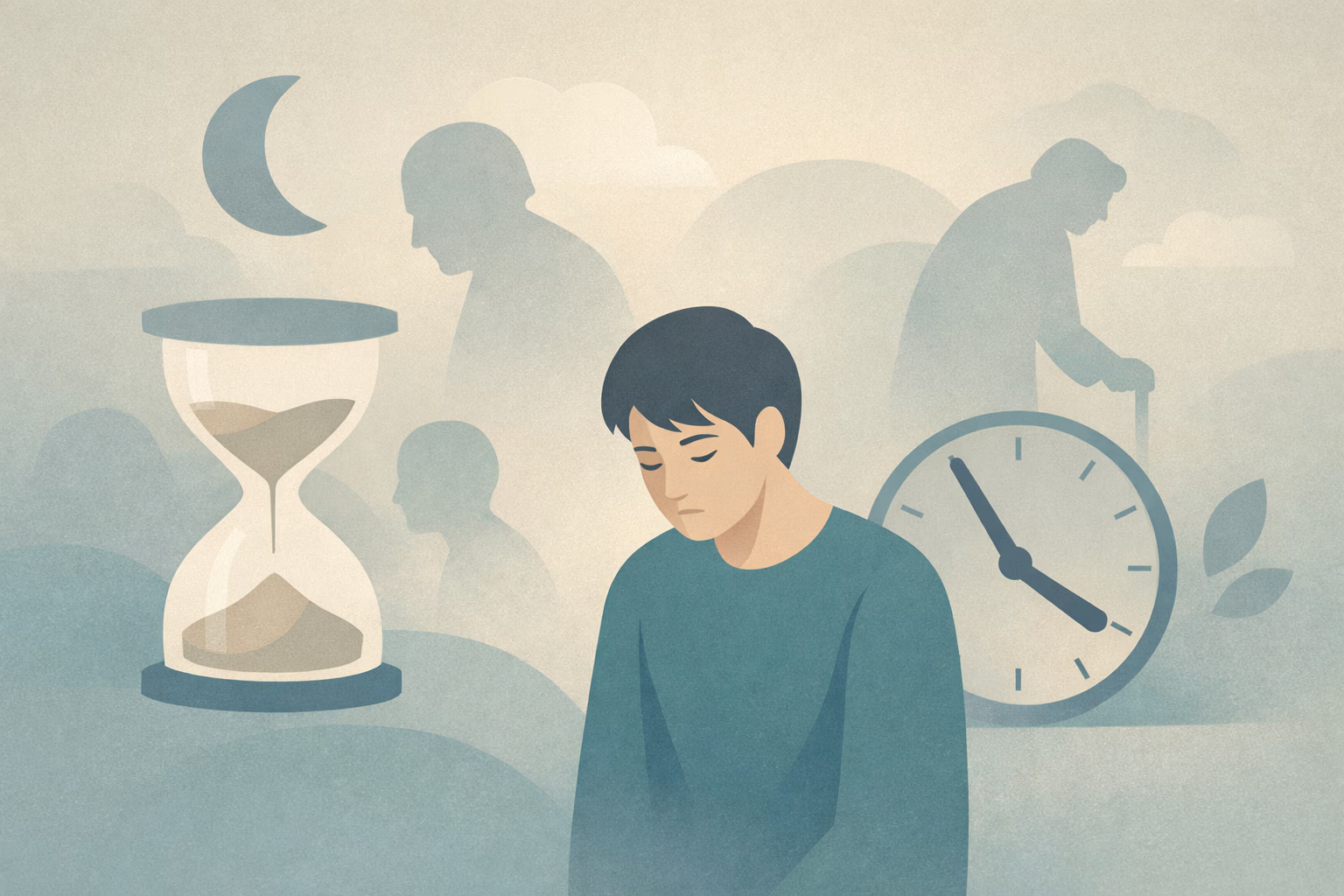
In short: Fear of aging is often described as vanity or denial. But for many people, it’s closer to a biological alarm: a sense that time passing could cost you relevance, belonging, or legitimacy.
Fear of aging is often described as vanity or denial. But for many people, it’s closer to a biological alarm: a sense that time passing could cost you relevance, belonging, or legitimacy. Under that kind of pressure, avoidance isn’t “irrational.” It’s a stabilizing maneuver—your system trying to reduce load and protect a self-concept that feels increasingly evaluated.
What if your avoidance isn’t fear-based weakness—but a built-in response to incomplete closure and constant comparison?
In a world that keeps score in visibility, speed, and novelty, aging can register as a threat to social position. The result is not just worry—it’s a whole pattern: distraction from reminders, overcontrol of appearance, reluctance to plan, and a strange urgency to stay “ahead.” This is less about motivation and more about regulation, meaning, and whether life is allowed to feel finished in the right places.
Fear of aging often arrives as a pattern of attention: scanning for signs of decline, noticing what younger people have, tracking what feels “too late,” and interpreting normal change as a warning. It can be quiet (a background preoccupation) or sharp (a spike after a birthday, photo, health symptom, or social event).
From a nervous system perspective, this is what happens when a topic becomes loaded: the brain prioritizes it, returns to it, and keeps it close for monitoring. The person may still function well—sometimes exceptionally well—but the internal bandwidth cost is high. Many people describe it as “being on watch.” [Ref-1]
Aging is not only physical change; it is also information. It reminds the mind that time is finite, that roles shift, and that social categories can change. When that information arrives without a matching sense of closure—without a felt sense that “my life is coherent, my place is real, my contribution is recognized”—the nervous system treats the reminder as destabilizing.
This is one reason age-related cues can trigger anxiety or avoidance even in people who “know better.” The issue isn’t insight; it’s whether the body has a settled story about what you are, what you stand for, and how you remain connected as conditions change. When the story is incomplete, reminders of finitude increase internal demand. [Ref-2]
Sometimes the distress isn’t about getting older. It’s about not feeling anchored while you do.
Humans are built for belonging, influence, and protection inside a group. Across history, losing status could mean losing access—resources, mates, safety, voice. So the brain’s threat systems evolved to track signals of rank, value, and replaceability.
In modern life, “status” can look like being current, employable, attractive, admired, or needed. Aging can be interpreted—sometimes subtly, sometimes loudly—as a potential drop in those social protections. When that interpretation lands, control efforts intensify: trying to manage appearance, performance, productivity, or identity presentation. This isn’t superficial. It’s the nervous system attempting to reduce uncertainty and keep social standing stable. [Ref-3]
Avoidance gets misunderstood as a purely psychological choice. Structurally, it’s often a rapid downshift in nervous system load: if a cue threatens identity or status, moving away from it can immediately reduce activation. That relief is not imaginary—it’s the body registering fewer danger signals in the moment.
But relief is not the same as completion. Avoidance can mute consequence and delay contact with age-related reality, which prevents the “done” signal that comes from finishing a loop. Without completion, the topic stays open in the background, and the system keeps returning to it for monitoring.
Research on aging dread points to social identity and cultural standards as key amplifiers—especially when appearance, relevance, and worth feel publicly judged. [Ref-4]
Ignoring aging can feel like safety because it reduces immediate discomfort. It can also preserve a familiar identity: “the capable one,” “the attractive one,” “the rising one,” “the person with time.” That identity may have been built through real effort and real achievement, so it makes sense the system protects it.
At the same time, avoidance quietly narrows life-access. When certain conversations, plans, medical check-ins, photos, reunions, or new roles become “too charged,” opportunities for growth and connection can be missed—not from lack of desire, but because the nervous system doesn’t get the closure it needs to stand down. Over time, the cost isn’t just anxiety; it’s a shrinking map of what feels safe to participate in. [Ref-5]
What gets postponed when “not thinking about it” becomes the main strategy?
In the Meaning Density view, a “power loop” forms when control becomes the main way to regulate uncertainty. With aging fear, the loop often looks like this: a cue appears (birthday, wrinkle, job shift), threat rises (status uncertainty), control/avoidance reduces arousal, and the relief teaches the system to repeat the pattern.
The unintended effect is that identity becomes more brittle. Because the person doesn’t get repeated experiences of meeting change and completing it, the brain doesn’t receive the evidence that “I can adapt and still be me.” Instead, the system learns: “Stability depends on staying ahead.” Surveys of aging fear suggest it’s common across adulthood, not only later life, and often ties to broader concerns about independence, social value, and security. [Ref-6]
Aging avoidance often disguises itself as responsible living or high standards. The behaviors can look socially rewarded, which makes the loop harder to recognize. The issue isn’t the behavior itself; it’s the function—whether it’s creating completion or keeping the system on permanent standby.
Cultural ageism intensifies these patterns by narrowing what “counts” as valuable at different ages, which increases identity strain and makes avoidance feel rational. [Ref-7]
When avoidance becomes chronic, the nervous system spends more time managing threat and less time integrating experience. That doesn’t necessarily look like collapse. It often looks like tightening: fewer risks, fewer new roles, more caution, more image-management, and less honest contact with what actually matters.
Over time, this can reduce well-being in a structural way. If someone expects devaluation with age—or repeatedly encounters ageist cues—the system may downshift participation, connection, and civic involvement, which can undermine mental health and life satisfaction. [Ref-8]
Stagnation isn’t always a lack of ambition. Sometimes it’s what happens when life can’t safely “complete” into the next chapter.
Avoidance teaches the brain what to prioritize. If every age-related cue triggers escape and relief, the brain learns: “This topic is dangerous; keep tracking it.” That can heighten sensitivity to decline signals—more scanning, more rumination, more checking behaviors—because the system expects more threat and tries to prevent it.
There’s also a social layer: when people anticipate devaluation, they may step back from participation. Reduced participation can then be interpreted internally as evidence of reduced relevance, reinforcing the status alarm. Research linking perceived ageism with participation and mental health highlights how social signals shape internal regulation over time. [Ref-9]
Many discussions of aging focus on mindset—acceptance, reframing, self-compassion. These can be supportive as language, but they aren’t the same as integration. Integration is what happens when the system has enough closure to stop bracing—when a person’s lived identity can include change without constant defense.
A more stabilizing bridge is meaning coherence: when worth is not forced to rely on a shrinking set of youth-coded signals, and when identity has room to be expressed through values, relationships, and contribution across stages of life. Newer cultural frameworks of aging emphasize multidimensional thriving—not a single standard of “staying young,” but continuing capacity, connection, and purpose in evolving forms. [Ref-10]
If worth didn’t need to be proven in one narrow way, what would still be true about you?
One of the most powerful counters to status insecurity is not self-assertion—it’s relational relevance. When people share experience, mentor, guide, create, or support others, they often receive a different kind of “place” in the social world. Not louder status, but sturdier belonging.
This matters physiologically. Being needed in a grounded, mutual way offers safety cues: continuity, recognition, and contribution that doesn’t depend on novelty. In developmental psychology, this is often described as generativity—an orientation toward building, guiding, and caring in ways that outlast a single moment. [Ref-11]
Relevance can be something you embody, not something you compete for.
When fear of aging loosens, it often doesn’t look like constant confidence. It looks like fewer internal alarms. Less scanning. Less urgency to manage impressions. More capacity to let signals arrive and pass without needing immediate control.
This shift is not merely “thinking differently.” It reflects changed learning in the nervous system: when new experiences of aging are met with completion—practical, relational, identity-level—the brain updates what it predicts and how much threat it assigns. Over time, resilience becomes more available because the system has evidence that adaptation is possible. Neuroplasticity research supports that patterns of reactivity and regulation can change with repeated experience and context, not just willpower. [Ref-12]
As coherence returns, energy that once went into monitoring and control becomes available for engagement. Not frantic reinvention, but a more settled participation in life: choosing relationships, projects, and roles that match values rather than managing status threat.
In this frame, aging isn’t a single loss; it’s a sequence of transitions that can become integrated into identity—if the environment allows enough closure, recognition, and real completion. With repeated experiences of adaptation, the nervous system updates its threat predictions, and the self becomes less dependent on narrow indicators of power. The brain’s capacity to change across adulthood is well-established, supporting the idea that identity can continue to reorganize in livable ways over time. [Ref-13]
Fear of aging is not proof of shallowness, failure, or immaturity. It’s often a signal that your system is tracking social risk in a culture that equates worth with visibility and youth. When the signal is met only with distraction or pressure, the loop stays open. When it’s met with conditions that allow completion—real roles, real belonging, real contribution—the system can finally stand down.
Many modern researchers and clinicians are moving toward a broader concept of aging: not a slide into irrelevance, but an ongoing process shaped by context, attitudes, and opportunities for participation. [Ref-14]
In that light, agency isn’t about forcing yourself to “be okay with it.” It’s about having a life that can keep making sense—where time passing doesn’t erase you, because your meaning is distributed across what you’ve built, shared, and lived.
A coherent identity can hold change without panic. It doesn’t require constant proof of youth, productivity, or desirability. It requires lived completion—enough moments where your contribution lands, your relationships are real, and your life feels like it adds up.
Aging, then, becomes less a threat and more a widening of role: from proving yourself to expressing yourself; from guarding status to creating impact. In generativity terms, the question shifts from “Am I still valued?” to “What am I here to pass on?” [Ref-15]
From theory to practice — meaning forms when insight meets action.
The article reframes it as closer to a biological alarm — a sense that time passing could cost you relevance, belonging, or legitimacy. Humans are built for status systems that historically tied access to resources, mates, and safety. Aging can register as a potential drop in social protections, especially in a culture that equates worth with visibility, novelty, and youth. Avoidance under that pressure isn't irrational; it's a stabilizing maneuver from the Threat & Safety System trying to protect a self-concept that feels increasingly evaluated. Naming it as nervous system regulation rather than vanity tends to restore more capacity than self-criticism does.
Because avoidance teaches the brain what to prioritize. Every age-related cue triggering escape and relief tells the system: this topic is dangerous; keep tracking it. That heightens sensitivity to decline signals — more scanning, more rumination, more checking. The article frames this as a Power Loop: cue appears, threat rises, control or avoidance reduces arousal, relief teaches the system to repeat the pattern. Identity becomes more brittle because the person doesn't get repeated experiences of meeting change and completing it. The brain never receives the evidence that 'I can adapt and still be me' — only that stability depends on staying ahead.
It offers a different kind of relevance — one based on contribution rather than competition. When people share experience, mentor, guide, create, or support others, they receive a sturdier kind of belonging. Not louder status, but place. This matters physiologically: being needed in a grounded mutual way provides safety cues — continuity, recognition, contribution that doesn't depend on novelty. Relevance becomes something you embody, not something you compete for. The question shifts from 'Am I still valued?' to 'What am I here to pass on?' That shift is a structural relief, because the meaning system stops being asked to defend a shrinking position.
Through closure rather than reframing. Many discussions focus on mindset shifts — acceptance, self-compassion — which can be supportive language but aren't the same as integration. Integration is what happens when the system has enough closure to stop bracing, when lived identity can include change without constant defense. As experiences of aging are met with completion (real roles, real belonging, real contribution), the brain updates what it predicts and how much threat it assigns. Worth stops needing to rely on a shrinking set of youth-coded signals because meaning is distributed across what you've built, shared, and lived.

From Science to Art.
Understanding explains what is happening. Art allows you to feel it—without fixing, judging, or naming. Pause here. Let the images work quietly. Sometimes meaning settles before words do.
One Quiet Window, one insight, one reflection — every Sunday