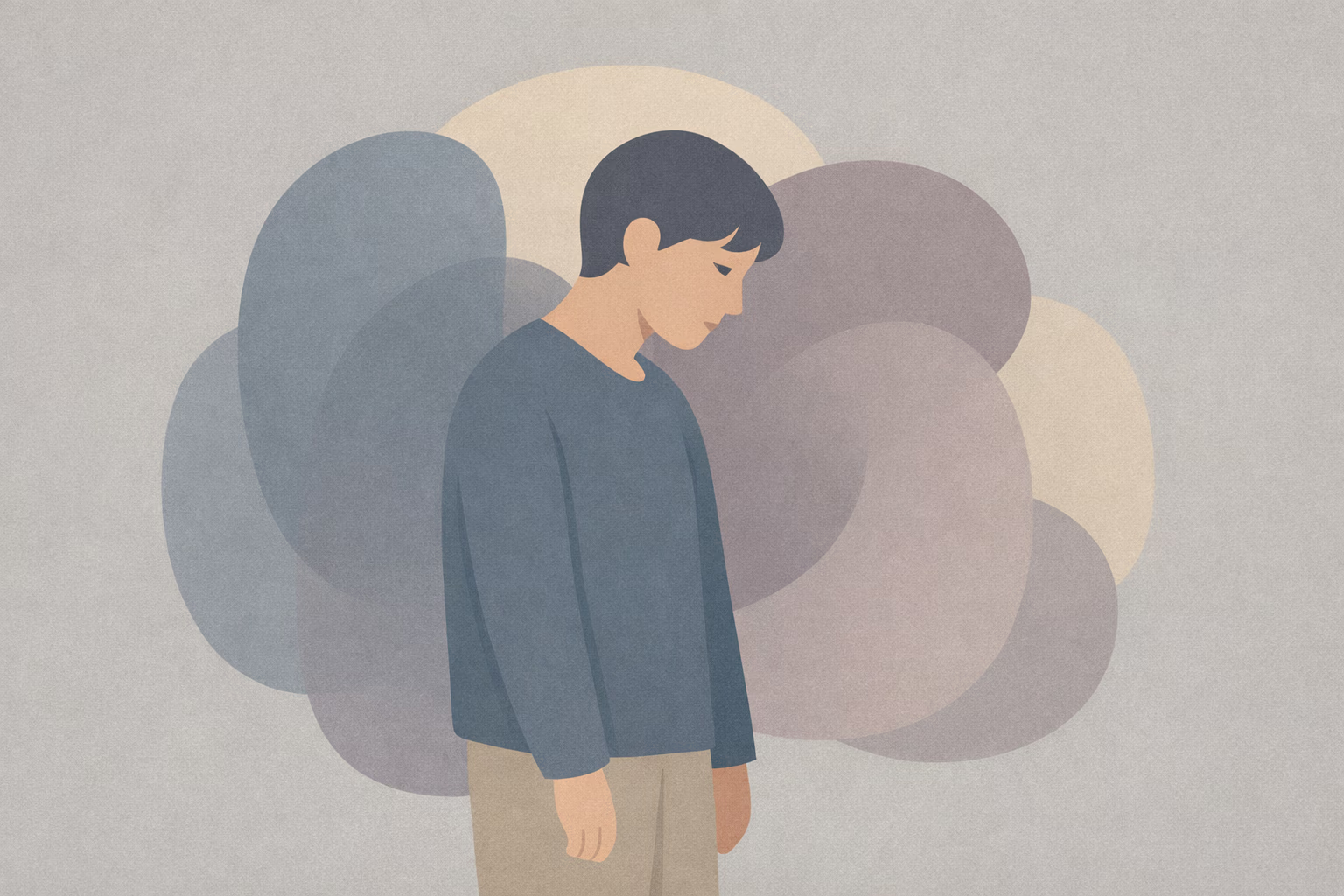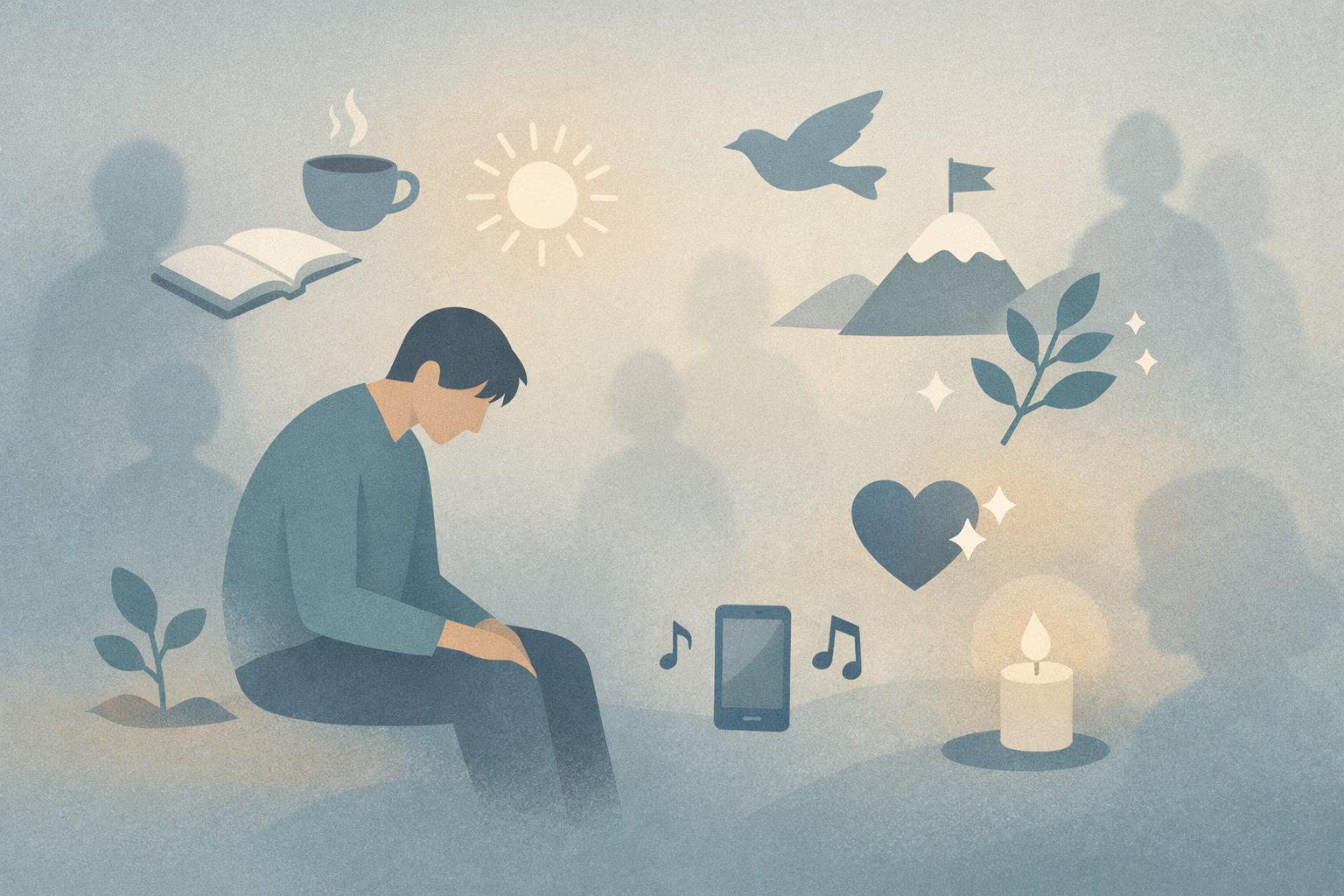

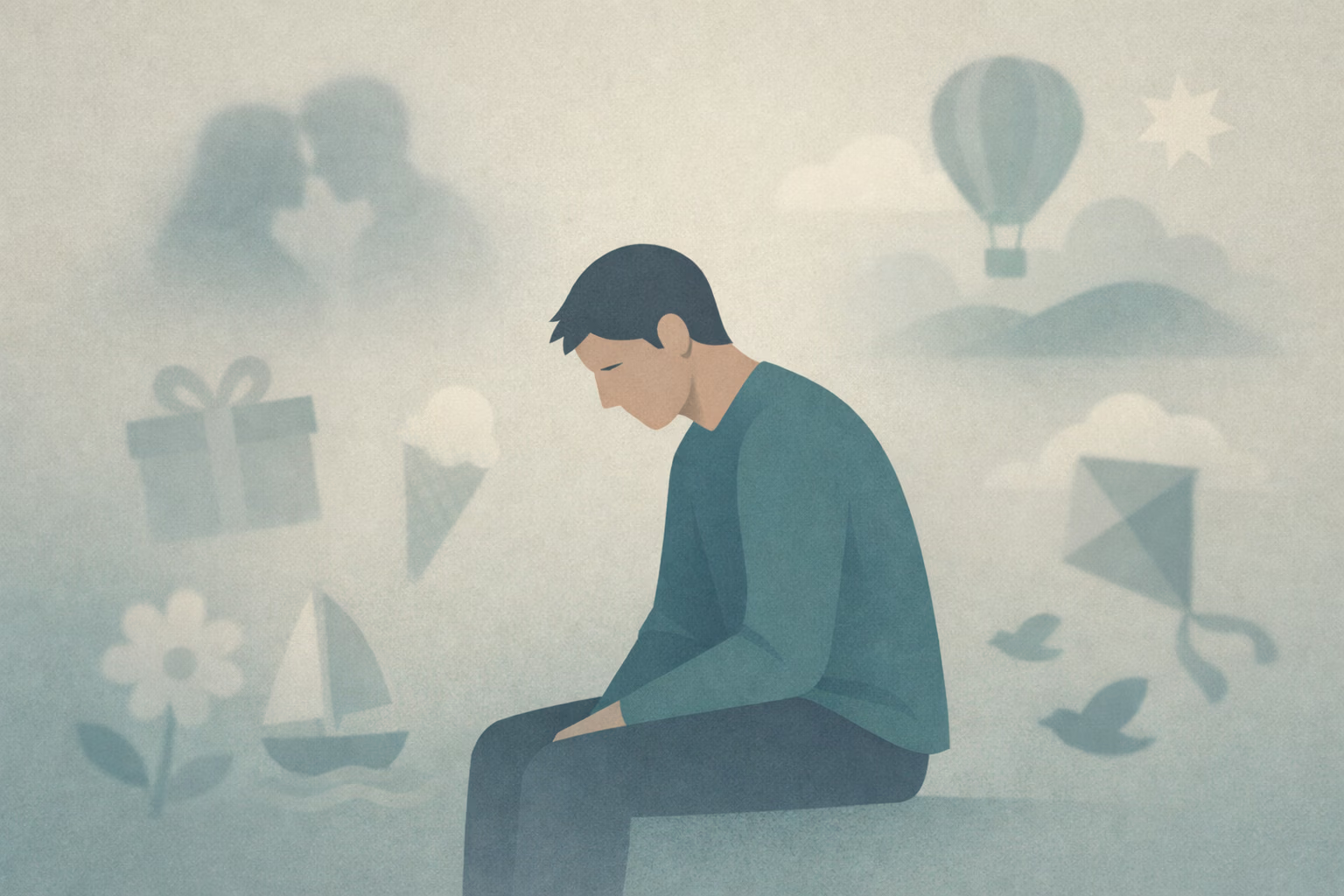
Meaning Blindness: When You Stop Seeing the Good in Your Life

In short: Gratitude apps look simple: a prompt, a few lines, a gentle reminder to notice what’s good. For some people, they bring a quick lift. For others, they feel like a thin layer over a heavier day—pleasant, but not lasting.
Gratitude apps look simple: a prompt, a few lines, a gentle reminder to notice what’s good. For some people, they bring a quick lift. For others, they feel like a thin layer over a heavier day—pleasant, but not lasting.
So why can something feel genuinely helpful in the moment, yet still not seem to change your baseline?
A grounded way to understand this is to stop treating gratitude as a personality trait or a moral posture, and start seeing it as a type of nervous-system input. Under modern pressure, many of us aren’t lacking positivity—we’re living with too many open loops, too much evaluation, and too few “done” signals. In that context, gratitude tools can either support closure and orientation, or simply add another task to an already crowded internal dashboard.
Many users notice an immediate softening after logging a few gratitudes: a brief settling, a little warmth, a slight widening of perspective. Then life resumes at full volume, and the uplift fades.
That pattern isn’t a failure of character, and it doesn’t necessarily mean the app is “fake.” It often means the relief is state-based—like stepping into a quieter room—while the system that creates your baseline is still carrying the same load. Short interventions can reduce distress in the near term, especially when someone is already under moderate strain, but that doesn’t automatically translate into durable change after a few entries. [Ref-1]
Sometimes the entry feels true. It just doesn’t feel finished.
When you repeatedly register something as “good,” “supportive,” or “worth keeping,” you’re not merely generating a thought. You’re training the brain’s selection system—what gets tagged as relevant, what gets stored, what gets revisited.
Gratitude practices can shift attention toward cues of safety, support, and meaning, and that shift can stabilize reward signaling over time: not as constant excitement, but as a more reliable ability to notice value. App-based gratitude interventions have been associated with increases in dispositional gratitude and well-being, suggesting something more than a momentary mood trick when repeated consistently. [Ref-2]
In other words: the “benefit” is often an attentional realignment, not a forced positivity.
Human nervous systems evolved to learn from reinforcement. We repeat what supports survival and belonging; we conserve energy when the environment feels unpredictable. This isn’t a motivational slogan—it’s biology.
Gratitude practice leverages that same reinforcement machinery by highlighting experiences that signal “this mattered,” “this helped,” or “this aligns with what I want my life to be.” Over time, that can strengthen the likelihood that supportive details are noticed and encoded rather than filtered out by threat scanning or fatigue. Internet- and app-based gratitude interventions have shown measurable benefits for well-being and mental health, consistent with the idea that this loop can be trained. [Ref-3]
But reinforcement doesn’t only respond to what’s true; it responds to what is repeated, what is salient, and what feels complete enough to register as real.
Digital gratitude tools often deliver three rapid experiences: a prompt (structure), a response (agency), and a record (evidence). For a nervous system that’s been running on partial signals and constant demands, that sequence can briefly restore coherence.
Even a brief daily app-based gratitude practice has been linked with improvements in daily affect—suggesting that the immediate “lighter feeling” many people report is a real state shift, not imagination. [Ref-4]
Modern wellness culture can make it sound like a single practice “rewires your mindset.” But a nervous system doesn’t reorganize itself because an idea is persuasive. It reorganizes when experiences repeat, complete, and settle into predictable patterns.
That’s why a gratitude entry can feel like a clean sip of water without becoming long-term hydration. Lasting change usually depends on consistent repetition over time—enough for the body to treat “noticing value” as a stable orientation rather than a temporary exercise. Gratitude journaling interventions have shown gains that can persist months later when the practice is sustained across weeks, indicating a dosage-and-time component that quick fixes ignore. [Ref-5]
Relief changes your state. Integration changes your baseline.
Gratitude becomes more than a mood tool when it functions as a loop that closes: something good happens, it’s registered, it’s connected to a value (care, effort, friendship, perseverance), and the system gets a quiet “done” signal.
When that loop repeats, it doesn’t just add positive thoughts. It can strengthen an internal orientation: “Support exists,” “My life contains resources,” “I can recognize what I’m living through.” In some contexts, gratitude journaling has been associated not only with psychological outcomes but also with physiological markers linked to regulation, suggesting the practice can touch the body’s stability systems when sustained. [Ref-6]
Noticing is the beginning. What changes people is when the noticing feels concluded—like it lands.
When gratitude practice is repeated in a way that actually closes loops (not just fills a box), changes are often subtle before they’re dramatic. The “win” may look less like constant happiness and more like improved signal return: the ability to come back to steadier ground after a stress spike.
Clinical trials of gratitude interventions have reported increases in positive affect, happiness, and life satisfaction, alongside reductions in depressive symptoms—effects that fit with a gradual re-weighting of what the mind and body treat as meaningful input. [Ref-7]
Sometimes gratitude apps become another quick-hit behavior: open, type, get a mild uplift, close. That can still be pleasant. But if entries are rushed, performative, or disconnected from lived consequences, the nervous system may treat them like temporary stimulation rather than meaningful completion.
This helps explain why effects can be modest or inconsistent across people. Systematic reviews find gratitude interventions tend to produce small-to-moderate improvements overall—real, but not magical—and outcomes vary with context, how the practice is done, and what else the person is carrying. [Ref-8]
In a high-fragmentation environment, a gratitude app can also become one more place where “I should be better” quietly accumulates—an extra open loop rather than a closure point.
Apps often rely on behavior design: reminders, streaks, badges, calendars. These features can be supportive because they reduce friction and keep the practice from disappearing during busy weeks. They can also create a subtle evaluation layer—turning meaning into a score.
Across cultures, gratitude interventions show effectiveness, but results depend on context and “dosage,” which includes how the practice fits into someone’s life rather than how perfectly it is completed. [Ref-9]
The same feature can regulate one person and dysregulate another.
Long-term mood change is less about talking yourself into gratitude and more about what starts to feel believable without effort. Over time, repeated gratitude can become a default appraisal style: the ability to recognize goodness alongside difficulty, without canceling either.
This is where people sometimes describe a gentler relationship with themselves—less inner arguing, less “prove you’re okay,” more balanced interpretation of their own days. Research linking gratitude with higher life satisfaction and positive mood fits with this idea: not constant uplift, but a more reliable equilibrium. [Ref-10]
When it’s working, it doesn’t feel like I’m convincing myself. It feels like I’m remembering what’s already there.
Humans regulate in connection. When gratitude is shared—privately with a friend, publicly in a community feed, or indirectly through a message of acknowledgment—it can create a different kind of closure: a completed social loop.
This matters because many forms of modern distress are not purely internal; they’re shaped by isolation, silent effort, and unrecognized contribution. Some app-based gratitude exercises have been studied for their ability to reduce repetitive negative thinking, suggesting that a well-structured practice can interrupt loops that otherwise keep the system activated. [Ref-11]
When gratitude is relational, it often stops being a “self-improvement behavior” and becomes a way life feels more mutually inhabited.
When gratitude practice is well-matched to a person’s capacity and environment, the longer-term effects are often described as steadier calm, easier appreciation, and quicker recovery after disappointment. Not a permanent glow—more like a system that can return to baseline with less struggle.
Design research on gratitude applications emphasizes reflection and reinforcement of positive attention, which aligns with the idea that repeated, structured noticing can strengthen a stable orientation over time. [Ref-12]
Coherence often shows up as:
The most durable shift isn’t that you log forever. It’s that your system learns a new default: value can be noticed, stored, and carried forward. At that point, the app may become optional—because the orientation lives in you.
Identity-level change is not insight. It’s a settling that happens when repetition meets completion: your experiences of support, effort, beauty, or love feel incorporated rather than merely recorded. Research exploring gratitude apps in student populations reflects this broader question—whether app use translates into meaningful changes in happiness and stress over time, not just momentary boosts. [Ref-13]
Eventually it stops being “three things.” It becomes “I know what matters, and I can recognize it when it appears.”
They can—when they function as more than a prompt. The long-term effect tends to emerge when the practice consistently helps your nervous system register completion: a clear signal that something good happened, mattered, and belongs to your life story.
When the app becomes another metric, another streak to maintain, or another place where you perform okayness, it may still offer brief relief but struggle to change your baseline. Many apps include prompts, streaks, and community features that can either support continuity or add pressure, depending on the person and their load. [Ref-14]
In a fragmented world, gratitude is less a positivity hack and more a way the mind rebuilds continuity—one finished loop at a time.
Long-term well-being doesn’t usually arrive as a constant high. It more often looks like stability: a nervous system that can stand down, an attention system that can find value again, and a life narrative that feels coherent enough to live inside.
When gratitude practice is sustained and matched to real capacity, studies suggest benefits can persist beyond the immediate moment—supporting the idea that repetition can gradually reshape what the system treats as meaningful and worth returning to. [Ref-15]
That’s not willpower. That’s a human organism learning, slowly and respectfully, what is safe to keep.
From theory to practice — meaning forms when insight meets action.
They can do both, depending on how they're used. The article distinguishes between state shift and baseline change. A quick entry can produce a real but temporary softening — like stepping into a quieter room — while the system that creates your baseline is still carrying the same load. Lasting change tends to depend on consistent repetition over time, enough for the body to treat 'noticing value' as a stable orientation rather than a temporary exercise. Gratitude journaling has shown gains that persist months later when sustained across weeks. Relief changes your state. Integration changes your baseline. Both matter, but they aren't identical.
Because it leverages the reinforcement machinery the nervous system already runs on. Humans repeat what supports survival and belonging; we conserve energy when the environment feels unpredictable. Gratitude practice steers attention toward cues of safety, support, and meaning — what gets tagged as relevant, stored, revisited. The benefit isn't forced positivity; it's an attentional realignment. Over time, this can stabilize reward signaling: not as constant excitement, but as a more reliable ability to notice value. It's the brain training what to keep, which is why the practice can shift dispositional gratitude rather than only momentary mood.
When entries become rushed, performative, or disconnected from lived consequences, the nervous system treats them like temporary stimulation rather than meaningful completion. In a high-fragmentation environment, the app can become one more place where 'I should be better' quietly accumulates — an extra open loop rather than a Done Signal. Streaks and reminders can support continuity for some people while feeling like surveillance for others ('I'm behind again'). The article frames this as Meaning Loop versus mere stimulation: noticing has to land as 'this belongs to my life' for closure to happen. Otherwise it's just another box to tick.
It stops feeling like convincing yourself and starts feeling like remembering what's already there. Long-term mood change is less about talking yourself into gratitude and more about what becomes believable without effort. Over time, repeated gratitude can become a default appraisal style — the ability to recognize goodness alongside difficulty without canceling either. People describe a gentler relationship with themselves, less inner arguing, more balanced interpretation of their days. Eventually it stops being 'three things' and becomes 'I know what matters and I can recognize it when it appears.' The orientation lives in you; the app may become optional.
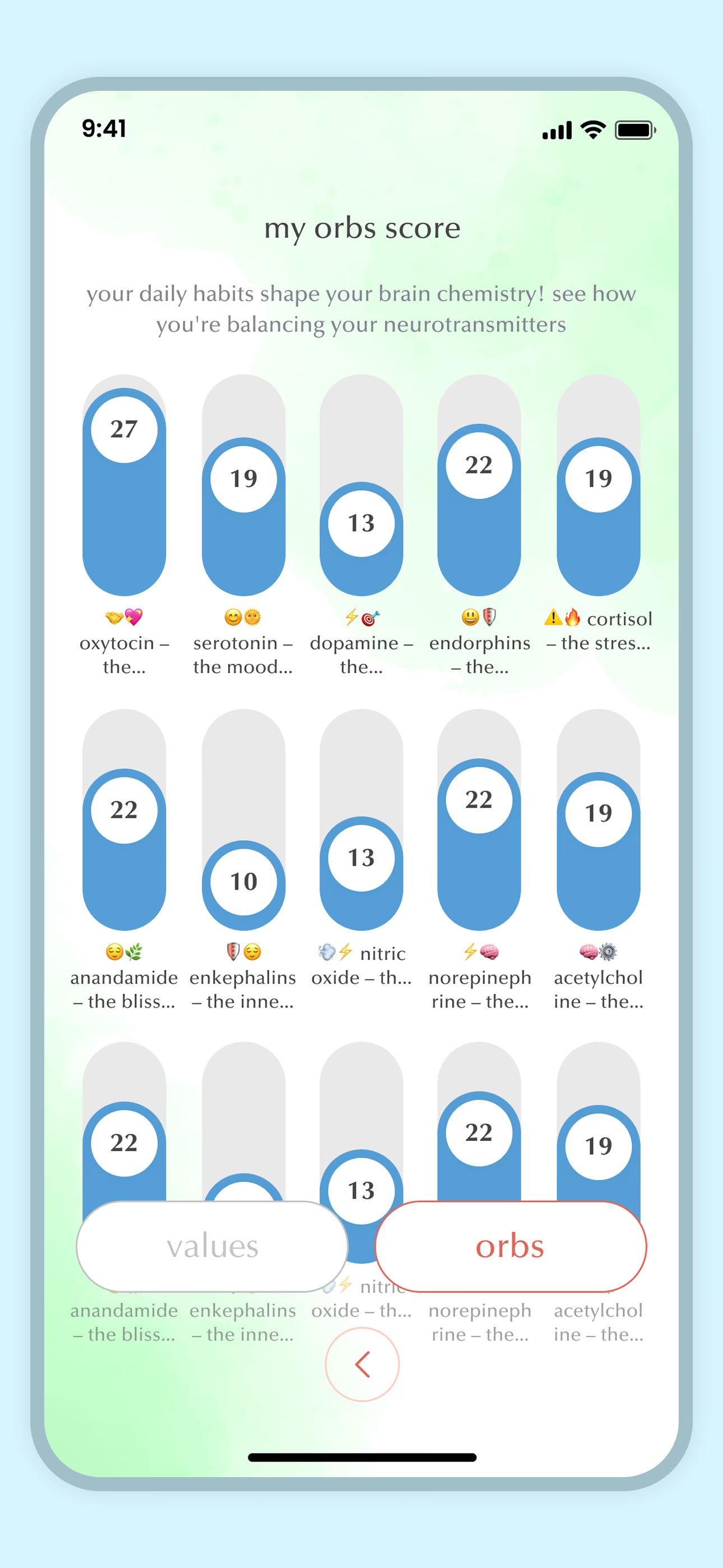
From Science to Art.
Understanding explains what is happening. Art allows you to feel it—without fixing, judging, or naming. Pause here. Let the images work quietly. Sometimes meaning settles before words do.
One Quiet Window, one insight, one reflection — every Sunday