Identity Softening: Letting Old Selves Fade Without Resistance
In short: There’s a particular kind of grief that doesn’t arrive with a funeral or a clear ending. It shows up when you realize you can’t fully return to who you used to be—your old priorities, your old social role, your old ways of coping, even your old voice in a room.
There’s a particular kind of grief that doesn’t arrive with a funeral or a clear ending. It shows up when you realize you can’t fully return to who you used to be—your old priorities, your old social role, your old ways of coping, even your old voice in a room.
What if the ache isn’t a sign that you’re making the wrong choice—what if it’s the nervous system noticing an identity shift?
Outgrowing a past identity can feel confusing because it mixes relief with loss. You may be safer, wiser, or more aligned—and still feel sad, nostalgic, or strangely untethered. That combination isn’t contradiction; it’s a system moving between the familiar and the not-yet-settled.
When people say “identity,” it can sound abstract. But the body experiences identity as a set of predictable loops: how you’re treated, what you’re expected to do, what you can count on, and what you do to keep connection stable.
So when an old identity starts dissolving—whether by choice, maturity, or necessity—the loss can register as sadness, nostalgia, disorientation, or social emptiness. It can feel like you’re grieving a person, because in a way you are: a lived configuration of roles, signals, and belonging cues. [Ref-1]
Sometimes what hurts isn’t the future. It’s that the past version of you had a place to stand.
Old identity scripts do more than describe you. They help regulate you. They tell you what “counts,” what earns approval, what reduces friction, and what keeps you included. When those scripts loosen, the nervous system can lose some of its usual safety cues.
This can create a temporary sense of isolation—even when you’re around people. It can also create an odd “flatness” where usual rewards don’t land the same way, because the reward system is partly calibrated to familiar patterns of validation and predictability. [Ref-2]
In that space, the mind often looks for reasons. But the deeper mechanism is simpler: the body is waiting for a coherent new map—one that reliably answers, “Who am I here, and what happens next?”
Humans evolved in groups where belonging affected survival. That’s why identity shifts can feel bigger than a preference change; they can register as a social risk. The attachment system is oriented toward cohesion, proximity, and predictability—especially during uncertainty. [Ref-3]
If a former identity came with clear rules (“I’m the responsible one,” “I’m the achiever,” “I’m the easygoing friend,” “I’m the caretaker”), it likely came with stable expectations from others. Letting that role fade can create a sense of exposure—not because you’re “too sensitive,” but because your social nervous system is updating what it can rely on.
When you change, the question isn’t only “Who am I now?” It’s also “Do I still belong?”
Holding onto an old identity often provides immediate comfort: familiar social feedback, recognizable routines, and a sense of being legible to other people. That familiarity can buffer uncertainty and reduce activation, at least in the short term. [Ref-4]
This is why returning to an old version of yourself can feel like relief—even if it also feels cramped. It’s not “self-sabotage.” It’s a regulatory move: the system reaching for known cues that once signaled stability.
From the inside, leaving a past identity can look like losing certainty, losing community, or losing a version of yourself that others recognized. That perception is understandable: it’s what the transition costs.
But growth is often an alignment event, not a rejection event. You aren’t only moving away from something—you’re moving toward a life where your actions, values, and daily reality fit together with less internal splitting.
That’s why grief can coexist with a quiet sense of rightness. The body can mourn what was familiar while also sensing that the new shape is more livable. [Ref-5]
Grief tends to persist when something important hasn’t reached closure. With identity, what’s unfinished is often the meaning loop: the old self had a story, a role, and a set of outcomes that felt “known.” When that loop breaks, the system stays slightly activated, as if waiting for the ending that makes it make sense. [Ref-6]
In that state, nostalgia can function like a temporary stitch. It reconnects you to a coherent narrative (“Back then I knew who I was”), even if it also keeps the loop from completing.
Importantly, insight alone doesn’t close the loop. You can understand why you changed and still feel unmoored, because integration is not a thought—it’s a whole-system settling that arrives after something has been completed enough to let the body stand down.
When an identity is shifting, it’s common to see “in-between behaviors”—not as personality traits, but as temporary strategies to manage ambiguity and social recalibration. Role transitions often come with a mix of stepping forward and pulling back. [Ref-7]
None of these automatically mean you’re “not ready.” They often indicate that the system is conserving capacity while it updates belonging cues and identity expectations.
Identity evolution usually requires a period where you are less certain and less socially mirrored. If the environment keeps demanding instant clarity—“So who are you now?”—the system may default back to the old role to stop the strain quickly.
Over time, repeated returns to a retired identity can create a stagnant feeling: not dramatic suffering, but a low-grade mismatch. The discomfort isn’t punishment; it’s what it feels like when your lived reality and your emerging values can’t quite meet. Work and role identity research often notes that recovery involves re-establishing coherence after a role is lost or left behind. [Ref-8]
Stagnation can feel like safety at first—until your system notices it’s not actually rest.
If grief stays open-ended, it can shape behavior in subtle ways: postponing decisions, hesitating to join new communities, or staying in places where you’re no longer accurate—because accuracy would require a new social contract.
When repeated non-closure becomes the norm, the system can start expecting that efforts won’t lead to stable outcomes. That expectation isn’t pessimism; it’s a learned pattern the brain can adopt under prolonged uncertainty. [Ref-9]
The result can look like “I can’t commit” or “I don’t know what I want,” when underneath there’s a simpler condition: the nervous system hasn’t received enough consistent evidence that the new identity has a reliable place to land.
Many people interpret identity grief as failure: “I should be over this,” or “If this is right, why does it hurt?” A more biologically faithful frame is that your system is reorganizing around new priorities while still carrying the imprint of old belonging rules.
Reflection and mindfulness are often discussed here, but not because noticing things magically resolves them. They can help create a steadier internal witness while the deeper process happens: old loops completing, new loops gaining enough repetition to feel real, and the body receiving consistent cues that you are still safe and connected in your new shape. [Ref-10]
Grief, in this context, isn’t a sign you’re going backward. It can be the cost of becoming coherent.
Because identity is partly social, it often stabilizes socially. Trusted people can provide something powerful: accurate reflection without forcing you back into an outdated role. That kind of validation reduces the load of having to “prove” your new self while it’s still forming. [Ref-11]
This isn’t about being fixed by other people. It’s about relational safety cues—signals that you remain welcome even as your preferences, boundaries, or ambitions change.
Sometimes grief eases not when you convince yourself you’re fine, but when your environment begins to respond to the new identity as if it’s real—because, increasingly, it is.
As the transition progresses, many people notice a shift that is more physiological than emotional: less bracing, fewer loops of second-guessing, and more natural follow-through. The old identity may still feel tender, but it no longer dominates the present.
This is often when “belonging” becomes less about fitting and more about fit—relationships, routines, and roles that match your current nervous system capacity. Attachment and belonging research suggests that felt connection supports stability and well-being, especially during change. [Ref-12]
Eventually, some of the energy that was tied up in maintaining the old story becomes available again. Not as constant excitement, but as steadier engagement: you can invest in relationships and activities that match who you are now.
At this stage, meaning is less about figuring it out and more about living it—when your behaviors begin to “count” as your identity because they repeat, land, and are recognized. In a digital world, identity can also be pressured by comparison and performance, which can make this settling take longer. [Ref-13]
You don’t stop missing your old self because you judged them. You miss them less because your life has somewhere new to rest.
If you’re grieving a past identity, it may be because that identity mattered—because it kept you connected, made you understandable, or helped you survive a chapter that required it. Honoring that reality can reduce the inner conflict that keeps the loop open.
And it may also help to recognize what grief is pointing toward: a transition where your actions and your values are asking to belong to the same story. When identity and behavior align, agency tends to return—not through pressure, but through coherence. [Ref-14]
You can respect the version of you that got you here without building your future inside their constraints.
Outgrowing a past identity doesn’t mean it was false. It means it had a season, a function, and a set of relationships with the world that made sense at the time.
Grief is often what arises when that season ends before the system has fully registered the closure. In time, what tends to heal isn’t more intensity—it’s completion: the quiet, identity-level realization that you are allowed to be who you are now, and still be connected. [Ref-15]
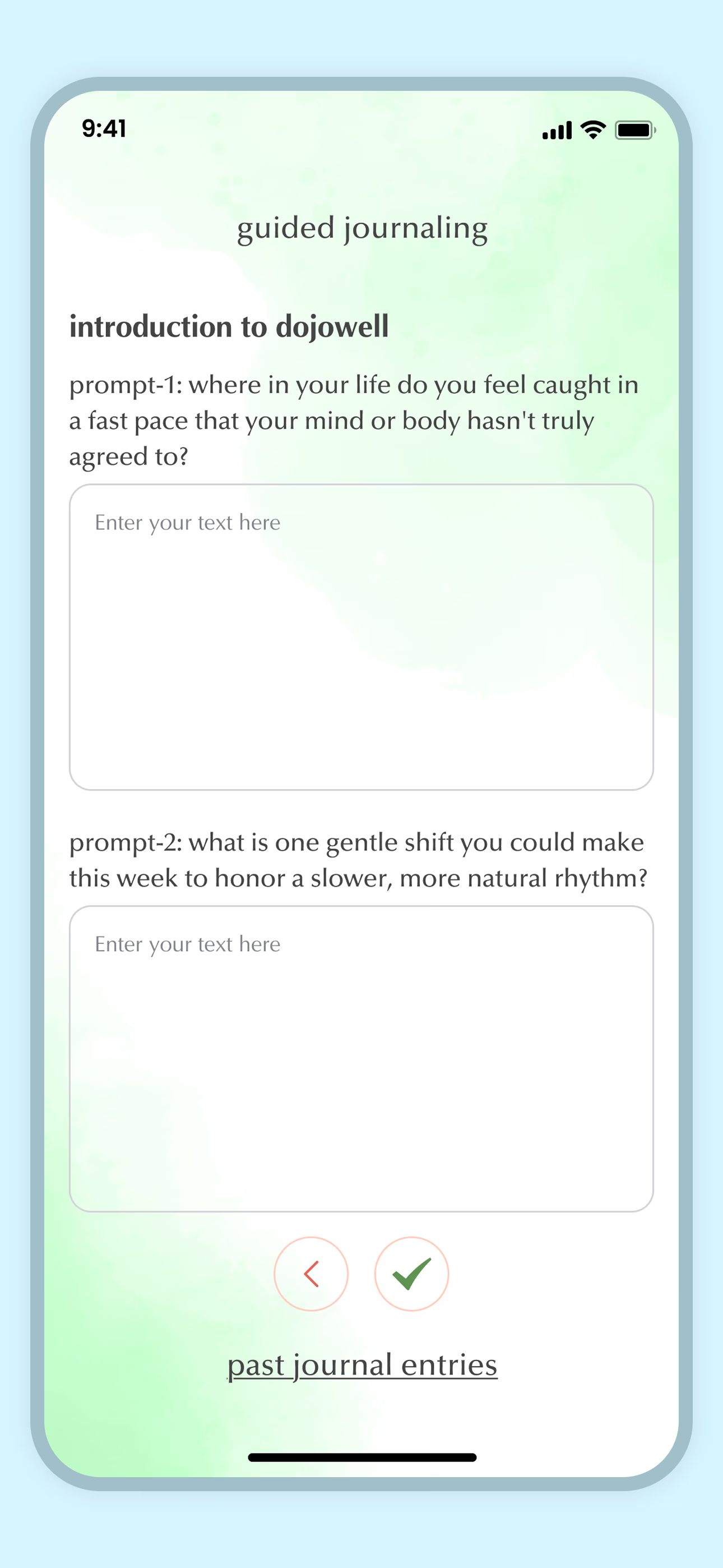
From theory to practice — meaning forms when insight meets action.
Because identity isn't abstract — the body experiences it as a set of predictable loops: how you're treated, what's expected of you, what you do to keep connection stable. When an old identity dissolves, the loss registers as sadness, nostalgia, or social emptiness because old scripts didn't just describe you, they regulated you. They told you what counts, what earns approval, what reduces friction. As they loosen, the Attachment & Belonging System loses some of its usual safety cues. Sometimes what hurts isn't the future. It's that the past version of you had a place to stand — a coherent role with predictable rules.
Because old identities provide immediate comfort: familiar feedback, recognizable routines, the sense of being legible to others. That familiarity buffers uncertainty and reduces activation in the short term. Returning to an old version of yourself can feel like relief even if it also feels cramped. It's not self-sabotage. It's a regulatory move: the system reaching for known cues that once signaled stability. Old roles come with ready-made scripts; scripts reduce social ambiguity; reduced ambiguity lowers nervous-system load. The pull backward is the body trying to find ground while the new shape is still forming.
Because grief persists when something important hasn't reached closure. With identity, what's unfinished is the meaning loop — the old self had a role, a story, and outcomes that felt known. When that loop breaks, the system stays slightly activated, waiting for the ending that makes it make sense. Insight doesn't close the loop. You can understand why you changed and still feel unmoored, because integration is whole-system settling that arrives after something has been completed enough for the body to stand down. Grief here isn't a sign you're going backward. It's the cost of becoming coherent.
Through repetition, recognition, and relational safety. Trusted people can provide accurate reflection without forcing you back into an outdated role — that reduces the load of having to prove your new self while it's still forming. Identity stabilizes when behaviors repeat, land, and are recognized as yours. As the transition progresses, the shift is more physiological than emotional: less bracing, fewer second-guesses, more natural follow-through. Belonging stops being about fitting and becomes about fit. The old self was true and had a season — outgrowing it doesn't make it false. It just means that chapter is allowed to be complete.
From Science to Art.
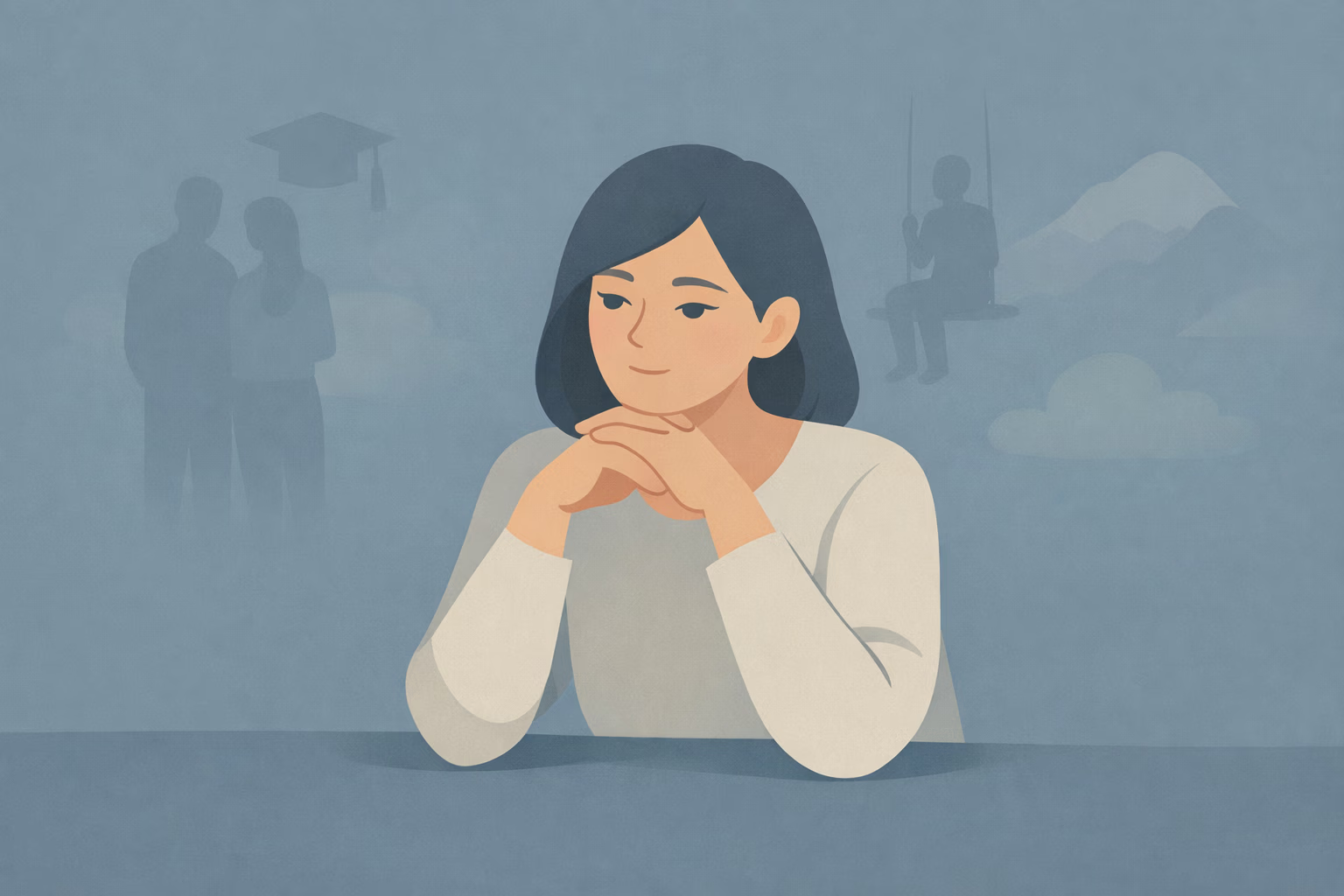
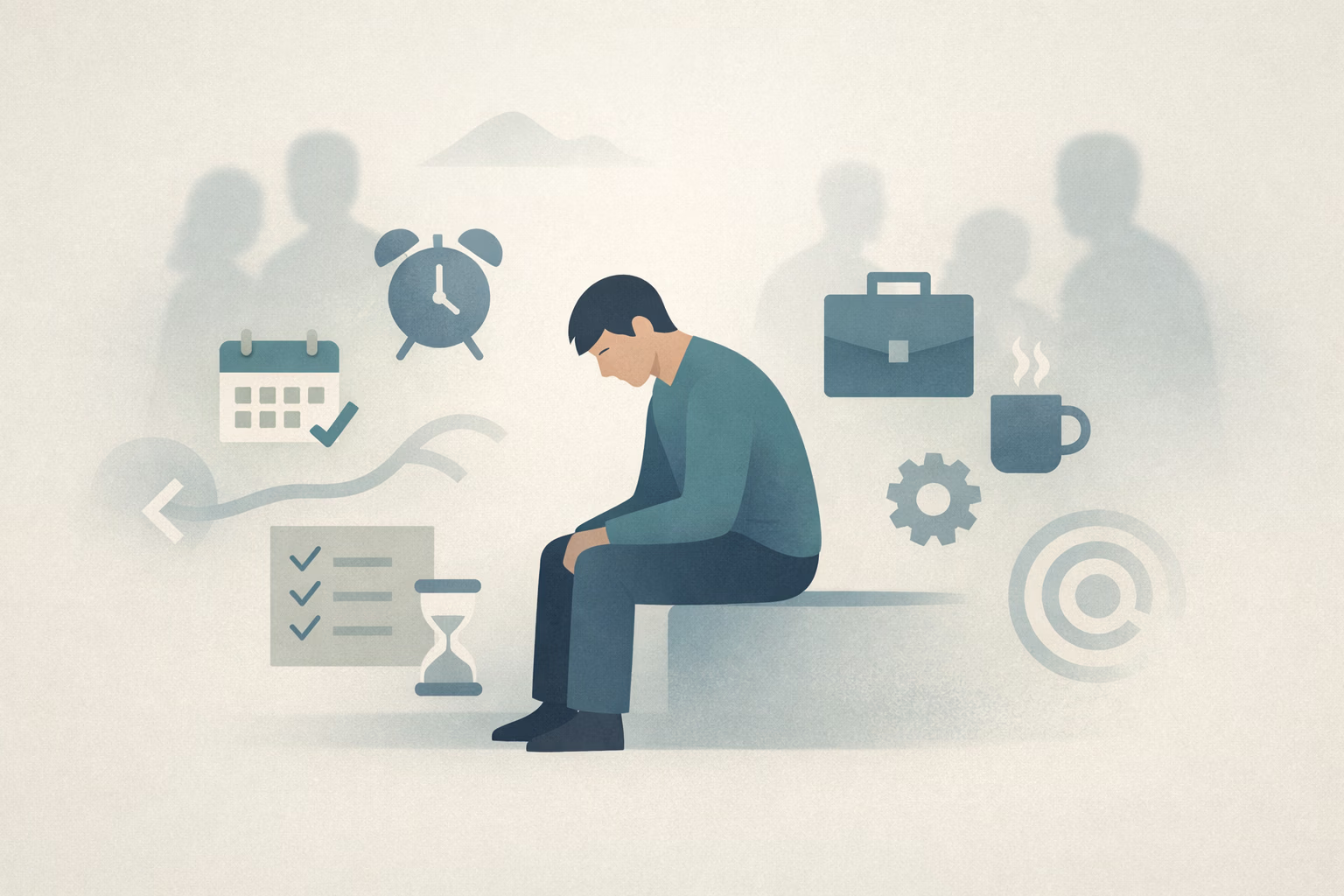
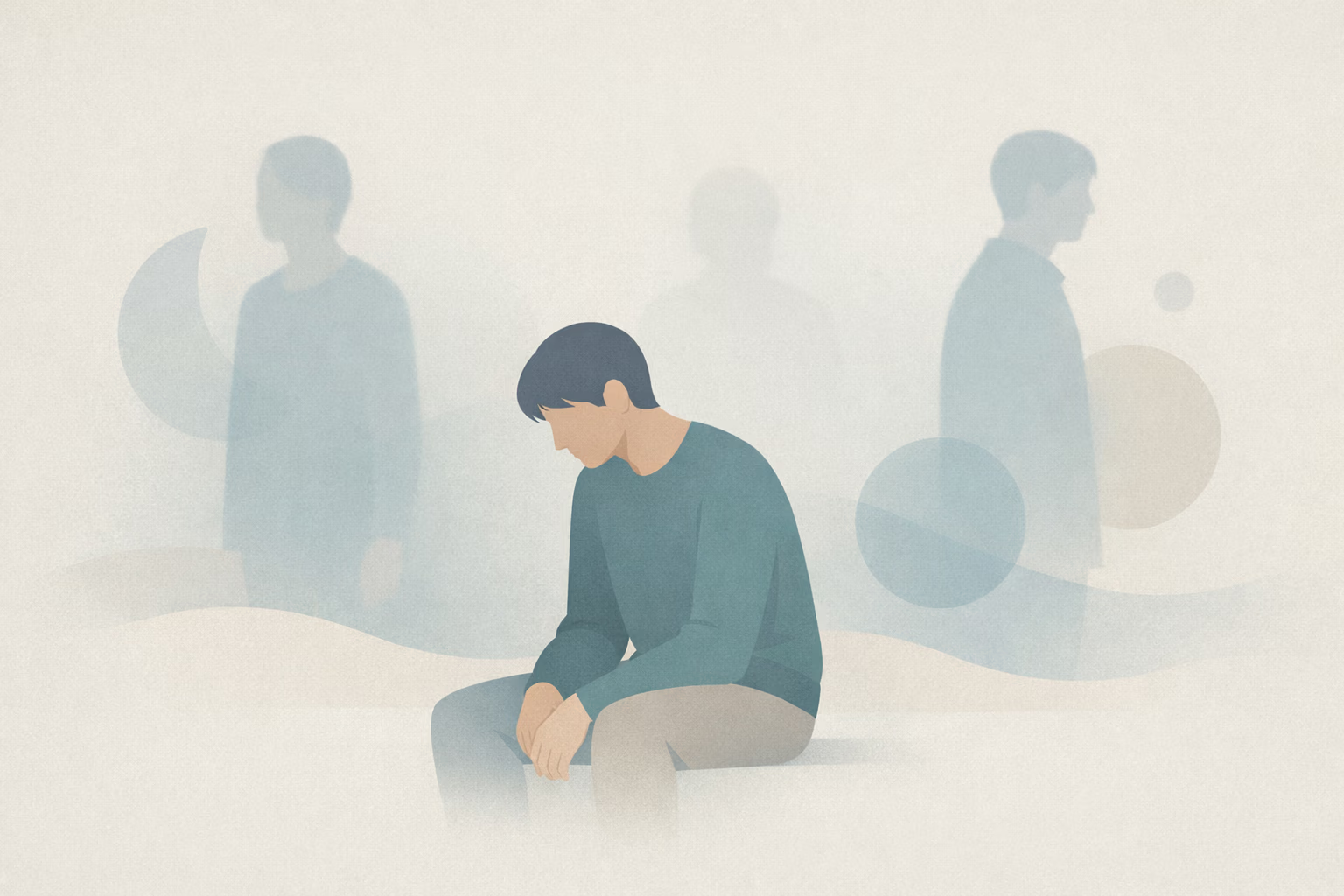
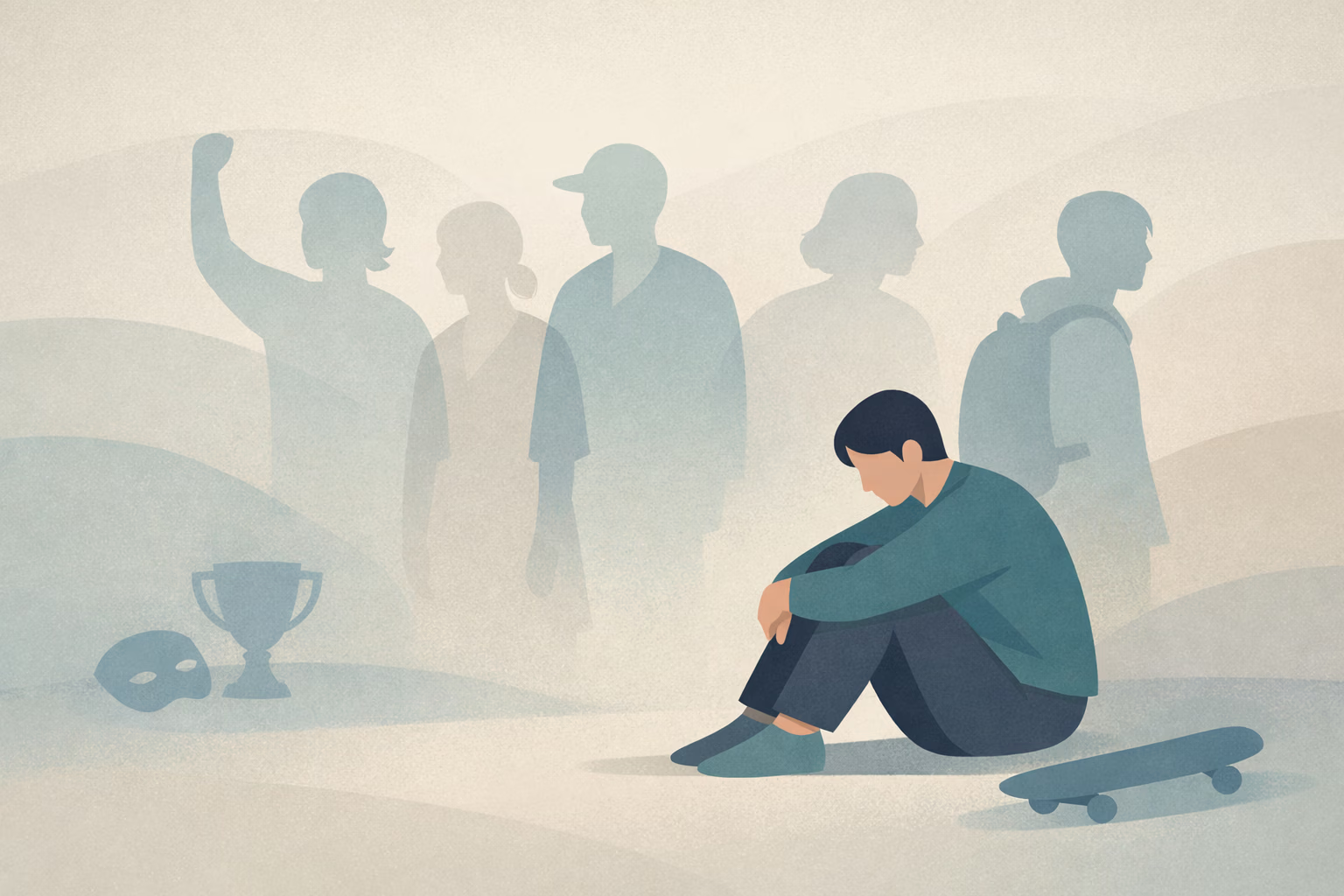
Understanding explains what is happening. Art allows you to feel it—without fixing, judging, or naming. Pause here. Let the images work quietly. Sometimes meaning settles before words do.
One Quiet Window, one insight, one reflection — every Sunday