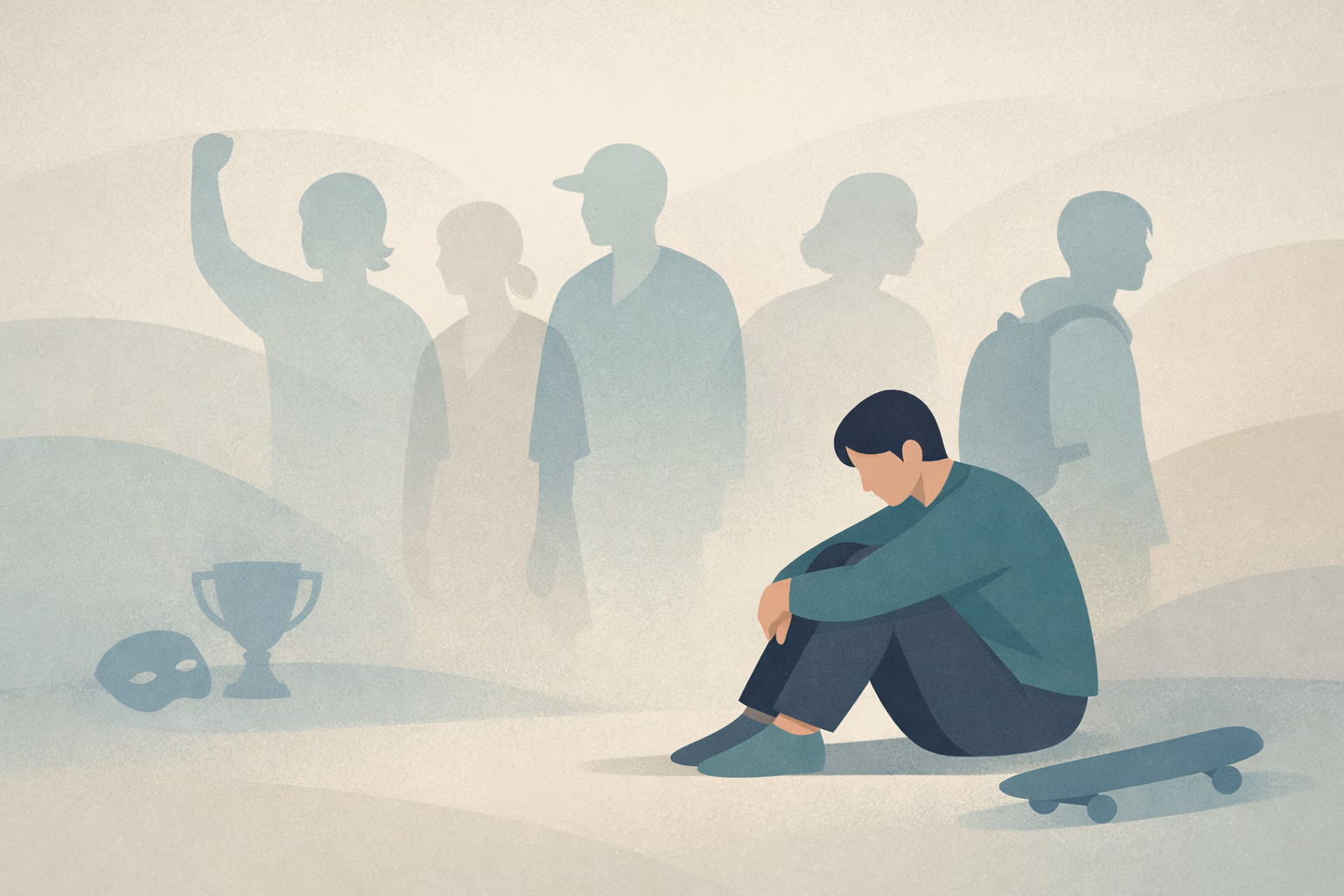
The Grief of Outgrowing Your Past Identity
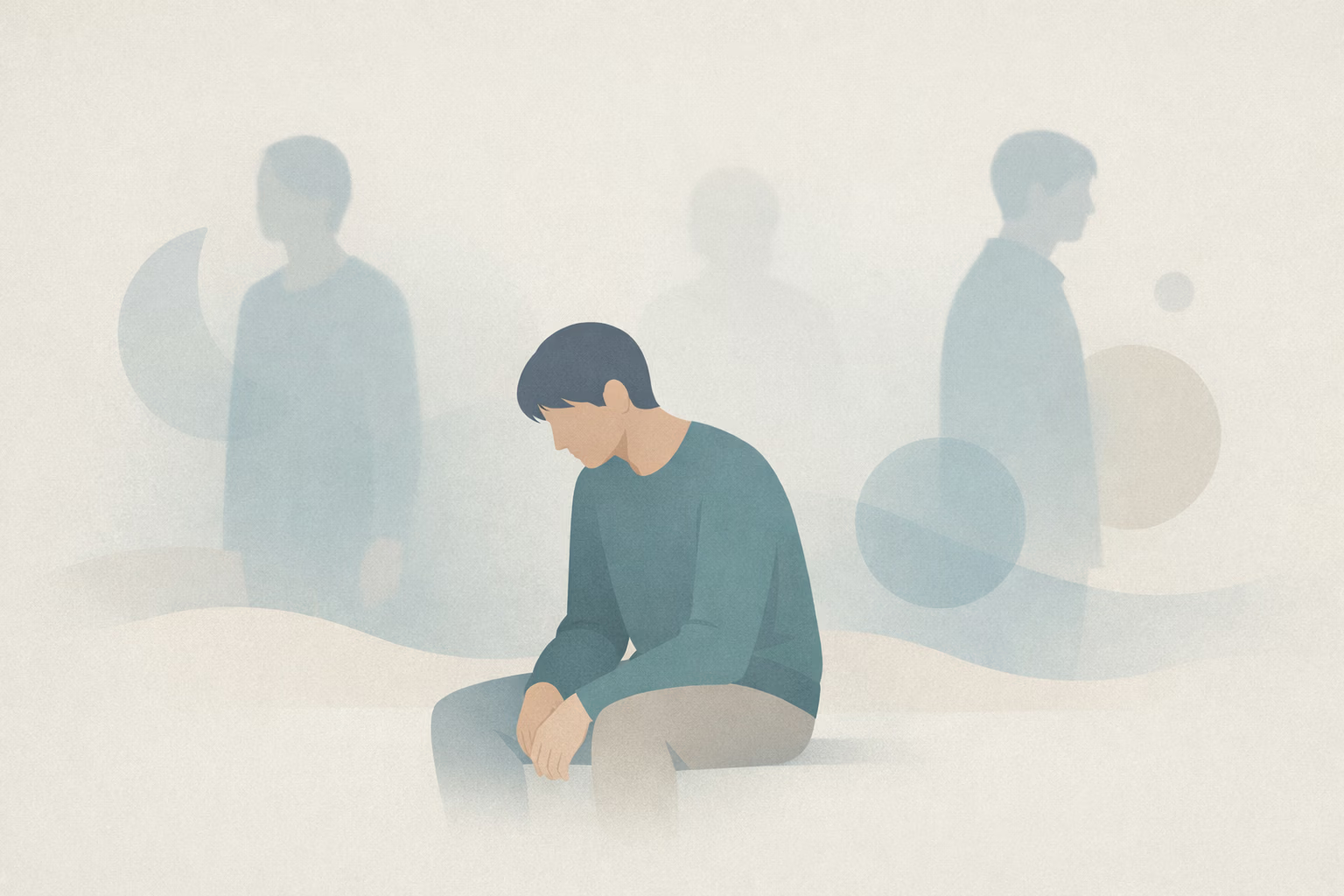
In short: Identity softening is the gradual easing of attachment to an older version of yourself—without forcing it, fighting it, or trying to “delete” the past. It’s less like ripping off a label and more like watching ink fade as your life reorganizes around what’s true now.
Identity softening is the gradual easing of attachment to an older version of yourself—without forcing it, fighting it, or trying to “delete” the past. It’s less like ripping off a label and more like watching ink fade as your life reorganizes around what’s true now.
Why can letting go of an old identity feel so tense—especially when you know you’ve outgrown it?
Because identity isn’t just a set of ideas. It’s a coordination system for your nervous system and your social world: it helps you predict what happens next, how people will respond, and what counts as “safe enough.” When that system is asked to update quickly, the body often generates friction—not as a flaw, but as a stabilizing response.
People often assume that if they’re “ready,” letting go should feel clean. But many transitions carry a physical signature: tension, restlessness, heaviness, or a strange internal argument that won’t resolve. Part of you moves forward; part of you holds the old coordinates.
This conflict is not evidence of immaturity or attachment problems. It can simply mean your system is negotiating continuity—trying to keep your life coherent while something foundational changes. The nervous system tends to prefer predictable maps, even if those maps are outdated. [Ref-1]
Sometimes the hardest part isn’t changing. It’s living through the moment when the old version hasn’t fully ended and the new version hasn’t fully landed.
Identity is supported by well-traveled neural pathways: familiar interpretations, automatic explanations, and default roles. When a pattern has been used for years—caretaker, achiever, problem-solver, outsider—it becomes efficient. Efficiency feels like certainty, and certainty often feels like safety.
So when life provides new evidence (new skills, new relationships, new limits, new desires), the system may not absorb it immediately. Not because you “don’t get it,” but because integration requires completion: repeated lived confirmation, reduced threat load, and enough settling for the nervous system to stop scanning for contradiction.
Gentle detachment can happen when the system is allowed to notice mismatch without escalating into self-attack or performance. The shift is less cognitive and more biological: the old story loses urgency as the body no longer needs it for stability. [Ref-2]
Our species depends on shared predictability. A coherent identity helps other people know what to expect from you—and helps you know what to expect from yourself. That’s not vanity; it’s coordination. In social groups, being legible has survival value.
That’s why identity change can feel risky even when it’s positive. The nervous system treats “Who am I now?” as a practical question: Will I still belong? Will I still be understood? Will I lose my place? Protecting narrative consistency can be a way of protecting social stability and internal coherence. [Ref-3]
What if the discomfort is your system trying to preserve continuity, not punish growth?
Holding onto an old self often delivers immediate predictability. It keeps roles intact, avoids renegotiating expectations, and prevents the awkward gap between “not that anymore” and “not fully this yet.” In that gap, consequences can feel unclear.
The old identity may also come with a ready-made set of rules: what you should want, how you should respond, what you’re allowed to feel, what earns approval. Even if those rules are costly, they can reduce uncertainty in the short term.
This is why release isn’t primarily a mindset decision. It’s a shift in conditions: when life supplies enough safety cues and closure, the system doesn’t need the old map as much. [Ref-4]
It can seem like resistance is protective: if you hold the old identity tightly, you avoid mistakes, avoid confusing others, avoid regret. But rigidity often extends the very discomfort it aims to prevent.
When the present keeps delivering evidence that you’ve changed—different needs, different limits, different priorities—clinging creates constant internal negotiation. The system stays activated because it can’t complete the transition. The result isn’t stability; it’s ongoing friction.
Identity softening is not about rejecting who you were. It’s about letting the nervous system stop spending energy on defending a map that no longer matches the terrain. [Ref-5]
Identity rigidity can function like an avoidance loop, not in the sense of “you’re afraid,” but in the structural sense that it bypasses a costly update. Updates require renegotiation: new boundaries, new language, new patterns of follow-through, new social feedback. That is real load.
When the system anticipates high load, it may default to the older self because it’s already paid for. The cost is that life keeps producing unfinished loops: you keep encountering moments that don’t resolve because they don’t fit the old role.
Over time, the loop can look like stagnation, but underneath it is a nervous system choosing the least metabolically expensive option available in that moment. Authenticity, in this frame, is less a moral ideal and more a condition of internal congruence that reduces ongoing conflict. [Ref-6]
During transitions, people often think something is “wrong with them” because they feel inconsistent. But inconsistency can simply mean the system is mid-update—running two maps at once.
Excessive self-criticism when you don’t perform your old role perfectly
Repeated comparison to a past version of yourself (“I used to be so…”)
Overexplaining choices to make the new self feel legitimate
Internal tension when rest, limits, or new priorities contradict the old narrative
A sense of being “on trial,” even in ordinary moments
These aren’t character traits. They’re coherence-seeking behaviors—attempts to restore a stable sense of self under changing conditions. [Ref-7]
When rigidity persists, new experiences have trouble “landing.” You might do new things, learn new truths, or live through meaningful events—yet they don’t translate into a settled sense of who you are now. They remain like loose files, not integrated chapters.
This can reduce adaptability because the system keeps prioritizing consistency over updating. It can also create a chronic sense of unfinishedness: life looks different, but you don’t receive the internal “done” signal that would allow stand-down.
In that state, people often seek intensity—more effort, more certainty, more reassurance—not because they’re dramatic, but because the system is trying to force coherence through activation. Integration, however, tends to arrive through completion and settling, not escalation. [Ref-8]
When an old identity is challenged, the system can respond with tightening: more self-monitoring, more internal debate, more checking whether you’re “allowed” to be different. This tightening rehearses the old map again and again.
Neurally, repetition matters. The more often the old role is used to resolve uncertainty, the more automatic it becomes. And the more automatic it becomes, the more effort it takes to tolerate the in-between space where the new identity hasn’t fully stabilized.
This is one reason why harsh self-pressure often backfires. It increases load, which increases reliance on default patterns. A softer stance doesn’t “solve” the transition by insight; it simply reduces the conditions that keep the old loop energized. [Ref-9]
One subtle shift changes the whole experience: moving from evaluating identity as a performance to understanding identity as a completion process. The question becomes less “How do I become the new me?” and more “What parts of the old story are still unfinished?”
Unfinished doesn’t mean tragic. It can be as simple as unclaimed lessons, unspoken endings, unrevised expectations, or roles that never received a clean conclusion. When those loops remain open, the nervous system keeps them available—like tabs that won’t close.
Self-compassion in this context isn’t self-congratulation. It’s a reduction of internal threat signals, which lowers the need for defensive identity maintenance and allows newer experiences to register more fully over time. [Ref-10]
Identity is not built in isolation. It’s shaped by feedback, belonging, and the experience of being understood. When relationships provide steady safety cues, the nervous system can risk updating without bracing for rejection.
Supportive people don’t need to “fix” you. Often they simply hold a consistent view of you while you’re changing. That steadiness reduces social uncertainty, which reduces internal tightening. Mentorship can also function as borrowed coherence: someone else’s calm confidence that change is survivable helps your system stand down.
Acceptance here is not a mindset slogan. It’s a relational environment that makes it easier for the old identity to retire without a fight. [Ref-11]
When identity softening occurs, it often feels quieter than expected. Not euphoric—more like fewer internal interruptions. The old narrative may still be accessible, but it no longer grips the steering wheel.
You might notice:
More ease in ordinary decisions (less internal debate)
Less need to defend or explain your direction
More stable mood and clearer priorities under stress
A growing sense that the present is “enough information” to live from
This is a capacity change: the nervous system returns to baseline more easily because it isn’t constantly trying to resolve an identity contradiction. The shift is often gradual, like sediment settling in water. [Ref-12]
As the old self fades, energy previously spent on maintenance becomes available for choice. Not forced self-improvement—choice that feels proportionate, grounded, and aligned with current values. This is where agency tends to return: not as motivation, but as coherence.
In practical terms, the system begins to organize around what’s true now. Actions start to “stick” because they match identity rather than fight it. Over time, new neural pathways become the default—not through intensity, but through repetition under conditions that feel safe enough for the update to hold. [Ref-13]
It’s not that you become someone else. It’s that you stop needing to prove you’re still the person you were.
If an old identity is hard to release, it often means it once provided real stability—socially, emotionally, or practically. Attachment can be a signal that something mattered, that a role protected you, or that a chapter ended without clean closure.
From a meaning-centered view, the goal isn’t to erase the past. It’s to let the past become complete enough that it no longer demands management. As congruence increases—between values, actions, relationships, and lived reality—the nervous system gets the message that the update is real. That is what allows softening to happen without force. [Ref-14]
Identity softening is a form of respectful transition: the past is acknowledged as part of your continuity, and the present is allowed to become your primary reference point. When change is met with enough closure and steadiness, the system doesn’t have to cling.
In that settling, self-leadership becomes less about pushing and more about alignment—where who you are, what you do, and what matters to you can finally occupy the same space without strain. [Ref-15]
From theory to practice — meaning forms when insight meets action.
Because identity isn't just an idea — it's a coordination system for your nervous system and social world. It helps you predict what happens next, how people will respond, and what counts as safe enough. When that system is asked to update, the body generates friction not as a flaw but as a stabilizing response. Part of you moves forward; part holds the old coordinates. The body can register the loosening as loss, even when you know you've outgrown the role. The hardest part isn't changing — it's living through the moment when the old version hasn't fully ended and the new one hasn't fully landed.
Because they're well-traveled neural pathways — familiar interpretations, automatic explanations, default roles. When a pattern has been used for years, it becomes efficient, and efficiency feels like certainty. Certainty often feels like safety. So when life provides new evidence, the system doesn't absorb it immediately. Integration requires completion: repeated lived confirmation, reduced threat load, enough settling for the system to stop scanning for contradiction. Holding on isn't stubbornness; it's the Threat & Safety System protecting narrative consistency, which is itself a coordination tool. Being legible to others has survival value — change asks the system to risk that.
Because resistance and harsh self-pressure increase load, and increased load makes the system rely more heavily on default patterns. When an old identity is challenged, the system tightens — more self-monitoring, more internal debate, more checking whether you're allowed to be different. That tightening rehearses the old map again and again. Repetition matters: the more often the old role is used to resolve uncertainty, the more automatic it becomes. A softer stance doesn't solve the transition through insight; it reduces the conditions that keep the old loop energized. Identity softening is gradual, like sediment settling in water — not a battle to win.
Quieter than expected. Not euphoric — fewer internal interruptions. The old narrative is still accessible but no longer grips the steering wheel. More ease in ordinary decisions, less internal debate. Less need to defend or explain your direction. More stable mood and clearer priorities under stress. A growing sense that the present is enough information to live from. Co-regulation supports this — when relationships hold a consistent view of you while you're changing, social uncertainty drops and the system can risk updating without bracing. You don't become someone else. You stop needing to prove you're still the person you were.
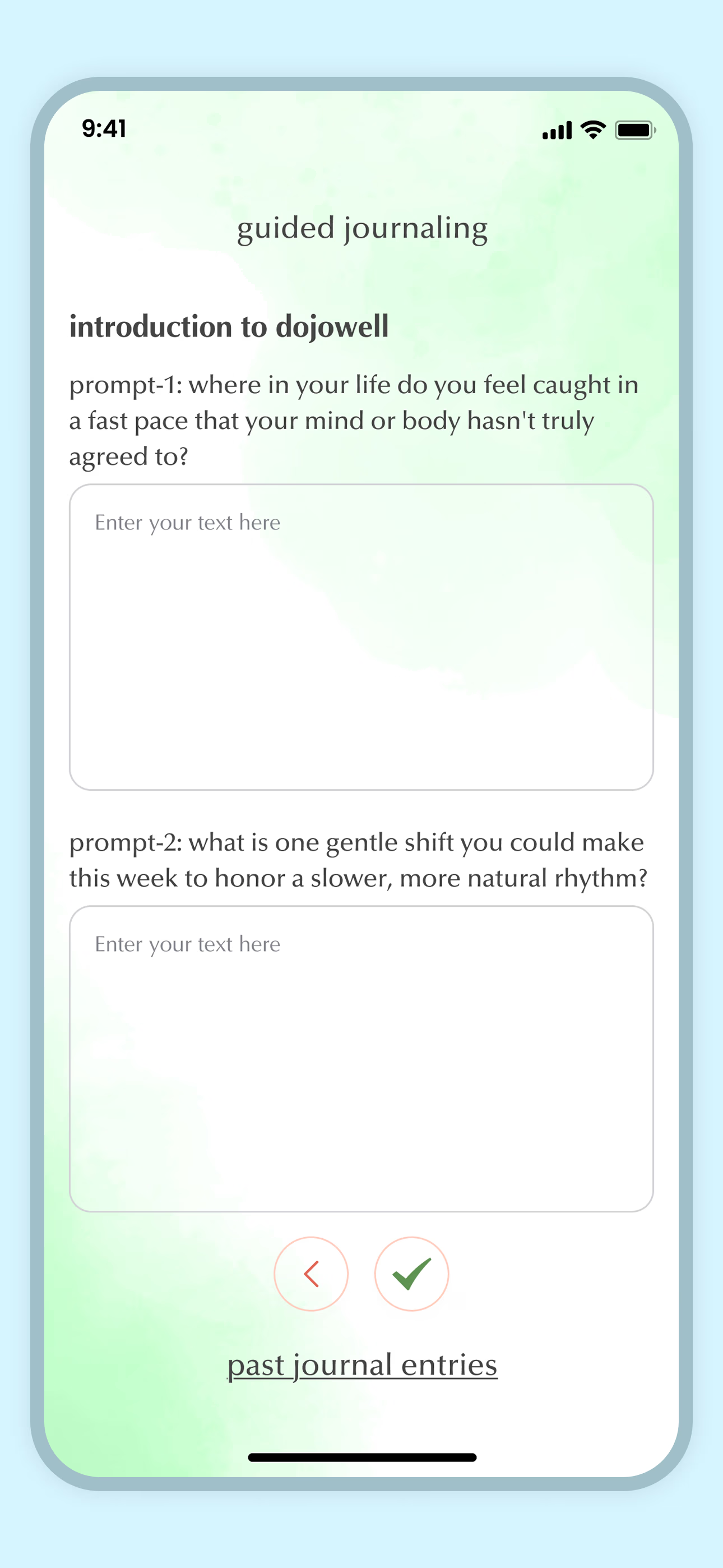
From Science to Art.
Understanding explains what is happening. Art allows you to feel it—without fixing, judging, or naming. Pause here. Let the images work quietly. Sometimes meaning settles before words do.
One Quiet Window, one insight, one reflection — every Sunday