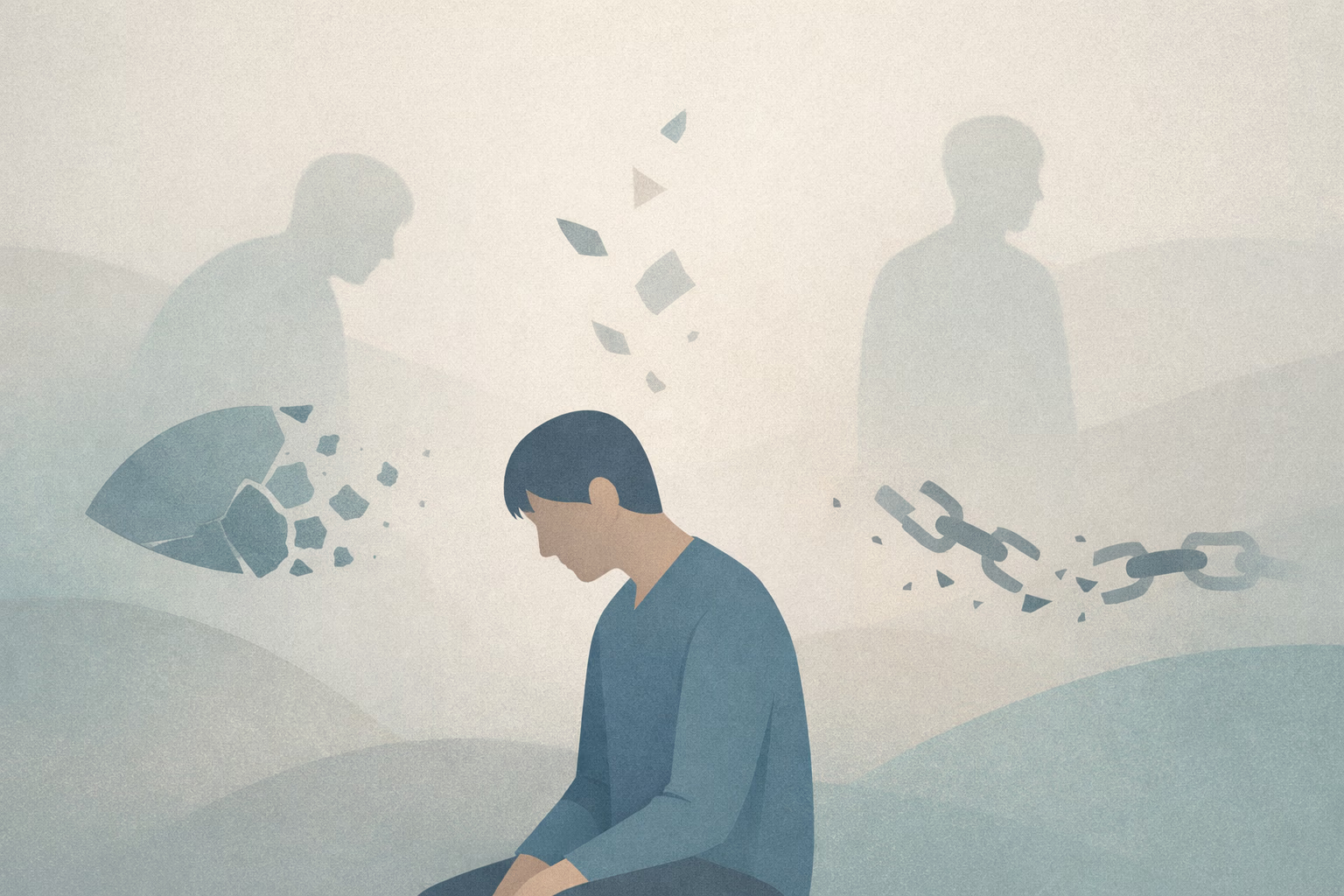
Internal Expansion: Growing the Space Inside Your Mind
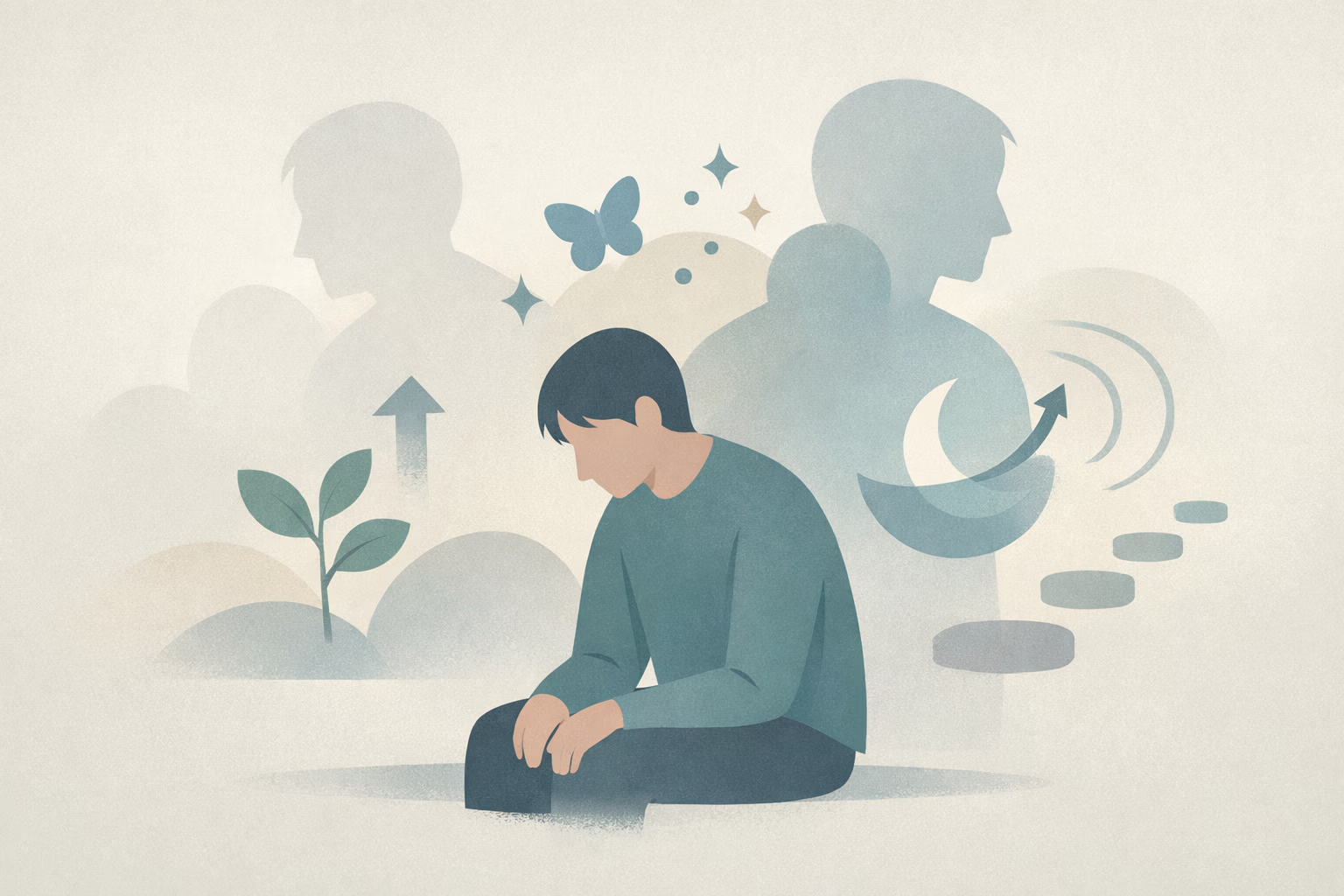
In short: Many people carry a quiet, persistent sense that there is “more me” somewhere ahead—more capacity, more honesty, more scale, more ease. It can show up as restlessness, tenderness, or a pressure-like longing that doesn’t neatly fit into any single goal.
Many people carry a quiet, persistent sense that there is “more me” somewhere ahead—more capacity, more honesty, more scale, more ease. It can show up as restlessness, tenderness, or a pressure-like longing that doesn’t neatly fit into any single goal.
What if that feeling isn’t a flaw in your personality, but a signal about incomplete closure?
Identity expansion isn’t just imagining a better version of yourself. It’s the gradual process of your nervous system and your daily life catching up to what already feels true internally—until your patterns begin to stand down because the story is no longer split.
That tension between how you live and who you sense yourself to be can feel like dissatisfaction, impatience, or a low-level hum of “not yet.” It’s easy to interpret it as weakness or indecision, but it often functions more like a signal: something inside you is asking for completion.
Humans don’t just seek comfort; we seek coherence. When your environment, relationships, work, or self-expression don’t provide “done” signals—clear endings, clear belonging, clear contribution—your system keeps scanning. The result can look like restlessness or chronic self-evaluation, even when nothing is “wrong.” [Ref-1]
Sometimes the longing isn’t for a different life. It’s for a life that finally matches.
Your brain builds a working model of “who I am” from patterns: what you repeatedly do, what consequences reliably follow, what roles you can inhabit without penalty, and what feels safe to express. Over time, those patterns become a self-concept—less like a belief and more like a default map.
When an expanded identity begins to feel possible—more creative, more direct, more relational, more leadership-oriented—attention shifts. You notice different opportunities, you register different costs, and your behavior starts to reorganize around what seems meaningful. But this reorganization isn’t powered by inspiration alone; it stabilizes when experiences complete and settle into your lived identity. [Ref-2]
In other words: the “new you” becomes real when your system has enough evidence that it can be real.
Human identity is deeply social. Our narrative systems evolved to keep us connected to groups while also allowing growth and specialization. That means expansion can carry an invisible cost: it can alter how you are seen, what you are expected to carry, or which relationships feel effortless.
This is why identity growth can feel oddly vulnerable even when it’s desired. It’s not simply “fear of success” or a lack of confidence. It’s your system evaluating: if I live more like the person I sense myself to be, what changes in my attachment, my role, my predictability, my safety cues? [Ref-3]
When the social and practical consequences are unclear, the nervous system often responds by holding position—through hesitation, overthinking, or pulling back into familiar roles.
Many people recognize the brief uplift that comes from imagining an expanded life: a clearer future, a stronger sense of purpose, a moment of internal alignment. That lift is real. It can reduce confusion and increase direction, at least temporarily. [Ref-4]
But state-change isn’t the same as integration. A compelling vision can energize you, yet still leave your system without closure if your current life doesn’t provide the experiences that make the vision believable and inhabited.
That’s why “feeling inspired” can coexist with feeling stuck. The picture is vivid; the body’s map hasn’t updated.
In modern culture, identity expansion is often framed as a mindset project: decide, visualize, affirm, commit. But meaningful growth tends to be more structural. It emerges when daily behavior, social feedback, and inner narrative stop contradicting each other.
Self-actualization—at its most grounded—doesn’t look like constant striving. It looks like increased fit between what matters to you and what your life repeatedly confirms. When that fit increases, your system receives “done” signals and stops generating so much internal debate. [Ref-5]
When identity expansion stalls, it’s tempting to blame willpower. But many “stuck” experiences are better understood as loops that never reach closure: you approach a threshold, your system senses uncertain consequences, and the pattern shifts you back toward familiar regulation.
This can look like self-doubt, second-guessing, or a sudden pull toward comfort. Structurally, it’s often the same mechanism: the old identity has known outcomes, while the expanded identity still has ambiguous costs. Until the new pattern completes—through repeated, survivable experiences—your system may keep flagging it as unfinished. [Ref-6]
It isn’t that you don’t want the bigger life. It’s that your system hasn’t gotten the “safe enough, real enough, repeatable enough” signal yet.
When the internal map and the external life don’t match, people often develop predictable regulatory patterns. These aren’t “bad habits.” They’re ways the nervous system reduces load, postpones consequence, or maintains social safety when closure is missing.
These patterns often intensify during transitions—career shifts, relationship changes, creative launches, new leadership roles—because identity is renegotiating in real time. [Ref-7]
Resisting identity growth doesn’t usually feel like a single dramatic decision. It’s more like a repeated narrowing: choosing the familiar tone, the familiar role, the familiar visibility level—because it keeps things predictable.
But predictability without fit can create its own strain. The longer the gap persists between lived patterns and felt potential, the more internal energy goes toward managing that split. Over time, this can reduce satisfaction—not because you’re ungrateful, but because your narrative identity remains unfinished and therefore activating. [Ref-8]
The cost isn’t “not reaching your goals.” The cost is carrying an unresolved self-story.
Identity becomes durable through repetition and self-evaluation: what you do, what you don’t do, and what you conclude about yourself afterward. When expansion is repeatedly postponed, the older identity keeps receiving confirming evidence—“this is who I am, this is what I do, this is what happens.”
Importantly, avoidance doesn’t require dramatic dread or conscious suppression. It can be as subtle as keeping choices reversible, staying in preparation mode, or maintaining a self-definition that lowers stakes. Those strategies reduce immediate load—but they also prevent the completion experiences that would update the identity map. [Ref-9]
Not choosing is still a kind of choosing—mainly, choosing to keep the current story intact.
There’s a quiet bridge between who you are now and who you sense yourself becoming: capacity. When stress load is high, the system prioritizes short-term regulation—staying functional, staying acceptable, staying safe. When load reduces and signals can return, the system becomes more able to incorporate new experiences into identity.
Reflection can clarify values, but clarity alone isn’t integration. The stabilizing change happens when life provides coherent experiences that end cleanly—moments where you act, the consequence arrives, and your system can stand down rather than keep scanning. In that lower-noise state, attention and energy naturally organize toward what feels meaningful and sustainable. [Ref-10]
Expansion is less about pushing forward and more about making the new story finishable.
Identity is not formed in isolation. Mentors, peers, and steady communities provide something the nervous system tracks closely: reliable social feedback. When you are witnessed in a new role—taken seriously, responded to predictably, given room to iterate—your system receives evidence that the expanded self can belong.
Support also reduces the need to do constant internal evaluation. Instead of carrying the whole meaning-making process alone, you get shared context: “this is normal,” “this is part of growth,” “you’re not the only one.” That shared context can be especially stabilizing during periods that resemble an identity crisis—when old roles no longer fit but the new ones haven’t consolidated yet. [Ref-11]
As the expanded identity begins to settle, people often describe a different kind of clarity—not a hype feeling, but a quieter internal “yes.” Decisions require less force. There is less bargaining with yourself. Not because life is easy, but because the internal map has fewer contradictions.
This phase can come with increased confidence, yet the deeper marker is alignment: your actions start to match your values often enough that the nervous system stops treating the identity as hypothetical. With less internal conflict, signals can return—body cues, relational cues, timing cues—because they’re no longer drowned out by constant self-management load. [Ref-12]
It starts to feel less like self-improvement and more like self-recognition.
Before identity expansion consolidates, a lot of energy goes toward managing uncertainty: monitoring, explaining, preparing, compensating, editing yourself. As coherence increases, that energy often becomes available for purposeful action—work, care, creation, contribution—because less of you is busy holding the split together.
This isn’t a constant high-output state. It’s a steadier orientation: you know what you’re here to do, what you’re not, and what counts as “done” for now. When the narrative fits the lived reality, the system can downshift, and meaning stops being something you chase and starts being something your life repeatedly confirms. [Ref-13]
Identity expansion can be understood as a normal developmental process: a person outgrows a map that once worked. The discomfort isn’t proof of inadequacy; it’s often proof that your system is registering a mismatch between your current roles and your emerging values.
Seen this way, potential isn’t a demand. It’s information. It points toward the kinds of experiences that would bring more fit, more closure, and more lived self-expression—what many traditions describe as self-actualization, not as perfection, but as a fuller use of one’s capacities within real life. [Ref-14]
You don’t have to argue yourself into becoming someone new. The system changes when the story becomes livable.
The most dignified view of identity growth is that it is embodied: it arrives through repeated, finished experiences that your nervous system can file as “this is me now.” Possible selves can guide exploration, but the stabilizing shift happens when daily life provides confirming closure—enough to quiet the old story without a fight. [Ref-15]
Over time, that is what identity expansion looks like: less internal negotiation, more coherent direction, and a life that increasingly matches the person you already sensed you were becoming.
From theory to practice — meaning forms when insight meets action.
That quiet sense of 'more me' often gets read as restlessness or dissatisfaction, but it usually functions more like a coherence signal. Your nervous system isn't only seeking comfort — it's seeking a version of life that matches what already feels true internally. When environment, work, or relationships don't supply 'done' signals, the system keeps scanning, and the felt result is that low hum of 'not yet.' This isn't a personality defect. It's a Meaning Loop trying to close: something inside you is asking for completion, and the body is reporting the gap until lived experience catches up.
Identity is deeply social. Expansion changes more than goals — it can alter how you're seen, what others expect from you, and which relationships still feel effortless. The Attachment & Belonging System reads those potential changes carefully. What looks like 'fear of success' is often just your system evaluating: if I live more like the person I sense myself to be, what shifts in my role, my predictability, my safety cues? Until those costs feel survivable, the body holds position — through hesitation, overthinking, or pulling back into familiar roles. The vulnerability is structural, not weakness.
Visualization can lift state — clearer direction, momentary alignment, less confusion. That uplift is real. But state-change isn't the same as integration. A vivid picture of who you could be doesn't update the body's working map of who you are. Self-concept is built from repeated experience, not single insights, so the new identity stabilizes only when daily life provides enough confirming evidence that it can be inhabited. That's why feeling inspired can coexist with feeling stuck: the picture is vivid; the system's predictions about you haven't caught up. Expansion lands through completed experience, not through visualization alone.
Self-improvement framing tends to treat growth as a mindset project — decide, visualize, affirm, commit. Identity expansion is more structural. It happens when daily behavior, social feedback, and inner narrative stop contradicting each other. Self-actualization at its most grounded doesn't look like constant striving; it looks like increased fit between what matters to you and what your life repeatedly confirms. When that fit increases, the system receives Done Signals and stops generating internal debate. The expansion isn't powered by harder pushing — it stabilizes when experiences complete and settle into your lived identity.
From Science to Art.
Understanding explains what is happening. Art allows you to feel it—without fixing, judging, or naming. Pause here. Let the images work quietly. Sometimes meaning settles before words do.
One Quiet Window, one insight, one reflection — every Sunday