Identity Shift: Becoming the Person You Intend to Be
In short: Most people don’t resist change because they “lack discipline.” They hesitate because identity is a coordination system: it keeps your relationships predictable, your choices legible, and your nervous system oriented. When an old self-concept no longer fits, the system can run hot—restless, scattered, or tightly controlled—while it searches for a new stable shape.
Most people don’t resist change because they “lack discipline.” They hesitate because identity is a coordination system: it keeps your relationships predictable, your choices legible, and your nervous system oriented. When an old self-concept no longer fits, the system can run hot—restless, scattered, or tightly controlled—while it searches for a new stable shape.
What if the friction you feel isn’t a flaw—just a sign that an old story is no longer closing cleanly?
Identity renewal isn’t a performance upgrade. It’s a process where certain roles, expectations, and self-descriptions stop producing coherence. A “next self” begins to appear when values, actions, and lived consequences start matching again—until the body can register something like: this is real, this is mine, this is settled.
Identity tension often shows up as uncertainty rather than a clear decision. You can feel pulled toward a different way of living, while your existing patterns keep generating the same outcomes. This isn’t simply indecision; it’s an active mismatch between what your system has practiced and what your life now requires. [Ref-1]
In that mismatch, the nervous system tends to prioritize continuity. Familiar roles and routines may be imperfect, but they’re predictable. Predictability is a kind of safety cue, even when it costs you energy.
Why does changing feel oddly threatening, even when you want it?
Because “who you are” isn’t only an idea. It’s an accumulated set of completed loops—things you’ve done, been seen doing, and learned will happen next. When those loops are unfinished or conflicting, the body stays recruited: scanning, adjusting, bracing.
It’s tempting to think identity renewal happens through a powerful realization: a new perspective, a better mindset, a clearer plan. But understanding is not the same as integration. Integration is what happens when a new pattern is completed enough times—with real-world feedback—that your system stops treating it as experimental.
In practical terms, identity becomes “true” when it is lived in a way that produces stable results: your environment responds differently, your choices become easier to predict, and the internal effort required to sustain the shift decreases. Narrative identity research describes change as reconstruction across time—where new meaning is consolidated through lived continuity, not just reflection. [Ref-2]
So “rewiring” is less like installing a new belief and more like establishing a new default. The brain updates based on what repeatedly resolves uncertainty and reduces internal conflict.
Human identity is not only personal. It’s relational infrastructure. It tells other people what to expect from you, and it tells you what you can reliably offer. That’s one reason deliberate change can feel exposed: the social system around you may still be referencing an older version of you.
This is why identity conflict can produce a specific kind of tension—less like sadness, more like a constant background recalibration. You may notice yourself over-explaining, under-committing, or trying to keep multiple versions of yourself running at once. That’s not “fear.” It’s the cost of maintaining predictability while transitioning. [Ref-3]
When your identity is in transition, you’re not only changing your future—you’re renegotiating what your past has meant.
Early identity renewal doesn’t always feel like confidence. Often it feels like orientation—less spinning, fewer competing rules, a clearer sense of what matters. The nervous system likes a clean signal: “this direction.” Even before everything is worked out, coherence can increase when your choices start pointing the same way.
People in transitions often do “identity work” by testing language, roles, and commitments until something fits and holds. That experimentation is not failure; it’s the system searching for a shape that can be sustained without constant self-monitoring. [Ref-4]
In other words, renewal can create an immediate reduction in internal contradiction—even if the external outcomes take time to catch up.
Small behavioral tweaks can help in the short term, but they don’t always produce durable change if they aren’t anchored to a coherent identity. When actions are disconnected from values and narrative continuity, they tend to remain “add-ons”—requiring ongoing pressure to maintain.
Narrative identity reconstruction is often complex and nonlinear. It stabilizes when the new story doesn’t just sound good, but when it organizes daily decisions in a way that reduces friction and resolves old contradictions. [Ref-5]
What makes a change stick?
Not intensity. Not perfect consistency. Usually, what sticks is what becomes self-reinforcing: your behavior produces consequences that confirm the new identity, and that confirmation lowers the effort required to keep going.
Incomplete renewal often looks like “almost.” Almost leaving the old role. Almost telling the truth. Almost claiming a value publicly. The system tries a small shift, then returns to what’s known—not because it is weak, but because the new pattern hasn’t reached closure.
When a change remains partial, it can inadvertently reinforce the older identity: the environment keeps responding to the familiar version of you, and your nervous system learns that deviation creates ambiguity without payoff. Over time, the cost of ambiguity can feel heavier than the cost of staying the same. [Ref-6]
This is one reason people can feel stuck even while “working on themselves.” If the loops don’t complete, the system never gets the stand-down signal that allows a new identity to settle as real.
Being between identities has recognizable patterns. They aren’t character defects; they’re adaptive responses to running multiple internal rule-sets at once.
In identity-crisis research and writing, this in-between stage is often framed as disorientation and instability—an understandable phase when a prior self-definition no longer organizes life well. [Ref-7]
When renewal is delayed for too long, the mind can become crowded with competing “possible selves”: who you were, who you might become, who others expect, who you fear becoming. This isn’t simply overthinking; it’s an ongoing coordination problem without closure. [Ref-8]
Over time, that coordination problem can reduce satisfaction—not because life is objectively worse, but because your system can’t settle. The absence of a “done” signal keeps attention circling the same questions, draining capacity that would otherwise go into connection, creativity, or rest.
Many people describe this as living with a low-grade friction: a sense that they’re always adjusting, always compensating, always managing impressions—without a stable center of gravity.
Old identity loops persist when daily actions continue to provide evidence for the older narrative. Not because you’re secretly committed to the past, but because the brain is an evidence-based organ. It updates identity from what repeatedly happens—especially under stress.
Possible-selves theory describes how images of who you could be influence current behavior, but only when the path between “future me” and “today’s actions” feels workable in the moment. When that bridge collapses—through overload, fragmentation, or constant evaluation—the system defaults to the identity that requires the least reorganization. [Ref-9]
So the loop is structural: if the environment keeps cueing the older role and the newer role doesn’t complete into consequence, the older identity remains the most believable story.
There’s a difference between imagining a next version of yourself and inhabiting one. The bridge is not willpower; it’s coherence. Coherence forms when the new identity is linked to values that feel non-negotiable, and when the nervous system has enough capacity to follow through without constant internal negotiation.
Identity-based motivation research highlights a key dynamic: when a future self feels connected to current context, actions feel more “like me” rather than like forced compliance. The reverse is also true: when the context makes the future self feel distant or incompatible, the same action can feel unnatural, even if it is chosen. [Ref-10]
The question isn’t “Can I become someone new?” It’s “Can my life support the version of me I’m trying to live?”
This is not a technique. It’s a description of what stabilizes change: reduced load, fewer competing narratives, and enough completion that the body recognizes the new story as the current one.
Identity is reinforced socially. Mentorship, coaching, and supportive communities matter not because they “motivate” you, but because they provide stable mirrors: consistent cues about who you are becoming and what is now expected of you. That predictability reduces the cognitive cost of holding the new identity alone. [Ref-11]
In a supportive context, the emerging self gets more opportunities to complete loops: you show up as the new version, the environment responds accordingly, and your nervous system receives confirmation that the shift is viable.
This is also why certain environments keep people stuck: if the social field repeatedly assigns you the old role, you have to spend extra energy overriding the cue—an exhausting way to live.
As a renewed identity consolidates, people often report increased clarity and steadier follow-through. Not because life becomes easy, but because fewer internal subsystems are arguing about what the “right” self should do. Capacity returns when the system is no longer spending so much energy on self-contradiction.
Personality and identity-related change is supported in research as possible over time, especially when repeated patterns create durable shifts in how someone responds to situations. Importantly, the stability comes from repetition and context, not from a single moment of insight. [Ref-12]
How do you know it’s settling?
Often it shows up as a quieter baseline: choices become less dramatic. You stop needing to “talk yourself into” the same alignment again and again because the alignment has become the default.
When an old identity stops demanding constant maintenance, energy becomes available—not as endless drive, but as usable attention. You’re no longer spending so much capacity on bracing, over-explaining, or internally negotiating basic decisions.
That shift is consistent with how self-concept functions: it organizes perception and behavior, reducing uncertainty about how to act. As self-concept becomes clearer and more consistent, it can support decisions that feel straightforward rather than effortful. [Ref-13]
Purposeful engagement, then, isn’t a personality trait. It’s what often emerges when your life is no longer split between incompatible selves. The nervous system gets to stand down, and meaning has room to accumulate through completed days.
Identity renewal is often described as self-improvement, but many people experience it more like self-organization: a return to a life that makes sense from the inside. Self-concept is not fixed; it’s shaped by experience, roles, and what you repeatedly live as true. [Ref-14]
Seen this way, choosing your next self isn’t about rejecting who you’ve been. It’s about allowing an older narrative to complete—so it can stop running in the background—and letting a newer narrative become stable through lived continuity.
Agency doesn’t always look like force. Sometimes it looks like a quiet alignment where your actions, values, and identity stop competing for control.
Identity renewal is not a makeover. It’s a re-joining: ideal self and lived self moving closer until the gap stops generating constant tension. When that joining happens through completion—through a life that consistently reflects what matters—coherence becomes durable, not performative. [Ref-15]
And in that durability, direction strengthens. Not as pressure, but as a settled sense of who you are becoming—because your days keep confirming it.
From theory to practice — meaning forms when insight meets action.
Because identity isn't just an idea — it's coordination infrastructure. The article explains directly: it keeps your relationships predictable, your choices legible, and your nervous system oriented. Who you are is an accumulated set of completed loops — things you've done, been seen doing, and learned will happen next. When those loops are unfinished or conflicting, the body stays recruited: scanning, adjusting, bracing. Renewal asks you to renegotiate what your past has meant while the social system around you may still reference an older version. Familiar roles are imperfect but predictable, and predictability is a safety cue even when it costs you energy.
Because understanding isn't the same as integration. The article makes this central: identity becomes true when it's lived in a way that produces stable results — your environment responds differently, your choices become easier to predict, internal effort to sustain the shift decreases. Rewiring is less like installing a new belief and more like establishing a new default. The brain updates based on what repeatedly resolves uncertainty and reduces internal conflict. Small behavioral tweaks don't always transform if they aren't anchored to coherent identity. What sticks is what becomes self-reinforcing: behavior produces consequences that confirm the new identity, lowering the effort required to keep going.
The article calls this the partial-change loop. Almost leaving the role. Almost telling the truth. Almost claiming a value publicly. The system tries a small shift, then returns to what's known — not from weakness, but because the new pattern hasn't reached closure. When change stays partial, it can inadvertently reinforce the older identity: the environment keeps responding to the familiar version of you, and the nervous system learns that deviation creates ambiguity without payoff. Over time, the cost of ambiguity feels heavier than the cost of staying the same. People can feel stuck even while working on themselves because the loops aren't completing.
Coherence between values, actions, and lived consequences. The article frames the bridge clearly: it's not willpower. Coherence forms when the new identity links to non-negotiable values, and when the nervous system has enough capacity to follow through without constant internal negotiation. Identity-based motivation works when a future self feels connected to current context — actions feel like me rather than forced compliance. Supportive contexts matter too: identity is co-authored, reinforced through stable mirrors that confirm who you're becoming. The question isn't 'can I become someone new' — it's 'can my life support the version of me I'm trying to live.' Renewal stabilizes when days keep confirming it.
From Science to Art.
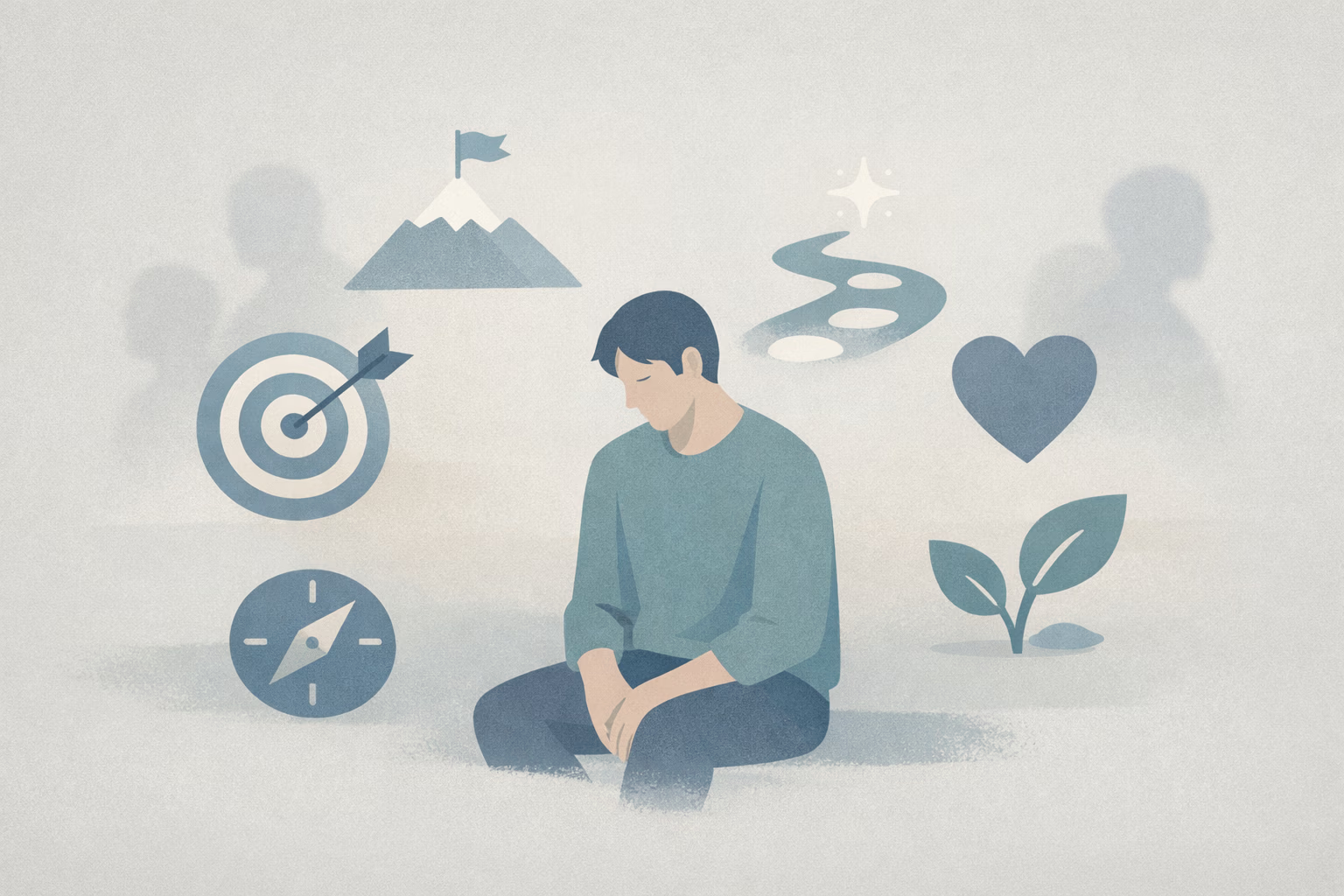
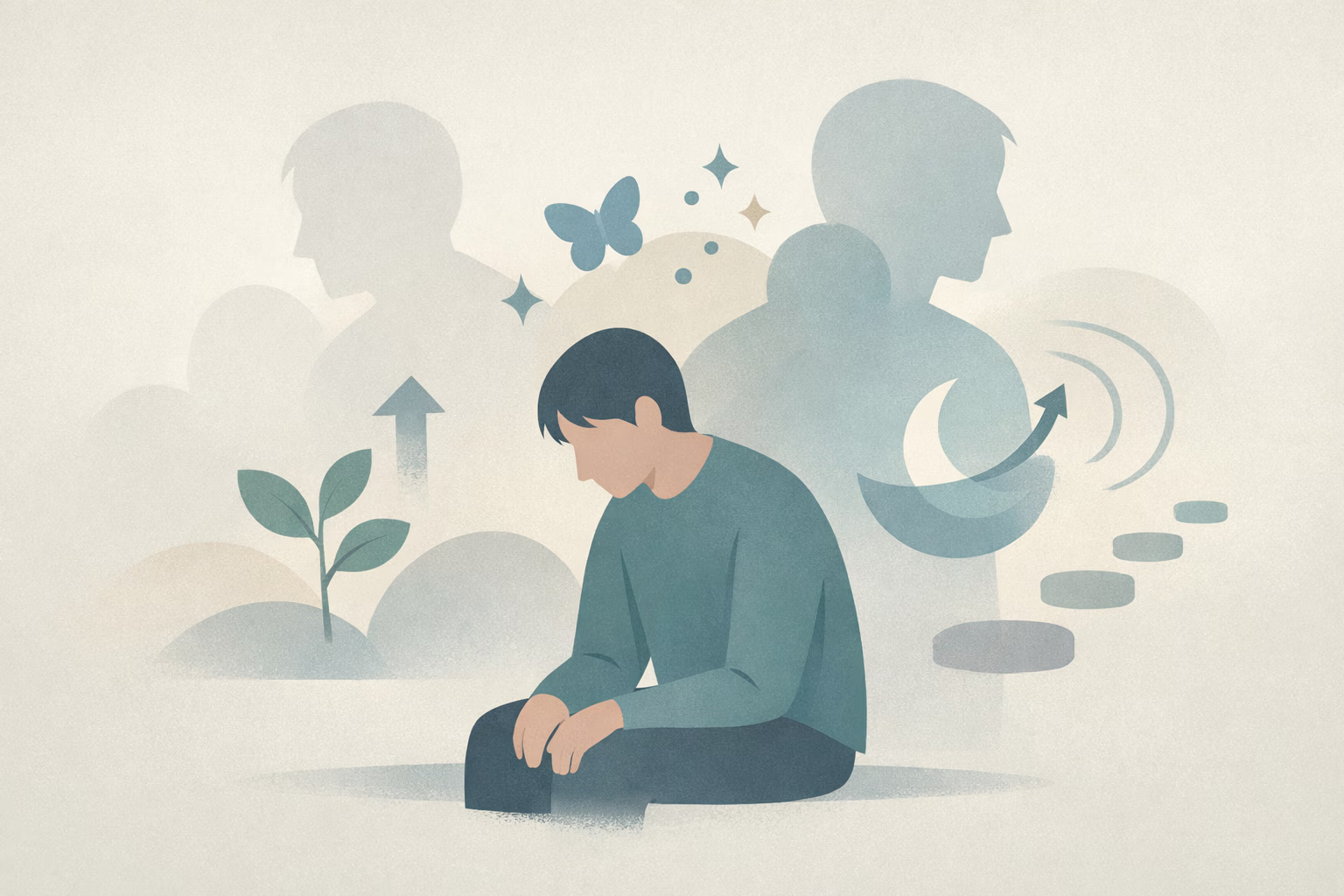
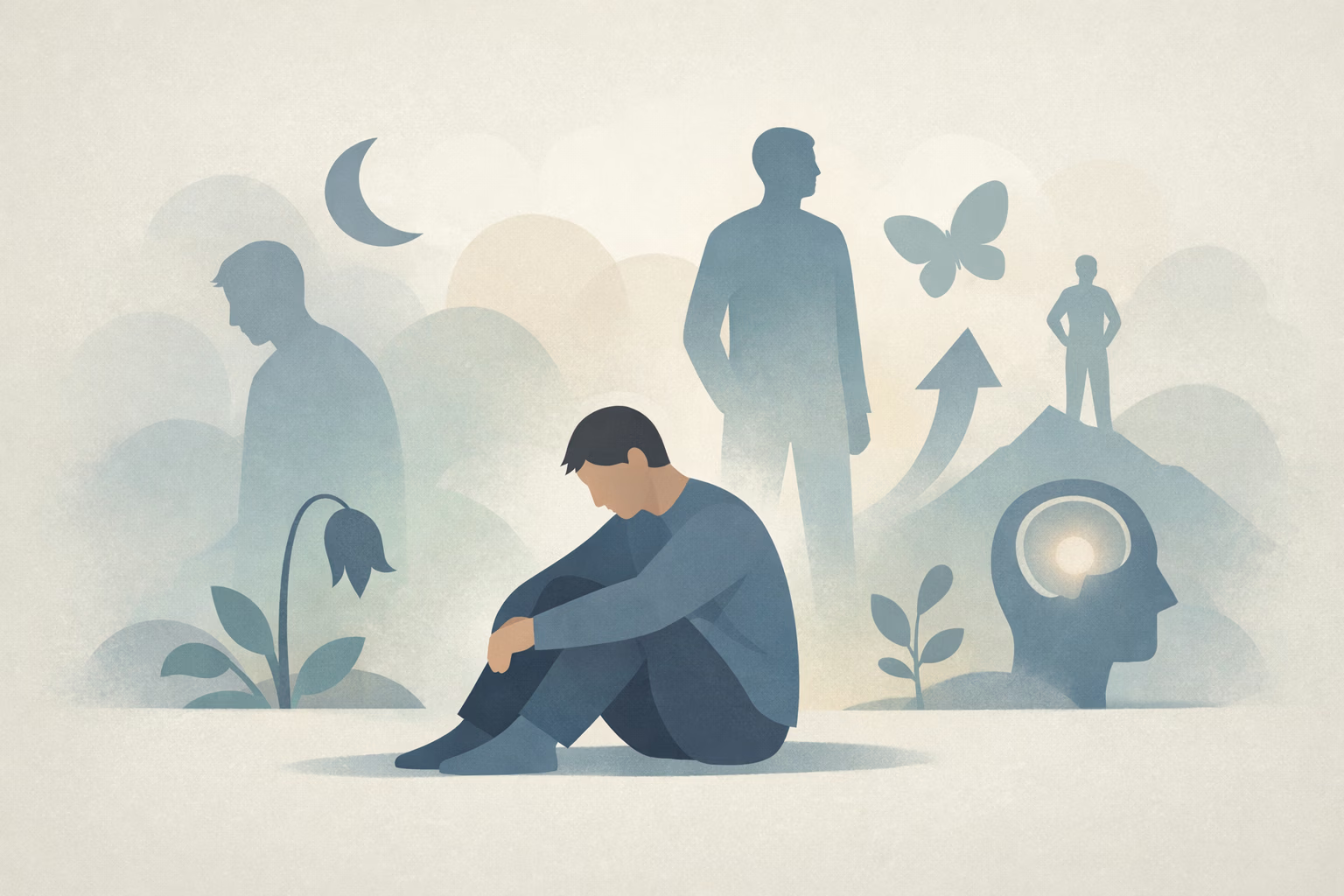
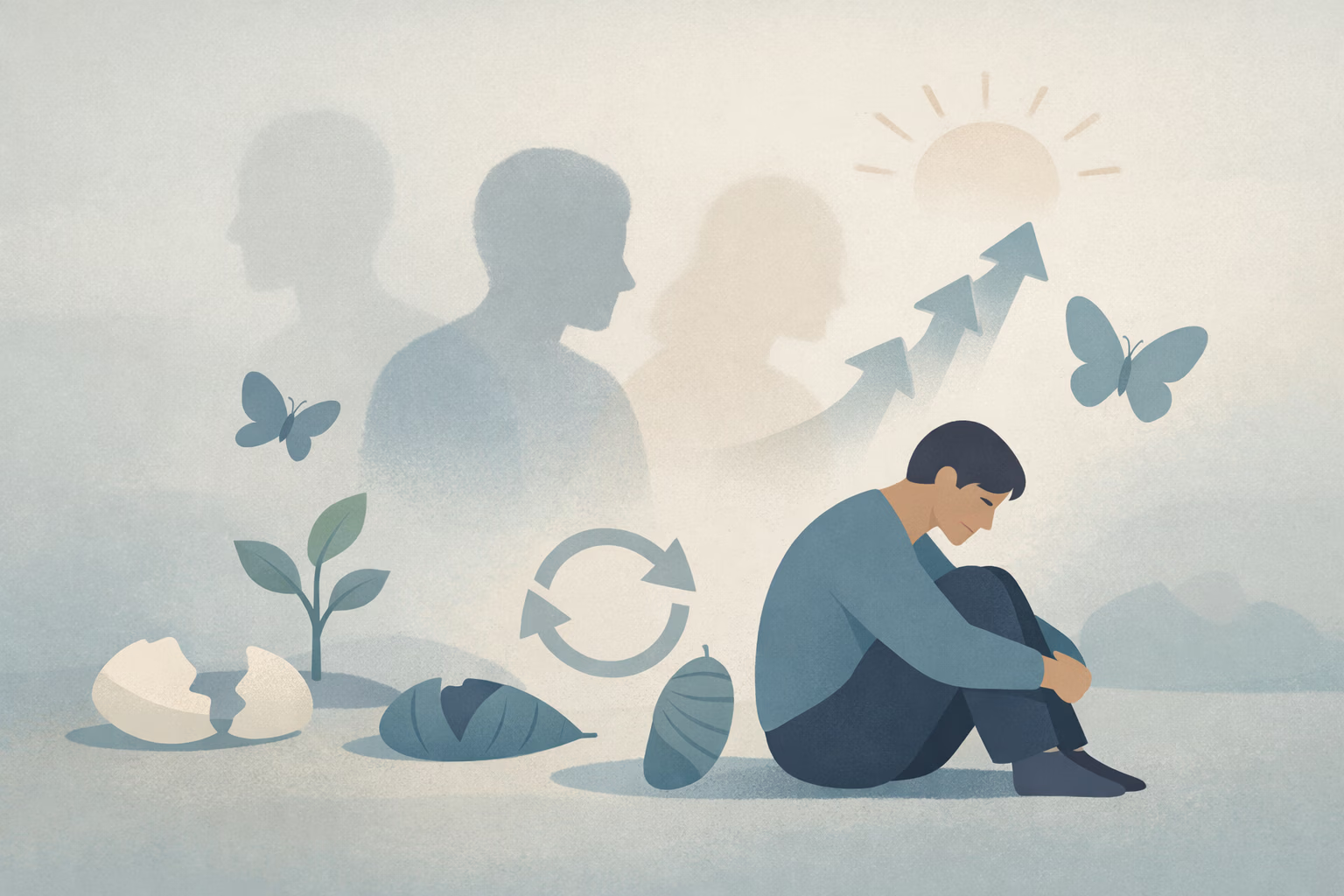
Understanding explains what is happening. Art allows you to feel it—without fixing, judging, or naming. Pause here. Let the images work quietly. Sometimes meaning settles before words do.
One Quiet Window, one insight, one reflection — every Sunday