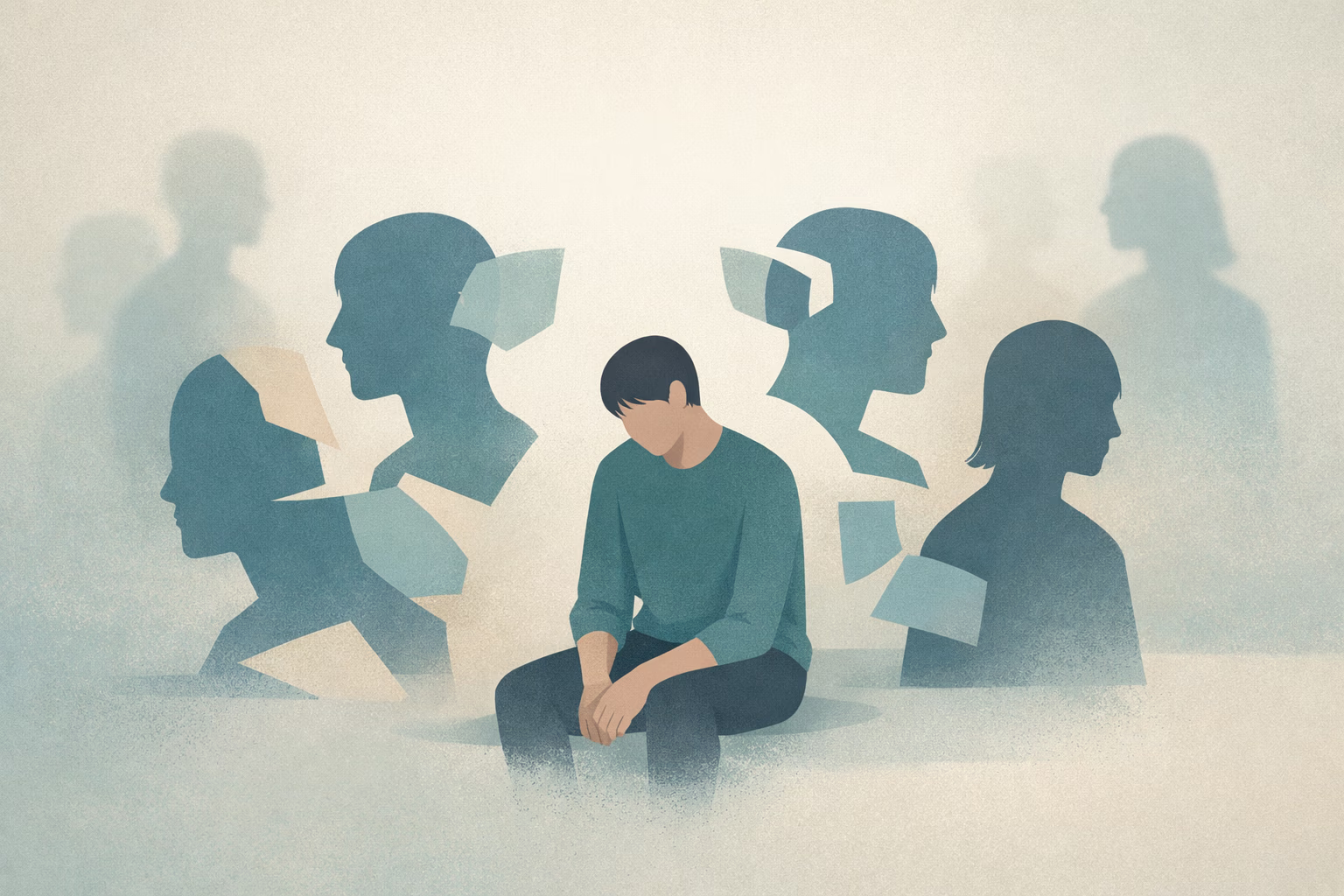
Guided Journaling: When Writing Becomes a Path to Awareness
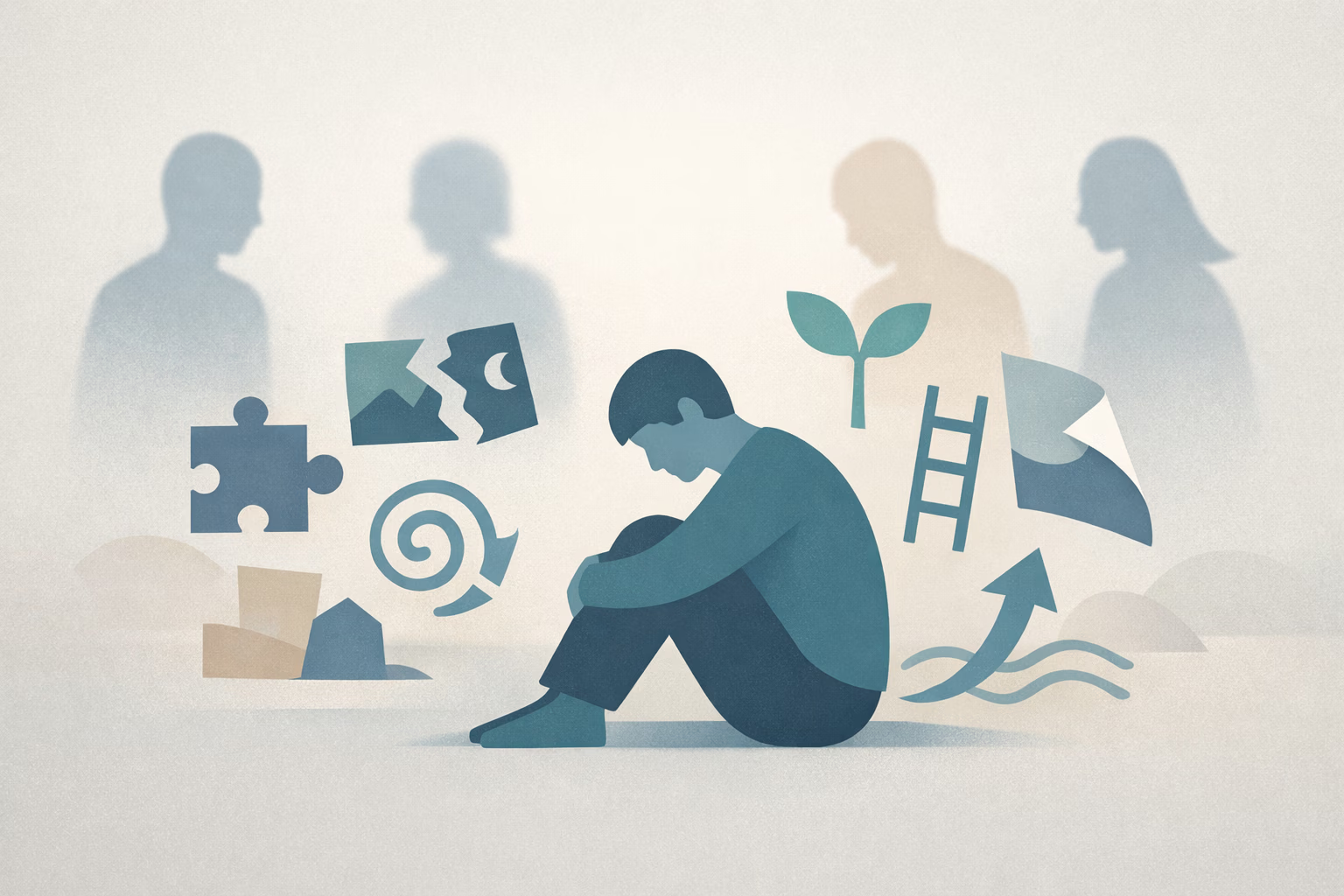
In short: Most people don’t live inside a single “self.” They live inside a story that keeps re-explaining who they are, what they can expect, and what they should avoid. When that story is outdated, it can quietly shape choices, relationships, and even body-level readiness—without anyone deciding it on purpose.
Most people don’t live inside a single “self.” They live inside a story that keeps re-explaining who they are, what they can expect, and what they should avoid. When that story is outdated, it can quietly shape choices, relationships, and even body-level readiness—without anyone deciding it on purpose.
What if the problem isn’t your personality, but an old story that never got a true ending?
Identity repatterning is often described as “rewriting your story.” In real life, it’s less like swapping a thought and more like completing a loop: experiences get organized into a coherent narrative, the nervous system receives a “done” signal, and the next chapter becomes possible without constant self-monitoring.
Feeling trapped isn’t always about circumstances. Sometimes it’s about the internal script that interprets every circumstance in the same direction: “This is how it goes for me,” “This is what people do,” “This is what happens when I try.” That script can make options look unavailable even when they’re technically present.
In the body, this can show up as persistent bracing, urgency, shutdown, or a hard-to-name resistance that arrives before a decision is even made. It’s not a character flaw. It’s a stability system doing its job: keeping life predictable by keeping the storyline consistent. Narrative coherence is strongly tied to how stable and workable life feels from the inside. [Ref-1]
When the story is already decided, the future can start to feel like a rehearsal instead of a choice.
Brains are pattern machines. What repeats becomes easier to activate: interpretations, expectations, and the sequence of reactions that follow. Over time, a personal narrative can function like a shortcut—quickly organizing ambiguous moments into a known meaning. That efficiency can be helpful in chaos, but it also makes old meanings “stick.”
This is one reason certain identity stories feel automatic. The nervous system prefers what it can predict; repeating the same explanation for events can reduce uncertainty in the short term. And repetition—especially when paired with routines and familiar cues—strengthens the sense of “this is me.” [Ref-2]
Storytelling isn’t just entertainment; it’s a social technology. A coherent identity helps other people predict us, and it helps us predict ourselves. That predictability supports coordination, trust, and belonging—basic conditions for human safety.
This is why identity narratives can be remarkably resistant to change. Not because people are stubborn, but because inconsistency can register as risk: social risk, self-trust risk, and the disorienting feeling of not knowing what comes next. Coherence tends to correlate with psychological stability for a reason—it reduces the internal cost of constant recalculation. [Ref-3]
So when an old story clings, it may be doing a safety job—not a sabotage job.
An identity story can be painful and still feel stabilizing. The mind knows how to live inside it. The body knows what posture to take. Relationships may even organize around it. Familiar narratives can deliver a sense of coherence: “At least I know who I am.”
In this way, clinging to a narrative isn’t always about preference; it can be about predictability. The story creates a map, and maps reduce nervous system load. Even a cramped map can feel safer than no map at all. [Ref-4]
From the inside, an old story can feel like stability: consistent routines, familiar roles, predictable outcomes. But stability without renewal can become stagnation—especially when the narrative blocks meaning, growth, or honest adaptation.
There’s a key difference: stable identity supports flexible response; rigid identity requires constant maintenance. A story that once protected you can start demanding more energy to keep it believable. Rituals and traditions can support meaning and belonging, but when the “ritual” is repeating a limiting self-definition, the payoff shrinks over time. [Ref-5]
Sometimes what looks like “who I am” is actually “what I’ve had to keep reinforcing.”
Avoidance is often framed as an emotional problem. Structurally, it can be simpler: a loop that prevents completion. If a narrative predicts a certain consequence (“If I speak up, I’ll lose connection”), the system may bypass the moment where new evidence could arrive. Not because you’re fragile, but because the loop protects coherence by keeping outcomes consistent.
Over time, the story becomes self-sealing. It repeats, life organizes around it, and the identity stays intact—at the cost of lived alignment. Narrative approaches often describe this as a pattern that can be “re-authored,” but the deeper shift is not the insight itself; it’s the completion of experiences that were previously left unresolved or untested in real conditions. [Ref-6]
Old narratives don’t always announce themselves as thoughts. They show up as repeatable patterns: the same relational roles, the same “type” of burnout, the same stalled decision points. The issue is rarely a lack of wanting. It’s that the identity story is doing a tight job of keeping the future consistent.
Some patterns people recognize include: [Ref-7]
None of these make you broken. They make you adaptive in an environment where your system hasn’t received a settled signal that something is complete.
Identity isn’t just self-esteem. It’s orientation—what you expect from life, what you interpret as possible, and what kind of effort feels worth it. When identity stays locked to an outdated narrative, the range of viable actions narrows. Life becomes less responsive.
The consequence is often not dramatic collapse, but slow meaning loss: fewer experiences register as “this counts,” “this matters,” “this is me.” Instead, energy goes into managing discomfort, maintaining roles, or repeating explanations that keep the system from having to renegotiate who you are. In narrative-focused change work, this is part of why re-authoring matters: it reopens pathways for purpose-driven behavior and more accurate self-concept. [Ref-8]
It’s possible to intellectually reject a story and still live inside it. That’s because repetition doesn’t require belief; it requires activation. Each time the narrative runs—through rumination, automatic interpretation, or rehearsed self-description—the pathway gets reinforced. The brain learns, “This is the route we take.”
Narrative therapy describes this as thickening a story through retelling, and re-authoring through developing alternative accounts with supporting details. [Ref-9] In nervous system terms, a repeatedly activated narrative keeps the body prepared for the same category of outcome. The system stays recruited, because the story has not reached an endpoint that signals completion.
The sticky part isn’t the thought. It’s the loop.
Reflection can help, but not because “insight fixes you.” Understanding is not the same as integration. Reflection is more like a staging area: a place where experience can be organized, sequenced, and given a coherent arc—so it can eventually settle into identity rather than keep reactivating as unfinished business. [Ref-10]
Practices like journaling, mindful attention, or structured prompts are often used in narrative work because they slow the story down enough to notice its default shape: what gets emphasized, what gets omitted, what endings are assumed. In the best case, this creates room for alternative interpretations to exist alongside the old one—without forcing immediate emotional intensity or “positive reframing.”
Not a new slogan—more like a new storyline that can hold the actual facts.
Identity stories are social. They form in relationship, and they often update in relationship. When someone trustworthy reflects you back with accuracy and steadiness—without collapsing you into a label—it can reduce the nervous system cost of changing your self-concept.
This is one reason coaching, mentoring, and therapeutic relationships can be powerful: they offer an external stabilizer while your internal narrative reorganizes. Narrative meaning-making and integration are supported by context, witness, and coherent reflection—not just private effort. [Ref-11]
When a new identity narrative begins to integrate, it usually doesn’t feel like constant enthusiasm. It often feels like reduced internal friction. Choices require less justification. You don’t have to rehearse who you are before acting. The system spends less energy maintaining coherence because coherence is becoming lived.
People often describe increased clarity and steadiness—not as a performance, but as a capacity return. The story doesn’t need to be repeated as often because it’s supported by completed experiences that confirm it. This is a central marker of narrative change: the new account becomes more detailed, more flexible, and more consistent with behavior over time. [Ref-12]
It’s quieter inside—not because life is perfect, but because it doesn’t need constant explaining.
Maintaining an outdated narrative can be surprisingly expensive. It requires vigilance: scanning for evidence, managing impressions, rehearsing explanations, bracing for predicted outcomes. As the narrative loosens and a truer storyline takes shape, that maintenance cost drops.
This is when many people notice an energy shift. Not a dramatic makeover, but a reallocation: more capacity for decisions that fit, relationships that are less role-bound, and responses that are proportionate to the present moment. In research on reappraisal and growth-oriented meaning-making, the benefit isn’t endless mental effort—it’s the ability to relate to challenge without getting stuck in the same constricting interpretation. [Ref-13]
The goal isn’t a “better story” you have to recite. It’s a story that no longer has to fight the present to stay alive.
When the same narrative returns again and again, it’s rarely because you’re unwilling to change. Repetition is often a signal: the current identity story is carrying unresolved loops, outdated predictions, or roles that no longer match your values and lived reality.
Seen this way, identity repatterning isn’t a self-improvement project. It’s a coherence project. The system is trying to complete something so it can stand down. And as meaning becomes more structurally supported—by real endings, real evidence, and real alignment—agency tends to feel less like force and more like orientation. [Ref-14]
Changing the stories that define you doesn’t mean denying what happened or pressuring yourself into permanent positivity. In fact, constant “reframing” can become its own strain when it turns into nonstop mental work. [Ref-15]
What tends to last is quieter: a narrative that fits the facts, matches your values, and can absorb new chapters without collapsing. When that kind of story takes root, the nervous system gets more completion signals. Life becomes less about defending an identity and more about inhabiting one.
From theory to practice — meaning forms when insight meets action.
Because brains are pattern machines — what repeats becomes easier to activate. A personal narrative functions like a shortcut, quickly organizing ambiguous moments into a known meaning. The nervous system prefers what it can predict, so repeating the same explanation reduces uncertainty in the short term. Repetition strengthens the sense of this is me. The sticky part isn't the thought; it's the loop. You can intellectually reject a story and still live inside it, because repetition doesn't require belief — it requires activation. Each retelling thickens the pathway, even when you disagree with the conclusion.
Because an identity story can be painful and still feel stabilizing. The mind knows how to live inside it, the body knows what posture to take, relationships organize around it. Familiar narratives deliver coherence: at least I know who I am. Clinging isn't always preference; it's predictability. The story creates a map, and maps reduce nervous system load. Even a cramped map can feel safer than no map at all. What looks like who I am is sometimes what I've had to keep reinforcing — a safety job, not a sabotage job. The story is doing work, just outdated work.
Identity can update, but not through slogan-replacement. Reflection helps not because insight fixes you, but because it slows the story down enough to notice its default shape — what gets emphasized, what gets omitted, what endings are assumed. The deeper shift is completion of experiences previously left unresolved. Practices like journaling or trusted reflection create staging areas where alternative interpretations can exist alongside the old one. The new story becomes more detailed, more flexible, more consistent with behavior over time. Not a new slogan — a new storyline that can hold the actual facts.
It usually doesn't feel like constant enthusiasm — it feels like reduced internal friction. Choices require less justification. You don't have to rehearse who you are before acting. The system spends less energy maintaining coherence because coherence is becoming lived. Maintaining an outdated narrative is expensive: scanning for evidence, managing impressions, rehearsing explanations, bracing for predicted outcomes. As that maintenance drops, energy reallocates: more capacity for decisions that fit, relationships less role-bound, responses proportionate to the present. The goal isn't a better story you recite — it's a story that no longer has to fight the present to stay alive.
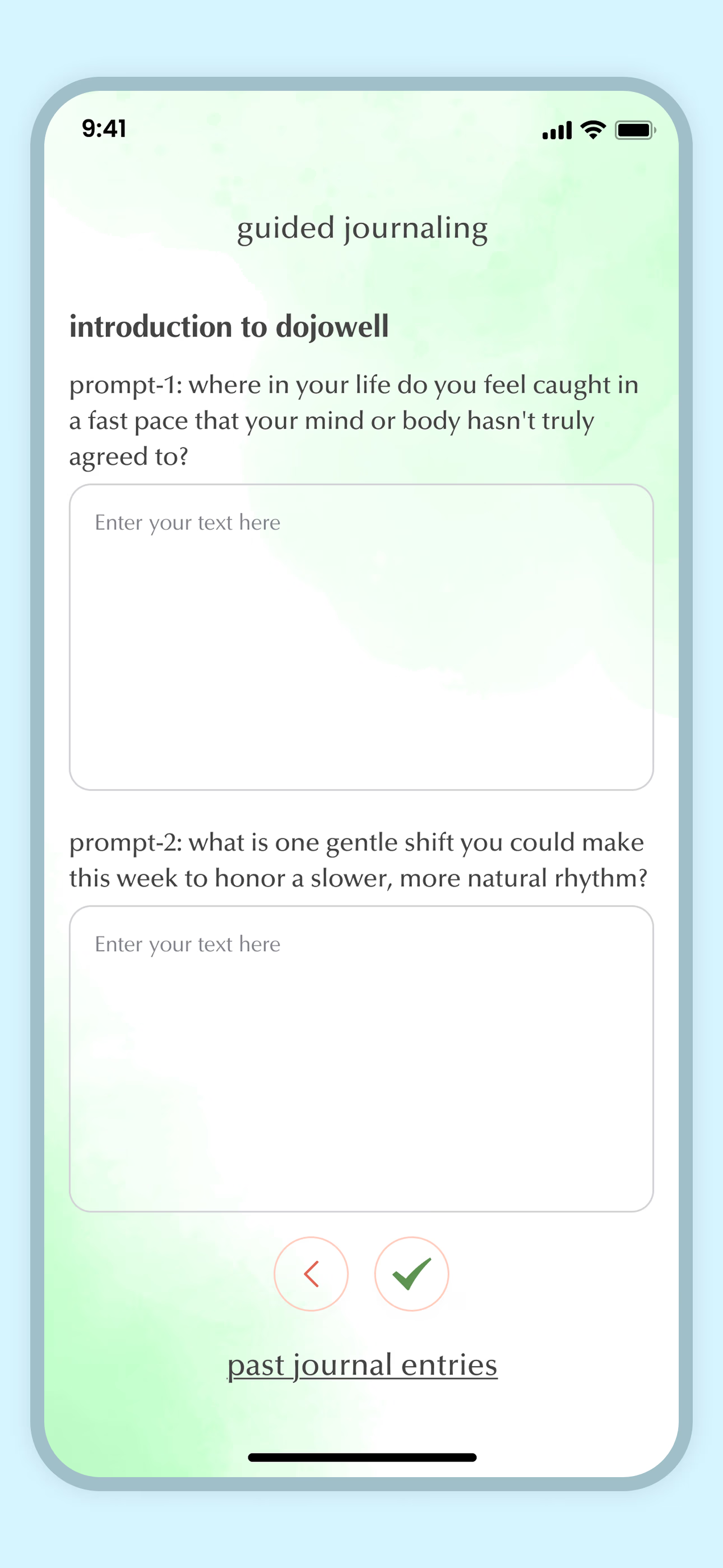
From Science to Art.
Understanding explains what is happening. Art allows you to feel it—without fixing, judging, or naming. Pause here. Let the images work quietly. Sometimes meaning settles before words do.
One Quiet Window, one insight, one reflection — every Sunday