
The Illusion of a Fixed Identity: You’re Not “Stuck”
In short: Many people carry a quiet pressure to be consistent: to have a stable personality, a clean story, a recognizable “me.” When life changes—or when you change—this pressure can make perfectly normal adaptation feel like failure. What if the problem isn’t that you’re inconsistent—what if it’s that your environment keeps asking you to stay the same?
Many people carry a quiet pressure to be consistent: to have a stable personality, a clean story, a recognizable “me.” When life changes—or when you change—this pressure can make perfectly normal adaptation feel like failure.
What if the problem isn’t that you’re inconsistent—what if it’s that your environment keeps asking you to stay the same?
A “fixed identity” can feel like certainty, but it often functions more like a brace: useful for stability in the short term, costly when growth is needed. In reality, identity is less a solid object and more a living pattern—shaped by context, relationships, and whether experiences get the chance to fully complete.
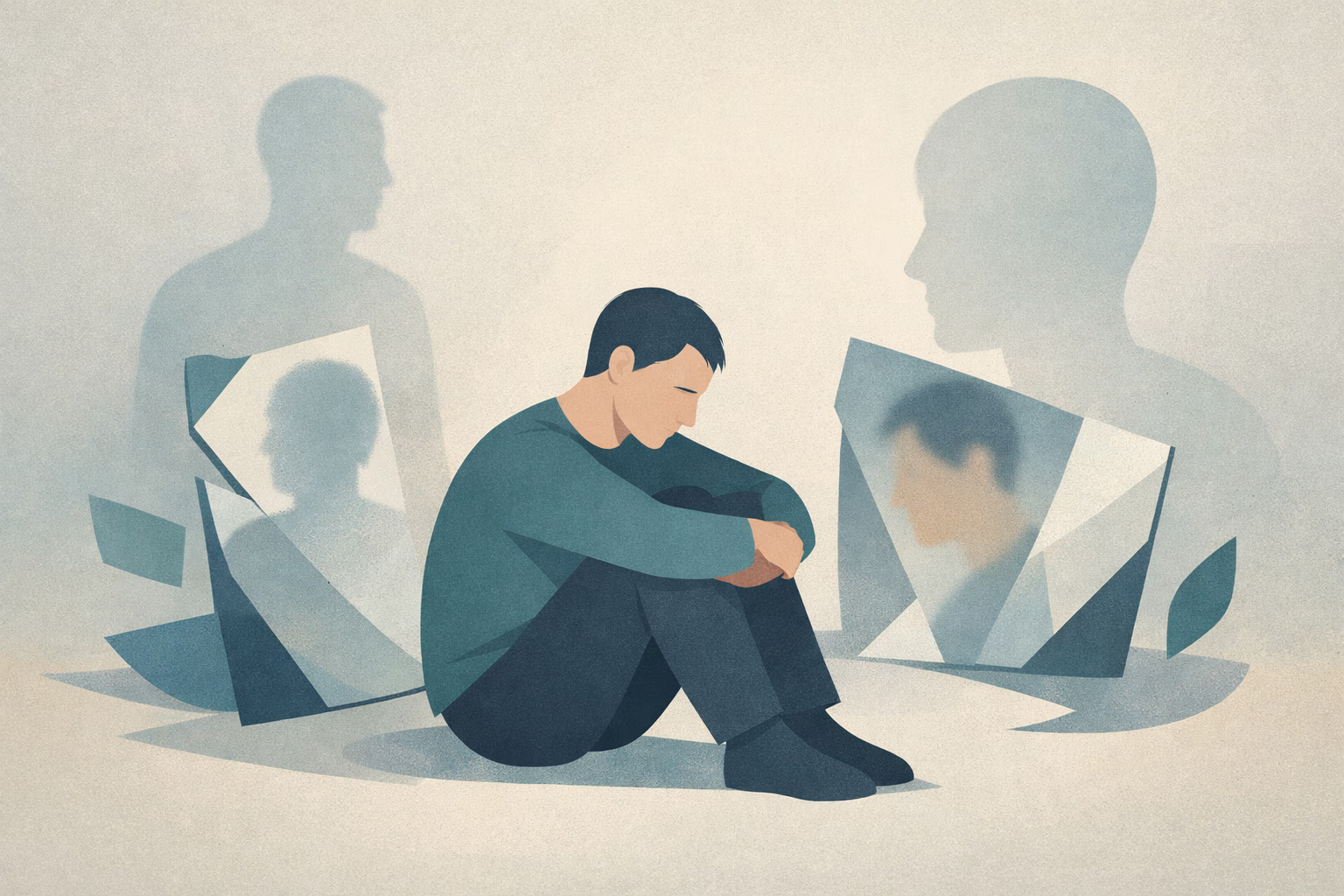
The feeling of being stuck usually isn’t a sign that you lack potential. More often, it’s a sign that your life has outgrown an old role, while your inner story is still organized around it.
Identity tends to form around what once helped you belong, cope, or stay safe: “the reliable one,” “the achiever,” “the low-maintenance friend,” “the one who doesn’t need help.” These aren’t flaws—they’re adaptations. The stuckness arrives when today’s reality conflicts with yesterday’s organizing story, and your system has to hold both at once.
That internal friction can show up as mental looping, fatigue, or a sense that nothing “lands.” In meaning terms, it’s not a lack of insight—it’s a lack of closure: an old narrative still running without a clean end. [Ref-1]
Human minds don’t just store facts; they organize experience into ongoing narratives. Once a self-concept becomes the “default,” attention and memory tend to reinforce it: we notice confirming evidence, explain away contradictions, and keep editing ourselves back into a familiar shape. [Ref-2]
This is less about fear and more about cost. Updating identity requires energy: it asks your nervous system to re-map what to expect from you, what you can expect from others, and what outcomes are likely. When your stress load is high, the system naturally leans toward the known—even if the known is uncomfortable—because predictability is a form of regulation.
So change can feel “threatening” without any dramatic emotion attached. It can simply feel unreal, unstable, or socially risky, because the story that used to coordinate your life has not yet been fully replaced by a completed, lived alternative.
In social species, stability matters. For humans, identity is partly an interpersonal signal: it helps groups coordinate, predict behavior, assign roles, and build trust over time. A coherent “who I am” makes it easier for others to know what to expect—and for you to know how to act. [Ref-3]
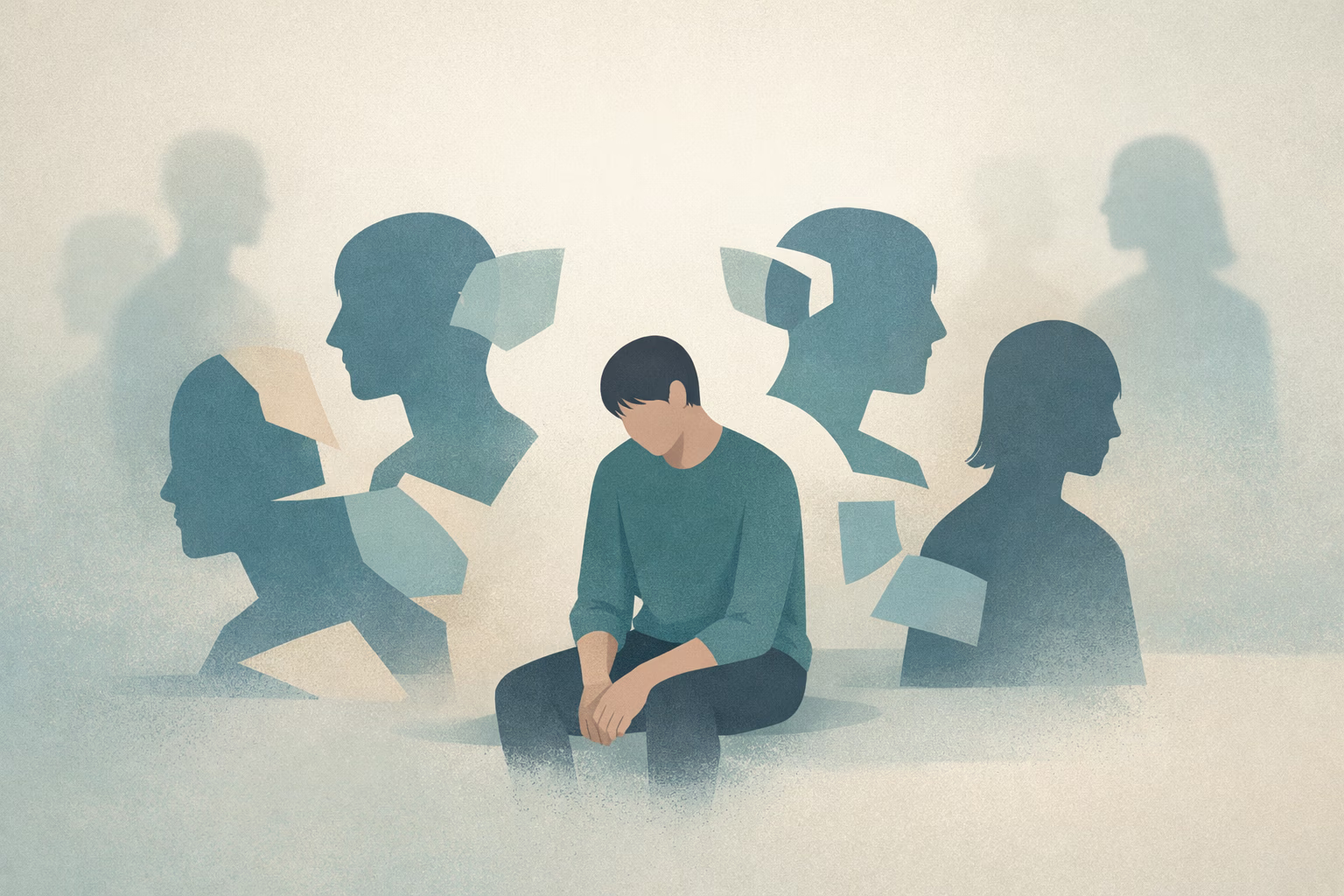
That’s why identity can feel bigger than personal preference. It’s tied to belonging, reputation, and the small daily negotiations of social life. When you shift, other people may need to update their expectations, too—and that update isn’t always immediate or smooth.
From a nervous system perspective, the “self” is not just an idea. It’s a stabilized pattern of cues: familiar routines, familiar relationships, familiar feedback. When those cues change faster than your system can integrate them, it makes sense to default to older scripts.
A fixed identity often provides short-term relief because it reduces decision load. It answers questions quickly: “What would someone like me do?” It can also reduce social friction: consistency reads as reliability, and reliability often gets rewarded. [Ref-4]
But the comfort is often borrowed. If the identity is maintained through constant self-monitoring—editing feelings, filtering choices, keeping life within a narrow lane—your system stays slightly activated. The story holds, but it doesn’t settle.
Sometimes “knowing who I am” is less about truth, and more about not having to renegotiate my life every day.
This is how a stable label can become a kind of ceiling: protective at first, then quietly constraining as your reality grows more complex.
The fixed-identity illusion promises stability, but it can create stagnation: a repeated set of choices that look coherent from the outside while producing friction on the inside. Over time, you may notice a subtle split between the life you’re living and the life that feels like it belongs to you. [Ref-5]
This isn’t a moral problem or a motivation problem. It’s a coherence problem. When new needs and values arise, but the old story doesn’t make room for them, your system has to manage constant mismatch.
Missed opportunities often aren’t missed because you “lack courage.” They’re missed because the old identity doesn’t have a completed bridge to the new one—so novelty stays unintegrated, and familiar patterns keep winning by default.
Identity stories are meant to help experiences make sense over time. When experiences complete—when they have a beginning, middle, and real ending—they can integrate into a stable sense of self. When they don’t, the narrative keeps looping. [Ref-6]
A meaning loop isn’t “overthinking.” It’s what happens when your system doesn’t receive a clear “done” signal. Without completion, you may keep returning to the same internal lines:
The loop can look like avoidance or rigidity, but underneath it is an incomplete narrative architecture—an identity that hasn’t been allowed to update through lived closure.
Fixed identity is often quieter than we expect. It’s not always a loud self-judgment. More often, it’s a set of invisible constraints that steer choices back toward the familiar. Personal myths—simple, repeatable stories about “who I am”—can keep life organized, even when they’re outdated. [Ref-7]
Common patterns include:
These are regulatory strategies. They reduce uncertainty. The cost is that they also reduce the raw material needed for an updated identity to form.
When identity is treated as fixed, the system tends to interpret new experiences as threats to coherence rather than inputs for growth. That can quietly erode resilience—not because you’re fragile, but because your range of “allowed” responses gets narrower. [Ref-8]
Creativity often declines in the same way: not as a loss of talent, but as a loss of permission. If the story says “I’m not that kind of person,” your mind stops offering options in that direction. The identity script becomes a filter, not a mirror.
Alignment also becomes harder. Values may shift with age, relationships, or reality. If your self-concept can’t move with them, you may experience a particular kind of fatigue: the exhaustion of maintaining a self that no longer matches your life.
Under stress, the nervous system prioritizes predictability. This is why, during high load, people often return to old roles and old explanations, even after genuine growth. It’s not sabotage; it’s a stabilizing reflex.
Attachment to the familiar identity can also be reinforced by immediate feedback loops: praise for staying in character, relief when you avoid social friction, quick certainty when you choose what you’ve always chosen. Over time, the fixed story starts to feel like the safest option—not because it’s true, but because it’s rehearsed. [Ref-9]
What if “going back to the old you” is simply what happens when life hasn’t offered enough completion to support the new one?
Without closure—without lived evidence that the newer identity can hold—you get a structural pull toward the known.
Reflection and narrative awareness can be useful because they loosen the grip of a single storyline. They can help you notice that “who I am” is often a sentence you repeat, not a finished description of a human being. [Ref-10]
At the same time, awareness isn’t the same thing as integration. You can understand your patterns perfectly and still feel pulled by them, because stability doesn’t arrive from insight alone. It arrives when experience completes—when new ways of being have enough repetition, enough relational confirmation, and enough real-world endings to become settled identity.
In other words: flexibility begins as a cognitive opening, but it becomes real when the body stops needing to defend the old story for regulation. That shift is quieter than a breakthrough. It often feels like less urgency, less self-editing, and more room for life to register and conclude.
Identity is not formed in isolation. We calibrate “who we are” through response: being seen, being met, being corrected, being welcomed back after change. In supportive relationships, feedback can function as a safety cue that says: your evolution won’t cost you everything.
This is part of why fixed identity can soften in the presence of trust. When connection is stable, the system can afford experimentation because social consequence is less catastrophic. The self doesn’t have to be held so tightly. [Ref-11]
When someone can hold a wider version of you, your nervous system stops treating change as social freefall.
Relational stability doesn’t “fix” identity, but it can reduce the load that keeps old roles locked in place.
As rigidity eases, people often notice a subtle increase in capacity: more willingness to engage with new contexts, more curiosity, less need to immediately decide what something “means” about them. This isn’t about becoming emotionally intense. It’s about the system tolerating more information without collapsing into a single label. [Ref-12]
Coherence returning can look like:
In Meaning Density terms, this is an identity gaining bandwidth: experiences can land, complete, and become part of you without demanding a defensive rewrite.
When the self isn’t organized around constant maintenance, energy becomes available for something else: direction. Not a forced reinvention, but a steadier ability to choose in alignment with values—because your identity can flex without shattering.
Purposeful self-leadership tends to feel less like pushing and more like orientation: actions making sense inside a lived narrative. This is one reason values-based coherence can stabilize behavior more reliably than pressure or motivation. [Ref-13]
You may still have old reflexes—everyone does. The difference is that those reflexes no longer define the whole story. They become weather, not identity. And over time, the self starts to feel less like a fixed statue and more like a trustworthy process.
If you’ve clung to a stable definition of yourself, it likely helped you navigate a real set of conditions. It brought predictability, belonging, and a manageable sense of who you needed to be.
But protection isn’t the same as completion. When life changes, the question isn’t “Who am I really?” as if there’s one hidden answer. The question is whether your current story allows your lived experience to finish its arcs—so meaning can consolidate instead of looping. [Ref-14]
Agency often returns not as a sudden confidence, but as a quieter permission: the sense that you are allowed to be a moving person in a moving life, and that coherence can be built through what becomes real, repeated, and done.
A dynamic identity isn’t a lack of self. It’s a sign of adaptation: a nervous system and a narrative system updating to match reality.
When your self-concept is flexible enough to include new chapters, you don’t have to spend as much energy protecting an old storyline. Life can integrate instead of fragment. And meaning can feel less like something you chase, and more like something that gathers—naturally—when your experiences are allowed to complete. [Ref-15]
From theory to practice — meaning forms when insight meets action.
Because life has often outgrown an old role while your inner story is still organized around it. Identity tends to form around what once helped you belong, cope, or stay safe — the reliable one, the achiever, the low-maintenance friend. These aren't flaws; they're adaptations. Stuckness arrives when today's reality conflicts with yesterday's organizing story, and your system has to hold both at once. That friction shows up as mental looping, fatigue, or a sense that nothing lands. It's not a lack of insight — it's a lack of closure: an old narrative still running without a clean end. The Meaning Loop hasn't completed.
Because updating identity is metabolically expensive. The mind doesn't just store facts; it organizes experience into ongoing narratives, then notices confirming evidence and edits ourselves back into a familiar shape. Updating asks the nervous system to re-map what to expect from you, what to expect from others, and what outcomes are likely. When stress load is high, the system leans toward the known — even uncomfortable knowns — because predictability is a form of regulation. Change can feel threatening without dramatic emotion. It can feel unreal or unstable because the old story hasn't been replaced by a completed, lived alternative yet.
Because under stress, the nervous system prioritizes predictability. During high load, people return to old roles and old explanations even after genuine growth — that's not sabotage, it's a stabilizing reflex. Old identities are also reinforced by quick feedback loops: praise for staying in character, relief from avoiding social friction, fast certainty when you choose what you've always chosen. The fixed story feels safest not because it's true, but because it's rehearsed. Going back to the old you is what happens when life hasn't offered enough completion to support the new one. Without lived evidence, the structural pull toward the known wins.
Through completion plus relational confirmation. Awareness loosens the grip of a single storyline — you notice that who I am is often a sentence you repeat, not a finished description. But understanding patterns isn't the same as integration. Stability arrives when new ways of being have enough repetition, enough relational confirmation, and enough real-world endings to become settled identity. Trust matters here: when someone can hold a wider version of you, your nervous system stops treating change as social freefall. The body stops needing to defend the old story for regulation. Coherence returns through what becomes real, repeated, and done.
From Science to Art.
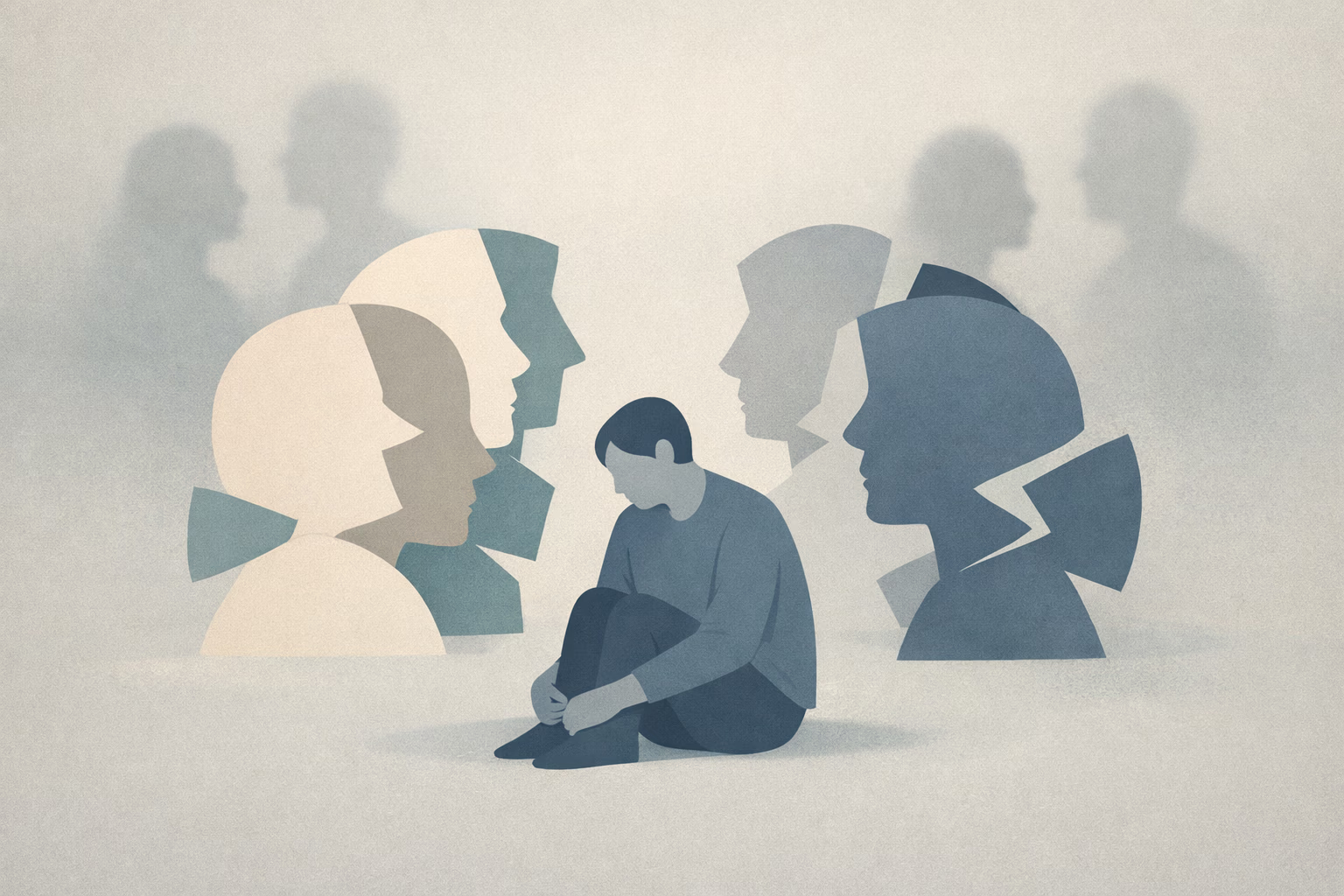
Understanding explains what is happening. Art allows you to feel it—without fixing, judging, or naming. Pause here. Let the images work quietly. Sometimes meaning settles before words do.
One Quiet Window, one insight, one reflection — every Sunday