Identity Disruption: When Life Events Force Reinvention
In short: There are seasons where you can look at your own life and feel strangely unfamiliar inside it. You might be doing the “right” things, showing up, staying functional—and still feel like your inner map no longer matches the territory.
There are seasons where you can look at your own life and feel strangely unfamiliar inside it. You might be doing the “right” things, showing up, staying functional—and still feel like your inner map no longer matches the territory.
What if “not recognizing yourself” isn’t a defect, but a transition state?
Identity confusion often appears when older roles, habits, and self-definitions loosen faster than new ones can consolidate. In that gap, the nervous system keeps scanning for stable signals: Who am I with these people? What matters now? What do I do next? The disorientation is real—and also intelligible.
Identity confusion isn’t only a philosophical question. It can show up as a lived, physiological experience: uncertainty that doesn’t resolve, a sense of being slightly “off,” and a loss of ease in choices that used to feel automatic. The mind may interpret this as something being wrong, but the system may simply be operating without reliable reference points. [Ref-1]
People often describe it as detachment from familiar behaviors or roles—like your personality is missing its usual anchors. Not because you “forgot yourself,” but because your internal signaling is recalibrating while old cues are fading.
Identity is partly built from repeated patterns: what you do, what you’re rewarded for, who you’re recognized as, and which stories reliably explain your choices. Over time, those patterns become efficient—less effort, more “this is just me.”
During change, that efficiency can drop. Older networks (habits, roles, self-explanations) lose strength when they’re no longer reinforced, but newer networks need repetition and context before they provide the same sense of certainty. In the middle, you get ambiguity: not a blank self, but an unfinished one. [Ref-2]
When the old story stops fitting, the nervous system doesn’t immediately trust the new one. It waits for proof.
From an evolutionary perspective, a coherent identity is not a luxury—it’s a social and survival tool. A stable “who I am” helps you coordinate with others, predict yourself under stress, and maintain belonging without constant renegotiation. When that coherence wobbles, the system often increases vigilance. [Ref-3]
This is why identity shifts can feel destabilizing even when they’re positive. It’s not that you’re doing something wrong; it’s that your narrative system is designed to prefer continuity. Rapid transitions—new environments, changed relationships, value shifts, losses, awakenings—can outpace the brain’s ability to produce a clear, settled signal.
When the system lacks closure, it reaches for what’s familiar. Old identity fragments—roles, aesthetics, routines, reputations—can provide temporary relief because they offer immediate predictability. Even if they no longer fully fit, they reduce the cost of uncertainty for a moment. [Ref-4]
This can look like returning to former versions of yourself in certain rooms, with certain people, or under stress. Not because you’re “in denial,” but because familiar structures create a stand-in for coherence while the new identity is still forming.
Why does familiarity calm the system so quickly?
Because it supplies a ready-made explanation. And explanations—especially social ones—are powerful safety cues.
Many people assume identity confusion means they’re broken or regressing. But in identity development research, periods of exploration and “in-between-ness” are common, especially when life conditions change. Disorientation can be the mind’s signal that an older structure has dissolved and a new one is underway. [Ref-5]
What matters is not whether confusion appears, but how long the system is asked to stay in an unresolved state—without completion, without stable feedback, without a lived sense of “this fits now.” Confusion is often less about weakness and more about timing: the old has ended, and the new has not yet earned its solidity.
In a transition, the system wants a “done” signal—something that marks the shift as real. When that signal doesn’t arrive, hesitation can become a loop: not because you’re avoiding feelings, but because the environment isn’t delivering enough closure to support a stable next identity.
In practical terms, this can resemble staying in a prolonged moratorium—many possibilities, few consolidations. The system keeps options open because committing without coherence can feel risky at a structural level. [Ref-6]
Over time, the loop can become self-reinforcing: the less consolidated the identity, the more costly decisions feel; the more costly decisions feel, the more the system delays the repetitions that would create consolidation.
Identity confusion often shows up as oscillation—between old habits and new intentions, old social scripts and new values. These aren’t character flaws. They’re signs that integration hasn’t had enough completion to settle.
Narrative research describes how people reconstruct identity through lived sequences—events that become coherent over time, not through a single insight. When the sequence is interrupted or constantly revised, the story remains “open,” and the system stays activated. [Ref-7]
When confusion persists without stabilizing inputs—consistent context, reliable relationships, meaningful roles—confidence often erodes. Not because you’re failing, but because the nervous system learns that internal signals don’t lead to closure.
Prolonged liminality can reduce the sense of agency: choices feel reversible, identity feels negotiable, and the self becomes something you manage rather than inhabit. Over time, this can slow growth and strengthen avoidance loops, simply because nothing is landing as complete. [Ref-8]
It’s hard to trust yourself when your life doesn’t give you enough “evidence” of who you are becoming.
In identity confusion, it’s common to keep checking the old mirror: “What would the old me do?” “How would people recognize me?” “Am I still the person I was?” That can feel stabilizing, but it can also keep the system tethered to outdated cues.
When identity decisions are repeatedly deferred, the nervous system stays in a high-monitoring posture. Instead of settling into a new narrative, it remains in evaluation mode—constantly updating, rarely concluding. Many descriptions of identity crisis highlight this pattern of uncertainty and indecision, not as a moral issue, but as a destabilizing condition. [Ref-9]
What if the problem isn’t that you don’t know who you are, but that nothing has had time to become “you” yet?
There’s a difference between understanding what’s happening and the body actually standing down. Insight can name the pattern, but coherence tends to arrive when experiences complete—when your nervous system receives consistent signals that a new way of being is safe, real, and socially workable.
In the middle phase, small cues often matter more than big conclusions: moments where you feel less split, less performative, less braced. Not as a burst of inspiration, but as a quieter internal “yes” that repeats over time. Some writers describe this as tracking emerging identity cues and stabilizing the system enough to notice what is already forming. [Ref-10]
When load is high, the mind leans toward scanning and self-interrogation. When load drops and contexts become more consistent, the same mind can begin to sort experience into a storyline that holds.
Identity is not built in isolation. Humans stabilize through reflected signals—how we’re received, recognized, and responded to. In transitions, supportive relationships can function like stabilizing mirrors: not telling you who to be, but providing enough safety and continuity for a new self-concept to consolidate.
This is one reason mentorship, community, and steady attachment figures can matter: they reduce the cost of experimentation and lower the nervous system’s need for constant self-justification. Clinical and counseling-oriented descriptions often note that social support helps people move through identity disruption with more stability. [Ref-11]
You don’t need someone to define you. You need enough steadiness around you that you can stop over-defining yourself.
When coherence begins to return, it often isn’t dramatic. It can feel like fewer internal arguments. Less explaining. More follow-through without needing to “convince yourself” first. A grounded sense that your choices are coming from one place, not several competing versions of you.
Clarity here doesn’t mean you have a perfect identity statement. It means your system is getting consistent closure: your actions, relationships, and values are aligning often enough that a lived identity can settle. Many people describe this phase as a quiet identity reorientation—less crisis, more direction. [Ref-12]
As identity consolidates, the system typically spends less energy on protection strategies—overcontrol, withdrawal, constant comparison, urgency to figure it out. Not because life becomes easy, but because the self becomes less negotiable inside you.
This is what integration implies: not a new idea about yourself, but a stabilizing of identity at the level of behavior, expectation, and internal signal. The emerging self becomes something you live, not something you manage. When self-concept and identity begin to align, energy often moves from hesitation toward participation. [Ref-13]
“I recognize myself” can be a physiological experience.
It can feel like your nervous system is no longer waiting for the other shoe to drop.
Identity confusion is often what it feels like when an old coherence has genuinely ended—but the next coherence is still earning its reality. In that sense, the discomfort can be a signal of readiness: your system is no longer able to maintain a story that doesn’t match your life.
Transitions frequently include a liminal phase, where you’re not who you were, and not yet who you’ll be. That in-between is not wasted time; it’s the space where new meanings can take shape through completion and consistency. [Ref-14]
Agency tends to return as your life provides more “done” signals—moments that confirm, repeatedly, what you value and how you move through the world now. Not through pressure, but through coherence.
Not recognizing yourself can be unsettling, but it can also be a sign that your identity is updating in an honest direction. The old self-concept isn’t failing; it’s becoming incomplete.
Over time, self-concept stabilizes when it is supported by lived continuity—roles, relationships, and choices that repeatedly match. That’s when the nervous system can stand down and the self can feel like a place you inhabit again, not a question you have to answer. [Ref-15]
Disorientation is not your identity. It’s a passage your system moves through when the next version of you is becoming real.
From theory to practice — meaning forms when insight meets action.
Because identity confusion isn't a philosophical problem — it's a physiological one. The article describes it as living between reference points: older roles, habits, and self-definitions are loosening faster than new ones can consolidate. The nervous system keeps scanning for stable signals — who am I with these people, what matters now, what do I do next. Decisions feel heavier than they used to. Social situations feel harder to read. Preferences blur. There's more scanning, less settling. This isn't dysfunction. It's what an identity system does when old cues are fading and new ones haven't earned reliability through enough repetition yet.
Usually no — the article reframes it as a transition state rather than dysfunction. In identity development research, periods of exploration and in-between-ness are common, especially when life conditions change. Disorientation is often the mind's signal that an older structure has dissolved and a new one is underway. What matters isn't whether confusion appears, but how long the system is asked to stay unresolved without closure or stable feedback. The disorientation is real and intelligible — not a defect. The old has ended, and the new hasn't yet earned its solidity. That gap is where identity recalibrates, not where it breaks.
Because familiar structures provide immediate predictability when the system lacks closure. The article explains this directly: old identity fragments — roles, aesthetics, routines, reputations — supply ready-made explanations even if they no longer fully fit. Familiarity calms the system quickly because explanations, especially social ones, are powerful safety cues. Returning to former versions of yourself in certain rooms or under stress isn't denial. It's the nervous system reaching for a stand-in for coherence while the new identity is still forming. The system prefers continuity, even imperfect continuity, over an unresolved gap.
Quietly, not dramatically. The article describes coherence returning as fewer internal arguments, less explaining, more follow-through without convincing yourself first. A grounded sense that choices are coming from one place rather than several competing versions of you. Decisions take less energy. Your 'no' becomes cleaner. Social presence feels less like performance. You can imagine a future self without forcing it. This isn't a perfect identity statement — it's the system getting consistent closure: actions, relationships, and values aligning often enough that lived identity can settle. 'I recognize myself' becomes a physiological experience: the body no longer waiting for the other shoe to drop.
From Science to Art.
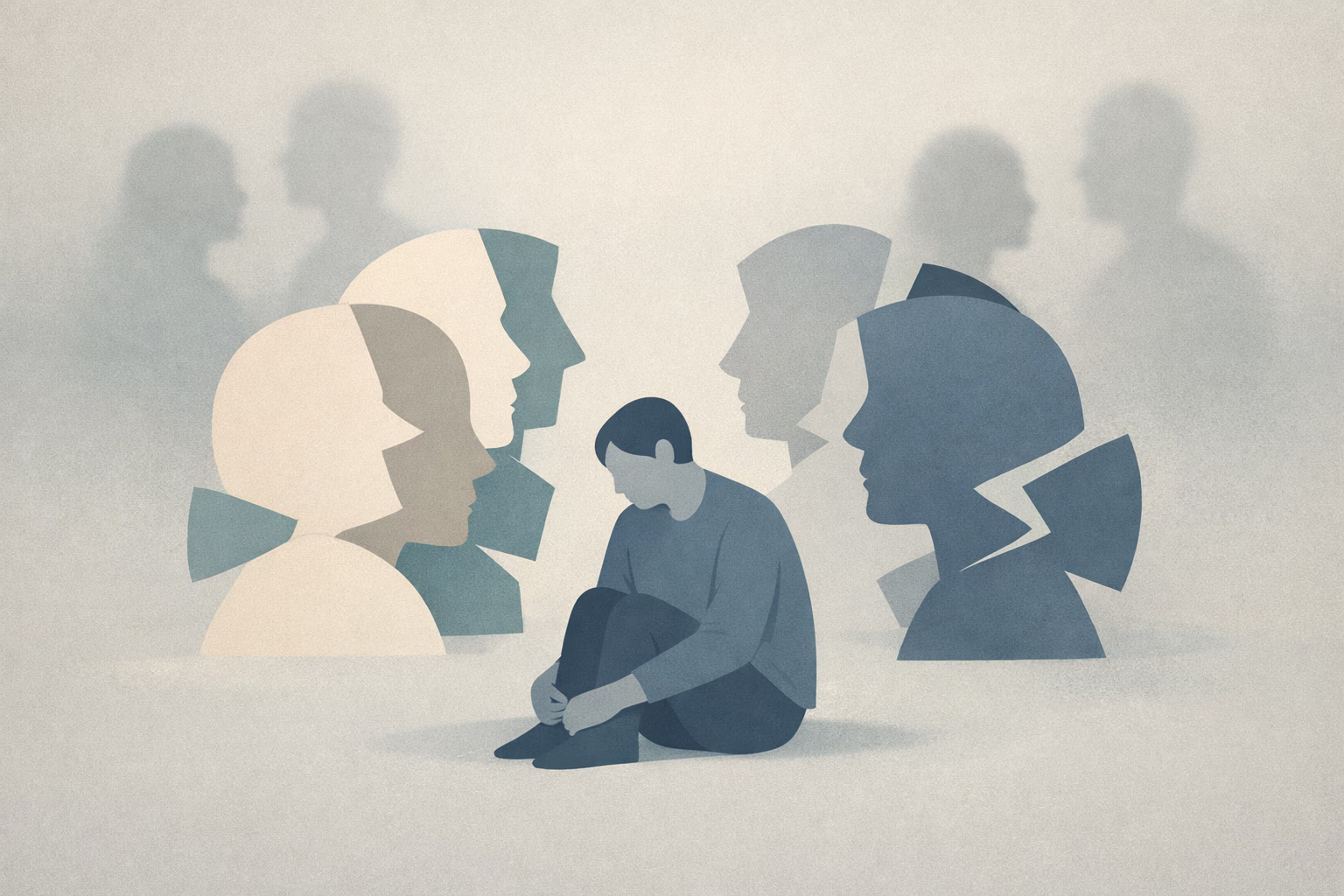
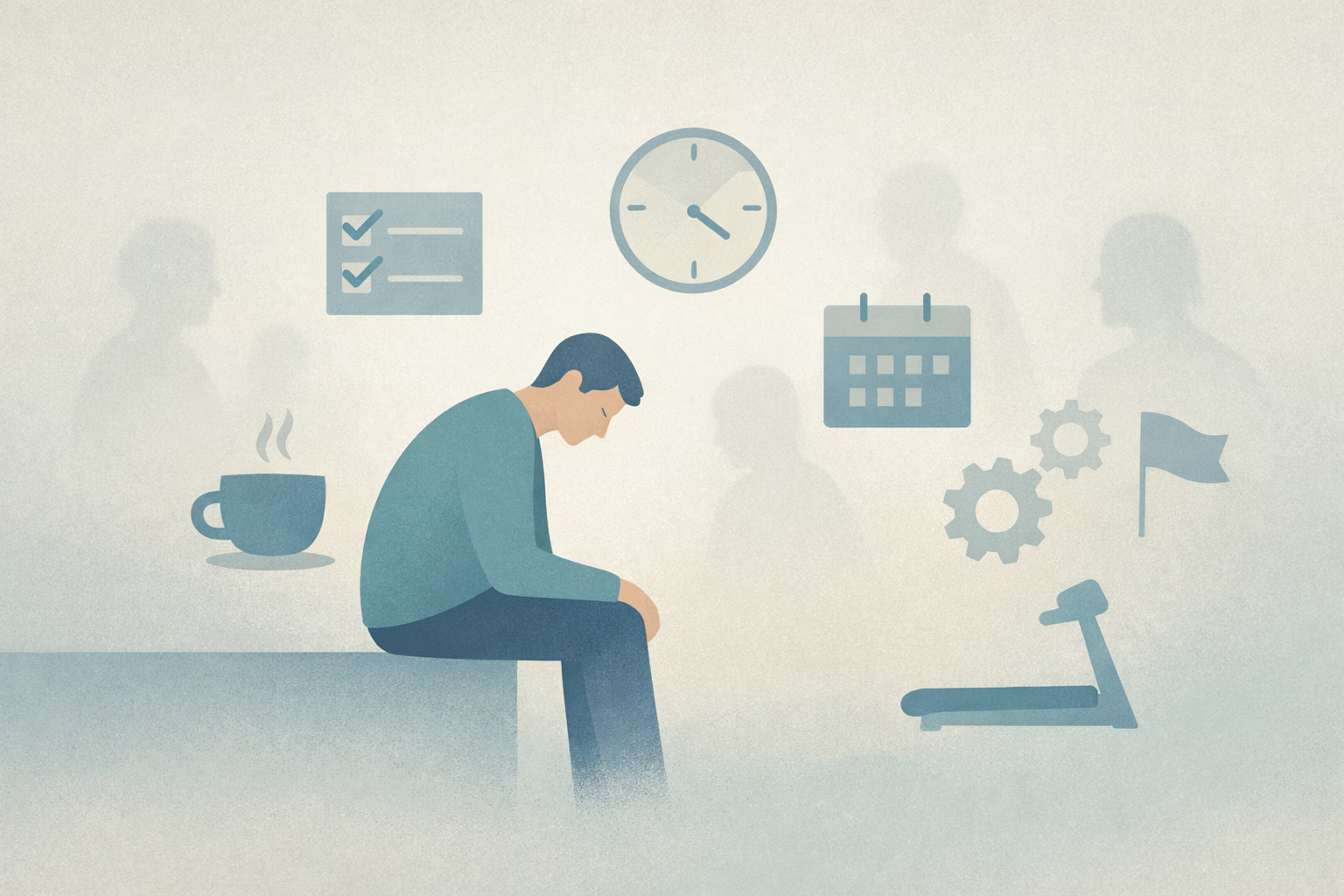
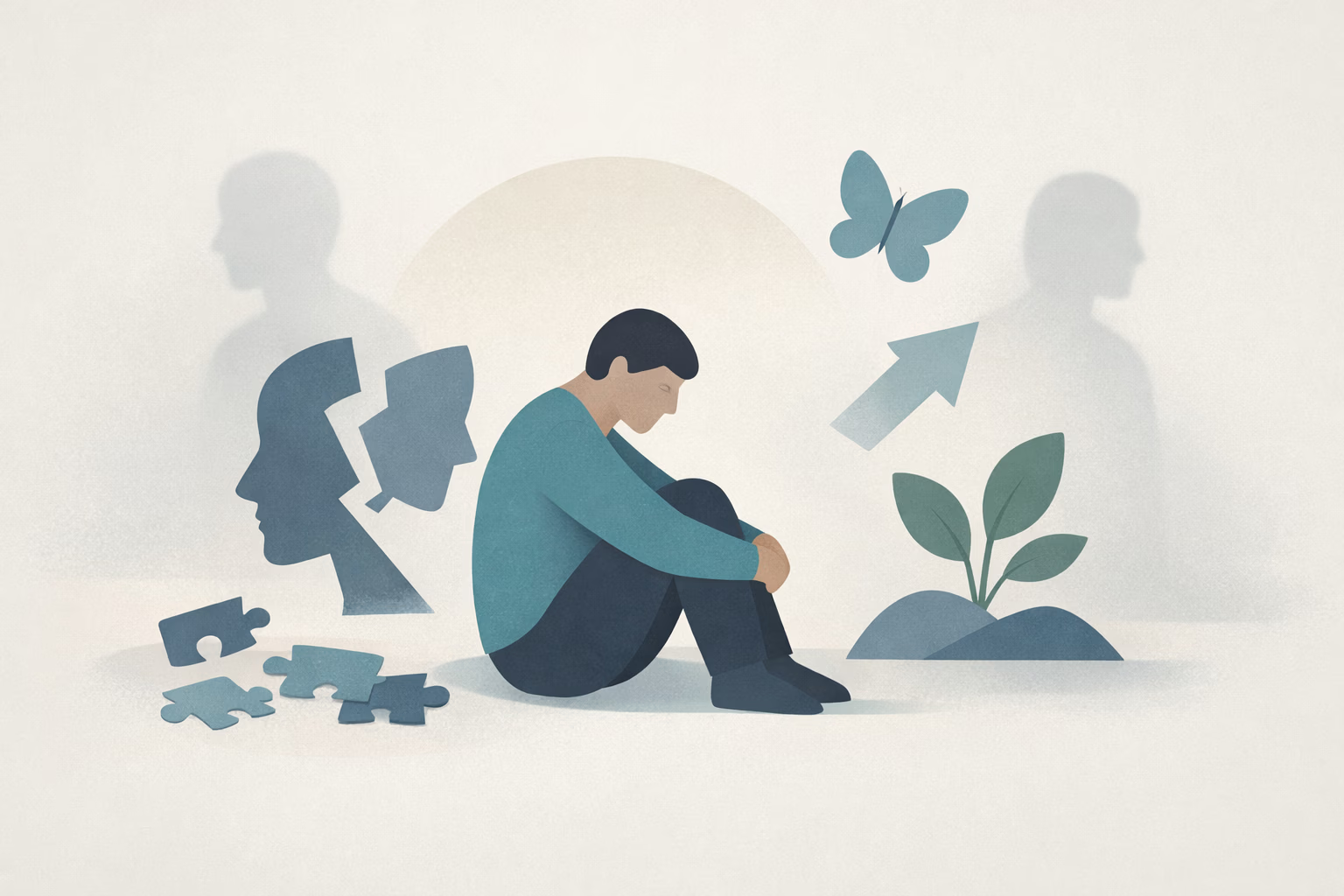
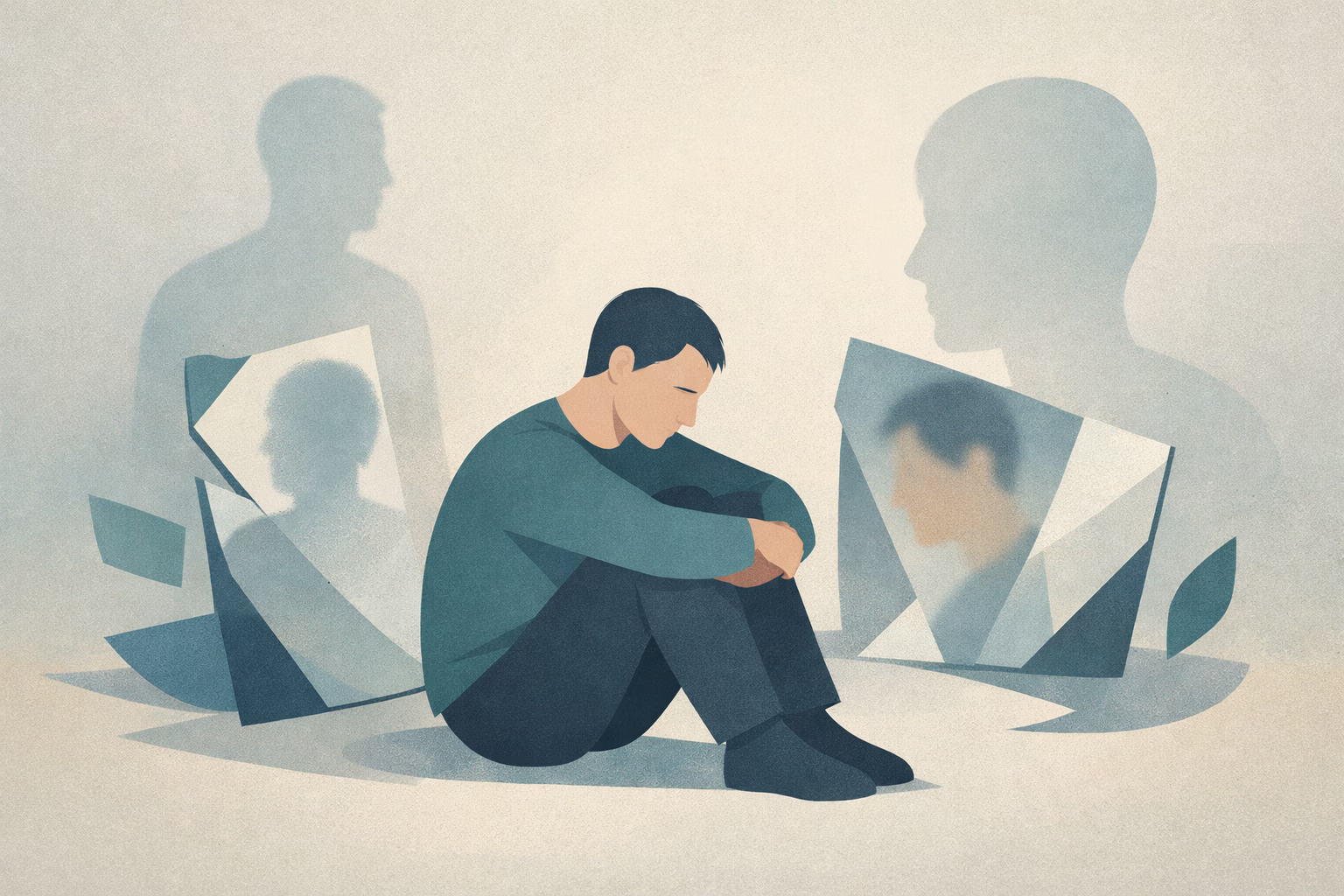
Understanding explains what is happening. Art allows you to feel it—without fixing, judging, or naming. Pause here. Let the images work quietly. Sometimes meaning settles before words do.
One Quiet Window, one insight, one reflection — every Sunday