
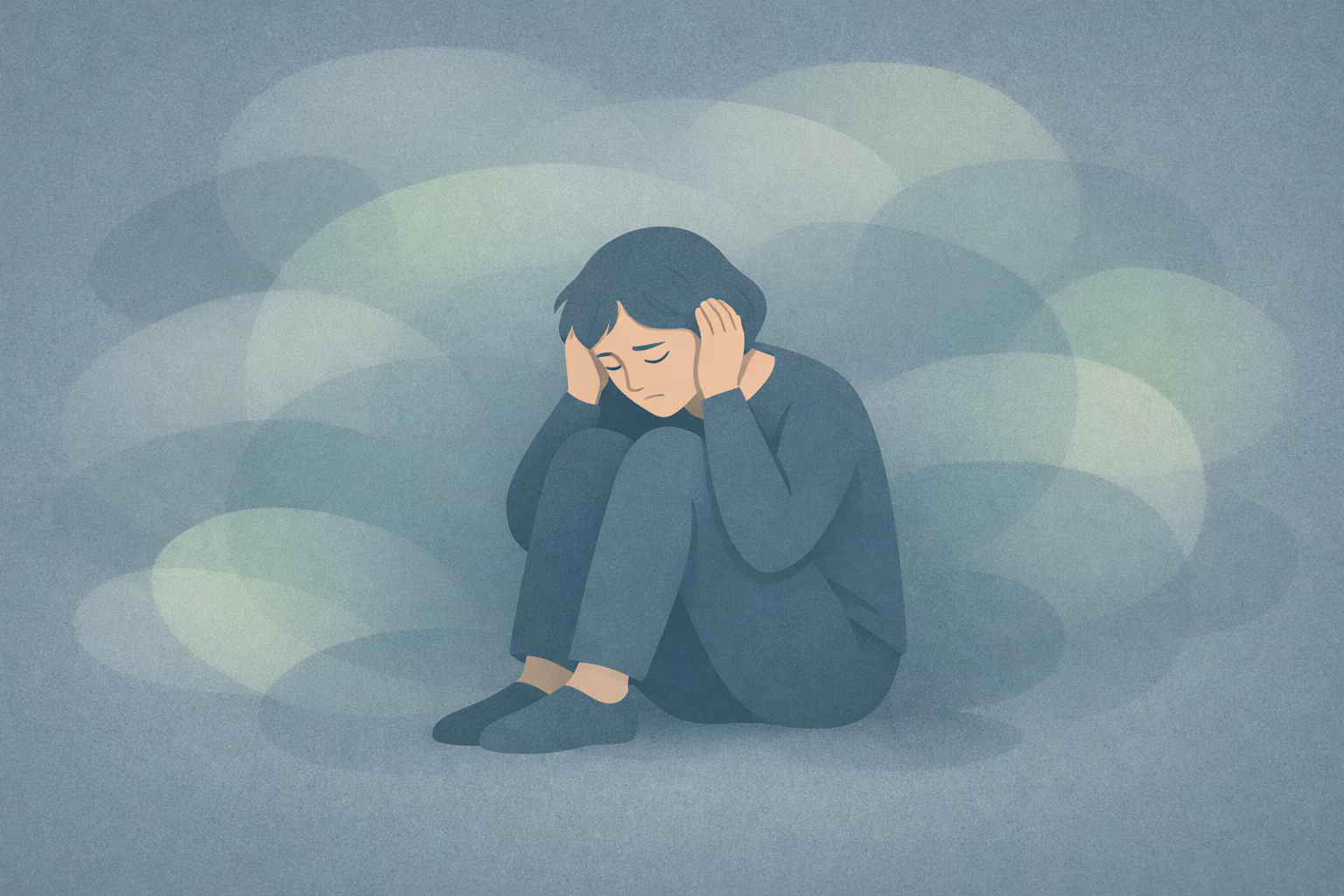
Emotional Overwhelm: When Life Feels Too Loud Inside
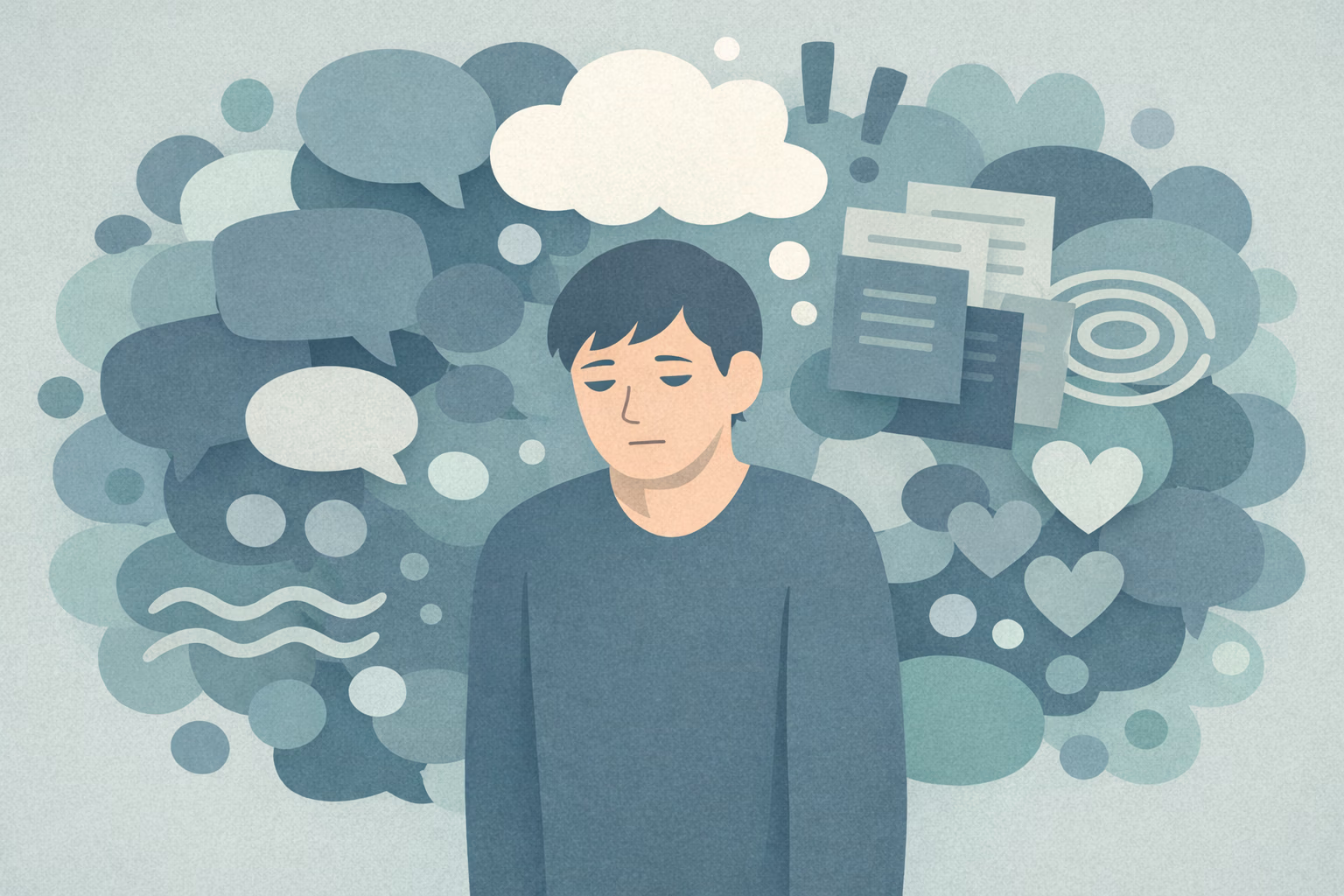
In short: Overstimulation isn’t a character flaw or a lack of toughness. It’s a state where the total amount of sensory, cognitive, and social input is exceeding the nervous system’s capacity to filter, prioritize, and settle.
Overstimulation isn’t a character flaw or a lack of toughness. It’s a state where the total amount of sensory, cognitive, and social input is exceeding the nervous system’s capacity to filter, prioritize, and settle.
When that threshold is crossed, the world can start to feel unusually sharp: sounds feel harsher, decisions feel heavier, and even small interruptions land like a jolt. This can look like anxiety, irritability, zoning out, or an urgent need to escape—but underneath, it’s often a system trying to regain coherence.
What if “too loud” is not a complaint—what if it’s feedback?
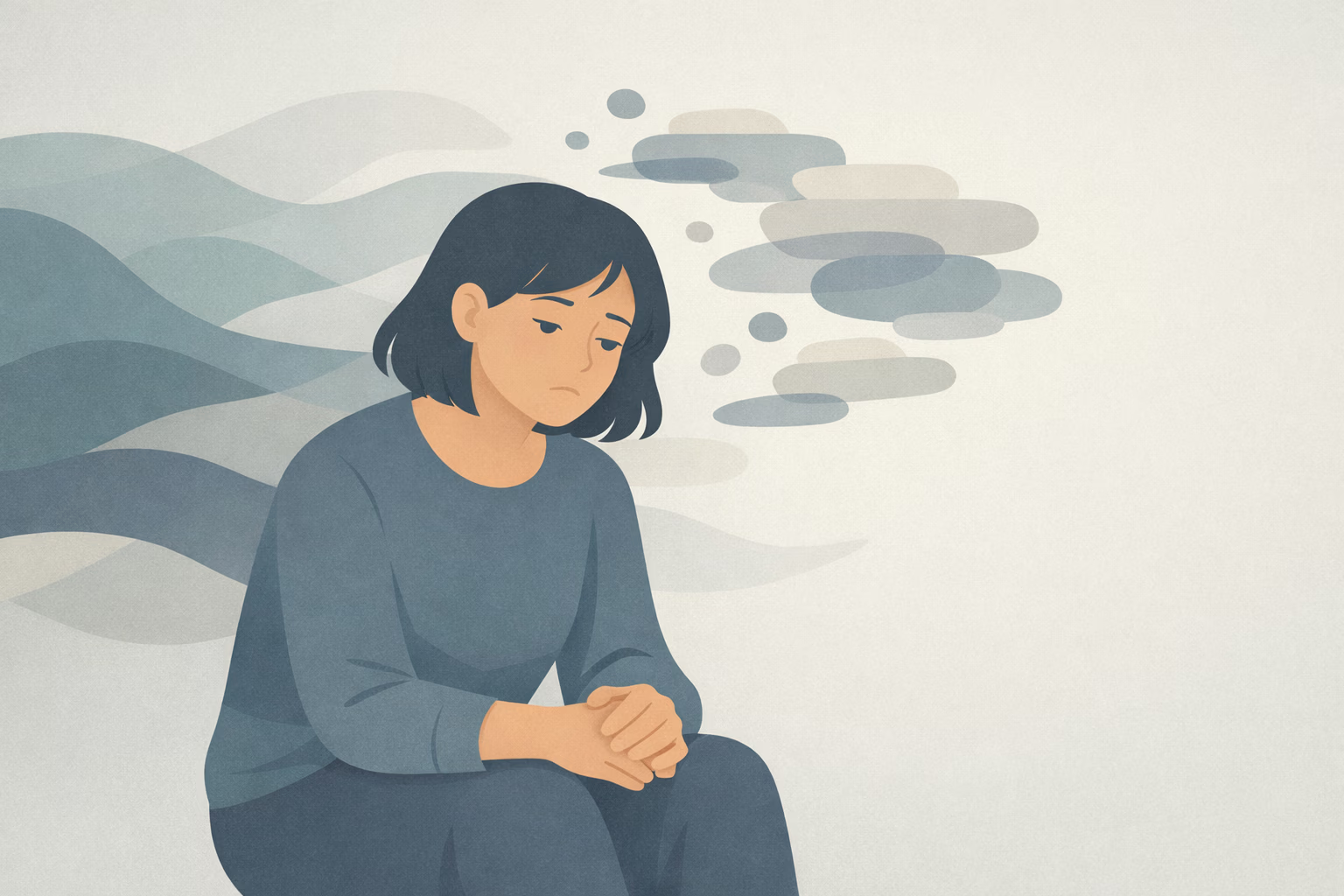
Life can feel “too loud” in a way that’s hard to explain: the lights seem brighter, notifications feel invasive, conversations feel like effort, and minor tasks spark disproportionate tension. You might notice your body bracing before anything even happens, as if it’s already preparing for impact.
This isn’t necessarily about one big problem. It’s often what cumulative input looks like when it reaches saturation: the nervous system stops treating new information as neutral and starts treating it as additional load. Small inputs then trigger big reactions—because they are arriving on top of a full stack. [Ref-1]
Your brain and body are built with filtering systems—often described as sensory gating—that reduce the amount of raw input you have to consciously process. Under manageable load, this filter helps you stay oriented: you can hear background noise without tracking it, read a screen without registering every flicker, and notice emotions without being pulled under by them. [Ref-2]
Under chronic high-intensity input, that filter can become less effective. Baseline arousal rises, attention becomes more easily captured, and your “bandwidth” for choice and patience shrinks. The result isn’t just feeling stressed; it’s feeling exposed—like everything is coming through at full volume.
When the filter weakens, the world doesn’t become objectively louder. Your system just loses the margin that used to make it livable.
Human nervous systems evolved around intermittent stimuli: moments of demand followed by recovery, social contact followed by quiet, focused effort followed by completion. In that rhythm, activation makes sense—because it resolves.
Modern life often removes the “done” signal. Input arrives in parallel: messages, headlines, ambient noise, open tabs, micro-decisions, social monitoring. Even when none of it is catastrophic, it’s still continuous. Overstimulation is one predictable outcome of a system designed for pulses living inside an environment that rarely pauses. [Ref-3]
If your capacity feels smaller than it used to, what if it’s not you shrinking—what if the load is expanding?
Here’s a confusing part: overstimulated systems often reach for more stimulation. Not because someone is “addicted to chaos,” but because certain types of input can temporarily organize internal noise. Fast content, constant checking, and busy environments can create a narrow channel of focus that feels like relief.
In the short term, stimulation can function like an external metronome: it sets a pace, offers predictable rewards, and reduces the space where discomfort would otherwise be felt as undirected energy. That can mimic control—even when it’s quietly adding more load. [Ref-4]
This is one reason overstimulation doesn’t always look like panic. It can look like restlessness, scrolling, multitasking, or staying “on” because stopping would reveal how taxed the system already is.
Modern culture often confuses being engaged with being well-regulated. You can be highly responsive—answering quickly, tracking many threads, consuming lots of information—and still be running on depleted regulatory reserves.
Overstimulation frequently hides behind the illusion of productivity: if you’re moving, you can feel functional. But capacity isn’t measured by output; it’s measured by how easily your system returns to baseline after input. When return becomes slow or unreliable, the nervous system starts behaving as if it must guard itself from even normal demands. [Ref-5]
Overstimulation often stabilizes through a loop that makes sense structurally. When overwhelm rises, the system looks for the quickest state change. Stimulation can provide that: it distracts, narrows attention, and creates short-lived relief.
But because stimulation adds more input, it can raise the baseline further. Over time, the nervous system becomes more reactive to less—more sensitive, more easily disrupted, more likely to seek escape. The loop isn’t driven by weakness; it’s driven by incomplete closure: no phase where the system fully stands down and integrates “this is over.” [Ref-6]
Relief changes state. Completion changes baseline.
Overstimulation symptoms can look mental, physical, and interpersonal all at once. People often assume they’re “overreacting,” when they’re actually seeing what saturation looks like from the inside: inputs arrive faster than the system can sort them.
These are not personality traits. They’re regulatory outputs—signals that the filter and recovery cycle are overextended. [Ref-7]
When high input is chronic, the nervous system may start to treat everyday life as a sequence of minor impacts. That can create a pattern of anticipatory tension: not necessarily conscious worry, but a baseline readiness that makes ordinary friction feel intolerable.
In this state, anxiety and irritability can increase, sleep can become lighter or less restorative, and emotional reactions can become faster—not because someone is “too sensitive,” but because there’s less buffering capacity available. The system isn’t failing; it’s operating with reduced margin. [Ref-8]
Fatigue here often has a particular texture: it isn’t just sleepiness. It’s the tiredness of constant processing without completion.
As tolerance drops, the world starts to require more effort to navigate. In response, the system naturally minimizes exposure to friction: fewer plans, less conversation, more postponing, more retreating into controlled environments.
This is often labeled “avoidance,” but structurally it’s a protective narrowing. When the nervous system expects additional input to cost more than it can afford, it prefers shorter loops: scrolling instead of meeting, staying home instead of commuting, silent withdrawal instead of explaining. That narrowing can temporarily reduce impact—while also shrinking the range of life that feels manageable. [Ref-9]
What looks like procrastination can be an economy measure: the system conserving what little bandwidth is left.
Overstimulation tends to carry shame because it can look irrational from the outside. But from a nervous-system perspective, it’s coherent: if your input-to-recovery ratio has been off for long enough, your system is behaving exactly like a system under sustained load.
The deeper issue is often not the presence of stimulation, but the absence of settling. When experiences don’t reach a clear endpoint—no “done,” no stand-down—the body keeps scanning, bracing, and updating. Over time, meaning becomes harder to access: not as a belief problem, but as an integration problem. A life without completion feels like a life you can’t fully inhabit. [Ref-10]
Coherence isn’t created by pushing harder. It arrives when the system finally receives enough closure to stop guarding.
Humans regulate in context. Calm, attuned relationships can function like external safety cues: predictable tone, unhurried presence, and non-demanding contact can reduce background vigilance. This isn’t about “talking out feelings.” It’s about the nervous system registering, through repeated experience, that it doesn’t have to mobilize as much to stay intact.
When connection is steady, the system often spends less energy interpreting ambiguous signals. That frees capacity for basic tasks and makes sensory input feel less threatening. Conversely, relationships that require constant performance, rapid replies, or ongoing evaluation can keep arousal elevated even when no conflict is happening. [Ref-11]
In this way, social environments don’t just affect mood; they affect processing load.
As overload reduces and closure becomes more available, perception often changes in subtle but important ways. The world is still busy, but it’s less intrusive. Sounds are still present, but they don’t land as alarms. You can track a conversation without simultaneously tracking everything else in the room.
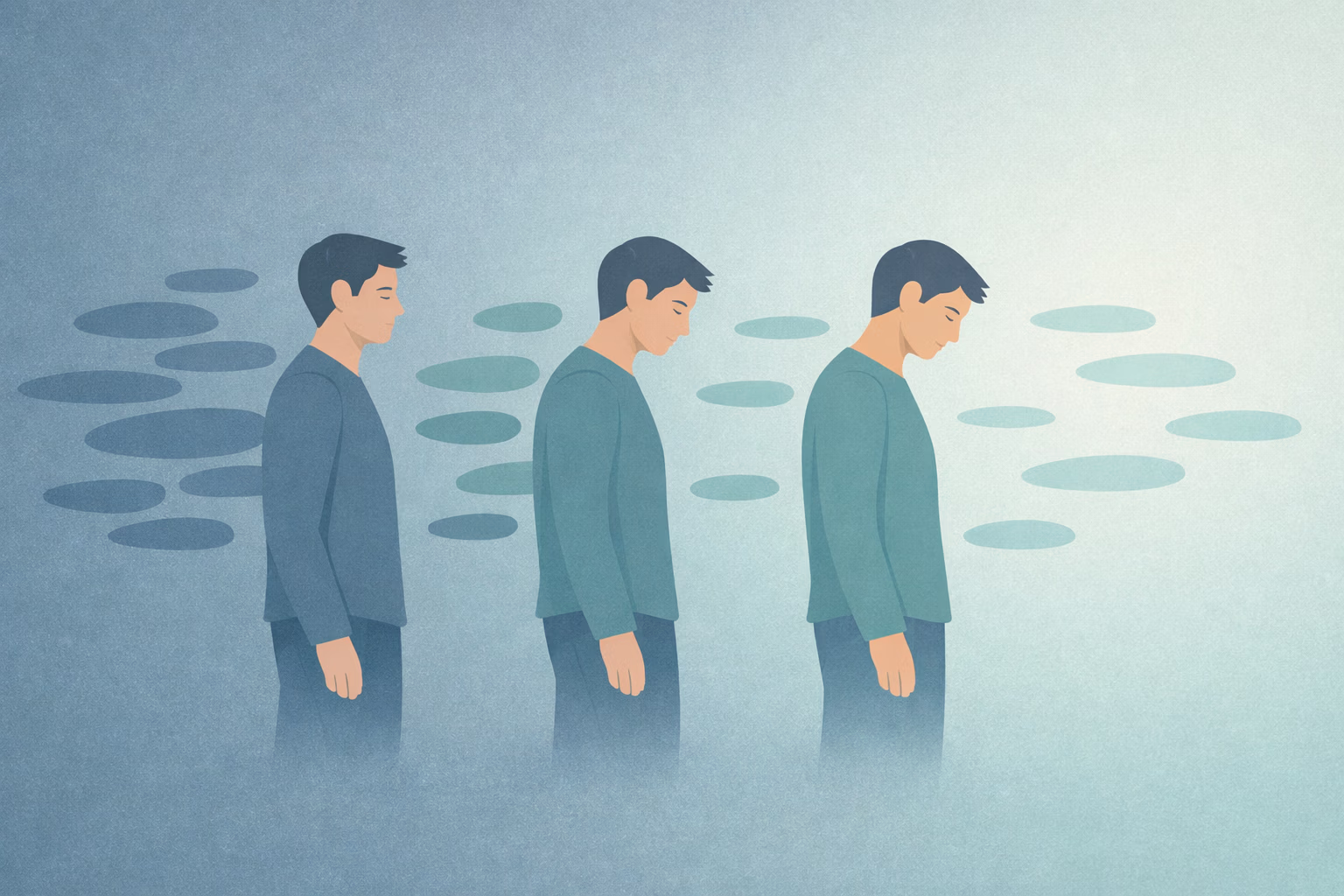
This shift is not constant calm or permanent comfort. It’s increased return: after stimulation, your system can come back. That “coming back” is a physiological signal of restored gating and improved tolerance for everyday complexity. [Ref-12]
In overstimulation, agency often gets mistaken for intensity: more content, more activity, more optimization, more “staying ahead.” But agency can also look like modulation—having the margin to choose pace, choose exposure, and let experiences end.
When the system is saturated, high-reward streams (feeds, autoplay, endless episodes) can offer quick containment while extending activation late into the day. Research on binge-watching and sleep points to how easily extended screen engagement can compete with recovery, especially when it becomes the default downshift. [Ref-13]
Recovery, in this frame, isn’t becoming a different person. It’s a structural shift: a life that allows completion, so the nervous system doesn’t have to keep shouting to be heard.
Overstimulation symptoms are often the body’s most respectful form of honesty: a signal that your limits are real, your load is measurable, and your system is asking for fewer open loops. That signal can be inconvenient, but it isn’t moral.
When life feels too loud, it may help to interpret that loudness as information about environment, pacing, and unfinished demands—not as evidence that you’re broken. Many resources describe sensory overload as a state that can be buffered by supportive conditions and reduced input strain, which reinforces the central point: the system responds to context. [Ref-14]
You don’t need to argue with your nervous system to regain dignity. You can start by believing its signals are meaningful.
In a quieter internal landscape, ordinary life often returns: simple tasks feel simpler, connection feels less effortful, and rest actually registers as rest. Not because everything is perfect, but because the system has enough closure to stop running constant interference.
If life has felt too loud lately, it can be worth holding a gentle question: what parts of your world have been asking your nervous system to stay “on” without a clear ending—and what might change if some of that noise finally completed? [Ref-15]
From theory to practice — meaning forms when insight meets action.
Sounds feel harsher, lights feel brighter, decisions feel heavier, and small interruptions land like a jolt. You might notice your body bracing before anything happens. Being asked one more question feels like a demand spike. Transitions — leaving, arriving, switching tasks — feel disproportionately hard. Restlessness pairs with fatigue. Sometimes the system shuts down: blankness, numbness, autopilot. These aren't personality traits. They're regulatory outputs from a nervous system whose filter is overextended. Inputs are arriving faster than the system can sort them, so small stimuli trigger big reactions because they're landing on top of an already-full stack. The world doesn't get objectively louder — your buffering capacity gets smaller.
Because certain inputs can temporarily organize internal noise. Fast content, constant checking, and busy environments create a narrow channel of focus that feels like relief. In the short term, stimulation acts like an external metronome: it sets a pace, offers predictable rewards, and reduces the space where discomfort would be felt as undirected energy. That mimics control even while quietly adding more load. This is the Avoidance Loop: overwhelm rises, stimulation provides quick state change, brief relief follows, but baseline keeps climbing. The system becomes more reactive to less. The loop isn't driven by weakness; it's driven by incomplete closure — no phase where the system fully stands down and integrates 'this is over.'
No, and modern culture often confuses them. You can be highly responsive — answering quickly, tracking many threads, consuming lots of information — and still be running on depleted regulatory reserves. Overstimulation hides behind the illusion of productivity: if you're moving, you feel functional. But capacity isn't measured by output; it's measured by how easily your system returns to baseline after input. When return becomes slow or unreliable, the nervous system starts guarding itself from even normal demands. More input looks like 'keeping up' while reducing tolerance. Faster switching feels efficient while increasing background arousal. Constant availability feels responsible while eroding recovery.
Perception softens in subtle but important ways. The world is still busy, but less intrusive. Sounds are present without landing as alarms. You can track a conversation without simultaneously tracking everything else in the room. This isn't constant calm — it's increased return: after stimulation, your system can come back, which is a physiological signal of restored sensory gating. Interruptions feel like information rather than threats. Decisions feel more linear and less like a pile-up. Attention feels more like a choice and less like a reflex. Agency stops looking like intensity and starts looking like modulation — having the margin to choose pace, choose exposure, and let experiences end.
From Science to Art.
Understanding explains what is happening. Art allows you to feel it—without fixing, judging, or naming. Pause here. Let the images work quietly. Sometimes meaning settles before words do.
One Quiet Window, one insight, one reflection — every Sunday