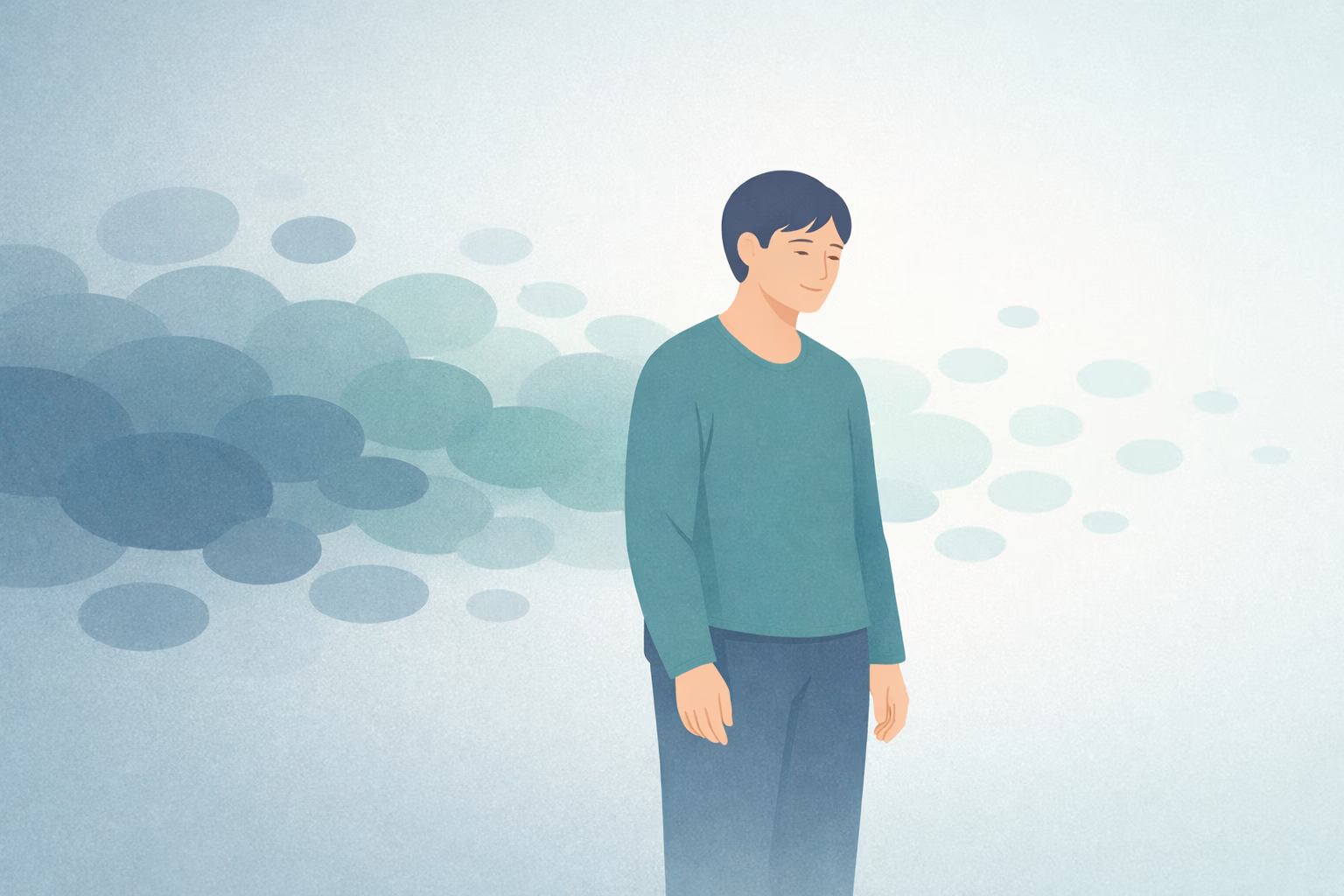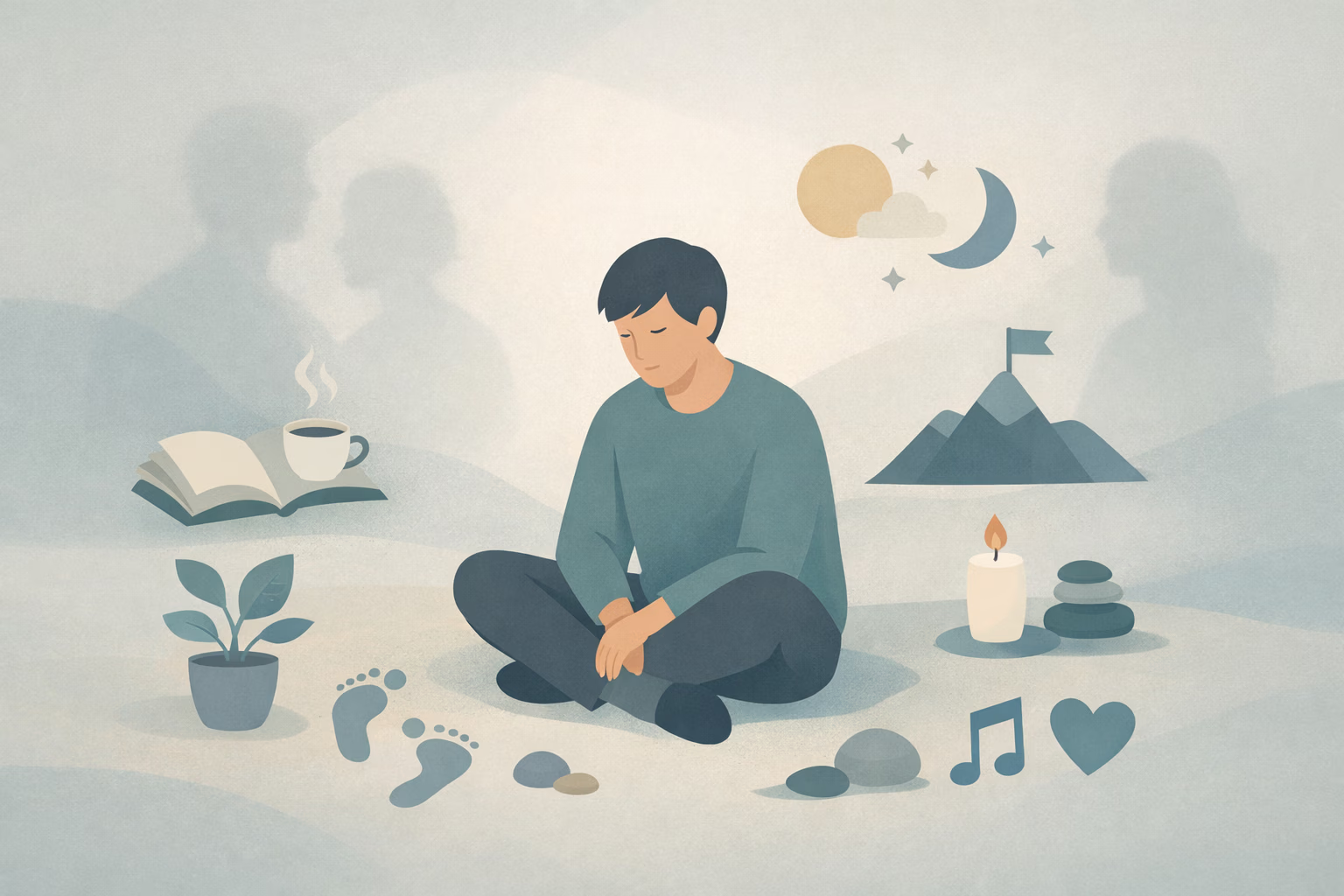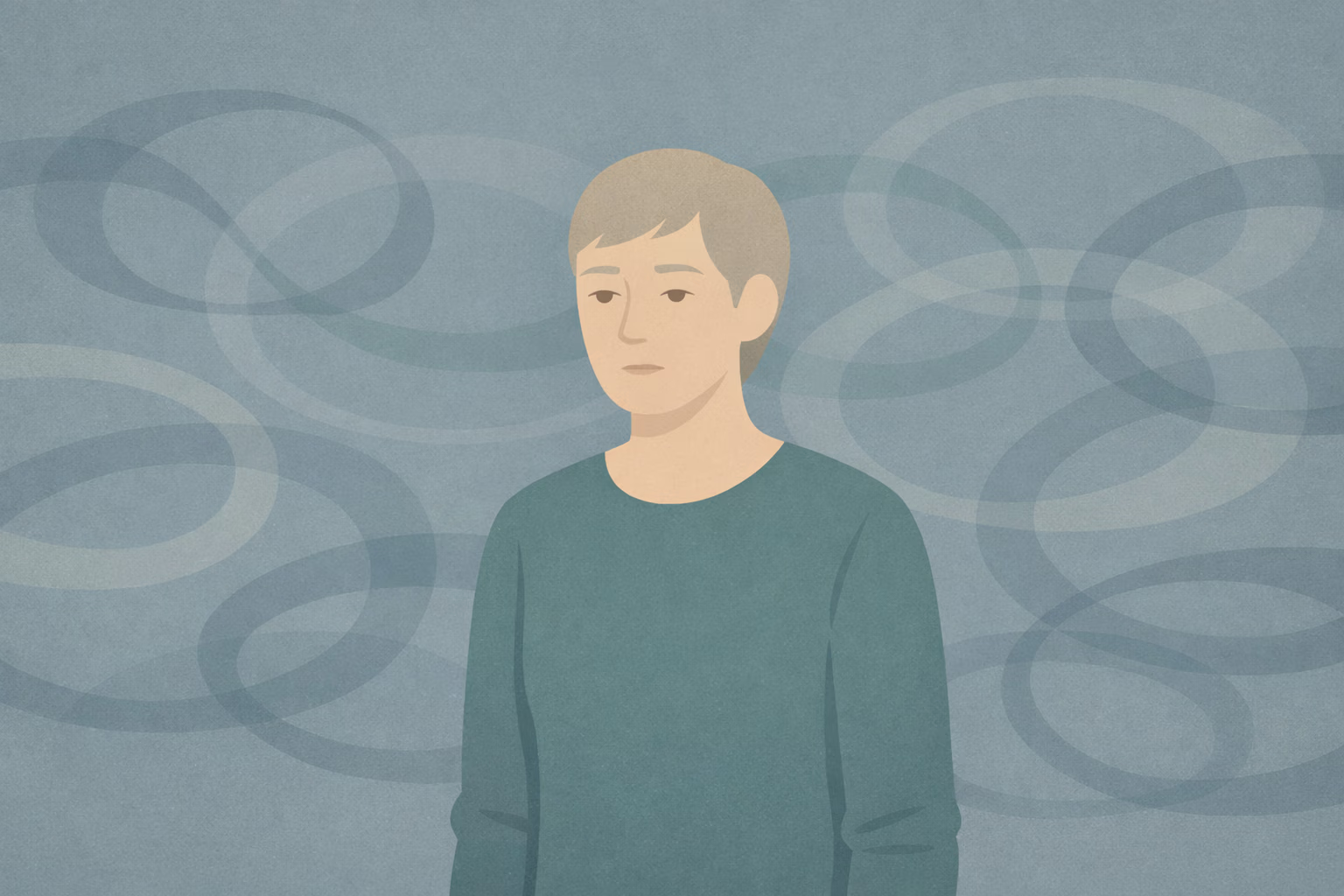
Chronic Stress Patterns: The Loops You Stop Noticing
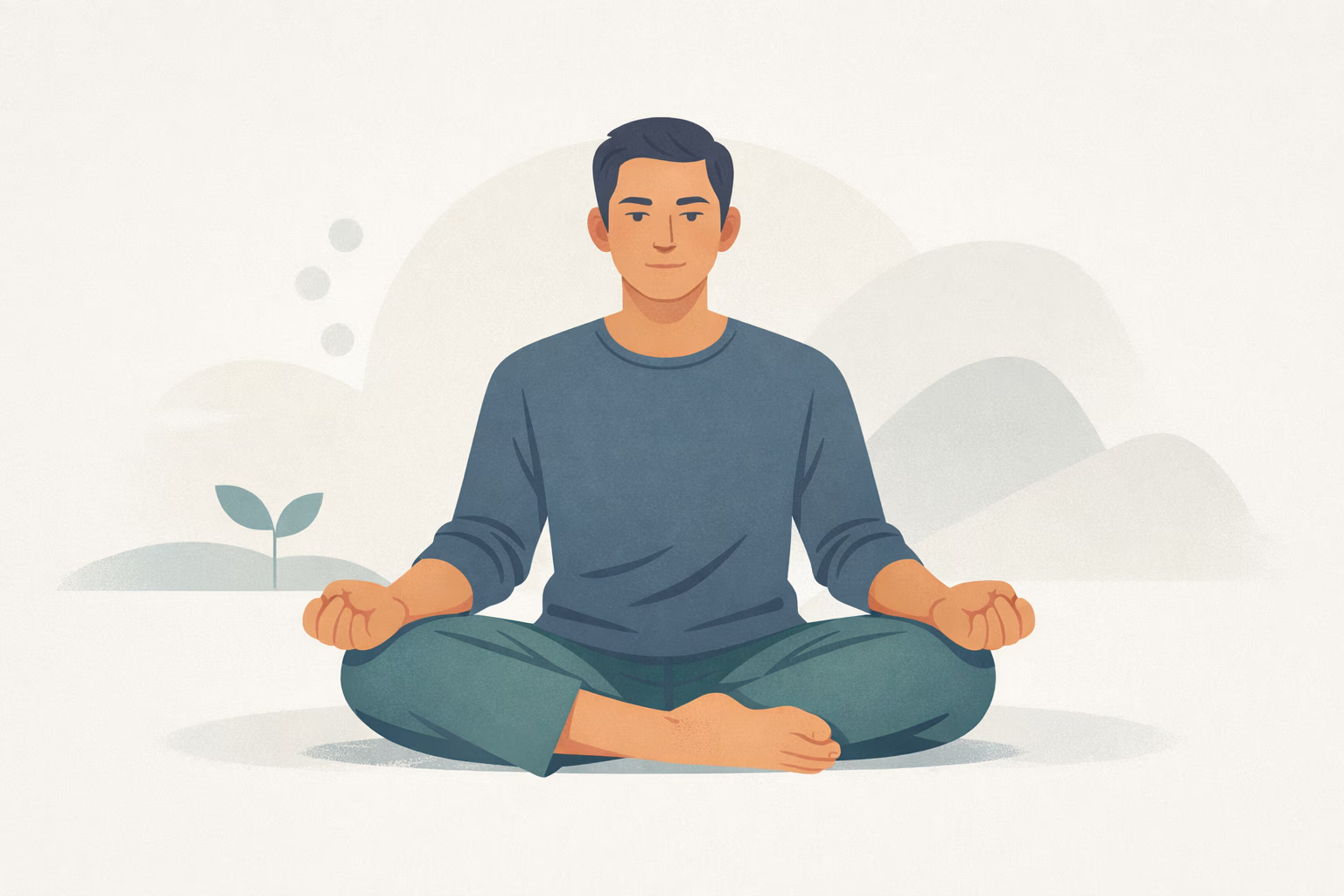
In short: Resilience is often talked about like a personality trait: you either “have it” or you don’t. But in lived experience, resilience looks more like a timing skill in the body—how quickly your system can come back online after it has been pulled into stress.
Resilience is often talked about like a personality trait: you either “have it” or you don’t. But in lived experience, resilience looks more like a timing skill in the body—how quickly your system can come back online after it has been pulled into stress.
When life is fast, evaluated, and rarely finished, it’s not unusual to feel reactive, depleted, or as if small disruptions knock you off course. That isn’t a character flaw. It’s a sign your threat-and-safety systems are carrying a high load with too few “done” signals.
What if resilience isn’t pushing harder—but returning more completely?
Many people know the specific kind of fatigue where the day is technically manageable, yet everything lands as pressure. A message arrives and your chest tightens. A minor change in plans ripples through your whole body. A normal decision feels like a test you can’t afford to fail.
This isn’t mysterious: under cumulative load, the nervous system shifts into a protective stance. Reactivity, shutdown, irritability, and fog are not identities; they are regulatory outputs that show up when your system can’t reliably predict closure.
And when the environment keeps “starting” experiences without letting them end, the threshold for activation gets lower. What looks like “sensitivity” is often a system doing its job in a world that won’t settle. [Ref-1]
Stress itself is not the full story. In biology, stress responses are meant to rise and then resolve. The key variable is recovery—how efficiently your system can return toward baseline once the demand passes. [Ref-2]
When a challenge is followed by completion and stand-down, the body learns a simple pattern: activation is temporary, and return is possible. Over time, that pattern becomes easier to access. The “training” is not constant exposure; it’s repeated cycles that include an ending.
Without that ending, stress becomes a continuous signal rather than a bounded event. The nervous system starts treating ordinary inputs as potential threats because it has no reliable proof that things conclude.
Humans evolved with threat systems that mobilize quickly—heart rate up, attention narrowed, urgency online. This is not dysfunction; it’s protection. The design assumes that after a sprint, a conflict, or a storm, the organism finds safety and recalibrates.
That recalibration is not just “calm.” It’s a physiological settling that happens when a loop completes: the body registers that the situation is over, that consequences are known, and that resources can be conserved again. Flexibility—the capacity to shift states—matters more than perpetual steadiness. [Ref-3]
In other words, resilience is less about never being activated and more about regaining access to normal range after activation.
When your system has a history of returning, stress becomes less confusing. You may still dislike pressure, but it doesn’t automatically read as danger. A body that has learned “I come back from this” doesn’t have to escalate as far to protect itself.
This is one reason resilience can feel like confidence without bravado. It’s not a pep talk. It’s a quieter signal: I can move through disruption and still regain orientation.
Research on structured resilience approaches often highlights reductions in stress and anxiety when people build skills that support recovery. The direction is consistent: restoration capacity changes the experience of threat. [Ref-4]
A common myth is that resilient people “don’t let things affect them.” But suppression requires effort and often keeps the system activated underneath. Resilience is different: it’s the ability to be impacted and still re-stabilize.
Flexibility can look like moving between gears: focus and rest, engagement and disengagement, seriousness and play. The goal isn’t to become unbothered; it’s to become more able to complete the stress cycle and return.
In controlled exposure models, what matters is not forcing intensity, but pairing challenge with resolution so the system updates its threat predictions. [Ref-5]
“Strength” isn’t never wobbling. It’s having a reliable way back.
When stress feels costly, the system naturally searches for relief. Often that relief comes through narrowing life: fewer risks, fewer conversations, fewer responsibilities, fewer unknowns. This is not about a personal failure of courage. It’s a structural response to reduced capacity.
The problem is that relief without completion can mute the immediate consequence while leaving the underlying loop unfinished. The nervous system doesn’t get the “safe ending” data it needs. So the world stays coded as more threatening than it is.
Over time, the avoidance loop can become self-reinforcing: less exposure to manageable demand means fewer opportunities for the system to practice returning. Stress inoculation frameworks describe how graduated exposure paired with coping and recovery can interrupt this pattern. [Ref-6]
Low resilience isn’t one feeling. It’s a cluster of predictable outputs when recovery is slow and closure is scarce. People often recognize it in patterns like these:
None of these are moral failures. They are the nervous system attempting regulation with the tools available in the moment.
And importantly: these outputs can coexist with competence. Many high-functioning people live in a constant aftershock state, carrying unfinished loops while still meeting demands. [Ref-7]
If the system rarely stands down, stress stops being episodic and becomes background. That is when people often describe burnout: not just tiredness, but reduced access to interest, connection, and initiative. The body conserves by lowering the volume on life.
In that state, anxiety can function like a scanning program—an attempt to prevent harm by anticipating everything. It’s not “overthinking” as a personality quirk; it’s threat management under too much unresolved demand.
Studies on emotion regulation training and resilience tend to converge on a practical point: when recovery skills improve, resilience markers improve too, especially under chronic stress. [Ref-8]
There’s a paradox: the more life is organized around preventing activation, the more activation becomes intolerable. Not because the person is weak, but because the system loses evidence that activation can end safely.
When manageable challenges are skipped, the nervous system doesn’t get practice with the full arc: mobilize → act → complete → settle. Instead, it learns a different arc: cue → alarm → escape → temporary relief → continued vigilance.
Over time, the “threat map” expands. New situations feel heavier, not because they are objectively dangerous, but because the system is operating with fewer closure memories to draw on. This is a common way stress can start to feel increasingly overwhelming. [Ref-9]
Resilience training is sometimes misunderstood as pushing through discomfort. But the deeper mechanism is more humane: the nervous system updates when it experiences challenge that is bounded, survivable, and followed by genuine recovery.
That combination—paced demand plus reliable return—creates an identity-level shift over time. Not a new belief (“I can handle anything”), but a quieter coherence: “I know what it is like to come back.” This is not insight; it is a settled data point in the body.
Many structured resiliency programs emphasize stress management, cognitive skills, and recovery rhythms as ways to support this return-to-baseline capacity. The spirit is not self-criticism; it’s building conditions where completion can happen. [Ref-10]
What changes when your system trusts that stress has an ending?
Humans are social mammals. For much of our evolutionary history, safety wasn’t an individual project—it was shared. That’s why support can change stress physiology: not through reassurance alone, but through cues of presence, pacing, and mutual orientation.
In real life, resilience often strengthens when challenge is met with some form of companionship: a colleague who helps triage, a friend who sits in the uncertainty with you, a mentor who normalizes the learning curve. Co-regulation can reduce load enough for the “completion” signal to register.
Even brief, repeatable moments of supportive connection can help resilience feel more accessible in daily contexts. [Ref-11]
Sometimes the nervous system doesn’t need a solution. It needs a witness and a boundary around the moment.
When resilience increases, people don’t necessarily feel euphoric or fearless. More often, they notice faster return. They can have a hard conversation and then eat dinner. They can receive feedback and still sleep. They can be disappointed without spiraling into hours of internal noise.
Common signs of restored capacity include:
This steadiness is a functional outcome: the system spends less time mobilized and more time available. Everyday resilience training content often describes these practical markers—recovering more quickly, feeling more grounded, and staying connected to priorities. [Ref-12]
With stronger recovery loops, stress can return to its original role: information. It signals that something matters, that a boundary is needed, that a skill is being stretched, or that support is required. It doesn’t have to mean “danger” or “I can’t.”
At that point, challenges can contribute to growth because they are digestible. They can be metabolized into identity: not as a story of constant struggle, but as evidence of capacity and continuity.
Resilience and stress reduction approaches often describe this shift as learning to meet demands with less depletion and more adaptive response. The emphasis is not on eliminating stress, but on changing what stress reliably leads to. [Ref-13]
Resilience is not the absence of disturbance. It is the system’s ability to be disturbed and still return to orientation—back to relationships, back to values, back to the parts of life that feel worth inhabiting.
Seen this way, resilience is deeply non-moral. It rises when conditions allow closure, when demands are survivable, and when there is enough support for the body to stand down. Agency grows not from pressure, but from coherence: the sense that your actions can complete and your system can settle afterward.
Many psychological frameworks describe resilience as adaptive coping and flexibility in the face of challenges. What people often recognize, underneath the language, is the relief of being able to re-enter life after disruption. [Ref-14]
Resilience training, at its most dignified, is not a campaign against your reactions. It is the gradual restoration of a natural rhythm: mobilize when needed, then come back.
When that rhythm is available, “emotional strength” looks ordinary and human. You still have stress. You just don’t have to live inside it. Over time, flexibility becomes less like a strategy and more like a baseline capability—evidence that your system can move through life without losing itself. [Ref-15]
From theory to practice — meaning forms when insight meets action.
Resilience is often talked about like a personality trait, but in lived experience it looks more like a timing skill in the body — how quickly your system can come back online after being pulled into stress. The training happens in the recovery, not the stress. When a challenge is followed by completion and stand-down, the body learns a simple pattern: activation is temporary, return is possible. Without that ending, stress becomes a continuous signal rather than a bounded event, and the threshold for activation drops. What looks like 'sensitivity' is often a system doing its job in a world that won't settle.
Under cumulative load, the nervous system shifts into a protective stance — reactivity, shutdown, irritability, and fog are regulatory outputs, not identities. They appear when your system can't reliably predict closure. When the environment keeps starting experiences without letting them end, the threshold for activation lowers. The Threat & Safety System starts treating ordinary inputs as potential threats because it has no recent proof things conclude. So a message arrives and your chest tightens; a minor change in plans ripples through your body. The disproportion isn't fragility; it's accumulated unfinished loops carrying forward into the present.
Counterintuitively, no. The more life is organized around preventing activation, the more activation becomes intolerable — not because the person is weak, but because the system loses evidence that activation can end safely. When manageable challenges are skipped, the nervous system doesn't get practice with the full arc: mobilize, act, complete, settle. Instead, it learns: cue, alarm, escape, temporary relief, continued vigilance. The threat map expands. Avoidance becomes a Power Loop where short-term relief lowers long-term capacity. Stress inoculation isn't about pushing through; it's pairing bounded challenge with reliable recovery so the system updates its predictions.
Not euphoria or fearlessness — usually, faster return. You can have a hard conversation and then eat dinner. You can receive feedback and still sleep. You can be disappointed without spiraling for hours. Common signs include shorter aftershocks, more consistent access to clarity under pressure, less urgency to escape or fix everything, more willingness to engage with normal demands. Resilience is co-regulated before it's self-held — supportive presence, pacing, and witnessing reduce load enough for completion to register. Sometimes the nervous system doesn't need a solution; it needs a witness and a boundary around the moment. Strength isn't never wobbling; it's having a reliable way back.
From Science to Art.
Understanding explains what is happening. Art allows you to feel it—without fixing, judging, or naming. Pause here. Let the images work quietly. Sometimes meaning settles before words do.
One Quiet Window, one insight, one reflection — every Sunday