
Curating an Online Self vs Living a Real Self
In short: Maintaining an online identity can look simple from the outside: posting occasionally, responding, staying “consistent.” But inside the body, it can feel like being slightly on display all the time—tracking how you come across, how you might be read, and whether what you shared will “land.
Maintaining an online identity can look simple from the outside: posting occasionally, responding, staying “consistent.” But inside the body, it can feel like being slightly on display all the time—tracking how you come across, how you might be read, and whether what you shared will “land.”
What if the fatigue isn’t weakness—what if it’s your system doing its job under continuous social load?
In modern digital spaces, identity can become something you manage rather than something you live. That shift creates a subtle but persistent strain: attention fragments, self-monitoring increases, and “done” signals rarely arrive. The result is often pressure, numbness, irritability, or a vague sense of being split—less like a psychological issue and more like an organism trying to stay safe in a fast, evaluative environment.
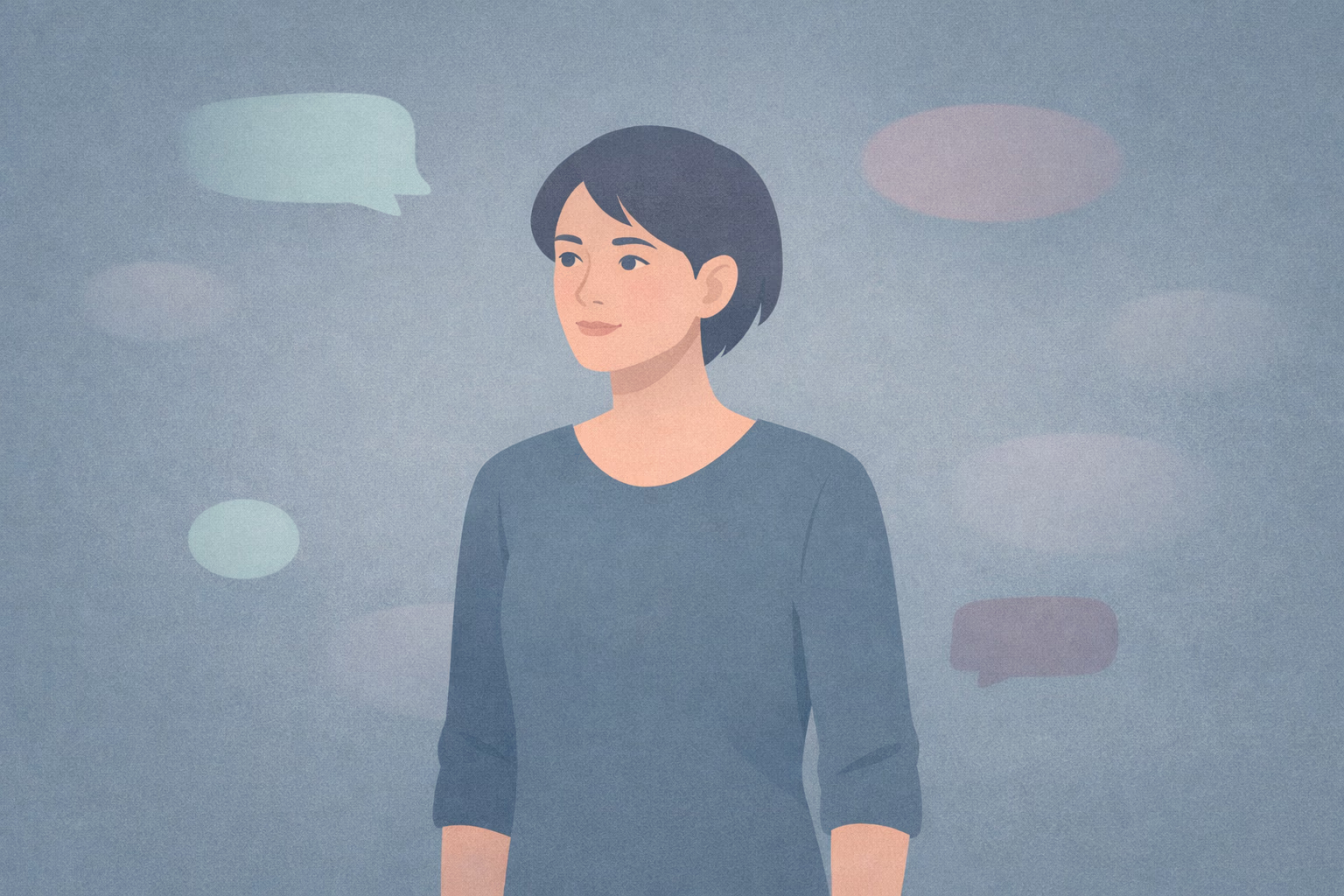
Many people describe an online life that feels slightly detached from their lived life: a version of them that is more polished, more certain, more upbeat, more coherent. Maintaining that version can create an internal sense of surveillance—like there’s always a camera on, even when no one is actively looking.
This is not “fake” versus “real” as a moral problem. It’s a structural problem: when your system has to hold two representations at once (who you are in motion, and who you appear to be), it increases load. Over time, that load can show up as restlessness, self-doubt, or a low-grade tension that doesn’t have an obvious cause. [Ref-1]
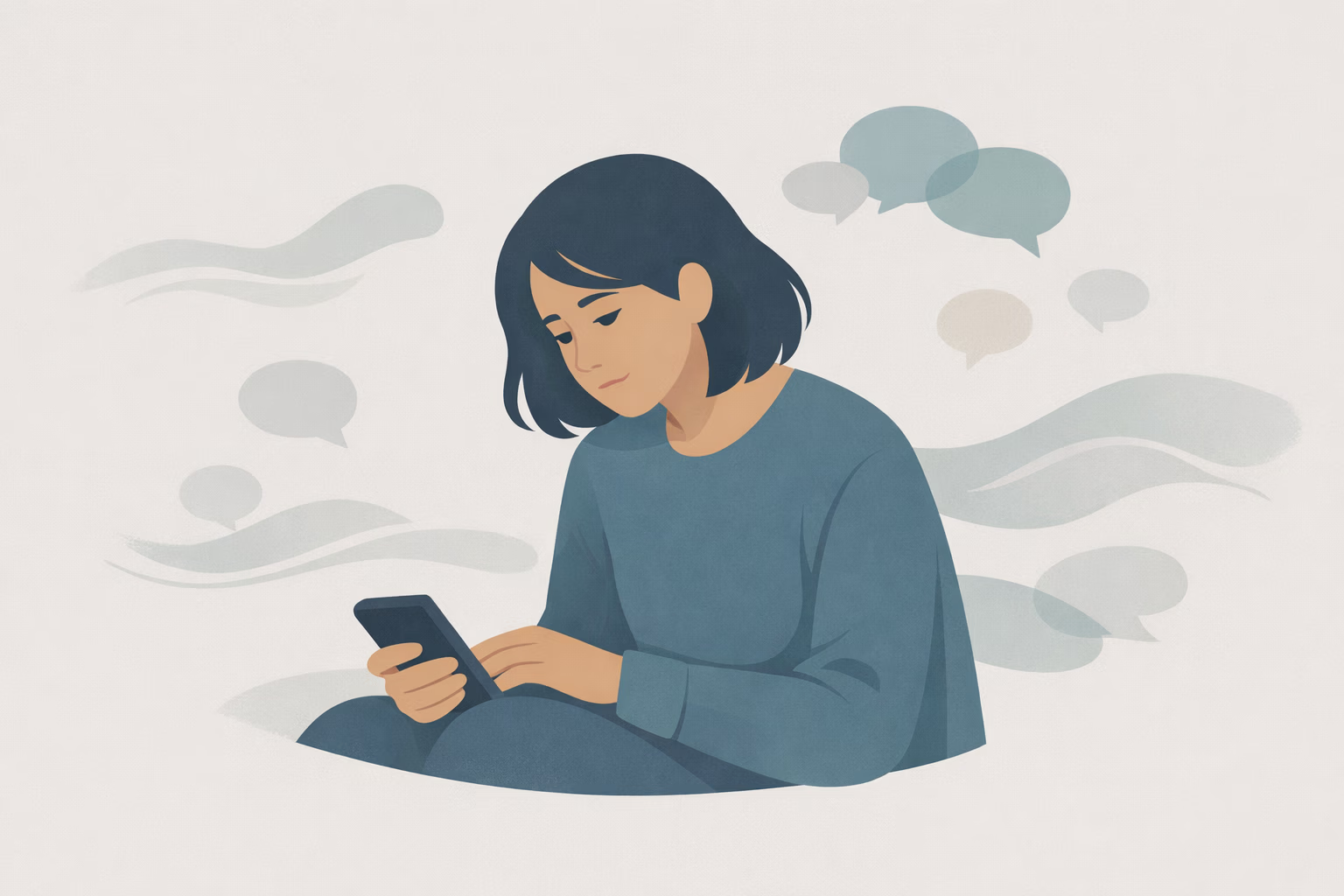
It can feel like you’re living next to yourself: doing your life, and also managing the story of your life.
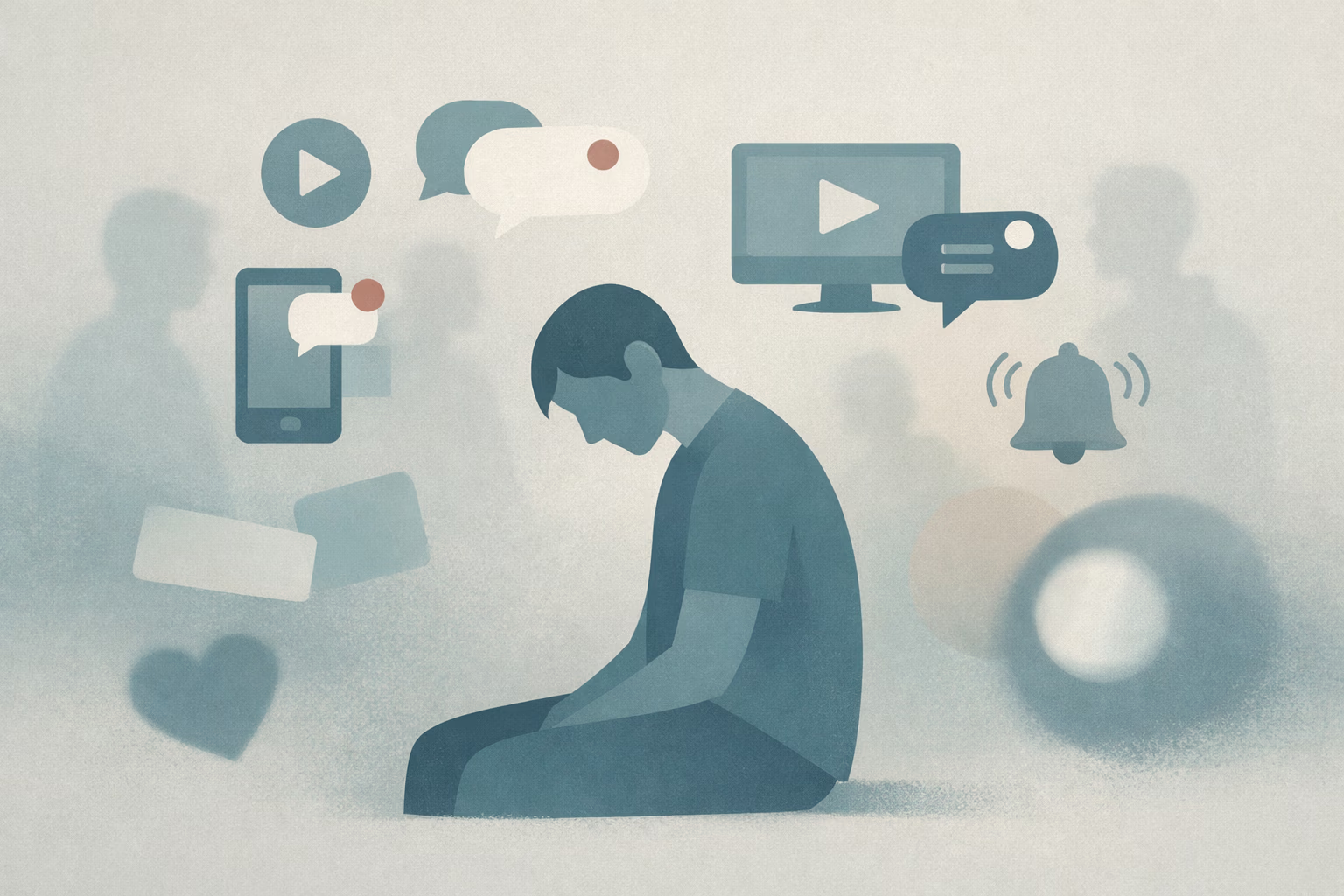
Online identity maintenance often requires repeated micro-decisions: wording, timing, tone, lighting, what to omit, what to clarify, whether to respond, how fast to respond, whether to delete. Each choice can be small, but the cumulative effect is that executive attention gets used for impression management rather than recovery, creativity, or presence.
When executive systems are busy, regulation becomes more expensive. The body may compensate through urgency (post now, fix now), control (edit more, check more), or withdrawal (avoid posting, mute, disappear). These aren’t “bad habits.” They’re the nervous system redistributing limited capacity under ongoing evaluative demand. [Ref-2]
Humans evolved to manage reputation in relatively stable groups: people you knew, in contexts that repeated, where misunderstandings could be repaired and social signals eventually completed. Your brain’s “story-making” capacity—who am I to them, what did that mean, where do I stand—was built for environments where feedback had edges.
Digital environments remove many of those edges. The audience is mixed, the context is thin, and the signal can keep echoing long after you’ve moved on. This can keep the narrative system lightly activated, as though it’s still waiting for the social moment to finish. That prolonged “not finished” state is one reason online self-presentation can affect well-being. [Ref-3]
Curating an online persona can genuinely help, at least initially. A cleaner story about yourself can reduce uncertainty. A flattering photo can deliver a quick sense of social belonging. A confident tone can function like a social shield: it decreases ambiguity and can feel safer than being misread.
The nervous system tends to favor whatever reduces threat signals quickly. So a curated identity can become a short-term regulator—especially during life transitions, loneliness, or periods when real-world belonging feels thin. The complication is that the relief is often state-based (a momentary lift), not completion-based (a lasting “done”). Over time, “keeping it up” can increase strain, particularly when self-presentation becomes more false or more effortful. [Ref-4]
When validation arrives, does it settle you—or does it restart the loop?
A common belief is that the more carefully you present yourself, the more secure your social standing will be. In practice, high-effort impression management can reduce life satisfaction and increase fatigue, because it trains the system to treat identity as a performance to maintain rather than a life to inhabit. [Ref-5]
Fragmentation happens when different contexts demand different “you”s: professional you, relatable you, aspirational you, unbothered you. None of these are inherently wrong. The strain comes from having to switch rapidly while staying readable—and from never getting the closure signal that says, “This is complete; you can stand down.”
In a high-visibility environment, control can start to feel like stability. If you can manage how you’re perceived, you can reduce unpredictability. If you can get consistent positive signals, you can temporarily quiet uncertainty.
This is the power loop: a cycle where monitoring, editing, and optimizing the persona provides short-term relief, which reinforces more monitoring, editing, and optimizing. The loop isn’t about vanity. It’s about a system trying to secure footing through controllable signals when internal coherence feels harder to access under load. Research links online identity curation with authenticity strain and social anxiety patterns, which fits this “control as safety cue” dynamic. [Ref-6]
Control can feel like calm—until you realize you can’t ever stop controlling.
When identity is treated as a public object, the body adapts. The adaptations often look like “quirks” people criticize themselves for, but they’re coherent responses to an environment that keeps consequences partially muted and perpetually pending.
These patterns are well-documented around impression management online and can even nudge behavior toward choices that don’t match one’s values when the performance pressure is high. [Ref-7]
Over time, constant persona management can erode the feeling of “I know where I stand with myself.” Not because someone loses their true self, but because the system stops receiving clear internal completion signals. When every expression is revised for impact, the body learns that expression is never finished—only interrupted.
Energetically, this can show up as social exhaustion, a flattened sense of preference, or a persistent sense that rest is not fully restorative. You may still be “off the clock,” but the narrative system is still running background processes: how it looked, what it meant, what’s next. Studies of impression management in platforms like Instagram highlight how self-presentation demands can intensify this strain. [Ref-8]
When you’re not posting, do you still feel like you’re being evaluated?
External feedback—likes, views, comments, silence—does more than inform; it conditions. The brain treats variable social reward as salient, and the nervous system learns to track it as a cue for safety, belonging, or status. When those cues become primary, the system leans harder on curated identity because it reliably produces measurable signals.
Importantly, the stress isn’t only negative feedback. Even positive feedback can raise the cost of future expression by increasing the perceived stakes: now you have a standard to maintain, a tone to keep, a version to protect. Broader reviews of social media and well-being describe how these feedback dynamics can shape self-evaluation and stress load over time. [Ref-9]
When your mirror is outside you, you can’t control when it stops reflecting.
There is a difference between understanding that online identity is stressful and having the system actually settle. Insight is information; settling is a physiological “stand-down” that happens when loops close and the environment stops demanding constant representation.
As self-surveillance loosens—even slightly—many people notice something simple returning: clearer preference. Not dramatic emotion, not a big breakthrough, but a quieter signal: what matters to me, what fits, what feels aligned. That values-signal is often the first bridge back to coherence because it’s orientation, not performance.
In other words, relief isn’t just “less pressure.” It’s the reappearance of internal guidance when the noise floor drops. Discussions of digital identity fatigue often point toward this shift from managing perception to reconnecting with intrinsic orientation. [Ref-10]
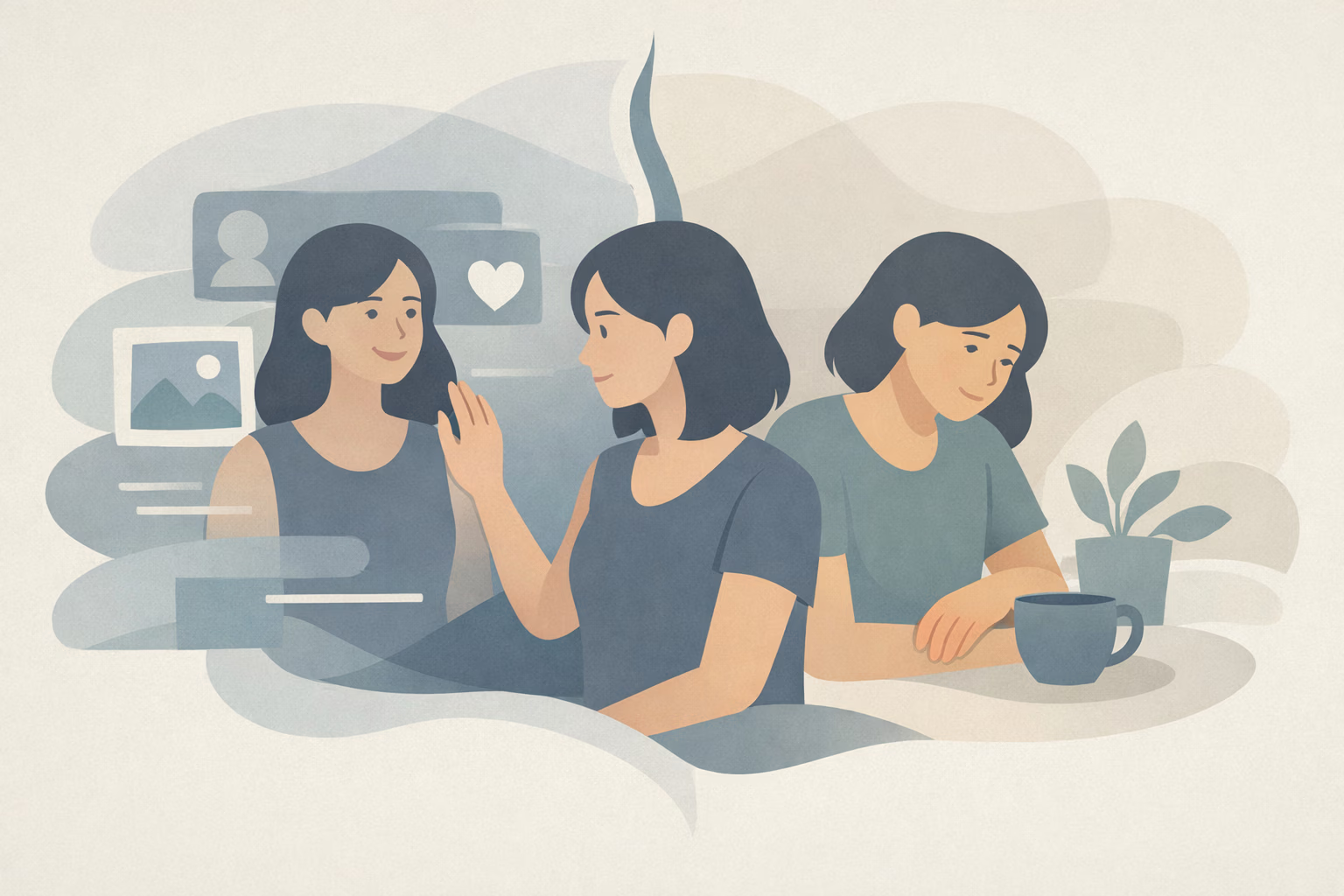
One of the strongest counterweights to digital persona strain is contact where you don’t have to be legible to a crowd. In low-performance relationships, communication completes: you speak, you’re met, you’re misunderstood and repaired, you’re known across time. These are closure-rich environments.
This matters because the nervous system recognizes safety through predictable signal return. When people have spaces where they are not curated, the body stops allocating so much energy to impression management elsewhere. The paradox is that “authenticity” online is often still a performance, while offline (or in private digital spaces) coherence can return because the interaction actually resolves. [Ref-11]
Where do you experience “I don’t have to manage myself”?
When pressure to perform decreases, people often expect a dramatic emotional release. More commonly, restoration shows up as increased capacity: you can be in your life without simultaneously narrating it. The urge to check, tweak, or re-interpret becomes less gripping because the system is no longer trying to complete itself through external signal.
Many describe a quiet relief: less preoccupation with consistency, less reflexive comparison, fewer “identity calculations” before ordinary actions. This isn’t about becoming perfectly confident. It’s about the return of enough internal steadiness that expression doesn’t feel like it has to earn safety. Cultural reflections on identity curation frequently note this yearning for authenticity as a relief from performance pressure. [Ref-12]
Relief can be ordinary: fewer tabs open in your head.
A managed identity is maintained for approval. A lived identity is expressed as a byproduct of what you value and what you’re doing with your actual days. The difference is not morality; it’s mechanics. When life has enough coherence—actions that complete, relationships that return signals, values that stay consistent across contexts—the system doesn’t need constant external confirmation to feel oriented.
In that state, online expression can become lighter: less like a proof of self, more like a trace of a life that is already underway. The performance demand decreases because identity is not being assembled in public. It is being formed through completion, and then represented, if and when that representation fits. Many discussions of social media fatigue point to this shift as the core of renewed authenticity. [Ref-13]
If maintaining an online identity feels heavy, it doesn’t mean you’re fragile or attention-seeking. It often means your system has been asked to do something metabolically expensive: keep a public-facing self stable in an environment that rarely provides closure.
Seen this way, the strain is not a verdict—it’s a signal. It can point to places where values, time, and expression have been pulled out of alignment, and where the self has become an object to manage rather than a life to inhabit. That reframe alone can soften shame and restore a sense of agency: not by forcing change, but by recognizing what your nervous system has been carrying. [Ref-14]
Digital stress isn’t just about screens; it’s about sustained evaluation without an endpoint. When the body is asked to stay publicly interpretable, it can lose access to the internal “done” signal that makes life feel settled. [Ref-15]
There is dignity in noticing that load. And there is steadiness in remembering: you are not required to be a perfectly maintained story. A coherent life tends to speak for itself—often more quietly, and with far less strain.
From theory to practice — meaning forms when insight meets action.
Because it requires repeated micro-decisions: wording, timing, tone, what to omit, whether to respond. Each choice is small, but cumulatively executive attention gets used for impression management instead of recovery, creativity, or presence. When executive systems are busy, regulation becomes more expensive — the body compensates through urgency, control, or withdrawal. Self-tracking replaces natural self-expression. Anticipating reactions replaces completion and rest. Checking feedback replaces internal settling. The fatigue isn't weakness; it's the nervous system redistributing limited capacity under continuous evaluative demand. It feels like living next to yourself: doing your life and managing the story of your life.
Not as a moral failing — but structurally, yes. When your system holds two representations at once (who you are in motion and who you appear to be), it increases load. Over time, that shows up as restlessness, self-doubt, or low-grade tension without obvious cause. Your narrative system evolved to manage reputation in stable groups where feedback had edges and misunderstandings could be repaired. Digital environments remove those edges — the audience is mixed, the context is thin, signals echo long after you've moved on. The narrative system stays lightly activated, waiting for social moments to finish. That prolonged 'not finished' state is where the strain lives.
When control starts feeling like stability. If you can manage how you're perceived, you reduce unpredictability. If you can get consistent positive signals, you temporarily quiet uncertainty. The Power Loop is monitoring, editing, and optimizing the persona providing short-term relief, which reinforces more monitoring, editing, optimizing. It isn't about vanity — it's a system trying to secure footing through controllable signals when internal coherence feels harder to access. Even positive feedback raises the cost of future expression by increasing perceived stakes: now there's a standard to maintain. Control can feel like calm — until you realize you can't ever stop controlling.
As self-surveillance loosens, something simple returns: clearer preference. Not dramatic emotion, just a quieter signal of what fits and feels aligned. That values-signal is often the first bridge back to coherence because it's orientation, not performance. Low-performance relationships — where communication actually completes through being met, misunderstood, repaired, known across time — provide closure cues the internet rarely gives. The body recognizes safety through predictable signal return. When identity is lived from meaning rather than managed for approval, online expression becomes lighter — less a proof of self, more a trace of a life already underway. You aren't required to be a perfectly maintained story.
From Science to Art.
Understanding explains what is happening. Art allows you to feel it—without fixing, judging, or naming. Pause here. Let the images work quietly. Sometimes meaning settles before words do.
One Quiet Window, one insight, one reflection — every Sunday