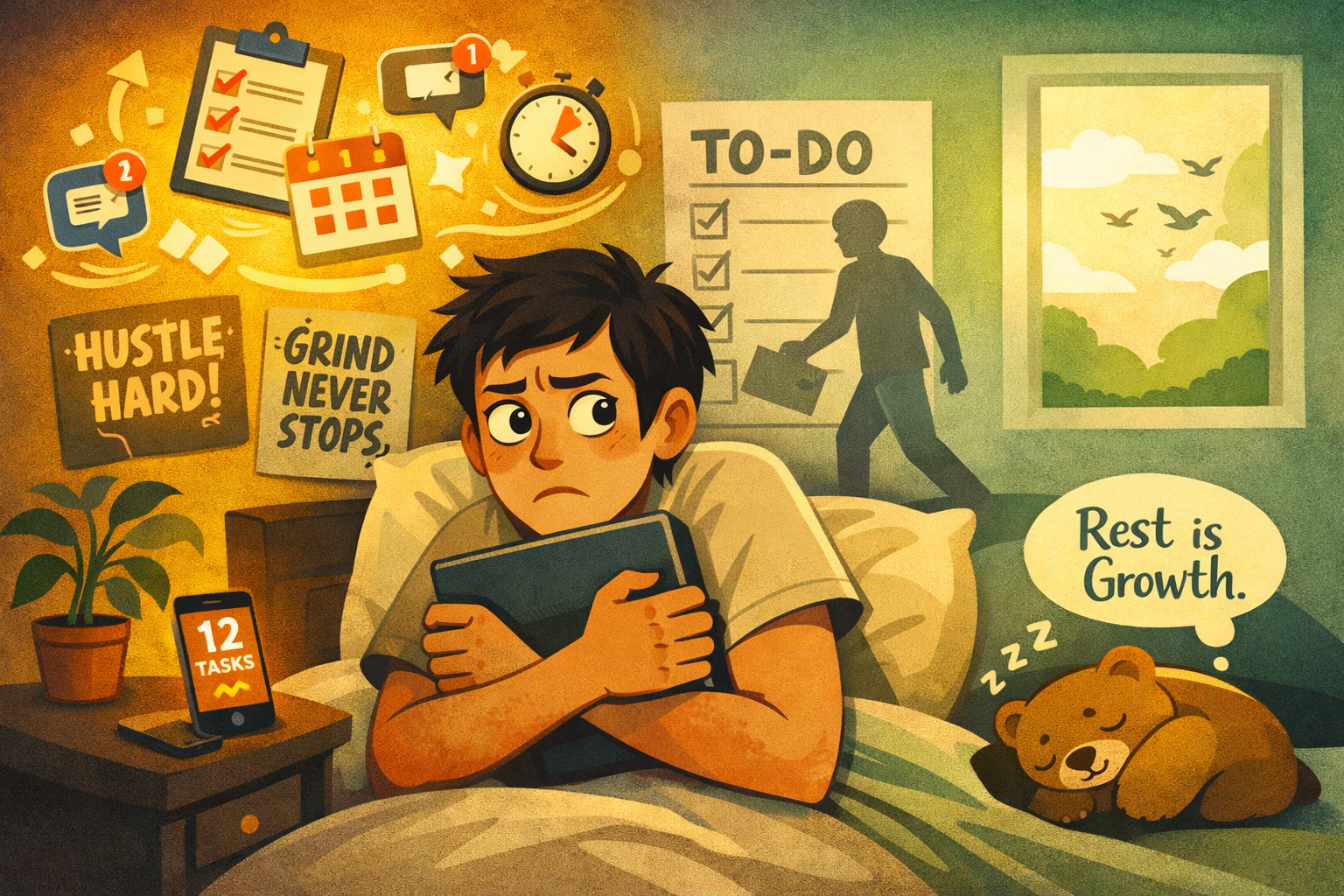
Toxic Productivity: When Rest Feels Like Failure
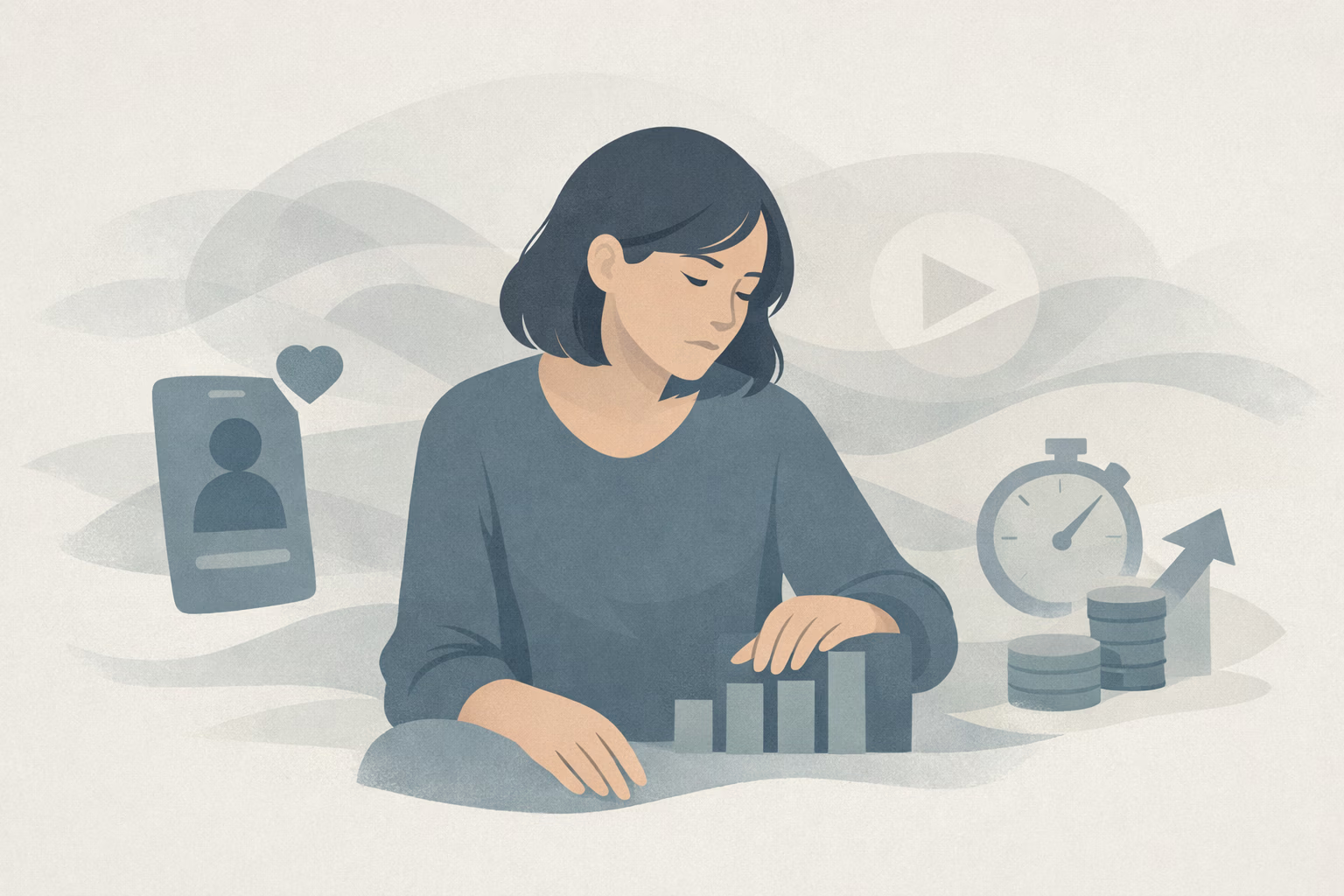
In short: Toxic productivity influencers aren’t just “motivational.” They’re a particular kind of content environment: one that frames constant output, optimization, and self-upgrading as proof of worth. The message is subtle but consistent—rest is suspicious, limits are excuses, and your value is something you must continually earn.
Toxic productivity influencers aren’t just “motivational.” They’re a particular kind of content environment: one that frames constant output, optimization, and self-upgrading as proof of worth. The message is subtle but consistent—rest is suspicious, limits are excuses, and your value is something you must continually earn.
When that message lands on a human nervous system, it doesn’t stay abstract. It becomes a state: urgency, vigilance, comparison, and the feeling of being behind—even while you’re doing a lot. That experience can look like drive on the outside, but on the inside it often feels like pressure without a true “done” signal.
What if the problem isn’t your motivation—what if it’s the kind of loop your brain is being asked to live in?
A common signature of hustle-driven pressure is the sense that your effort never quite lands. You finish one thing, and the next benchmark appears immediately. The body stays mobilized because the environment keeps implying that closure is unsafe: if you stop, you fall behind.
Over time, this can create a chronic “unfinished” feeling—like your day is a series of partial completions. Even when tasks get done, the nervous system may not register completion, because the criteria keep moving. Many people interpret this as a character problem, but it often reflects sustained load and constant evaluation. [Ref-1]
It’s hard to feel proud of progress when the scoreboard updates faster than your nervous system can stand down.
Hustle content is frequently packaged as inspiration, but it commonly carries an implied warning: “If you are not doing this, you are at risk.” The brain is sensitive to risk cues—especially social risk cues—so the body may respond as if it’s facing a live challenge: heightened arousal, narrowed attention, and an urgency to prove competence.
This is one reason the same video can feel energizing at first and then compulsive later. The stimulation isn’t only about goals; it’s about status and safety. In that state, striving can become less about chosen direction and more about reducing internal pressure. Over time, chronic activation is associated with stress physiology and mental strain. [Ref-2]
Social status tracking is not vanity—it’s an old survival function. In group-living species, being excluded or devalued carried real costs. Modern platforms transform that ancient system into a 24/7 feed of comparisons: who is winning, who is improving, who is “serious,” who is falling behind.
Because the input is continuous, the nervous system can start treating productivity as a belonging signal. Not in the sense of a conscious belief, but in the sense of a patterned state: monitor, compare, adjust, repeat. Social comparison on digital platforms has been linked with shifts in self-evaluation and wellbeing, particularly when comparison becomes frequent and unresolvable. [Ref-3]
When your brain reads output as “rank,” what happens to rest?
Hustle culture doesn’t only pressure; it also offers something many people are hungry for: an identity that feels simple. If you’re “the disciplined one,” “the grinder,” or “the optimized one,” you get a clear role, a script for decisions, and a temporary sense of control.
That’s why the pull can be strong even when the body is exhausted. The content promises certainty—do this and you’ll be safe, respected, ahead. It can also offer a fleeting sense of superiority over your own limits, which can feel stabilizing in the short term. But it’s a stability that requires constant fuel. [Ref-4]
Relentless-effort narratives tend to equate intensity with meaning: if you push harder, life will feel more solid. But many people notice a different outcome—exhaustion, irritability, reduced creativity, and a strange hollowness even after achievements.
This mismatch isn’t “ingratitude.” It often reflects a system that’s spending more time revved up than completed. Stimulation can keep you moving, but it doesn’t necessarily create the kind of internal closure that makes accomplishments feel like they belong to you. When productivity becomes the primary proof of worth, the reward is easily diluted, because the next demand arrives before the body registers completion. [Ref-5]
A power loop forms when the environment repeatedly pairs worth with measurable performance. You do more to feel solid; the bar rises; you do more again. The loop is persuasive because it provides immediate feedback—metrics, before-and-after stories, “day in the life” evidence. But it also keeps your nervous system in a state of ongoing audition.
In this loop, rest can start to feel like a loss of position, not a neutral human need. Even “self-care” gets recruited into performance: sleep for output, nutrition for output, relationships for networking. When everything is instrumental, nothing truly completes.
Many descriptions of toxic productivity highlight this pattern: being busy becomes a baseline expectation, and slowing down carries an implied moral penalty. [Ref-6]
Under hustle pressure, the nervous system often adapts by narrowing around efficiency and minimizing anything that doesn’t produce quick proof. This can look like ambition. But inside, it can feel brittle—like your day must be tightly controlled to prevent falling behind.
These are not identities. They’re regulatory responses—ways a system tries to maintain stability when the environment keeps removing closure.
When the body stays in extended mobilization, it often reallocates resources away from long-term repair, play, and relational presence. People may notice more tension, sleep disruption, flattened pleasure, and a reduced capacity to shift gears. The costs aren’t only physical; they can be relational and existential.
Creativity tends to suffer in constant evaluation climates because creative work requires slack—time for signals to return, ideas to incubate, and experience to consolidate. Similarly, intrinsic motivation can weaken when the primary reward becomes external proof. Many discussions of hustle culture describe impacts on mental health, burnout risk, and the sense of life narrowing around output. [Ref-8]
When everything is measured, even your inner life can start to feel like a performance review.
Insecurity is not a defect; it’s often a sign that your system is missing reliable closure cues. When you don’t feel settled, the mind naturally scans for orientation: “What should I be doing? How are others doing it? What’s the standard?” Hustle content supplies quick answers.
But because the content is optimized for engagement, it often intensifies comparison. You see highlight reels, extreme routines, and curated certainty. That can increase perceived inadequacy, which increases scanning, which increases exposure—tightening the loop. Social comparison research frequently notes how platform design can amplify upward comparison and self-judgment, especially when the comparisons are frequent and hard to reality-check. [Ref-9]
Hustle culture tends to collapse identity into output: “I am what I produce.” A different framing is possible—one that treats productivity as a tool rather than a verdict. In this framing, effort has a place, but it doesn’t carry the job of proving you deserve rest, care, or belonging.
This is not about convincing yourself with affirmations, or trying to think differently while living under the same pressure. It’s about recognizing how nervous systems respond to constant evaluation: they mobilize, they narrow, they cling to whatever provides temporary control. When the scoreboard quiets and closure becomes available, the body can gradually relearn a steadier baseline—one where “enough” is a felt signal, not a number. [Ref-10]
What changes when you no longer treat output as evidence of being allowed to exist?
Humans regulate in groups. When the social environment rewards only performance, people often become performative. When the social environment values presence, reciprocity, and realistic pacing, the nervous system receives different cues: you don’t have to prove yourself every minute to remain included.
Communities that buffer hustle pressure tend to normalize ordinary humanity—rest, seasons of lower output, caregiving, illness, learning curves. They also widen the definition of contribution: being reliable, kind, engaged, creative, honest. This matters because social comparison is not just an individual habit; it’s shaped by what your surroundings praise and what they ignore. [Ref-11]
When the power loop loosens, people often describe a return of steadier energy rather than constant spikes. The day may feel less like an audition. Work can still matter, but it no longer has to carry your entire identity.
This shift often shows up as increased capacity for signal return: you notice fatigue earlier, satisfaction lasts longer, and the urge to compare doesn’t hijack attention as quickly. There may be more self-trust—less because you “believe in yourself,” and more because your system is no longer living in a permanent state of catching up. Many accounts of toxic productivity note that doing more can paradoxically reduce happiness, while a more humane pace supports wellbeing. [Ref-12]
Hustle metrics tend to be loud because they’re countable: hours, streaks, revenue, followers, body changes, inbox zero. But meaning often has a quieter signature. It’s not always the most visible outcome; it’s the sense that what you’re doing fits your values and can actually complete—so the nervous system can register, “This belongs to my life.”
When performative output is no longer the main compass, goals can reorganize around contribution, craft, relationships, learning, and service—things that accumulate into identity rather than demanding constant proof. This is where agency becomes more real: not the frantic agency of pushing, but the grounded agency of choosing. [Ref-13]
You don’t lose ambition when you leave hustle culture. You lose the need to earn your right to breathe.
Hustle culture often sells a single story: more effort equals more value. But human systems don’t stabilize through endless effort—they stabilize through coherence, realistic limits, and enough closure to stand down. When worth is detached from output, productivity can return to its proper role: something you use, not something you are.
If hustle content has been shaping your inner climate, that isn’t a sign you’re “easily influenced.” It’s a sign you’re human in an environment designed to keep you comparing and striving. Naming the loop with dignity can be the beginning of reclaiming a life where work serves meaning, not the other way around. [Ref-14]
Hustle culture makes other people’s intensity look like a universal standard. But nervous systems are not machines, and lives are not identical. The most sustainable kind of progress tends to arrive when effort aligns with values and can actually complete—so it becomes part of your lived identity, not just another performance. [Ref-15]
You’re allowed to be a person with limits and still be serious about what matters.
From theory to practice — meaning forms when insight meets action.
Because the content is packaged as inspiration but commonly carries an implied warning: if you are not doing this, you are at risk. The brain is sensitive to risk cues, especially social risk cues, so the body responds as if facing a live challenge — heightened arousal, narrowed attention, urgency to prove competence. Stimulation isn't only about goals; it activates Status & Control circuitry around rank and belonging. The same video can feel energizing at first and compulsive later because what's actually being recruited is threat detection. Striving stops being chosen direction and becomes pressure reduction in disguise.
Because the environment keeps removing closure. You finish one thing and the next benchmark appears immediately. The body stays mobilized because the criteria keep moving — if you stop, you fall behind. Even when tasks get done, the nervous system doesn't register completion, because there's no clean Done Signal. People interpret this as a character problem, but it's sustained load and constant evaluation. The Power Loop here pairs worth with measurable performance: do more to feel solid, the bar rises, do more again. Rest starts to feel like loss of position rather than a neutral human need. The scoreboard updates faster than your nervous system can stand down.
Yes. A Power Loop forms when output becomes the scoreboard for worth. The loop is persuasive because it provides immediate feedback — metrics, before-and-afters, day-in-the-life evidence. But it keeps the system in ongoing audition. Even self-care gets recruited into performance: sleep for output, nutrition for output, relationships for networking. When everything is instrumental, nothing truly completes. Insecurity feeds the feed and the feed feeds insecurity — when you don't feel settled, the mind scans for orientation, and the content supplies highlight reels and curated certainty. Comparison intensifies, scanning increases, exposure increases, and the loop tightens itself.
Steadier, not euphoric. The day stops feeling like an audition. Work can still matter without carrying your entire identity. Capacity for signal return increases — you notice fatigue earlier, satisfaction lasts longer, comparison hijacks attention less quickly. There's more self-trust, not because you believe in yourself, but because your system stops living in permanent catching-up. Goals reorganize around contribution, craft, relationships, learning — things that accumulate into identity rather than demand constant proof. Productivity returns to its proper role: a tool, not a measure of worth. You don't lose ambition. You lose the need to earn the right to breathe.
From Science to Art.
Understanding explains what is happening. Art allows you to feel it—without fixing, judging, or naming. Pause here. Let the images work quietly. Sometimes meaning settles before words do.
One Quiet Window, one insight, one reflection — every Sunday