Screen Addiction & Overstimulation: Why You Can’t Look Away
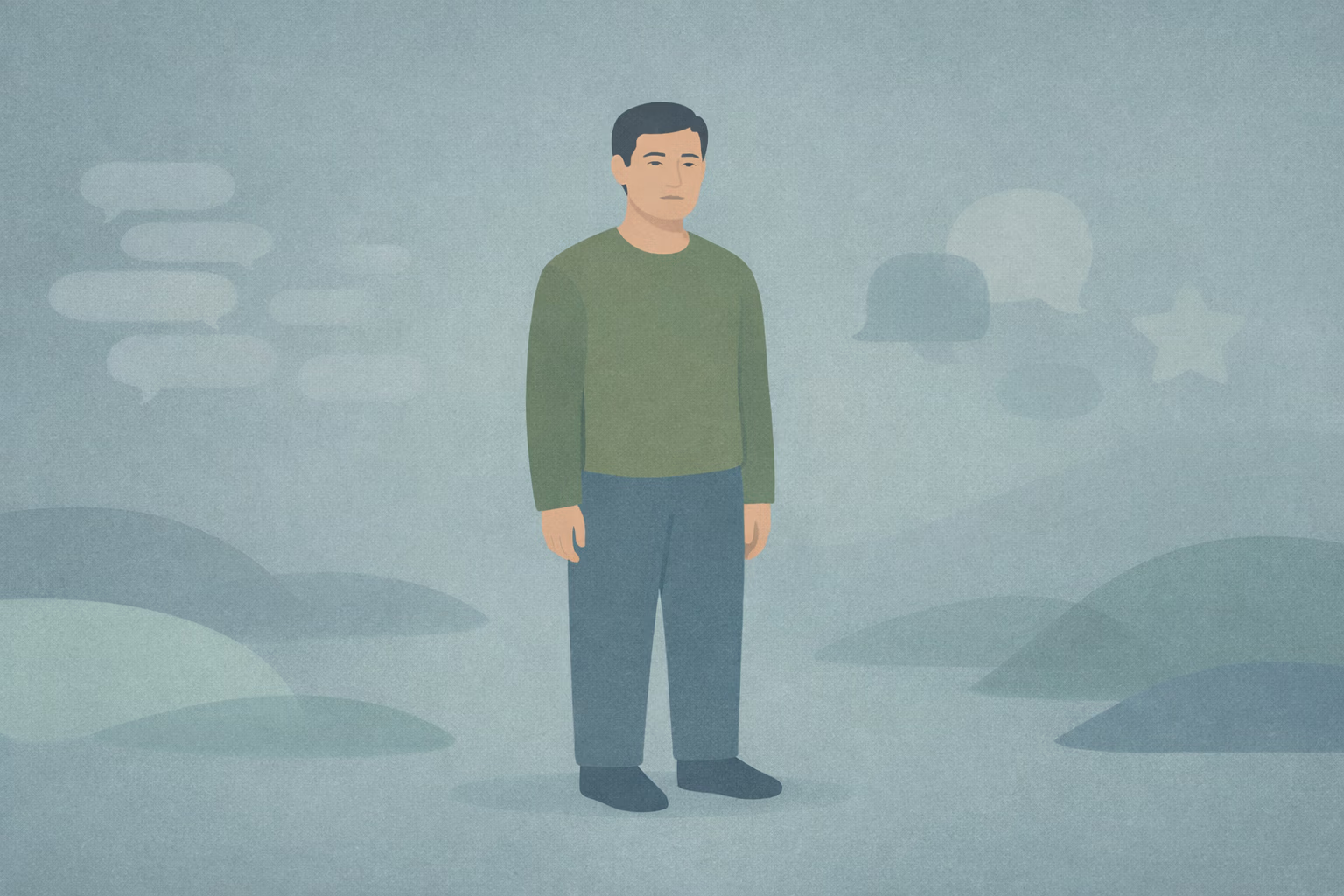
In short: Ten years is a long time for a nervous system to live in fast-switching input: infinite scroll, constant notifications, high-reward content, and the subtle pressure to keep up. If you’ve noticed you feel more tired but less satisfied, more stimulated but less settled, that isn’t a character flaw.
Ten years is a long time for a nervous system to live in fast-switching input: infinite scroll, constant notifications, high-reward content, and the subtle pressure to keep up. If you’ve noticed you feel more tired but less satisfied, more stimulated but less settled, that isn’t a character flaw. It’s what many brains do under sustained load.
What happens when “normal” becomes high-intensity, all the time?
This article isn’t about blaming screens or praising willpower. It’s about how reward, stress, and attention circuits adapt to what they’re repeatedly exposed to—and how those adaptations can change your baseline sense of motivation, focus, and meaning.
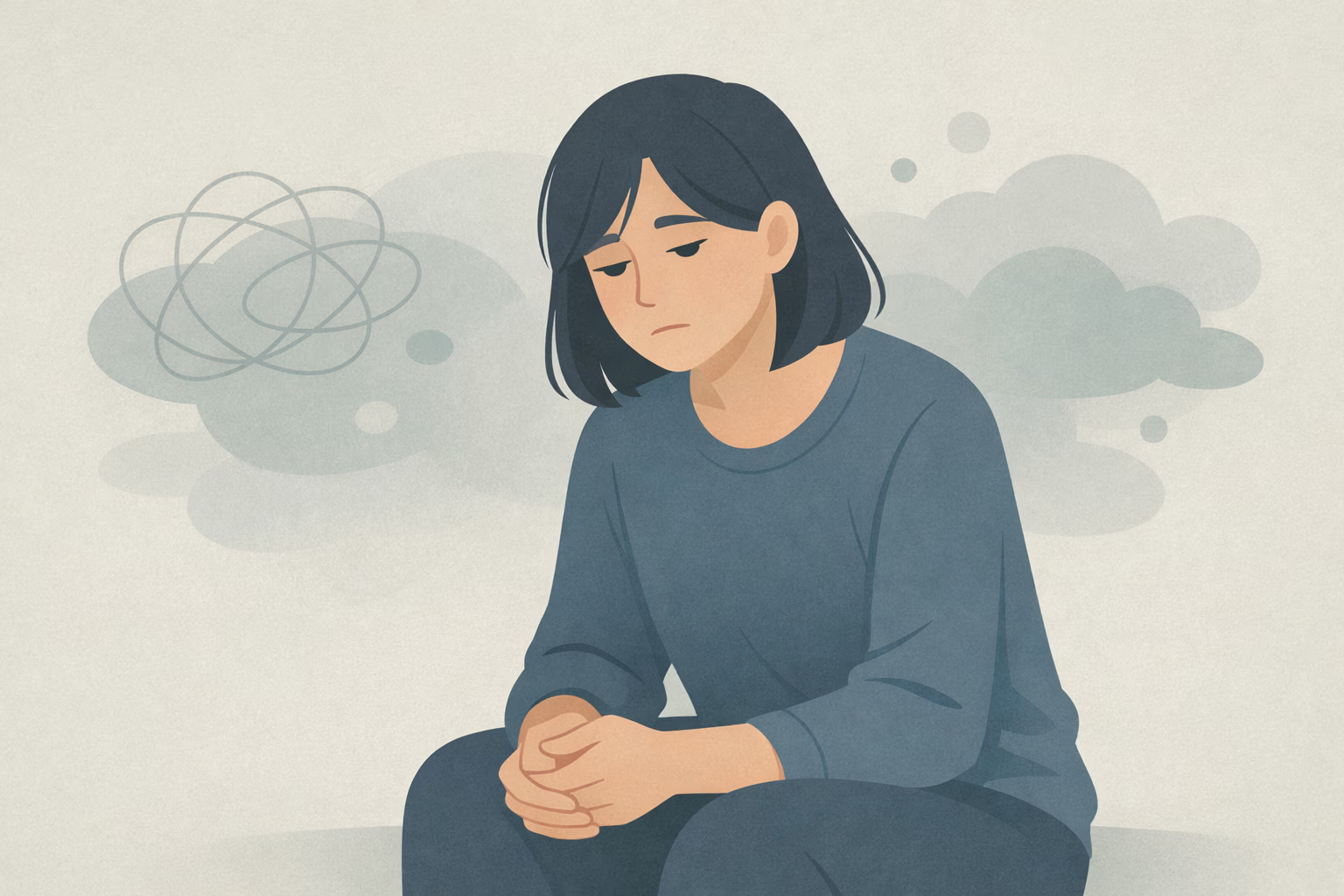
Long-term overstimulation often shows up as a specific kind of fatigue: not just sleepiness, but a reduced tolerance for anything slow, quiet, or unresolved. People describe it as mental “static,” emotional flatness, or the sense that their brain is running hot even when they’re not doing much. [Ref-1]
This can be confusing because the body may still be moving through the day—working, messaging, consuming, responding—while the internal experience feels thin or drained. In Meaning Density terms, life can become full of input but low on completion: many starts, few “done” signals.
Reward chemistry is designed to help organisms learn what’s worth approaching and repeating. When high-intensity novelty is frequent, reward systems can adapt by becoming less responsive to the same level of stimulation, while expectation and seeking can rise. Over time, “more” is required to get “less.” [Ref-2]
This isn’t about a broken brain. It’s about calibration. When big spikes are common, everyday signals can register as comparatively low-value. That shift can also interact with stress physiology: chronic chasing can keep the system slightly activated, making it harder to settle into sustained attention or quiet satisfaction.
In daily life, this can look like attention that keeps scanning for the next hit of relevance—new tabs, new ideas, new updates—without the nervous system ever receiving the closure cue that says, we’re safe, we’re done, we can stand down.
Human reward systems evolved in environments where novelty and high-value rewards were intermittent—useful, but not endless. In scarcity conditions, a strong pull toward reward makes sense: it increases survival chances. [Ref-3]
But in modern digital environments, novelty can be continuous, personalized, and frictionless. The nervous system reads that as opportunity after opportunity. The ancient circuitry doesn’t naturally interpret “infinite options” as abundance; it can interpret it as unfinished—as if something important might be missed.
Stress and reward are also not separate lanes. They influence each other. Under prolonged activation, the system can become more sensitive to strain while simultaneously less sensitive to ordinary pleasure. That’s not a moral failing; it’s an adaptation to conditions.
Overstimulation rarely begins as a problem. It often begins as relief. High novelty can create an immediate lift: more ideas, faster learning, a sense of connection, and a feeling of being “on.” That can be especially compelling during periods of uncertainty, loneliness, or overload—times when the system is already seeking steadiness.
There’s also a social reality: modern life rewards responsiveness. Being reachable, informed, and quick can be mistaken for being effective or even being okay. In the short term, stimulation can resemble vitality.
Physiologically, though, repeated stress-reward activation can carry a cost: the same pathways that energize pursuit can also keep the body in a more braced state. [Ref-4]
One of the most disorienting parts is the mismatch between what it looks like and what it feels like. From the outside, someone may appear highly engaged—always consuming, responding, learning, tracking. Internally, capacity can be narrowing: less patience, less depth, less tolerance for complexity that can’t be resolved quickly.
This is where the “illusion” forms. High stimulation can create a sense of movement without creating completion. A day can be packed with activity and still feel strangely un-lived, because nothing lands long enough to integrate into identity or closure.
Over time, systems that were designed to respond to occasional reward surges can start to treat frequent surges as normal background. That can make quieter states feel like a deficit rather than a resting baseline. [Ref-5]
In the Avoidance Loop, overstimulation isn’t primarily driven by “fear” or “lack of discipline.” It’s driven by structure: when fatigue rises, fast reward becomes the easiest available state shift. The input bypasses friction and provides immediate change—then the system pays for it later as deeper depletion.
The loop can look like this:
Digital environments intensify this loop because they offer constant, low-effort switching. The nervous system doesn’t get time to complete cycles of attention and rest. [Ref-6]
After years of high stimulation, many people notice similar shifts—not as diagnoses, but as predictable adaptations. The brain learns what kind of input is “worth it,” and the body learns what kind of arousal is typical.
Attention can become more vulnerable to interruption in high-media contexts, especially when the environment trains rapid scanning and frequent novelty shifts. [Ref-7]
None of this makes you broken. It suggests your system has been trained for a fast world, and now it’s paying the price in recovery and meaning density.
When overstimulation becomes chronic, the impacts can linger beyond any single week of heavy use. People often report a lower threshold for irritability, more sensitivity to minor stressors, and a harder time returning to baseline after being activated.
Focus can become more fragile—not because you lack intelligence or care, but because the nervous system has learned to expect quick resolution and frequent reward. Sustained attention requires a stable internal platform. If the platform is jittery, attention has less to stand on.
Another subtle shift is the reduced ability to experience simple pleasure. Not “sadness,” necessarily—more like a muted return on ordinary experiences: a meal, a walk, a conversation. When reward calibration changes, everyday life can feel underpowered. [Ref-8]
A key feature of long-term overstimulation is normalization. The brain is a prediction machine: it updates what it considers “baseline.” When high intensity is frequent, the system begins to treat it as standard operating conditions.
Dopamine is involved in reward, learning, and motivation—especially in signaling salience and helping you move toward what matters. [Ref-9] If the environment repeatedly tags rapid novelty as highly salient, the brain can begin to assign less salience to slower rewards: reading, deep work, face-to-face nuance, even restful quiet.
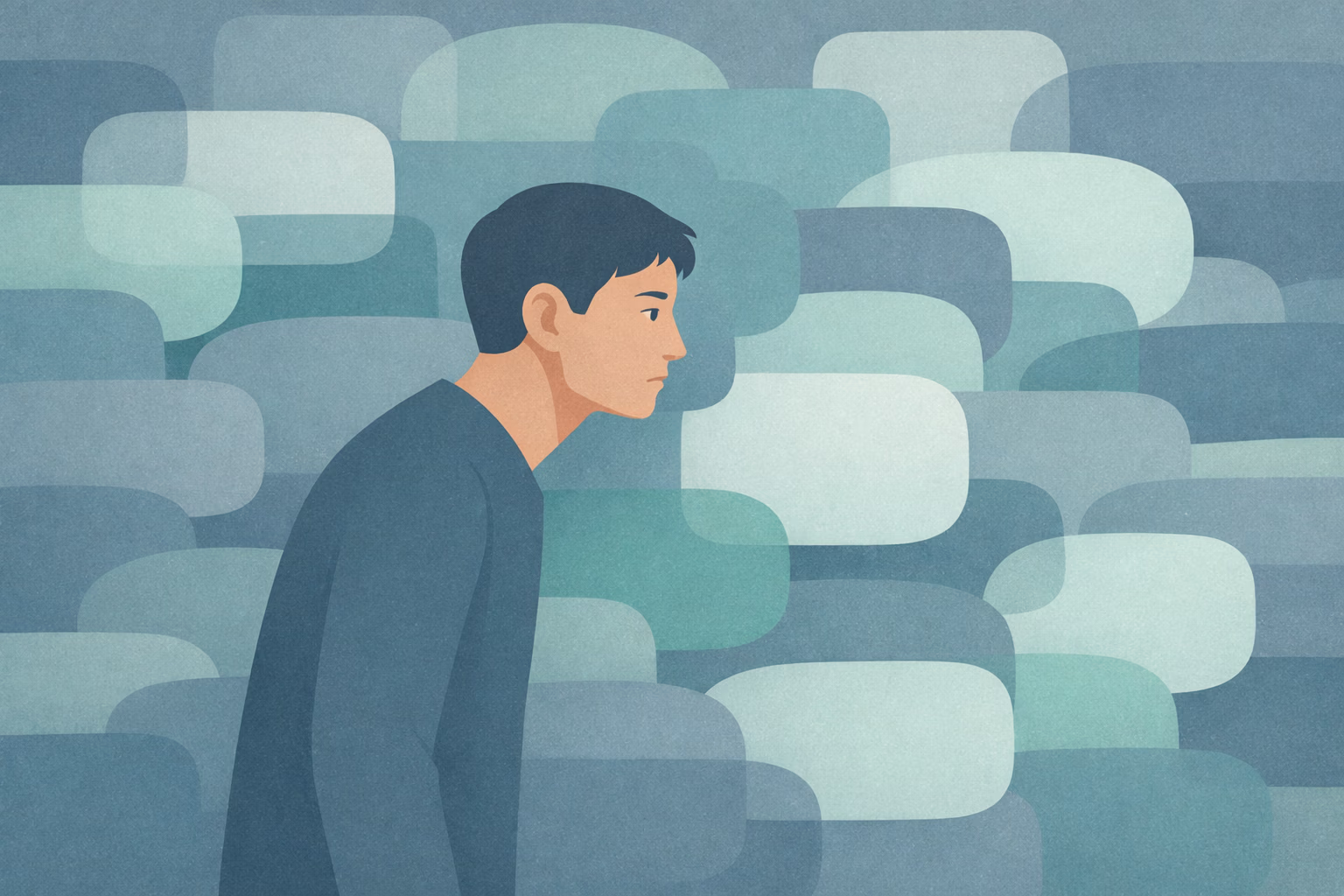
When everything is loud, “normal” can start to feel like silence—and silence can feel like something is missing.
This is one reason people can feel both over-stimulated and under-satisfied: the nervous system is flooded with signals but still not receiving completion.
Recalibration is not a mindset shift. It’s a nervous-system event: a gradual return of responsiveness when the intensity of input is low enough, for long enough, that the system stops bracing for the next spike.
In everyday terms, it’s the difference between state change and settling. Stimulation changes state quickly. Settling happens when loops can complete—when attention can finish, when the body can downshift, when the day contains moments that feel closed rather than merely paused.
Hedonic adaptation describes how repeated exposure to a stimulus can reduce its impact over time, pushing the system to seek more for the same effect. [Ref-10] In a meaning framework, the deeper issue isn’t pleasure itself—it’s the loss of “enoughness,” the internal signal that allows life to feel complete.
Digital intensity can mimic connection without providing the full set of safety cues that come from real-time, embodied presence: eye contact, pacing, mutual responsiveness, the subtle rhythm of being with someone. Those cues matter because regulation is social as well as individual.
When attention is chronically pulled outward by fast reward, the nervous system can become less practiced at receiving low-intensity rewards—like being listened to, sharing a meal, or sitting in companionable quiet. In those settings, reward is slower, but it carries a different message: nothing is urgent right now.
Research in behavioral economics and psychology has long noted that social context shapes how people evaluate reward and satisfaction. [Ref-11] In lived experience, calm presence can function like a reset signal—not through insight, but through repeated exposure to a pace that the body can actually metabolize.
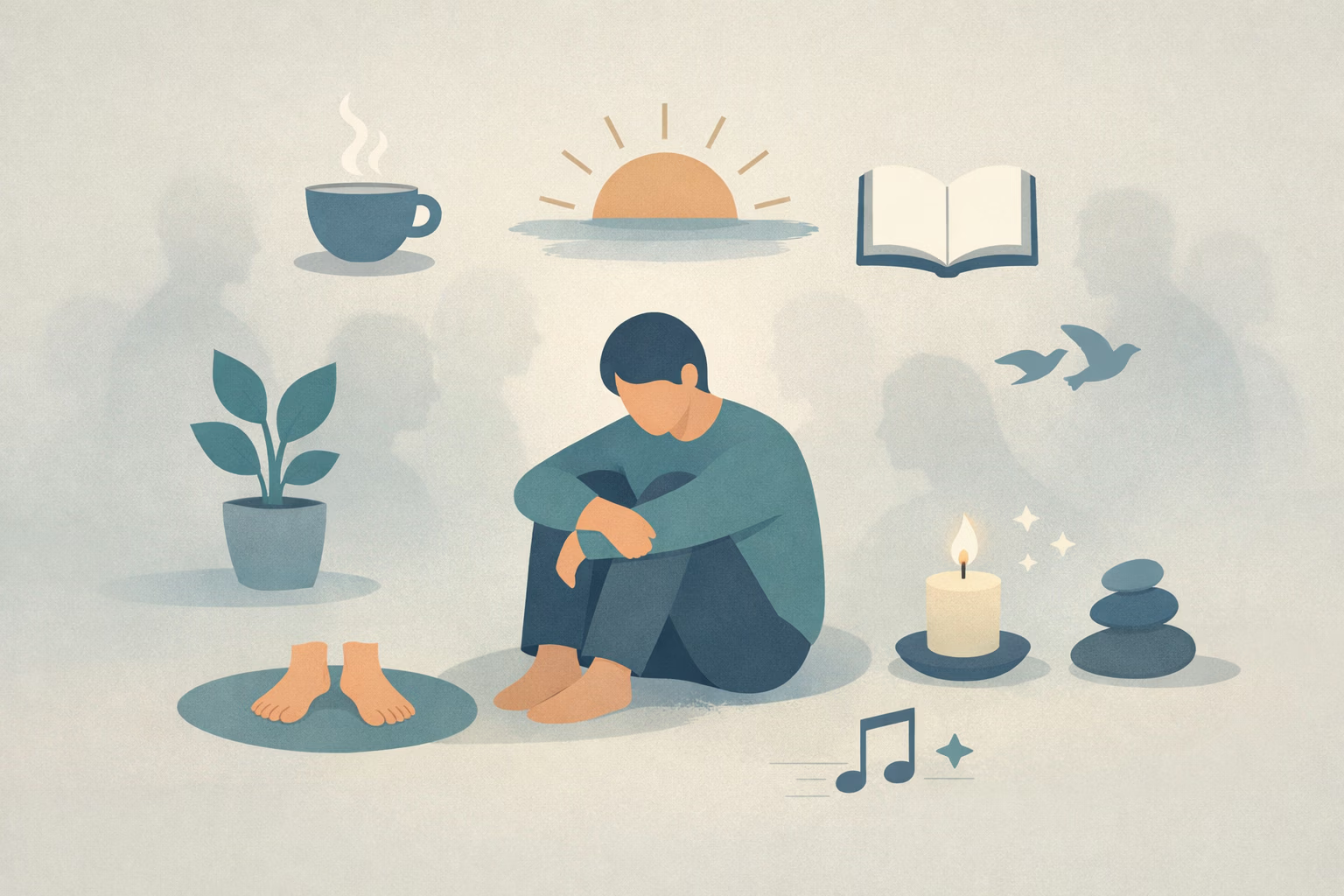
When overstimulation decreases, the return often isn’t dramatic. It’s incremental and physical: a longer attention span without strain, a quieter mind in the evening, a renewed ability to taste enjoyment in ordinary moments.
This is not about “feeling more.” It’s about capacity returning: the system can register subtler positive signals again because it’s no longer constantly competing with high-intensity input. Pleasure and enjoyment are not just emotions; they’re part of a broader affective system that helps you learn what supports life and what feels nourishing. [Ref-12]
People sometimes notice:
These are signs of recalibration and closure returning—not through effort, but through reduced activation and more complete cycles.
Over the long run, the opposite of overstimulation isn’t deprivation. It’s coherence: engagement that has a beginning, middle, and end; pleasure that doesn’t require escalation; attention that can stay with something long enough to become part of your life story.
When meaning density rises, behavior stabilizes. Not because you “try harder,” but because the nervous system is no longer negotiating with constant unfinished loops. A paced life offers more completion points—moments when the body can recognize, that was enough, that counted.
In practical culture, people sometimes call this “healthier dopamine habits,” but the deeper shift is identity-level: choosing environments that allow your reward system to work the way it was meant to work—through learning, relationship, craft, and lived values. [Ref-13]
If you recognize yourself in these patterns, it doesn’t mean you’re weak, broken, or permanently damaged. It means you’ve been living in an environment that continuously recruits reward and attention systems that were designed for intermittent novelty and frequent closure.
Neural fatigue has a logic. It’s the cost of sustained high-intensity input without enough completion, recovery, and low-demand time for the system to downshift. Many clinicians and educators describe this as a kind of “dopamine burnout” pattern—less joy, less motivation, more strain—without implying that the person is the problem. [Ref-14]
You are not failing at life. Your nervous system is adapting to the life it’s been given.
Agency often begins not with forcing change, but with seeing the pattern as structural: input, pacing, closure, and what your system has been trained to expect.
After a decade of overstimulation, many people don’t need a new personality. They need a baseline that can register “enough” again—where simple rewards feel real, attention can settle, and days contain completion rather than constant partials.
It can be worth reflecting on a gentle question: when intensity is lowered, does life start to feel more coherent—more like it belongs to you? Some popular discussions frame this as “dopamine fasting,” but the most important point is simpler: when the nervous system gets fewer spikes, it often regains the ability to value what’s already here. [Ref-15]
From theory to practice — meaning forms when insight meets action.
Long-term overstimulation shows up as a specific fatigue: not just sleepiness, but reduced tolerance for anything slow, quiet, or unresolved. People describe it as mental static, emotional flatness, or the sense that the brain is running hot even when nothing is happening. The body may still be moving through the day — working, messaging, consuming — while the internal experience feels thin. Life becomes full of input but low on completion: many starts, few Done Signals. Low tolerance for boredom, difficulty sustaining focus without quick reward, feeling cognitively overfull yet undernourished, reduced inner spark even during enjoyable things. This is a capacity signal, not a character flaw.
Because reward circuits adapt. When high-intensity novelty is frequent, the system becomes less responsive to the same level of stimulation while expectation and seeking rise. More is required to get less. This isn't a broken brain — it's calibration. When big spikes are common, everyday signals register as comparatively low-value. The brain treats high intensity as standard operating conditions, so quieter states feel like a deficit rather than a resting baseline. When everything is loud, normal can start to feel like silence — and silence can feel like something is missing. The system is flooded with signals but still not receiving completion.
Because high stimulation creates a sense of movement without creating completion. From the outside, someone may appear engaged — always consuming, responding, learning, tracking. Internally, capacity is narrowing: less patience, less depth, less tolerance for complexity. A day can be packed with activity and still feel un-lived because nothing lands long enough to integrate into identity. This is the Avoidance Loop in long form: baseline tiredness, reach for high-novelty input to change state, short-lived lift, reduced recovery, deeper baseline strain, lower tolerance for low-stimulation moments. Digital environments intensify the loop because they offer constant low-effort switching with no time to complete cycles of attention and rest.
Yes — gradually, through reduced intensity, not insight. Recalibration is a nervous-system event: a return of responsiveness when input is low enough, for long enough, that the system stops bracing for the next spike. It's the difference between state change and settling. People notice incremental, physical returns: longer attention span without strain, quieter mind in the evening, renewed ability to taste enjoyment in ordinary moments. More stable morning energy, less urgency to check for updates, greater tolerance for slow tasks, a clearer sense of what matters. This isn't feeling more — it's capacity returning because the system is no longer constantly competing with high-intensity input. Recovery looks like coherence, not deprivation.
From Science to Art.
Understanding explains what is happening. Art allows you to feel it—without fixing, judging, or naming. Pause here. Let the images work quietly. Sometimes meaning settles before words do.
One Quiet Window, one insight, one reflection — every Sunday