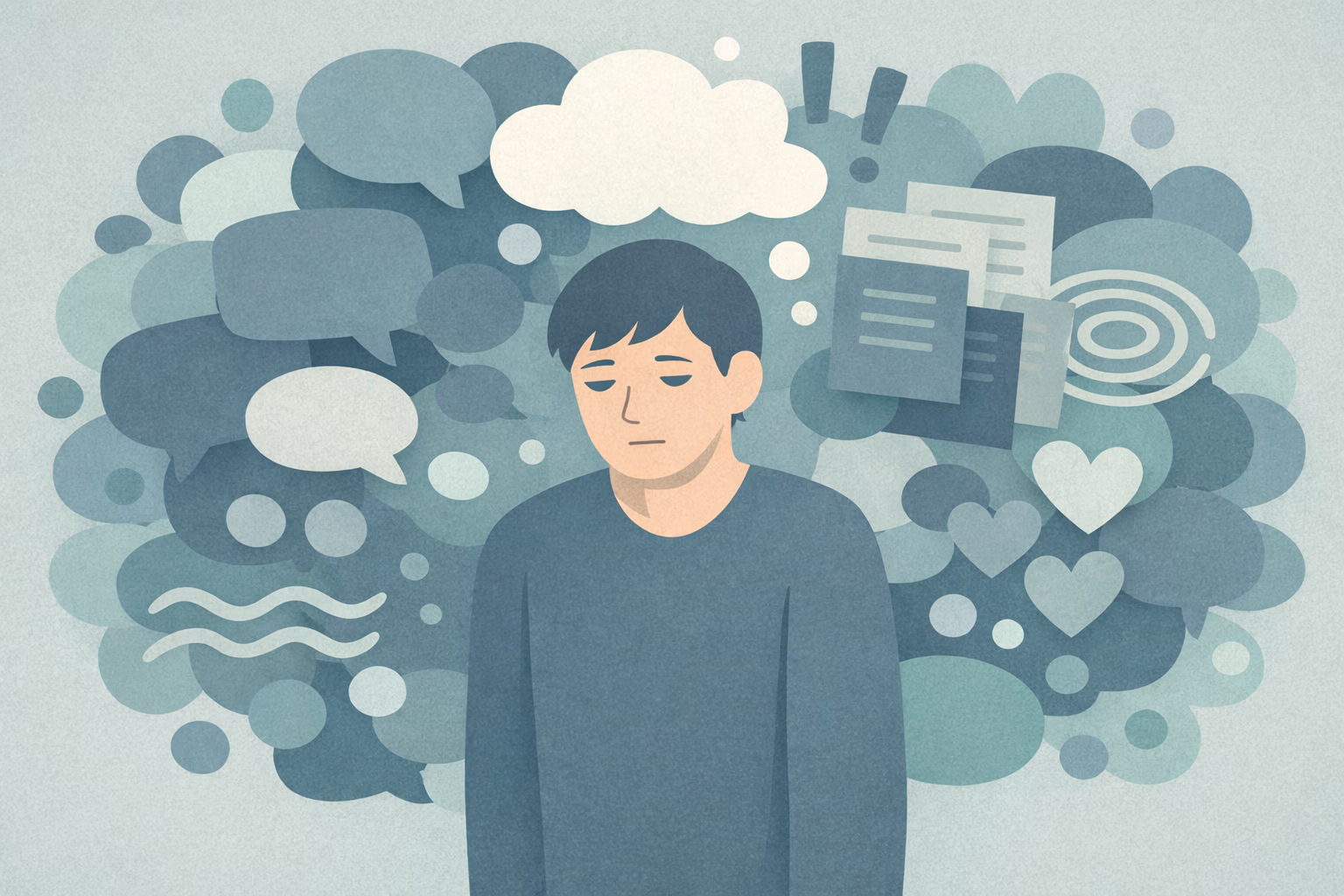
Overstimulation Symptoms: When Life Feels Too Loud
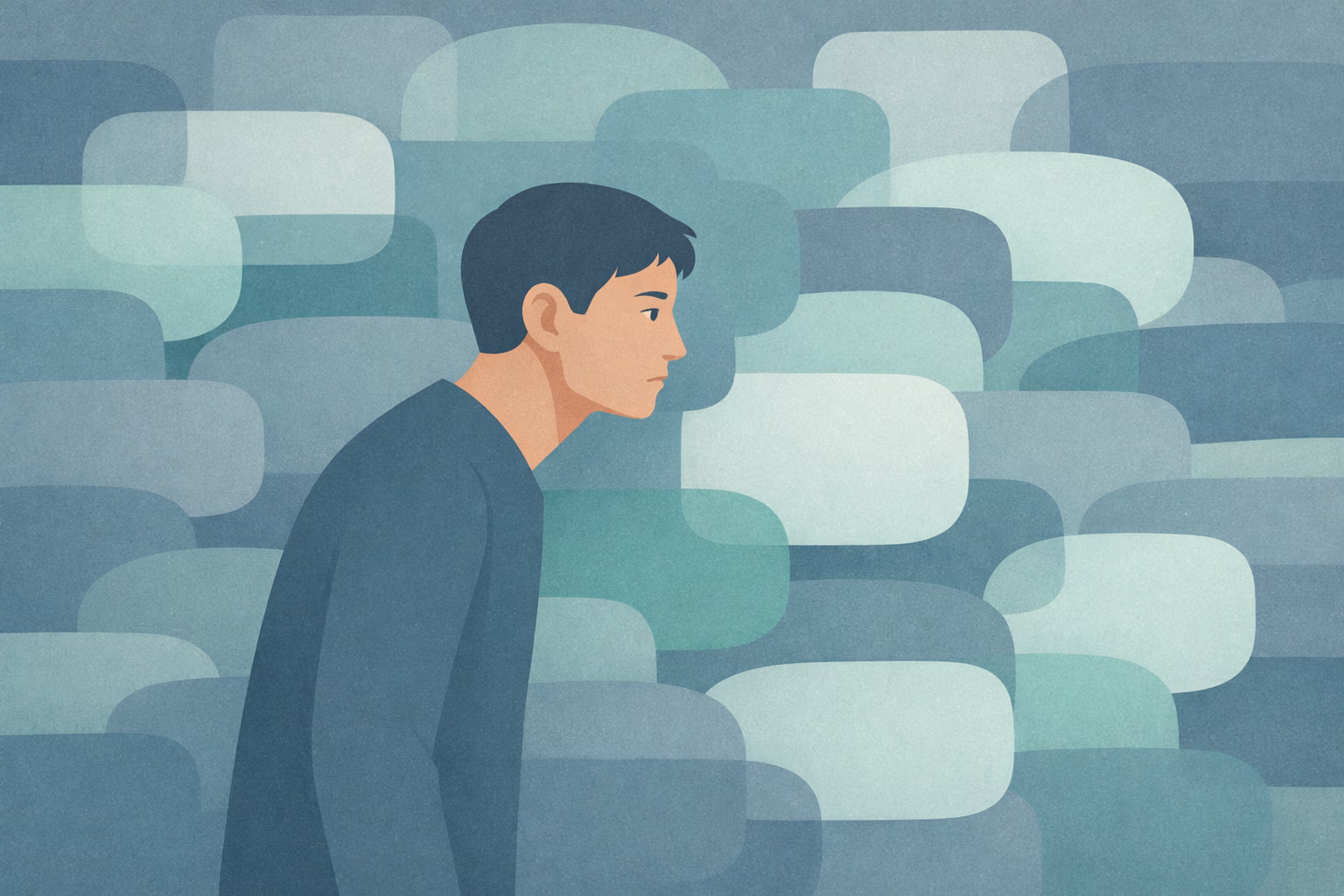
In short: Many people describe a strangely familiar moment: you pick up your phone for one small thing, and then time disappears. Not because you’re careless. Not because you “don’t want it enough.” More often, it’s because modern screens create a level of stimulation that nudges the brain into a high-alert, high-reward state that is difficult to end cleanly.
Many people describe a strangely familiar moment: you pick up your phone for one small thing, and then time disappears. Not because you’re careless. Not because you “don’t want it enough.” More often, it’s because modern screens create a level of stimulation that nudges the brain into a high-alert, high-reward state that is difficult to end cleanly.
In that state, the urge to keep going can feel less like a choice and more like momentum. Your system doesn’t get the internal “done” signal it needs to stand down—so it keeps scanning, refreshing, checking, and consuming.
If you keep scrolling even when you don’t enjoy it, what is your system trying to regulate?
Overstimulation often shows up as mental fatigue paired with restlessness—an odd combination where you feel tired, but stopping feels uncomfortable. People describe it as being “pulled” toward the screen, even when their body is asking for a break. [Ref-1]
This isn’t a personality flaw. It’s what happens when your attention system is repeatedly recruited and redirected. When the brain is asked to orient, evaluate, and respond at high frequency, disengaging can start to feel like dropping a spinning plate rather than gently setting something down.
Dopamine is often talked about like a happiness chemical, but in everyday life it functions more like a pursuit-and-priority signal: it helps mobilize you toward what might matter next. When screens provide rapid novelty, micro-rewards, and unpredictable updates, that pursuit system stays active. [Ref-2]
At the same time, attention gets fragmented. Each ping, scroll, and switch asks your brain to re-orient—again and again. That repeated re-orienting can keep the nervous system in a “ready” mode, even when you want to rest.
When the next thing is always available, the brain doesn’t get many natural endpoints.
Human attention evolved in environments where novelty arrived in doses: a sound in the brush, a shifting face, a change in weather. Modern screens compress an enormous amount of novelty, social information, and reward into a small glowing rectangle—available at any moment. [Ref-3]
This doesn’t mean humans are “weak.” It means the stimulus is unusually concentrated and continuous. When the input stream is stronger and faster than the nervous system’s natural settling rhythms, the system adapts by staying in pursuit longer than it would in a slower environment.
Screens can provide relief from states that are hard to sit in: boredom, social ambiguity, waiting, uncertainty, or the raw openness of unstructured time. In modern life, those states are common—because many experiences no longer complete into clear endings.
So the screen becomes a reliable bridge: instant engagement, instant input, instant “something.” The nervous system doesn’t have to search for closure in the room, the day, or the body; it gets a pre-packaged stream instead. That can be soothing in the moment, even if it costs capacity later. [Ref-4]
What if the screen isn’t the problem—what if it’s the most available regulator in an environment that rarely provides “done”?
One of the most confusing parts of screen overstimulation is that it can feel like you’re “waking up” while you’re actually draining. Fast content creates a sense of aliveness—more input, more options, more reactions—yet many people notice a later drop: heaviness, dullness, headaches, irritability, or a flattened mood. [Ref-5]
This is the mismatch between stimulation and restoration. Stimulation changes state. Restoration requires that the nervous system receives safety cues and completes loops—so it can stand down. When the day is filled with partial attention and constant evaluation, the body may not register completion, and recovery signals stay faint.
Excessive screen use often follows a “Pleasure Loop”: you reach for input to feel better or more engaged, the input spikes stimulation, and then your baseline state feels comparatively underpowered—so you reach again. Over time, the loop can shift from enjoyment to compulsion, where the behavior continues even when it’s no longer satisfying. [Ref-6]
In a Pleasure Loop, the nervous system learns that the quickest way to change state is more intensity: more novelty, more tabs, more clips, more scrolling. The loop isn’t sustained by character. It’s sustained by a predictable pattern: fast relief, incomplete closure, then renewed urgency.
When digital intensity stays high, the system can become less tolerant of low-input moments. Silence can feel “too quiet,” and normal life can feel strangely under-stimulating. This isn’t because you secretly dislike your life. It’s because your baseline has been conditioned by a faster tempo. [Ref-7]
People often report patterns like:
These are not identities. They’re outputs: what a mobilized nervous system looks like when it’s been asked to stay “on” for too long.
High-frequency screen use can temporarily reduce vigilance and inhibition—skills that help you sustain focus and choose when to stop. When those capacities are strained, it becomes easier to keep consuming even when you intended to switch tasks. [Ref-8]
At the same time, intrinsic motivation can weaken. Not because you “don’t care,” but because real-world rewards often arrive more slowly and require continuity. If your day is repeatedly interrupted, the brain receives fewer completion signals—fewer moments where effort becomes a settled “that counted.” The result can look like numbness or apathy, but structurally it’s often reduced signal strength after chronic fragmentation.
A key trap is that overstimulation can produce its own withdrawal-like discomfort: agitation, restlessness, or a sense that something is missing. Then more input briefly smooths that edge. The loop can start to feel self-justifying: “I need this to feel okay,” when the need was amplified by the pattern itself. [Ref-9]
In this structure, craving isn’t proof that you’re broken. It’s a predictable response when the nervous system has learned that quick input is the fastest route away from the tension created by too much input. The body keeps choosing the shortest path to state change—even when the long-term outcome is depletion.
Restoring balance after prolonged digital intensity is less about “winning against your phone” and more about the nervous system regaining clean transitions. When experiences have beginnings, middles, and ends, the body can register completion and reduce mobilization. That reduction isn’t a thought. It’s a physiological settling that arrives when the system trusts that nothing urgent is unfinished. [Ref-10]
In other words: regulation improves when life offers real stopping points—moments that feel complete enough for the brain to stand down. When those endpoints return, attention becomes less hunted. Not because you tried harder, but because your environment and your rhythms stop demanding constant pursuit.
Stability doesn’t require constant control. It requires enough closure for the system to stop scanning.
Human nervous systems regulate through cues of safety and belonging: eye contact, tone of voice, shared attention, predictable routines, and embodied presence. These signals are qualitatively different from digital input because they come with reciprocity and natural endpoints—conversations end, meals finish, walks return you home.
Research consistently links higher screen time with a range of health and well-being outcomes in adolescents, pointing to the broader reality that screens don’t just take time; they can displace regulating experiences like sleep, movement, and social connection. [Ref-11]
When was the last time your day gave you a clear “we’re done now” signal?
As digital intensity decreases or becomes less continuous, many people notice a particular kind of clarity: less mental buzzing, less urgency, and more steadiness. This isn’t “positive thinking.” It’s capacity returning when the system is no longer asked to switch contexts every few seconds. [Ref-12]
You may also notice that ordinary activities start to feel more “enough.” That’s not because your standards lowered; it’s because your nervous system can finally register subtler reward signals again. When the stimulus threshold drops, the world becomes readable—your attention can land, and then release.
In an overstimulated state, it can take more intensity to feel anything at all. The result can resemble dullness: muted curiosity, muted satisfaction, muted presence. Over time, this can look like “brain fog” or cognitive drag—not as a permanent decline, but as a system operating under chronic digital load. [Ref-13]
When sensitivity restores, it often feels surprisingly simple: quieter thoughts, more stable attention, and a renewed ability to notice small cues—hunger, tiredness, interest, comfort, discomfort. Those cues help behavior self-organize. You don’t have to push for meaning; meaning becomes easier to detect when perception isn’t saturated.
When your senses come back online, you don’t need as much intensity to feel alive.
Media overload doesn’t just crowd your schedule; it crowds the internal space where you make sense of your life. When attention is repeatedly diverted, experiences don’t fully consolidate into “this mattered” or “this is who I am.” You get activity without integration, stimulation without closure. [Ref-14]
In that context, protecting attention isn’t about restriction or self-improvement. It’s about coherence: having enough unfragmented time for experiences to complete, for values to become lived, and for identity to feel like more than a set of reactions. When attention returns to what is meaningful, agency tends to return with it—not as motivation, but as orientation.
Compulsive screen use is often a sign that your nervous system has been running without enough natural endpoints. The pull isn’t proof of weakness; it’s proof that the stimulus is powerful and the environment is loud.
Recovery, at its core, begins when the brain is given conditions that allow it to stand down—to stop scanning, stop chasing, and stop needing constant input to feel okay. When rest becomes possible again, many people find that life regains texture, and “enough” becomes a real sensation rather than a rule. [Ref-15]
From theory to practice — meaning forms when insight meets action.
Because the pull isn't really about enjoyment — it's about a nervous system that doesn't get a clean Done Signal. When the brain is asked to orient, evaluate, and respond at high frequency, disengaging starts to feel like dropping a spinning plate rather than gently setting something down. People describe being 'pulled' toward the screen even when their body is asking for a break. That's a Pleasure Loop running on momentum: input spikes stimulation, baseline feels comparatively underpowered, and the system reaches again. Novelty replaces completion, intensity replaces satisfaction, and 'more input' replaces 'enough.' The behavior continues even when it's no longer satisfying.
Modern screens are supernormal stimuli — they compress an enormous amount of novelty, social information, and reward into a small glowing rectangle, available at any moment. Human attention evolved in environments where novelty arrived in doses: a sound in the brush, a shifting face, a change in weather. The compressed version isn't proof that humans are weak; it means the stimulus is unusually concentrated and continuous. When input is stronger and faster than the nervous system's natural settling rhythms, the system adapts by staying in pursuit longer than it would in a slower environment. This is Evolutionary Mismatch in everyday form.
Because engagement can look like energy while it quietly depletes you. Fast content creates a sense of aliveness — more input, more options, more reactions — yet many people notice a later drop: heaviness, dullness, headaches, irritability, flattened mood. That's the mismatch between stimulation and restoration. Stimulation changes state; restoration requires safety cues and completed loops so the system can stand down. Worse, overstimulation produces its own withdrawal-like discomfort — agitation, restlessness — that more input briefly smooths. The need was amplified by the pattern itself. Craving isn't proof you're broken; it's a predictable response to a self-generating loop.
Restoring balance is less about winning against your phone and more about the nervous system regaining clean transitions. When experiences have beginnings, middles, and ends, the body registers completion and reduces mobilization — not as a thought, as a physiological settling that arrives when the system trusts nothing urgent is unfinished. Real-world presence and connection provide strong safety cues qualitatively different from digital input: conversations end, meals finish, walks return you home. As load reduces, ordinary activities start feeling more 'enough' — not because standards lowered, but because the nervous system can register subtler reward signals again. When senses come back online, you don't need as much intensity to feel alive.
From Science to Art.
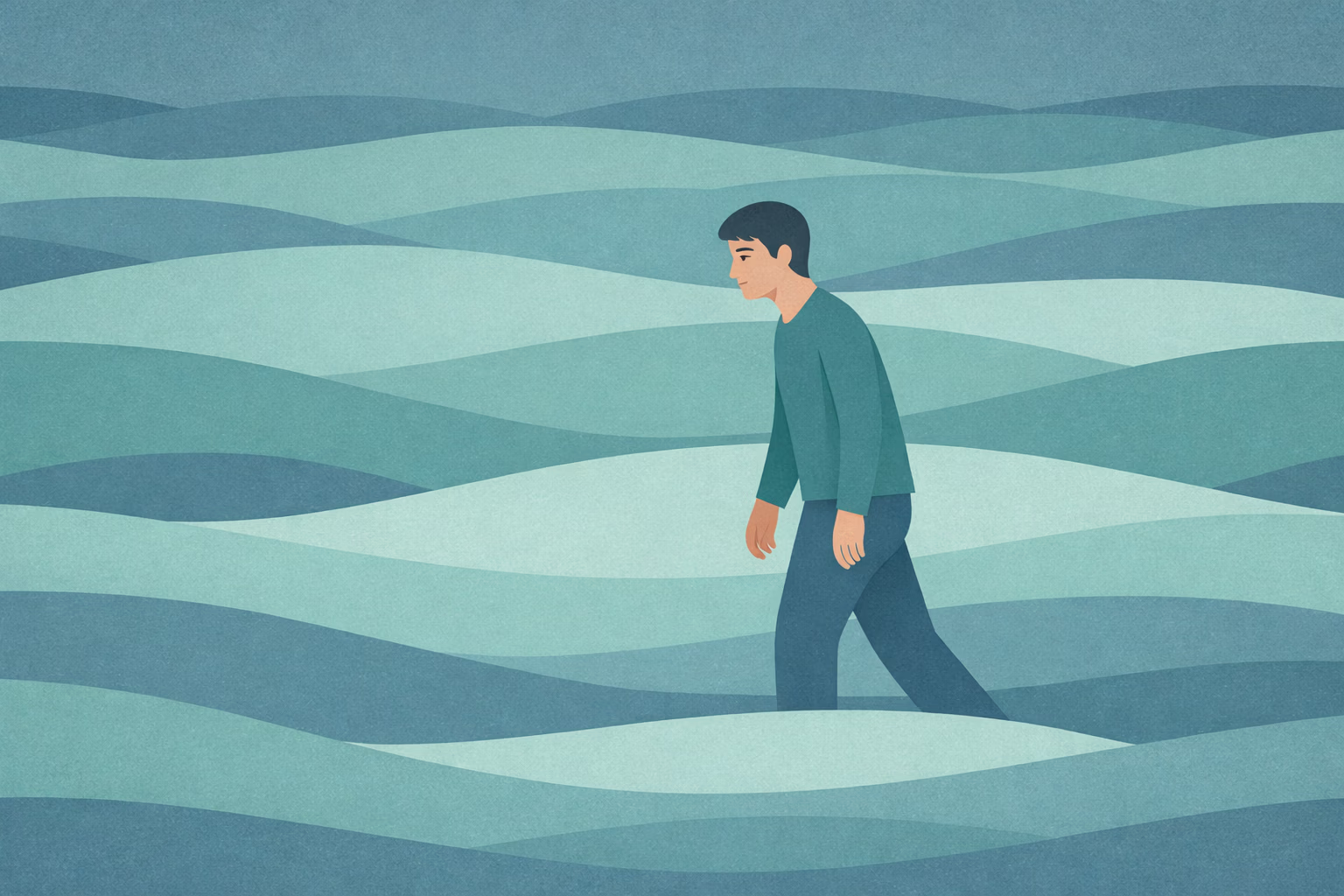
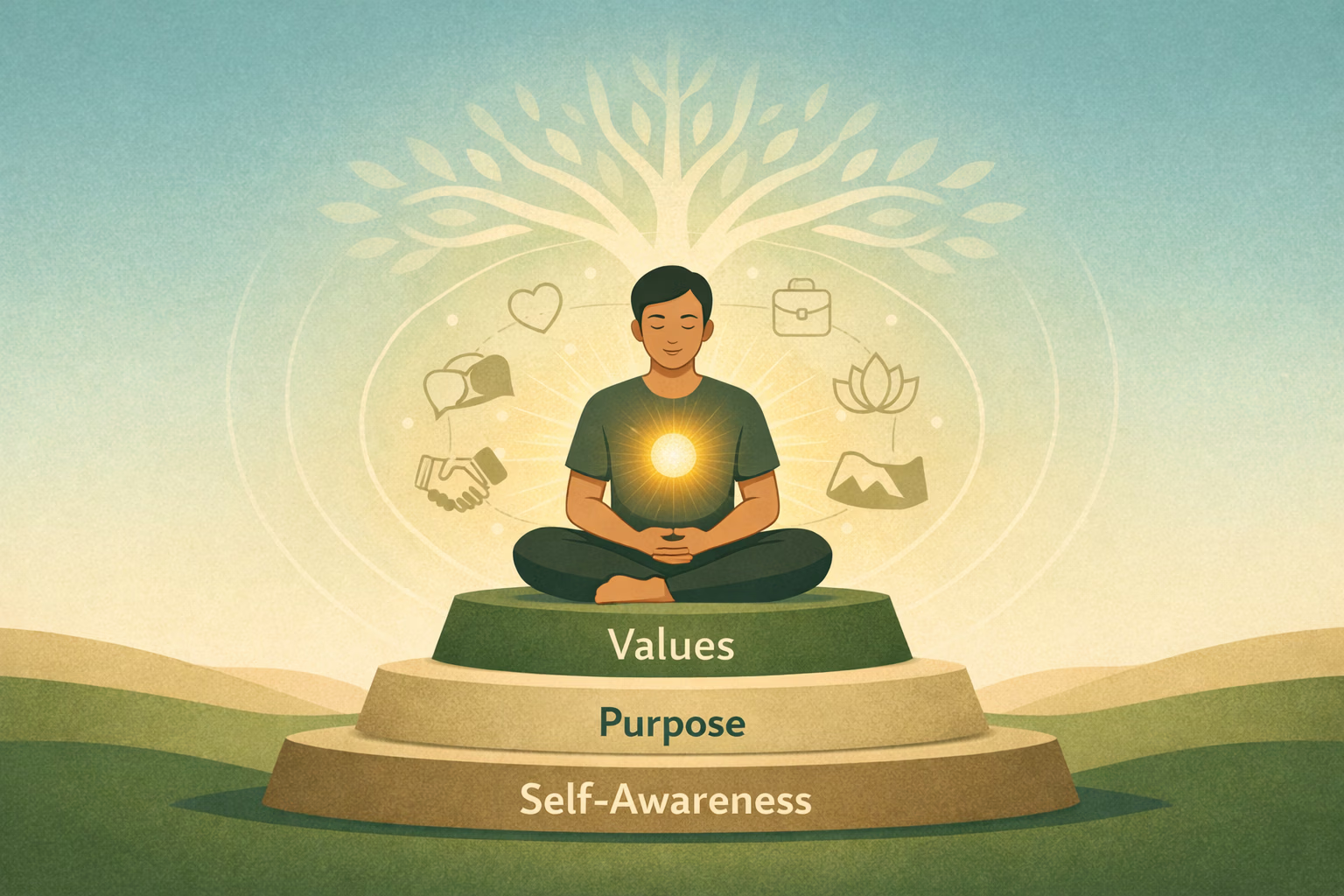
Understanding explains what is happening. Art allows you to feel it—without fixing, judging, or naming. Pause here. Let the images work quietly. Sometimes meaning settles before words do.
One Quiet Window, one insight, one reflection — every Sunday