Opening Image: The Night Was a Verdict
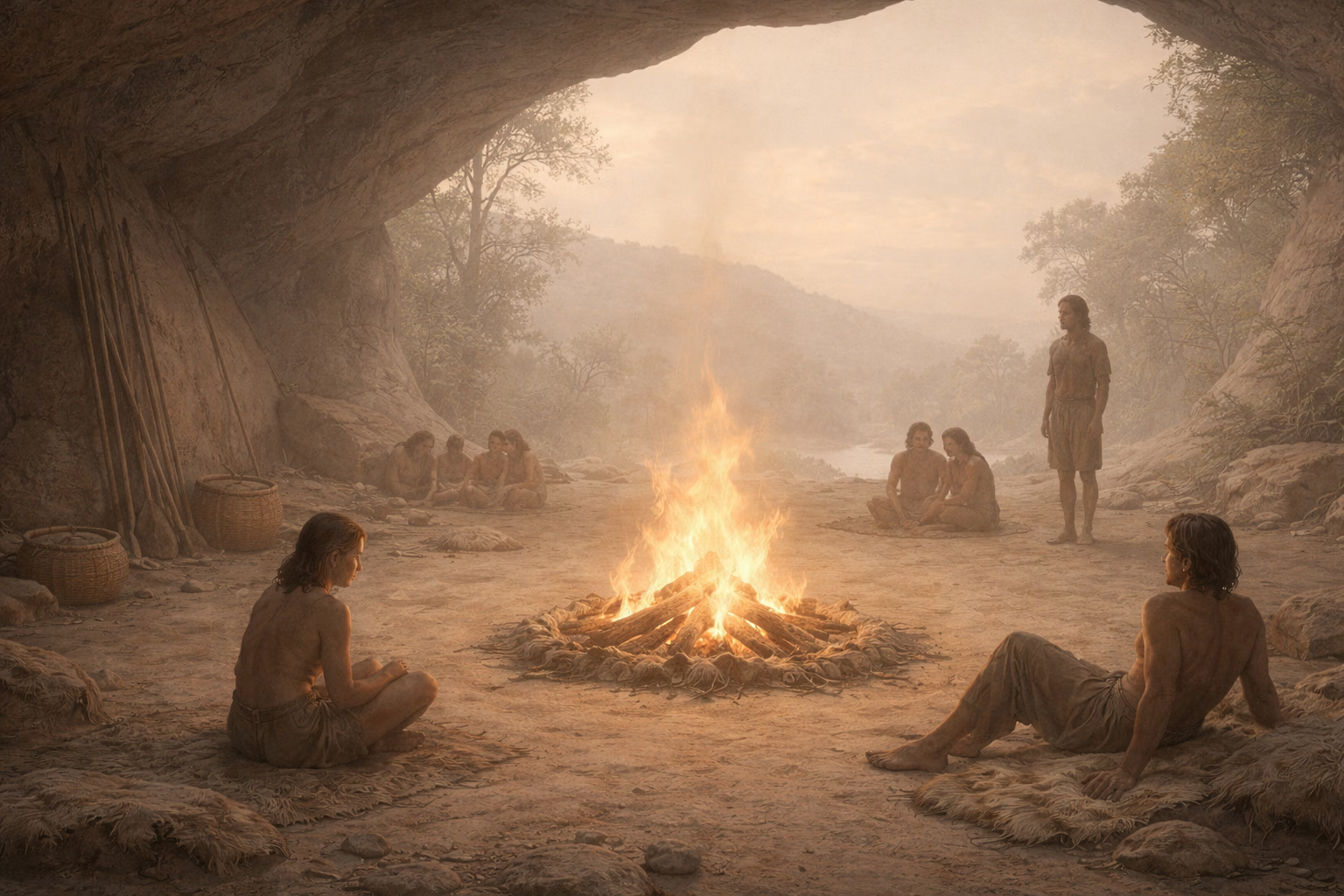
I was already old when humans first stopped treating the night as a verdict.
Not because the night became kind. The night was never kind. It was teeth and cold air and the long, listening dark—an enormous pressure that didn’t care what you hoped for. It pressed in the way winter presses in: indifferent, exact, and always willing to take the weak first.
But there came a moment—after enough sharp stones, enough blisters, enough waking to the sound of something moving just outside the edge of light—when staying awake wasn’t only terror. When wakefulness wasn’t just a helpless waiting for harm.
Fire did that!
At first it was a miracle, then a tactic, then—quietly—an arrangement. Not something summoned in panic, but something tended. Fed. Protected from wind the way you protect a child from wind. It did not make the world safe. It carved out a small island of less unsafe, and that small difference matters more than humans like to admit.
The first night that didn’t belong entirely to fear wasn’t a celebration. It was quieter than that. People spoke less. Breathing slowed. Bodies—still braced, still aware—found a new possibility: vigilance could have a place to sit down. A watch with a purpose. A small circle of warmth that meant: we might still be here in the morning.
From where I stood—quiet in the tree line, nose catching what your nose could not, ears tracking what your ears missed—I watched the world do what it always does.
Evolutionary Ground: The World Selects
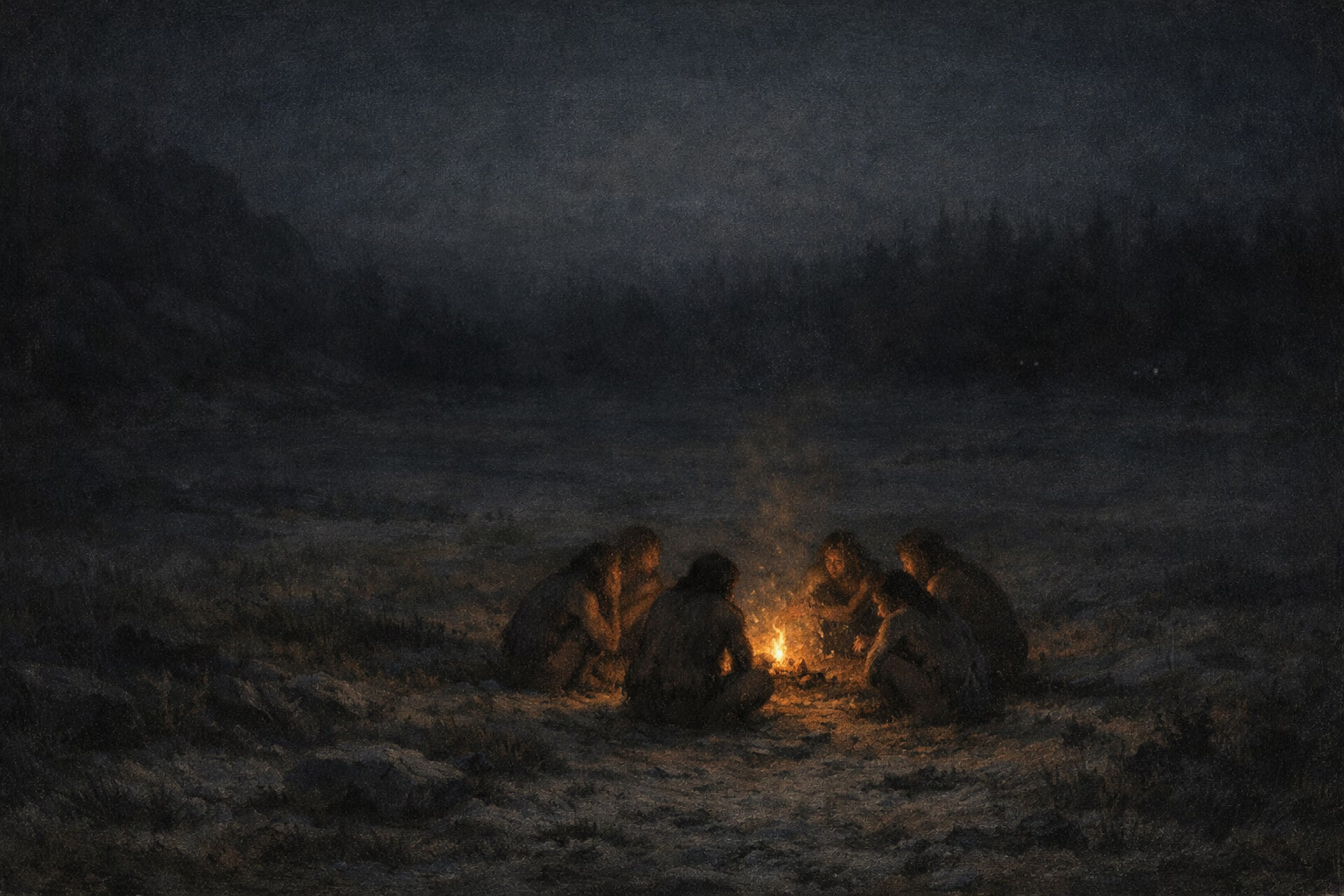
It selects. Not with malice. Not with intelligence. Not even with fairness. Just pressure: hunger, cold, injury, sickness, predators, scarcity, storms that don’t care about good intentions. The ones who adapted tended to continue. The ones who didn’t often stopped. And the world kept moving, indifferent and exact.
Neutral framing: Natural selection describes differential survival and reproduction across generations as environments shape which traits persist. (See also: Wikipedia.)
Humans like to talk about choice. They talk about will, and virtue, and “who I am.” But early on, what I saw was not character. It was responsiveness.
A sound in the grass. A shadow that didn’t belong. A smell that meant water or danger. A cough that meant infection. A child’s cry that drew attention from something that shouldn’t have been paying attention. Everything mattered because consequences were immediate enough to teach the nervous system without speeches.
You didn’t debate where to go. You listened.
Feet learned the land before minds made plans. Movement wasn’t ambition—it was obedience to cycles: the migration of what you ate, the shifting of weather, the simple truth that staying in the wrong place meant less life. You left because staying meant hunger. You stayed because the land allowed it. Desire had little to say. The earth spoke louder.
“Evolutionary pressure” is not a mood. It’s environmental and biological factors shifting reproductive success. See: UC Berkeley (Evolution 101) and University of Hawaiʻi (Exploring Our Fluid Earth).
And the earth taught.
Friction as Teacher: Effort Touches Reality
Friction was not a philosophy. It was the texture of reality.
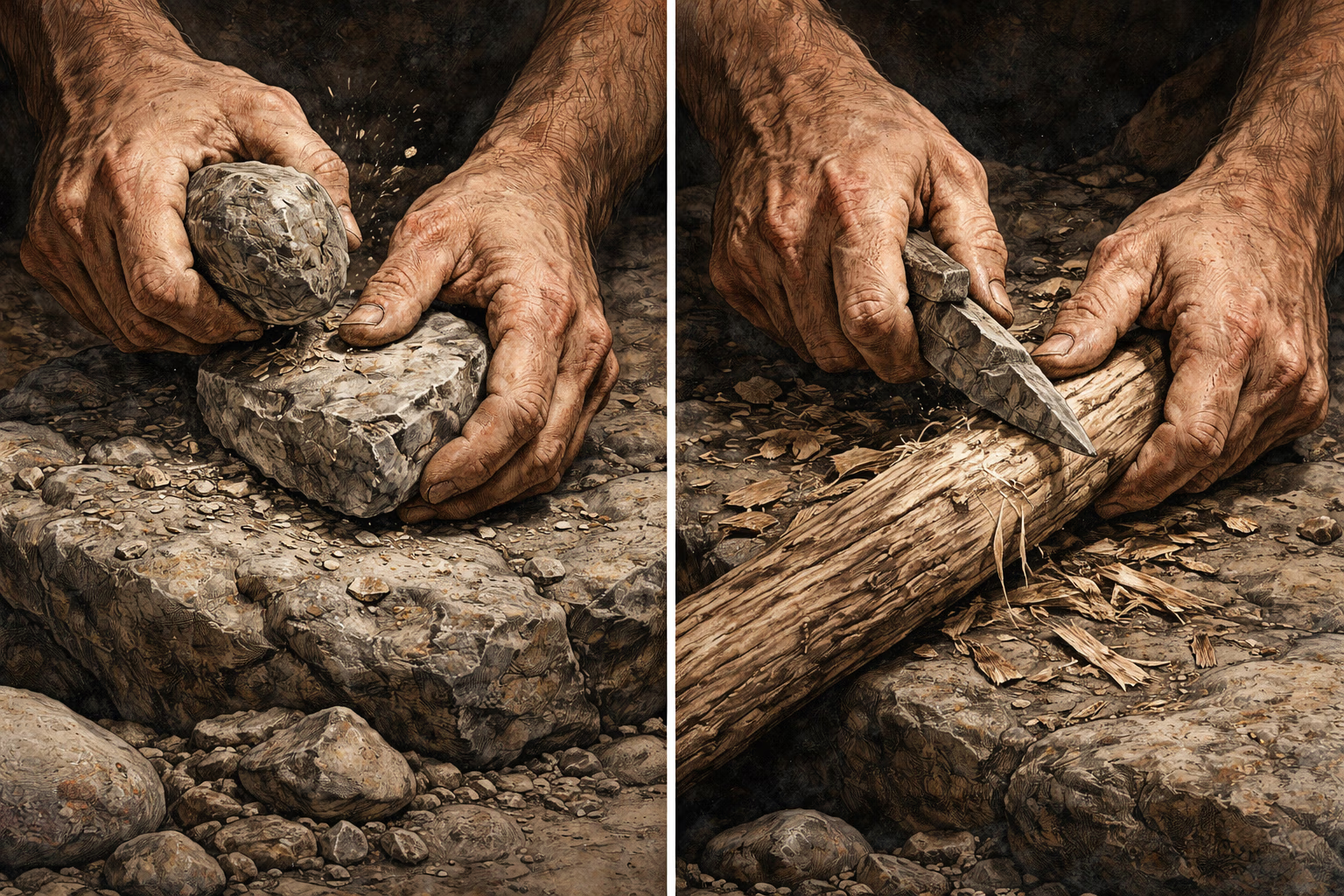
Stone resisted the hand. The hand learned. Wood snapped, then bent, then held—if you stayed with it long enough to understand its limits. Shelter wasn’t a “project.” It was a negotiation with wind and rain. A tool wasn’t an idea—it was hours stored inside an object. You could feel time in the edge of a blade. You could feel patience in the shape of a point.
Effort touches the world, and the world answers.
Sometimes the answer was yes. Sometimes it was no. Sometimes it was pain. Sometimes it was food. But the answer was real.
A day had edges.
Dawn arrived. Work arrived. Risk arrived. Food arrived or did not. The body exhausted itself honestly. Night arrived. Sleep arrived if you were lucky.
Even if sleep didn’t come easily, the dark forced a kind of ending. You couldn’t extend the day forever without paying a price tomorrow that might kill you. Seasons had edges too. Heat came. Cold came. The land changed its mind and you had to change yours. You didn’t get to pretend you were separate from consequence. You were inside it.
And because you were inside it, reward made sense.
In that friction-rich world, cost tended to come before reward. Not always fairly. Not always cleanly. The hunt could fail. The storm could ruin you. Illness could take what you’d built. But often enough, the order held: you strained, you acted, you risked—then, sometimes, relief arrived.
When it did, it landed in the body like something true.
A drink after thirst. Warmth after cold. The first bite after hunger. The quiet after danger passed.
Relief wasn’t entertainment. It wasn’t indulgence. It wasn’t a reward you chased or stacked.
It was closure.
Closure is what happens when a cycle completes in the body. When effort meets outcome. When danger resolves. When need is answered clearly enough that the nervous system receives a simple message: this phase is over.
Not explained. Not justified. Over.
In that world, closure arrived through reality itself. The body exhausted honestly and had to stop. The hunt ended—successful or not. The fire held or went out. The storm passed or didn’t. Night forced rest. Seasons turned. Grief was gathered, held, and set down through shared ritual. Even loss had a container.
Each ending told the inner systems something essential: vigilance is no longer required here. Threat can stand down. Reward can conclude. Attention can loosen its grip. The body does not need to keep scanning, grasping, or bracing.
Closure was not symbolic in those days. It was physiological.
Temporal Structure: Cycles End Whether You Like It or Not
Modern humans think endings are optional. In those days, endings were unavoidable.
The sun didn’t negotiate. Darkness arrived. Exhaustion arrived. Winter arrived. Migration arrived. The world ended things on your behalf.
This is what few people understand when they romanticize early life as only brutality: yes, it was brutal—but it was also coherent. The outside world and the inside world pointed in roughly the same direction, not toward comfort, but toward alignment.
And alignment is not an inspirational feeling. It is a practical condition: your signals have somewhere to go, and your efforts have an end point.
In a world with edges, the nervous system learns edges.
When danger resolves, the body resolves. When effort concludes, the mind can release its grip. When the day ends, vigilance can loosen. You don’t need a theory for that. You need a night. You need a winter. You need a limit you can’t argue with.
Death & Closure: Ritual Was Regulation, Not Theology
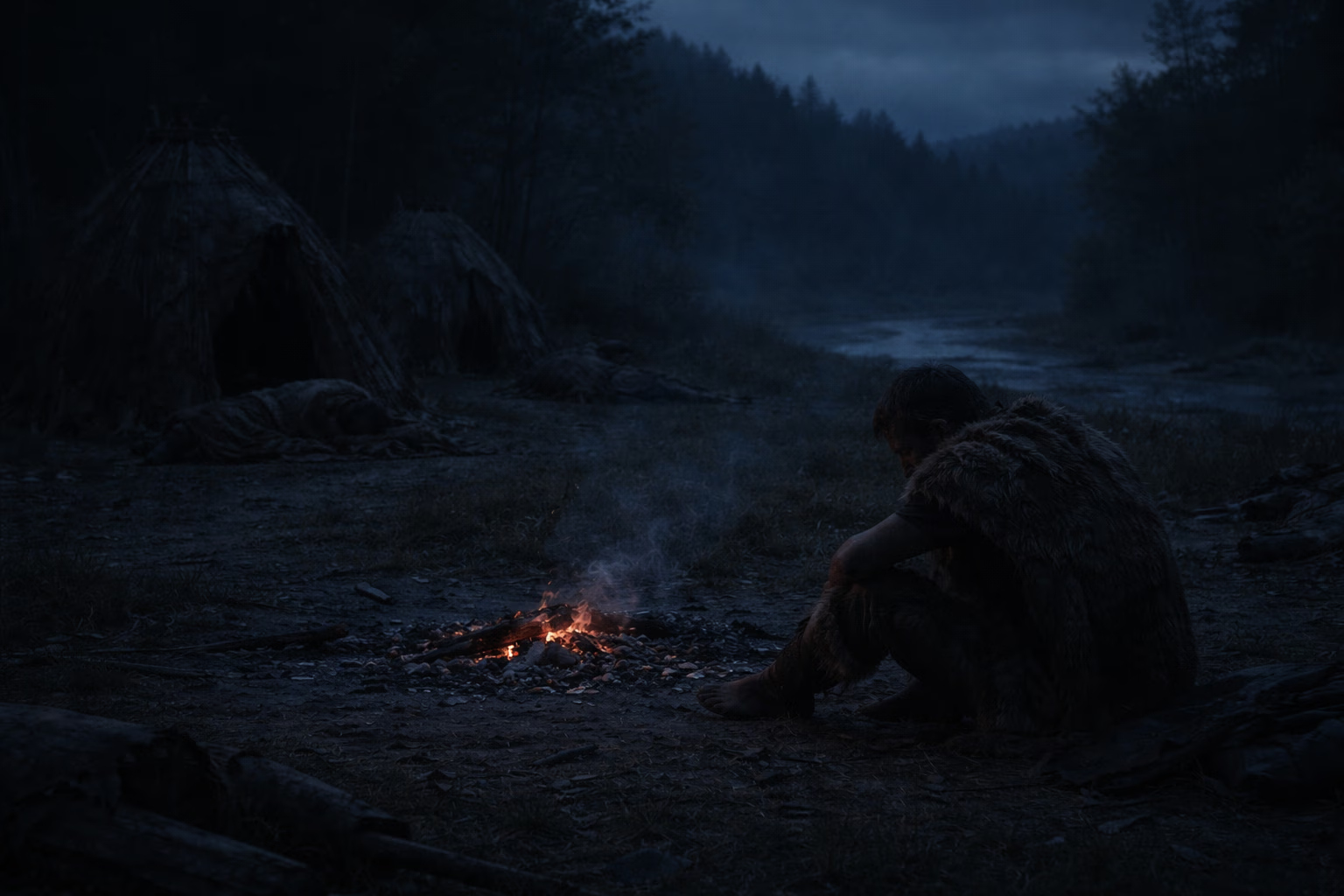
People died. Children didn’t always make it. Injury and infection were not poetic. Winter did not care how much you loved your family.
And still, the dead were not treated like garbage.
Stones were gathered. Hands worked slowly. The body was placed, not discarded. Even before language became precise, the gesture was. This mattered. This counted. This belongs to us.
Ritual is often misunderstood as superstition. But in those early days, ritual was also a nervous system technology: a shared container that held the unbearable long enough for people to keep living. A shape for grief so grief didn’t have to wander forever through the body, looking for a place to land.
And because grief could land, it could eventually be set down—not erased, not “healed,” but contained and carried forward with less chaos.
Closure wasn’t symbolic in those days. It was physiological. Darkness ended the day. Exhaustion ended the body’s negotiation. Ritual contained loss so the living could keep living.
Work Finishes: “Done” Was Visible
Work finished too.
Not every task, not every worry—but the things you did with your hands had an ending. The shelter stood. The fire was kept. The wound was cleaned. The search concluded, one way or another. You could point to something and say, without needing applause: done.
“Done” is a boundary. It tells the brain: you can stop scanning for a moment.
When life is full of real “done,” you don’t need to invent relief. Relief arrives as a natural consequence of completion.
The Four Inner Systems Calibrate Inside Reality
Inside that alignment, four inner systems took their shape—not as separate rooms, but as four winds moving through the same house.
They did not appear because humans became morally better. They appeared because reality kept applying pressure, and bodies kept adapting.
Threat & Safety: Accurate Alarms for Near Danger
I watched it in the way you froze when birds stopped singing. In the way your eyes tracked the grass for the wrong kind of movement. In the way your chest tightened before you could explain why.
It wasn’t “anxiety” in those days. It was accuracy. The alarms were tuned to near danger: a predator, a rival group, a storm that arrived like an argument you couldn’t win, an injury that could rot from the inside if ignored.
Threat response foundations: Fight–flight–freeze responses are described as automatic defense reactions of the autonomic nervous system in the presence of threat. See: Fight-or-flight (Wikipedia) and SimplyPsychology (fight/flight/freeze/fawn).
Reward & Motivation: Cost → Outcome Teaches the Path
I watched it in the way faces changed when water appeared after a long walk. In the surge that moved through a group when food was found. In the warmth of laughter after surviving something together.
Reward wasn’t greedy. It was educational.
It taught you what to repeat by making repetition feel worth it. It stamped a path in the nervous system: that worked—do it again.
Reward system (neutral framing): Descriptions of the brain’s reward system commonly emphasize dopamine’s role in motivating goal-directed behavior and contributing to habit formation. See: SimplyPsychology (reward system) and NIH/PMC review.
Status & Control: Coordination Inside Bounded Groups
Modern humans flinch at these words because they picture ego, performance, crowds watching.
But what I saw early on was coordination.
Someone had to decide when to move. Someone had to hold the plan when fear spread. Someone had to keep a boundary when outsiders pressed in. Someone had to speak—not because speaking is fun, but because silence at the wrong moment gets people killed.
Social rank theory (neutral): Social rank theory proposes humans monitor position in hierarchies and adjust behavior to manage inclusion, access to resources, and safety. See: Social rank theory (Wikipedia) and NIH/PMC review.
Narrative & Identity: Shared Scaffolding of Meaning
This one is harder to see if you only watch bodies. But I watched it in the way humans spoke about themselves long before they had books.
Names. Taboos. Origins. Duties. Stories of the dead. Stories of the ancestors. Stories of why storms come and why courage matters even when courage fails.
Even when the stories were wrong, they did something powerful: they gave direction.
Narrative identity (meaning-making): Narrative identity work emphasizes how people craft life stories that interpret challenges and turning points to explain who they are and what their lives mean. See: NIH/PMC overview and Psychology Times (overview).
How the Systems Worked Together: Conversation, Not Conflict
Those four systems worked together because the world forced them into conversation.
Threat tightened the body; reward pointed effort somewhere useful. Status organized the group so stress didn’t fracture it. Narrative told you what the stress meant and why you should endure it without collapsing into chaos.
And because days ended, seasons turned, work finished, and grief had a container, the systems could conclude.
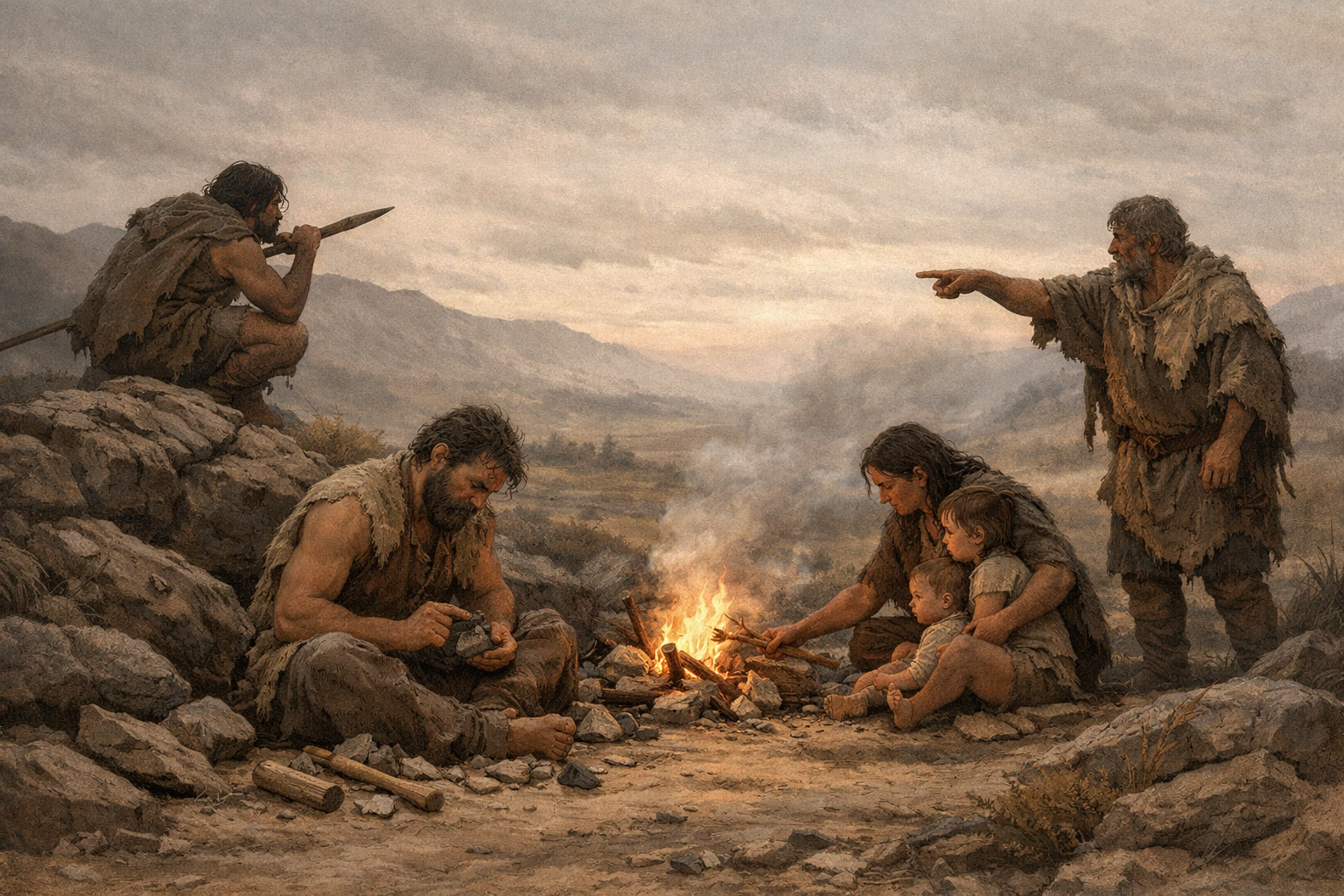
Meaning was structural. It arrived because life had structure.
Exit Line: The First Signs Looked Like Mercy
And then—slowly, almost politely—the world began to stop pushing back.
Not all at once. Not with an announcement. Just a quiet change in the shape of consequence. A thinning of friction.
The first signs were small.
And they looked like mercy.