Pleasure Plateau: When Too Much Stimulation Makes Life Feel Flat
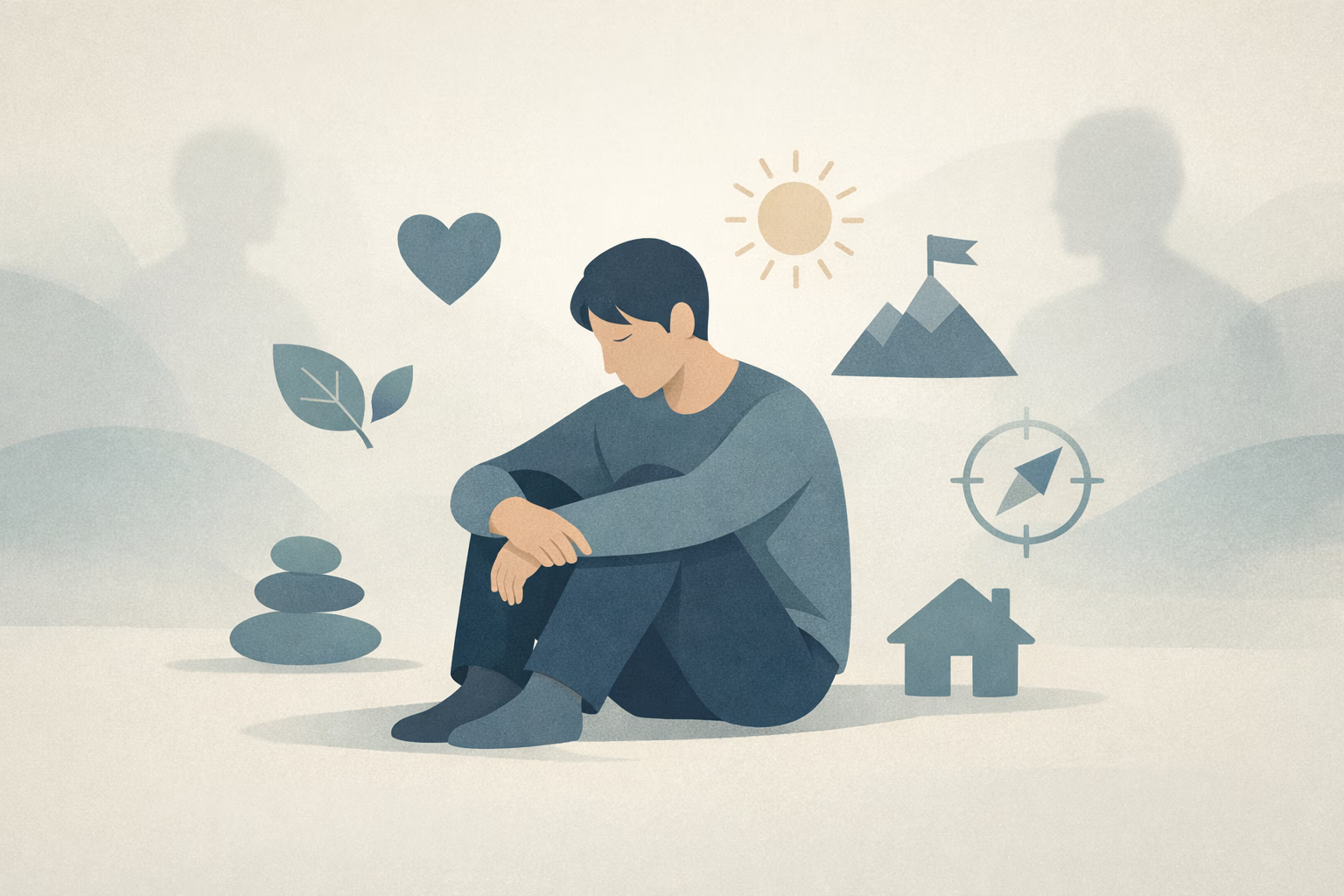
In short: Satisfaction fading quickly after something good happens is often treated like a personal flaw: not grateful enough, not disciplined enough, not mindful enough. But what many people call “never satisfied” can be a predictable outcome of how human reward systems adapt—and how modern life prevents experiences from fully completing.
Satisfaction fading quickly after something good happens is often treated like a personal flaw: not grateful enough, not disciplined enough, not mindful enough. But what many people call “never satisfied” can be a predictable outcome of how human reward systems adapt—and how modern life prevents experiences from fully completing.
What if the problem isn’t that you can’t appreciate what you have, but that your system isn’t getting a clear “done” signal?
The hedonic treadmill describes the tendency to normalize improvements and return to baseline wanting. It doesn’t mean joy is fake or that pleasure is bad. It means pleasure is designed to move through you—while lasting steadiness tends to come from closure, coherence, and identity-level alignment.
The hedonic treadmill often feels subtle: a brief lift after a purchase, a milestone, a compliment, a new plan—followed by a familiar restlessness. Even when circumstances improve, the internal signal can be, “Okay… what’s next?” [Ref-1]
This can look like ambition on the outside and low-grade dissatisfaction on the inside. Not because someone is broken, but because their system is doing what it was built to do: update quickly, scan for what’s missing, and keep moving.
“It’s not that I can’t enjoy things. It’s that enjoyment doesn’t land.”
Reward circuitry is sensitive to change. A new stimulus can produce a sharp lift in interest and energy, but the nervous system rapidly adjusts its expectations. What was exciting becomes familiar, and the same input generates less impact over time. [Ref-2]
This is not a motivational failure; it’s adaptation. In practical terms, the system stops reacting to what’s predictable and starts orienting toward what might be new, different, or uncertain. Novelty becomes the easiest lever for a quick internal shift, so seeking is reinforced—especially when life feels heavy or incomplete.
From an evolutionary perspective, a brain that settled permanently after one good meal or one safe season would be less likely to keep exploring, gathering, and adapting. Humans developed reward systems that support continued resource-seeking and learning—particularly in changing environments. [Ref-3]
So the “treadmill” isn’t an accident. It’s a design feature that helped with survival. The mismatch happens when a system optimized for periodic wins and clear completion is placed in an environment where stimulation is endless and closure is rare.
Pleasure doesn’t just feel good; it can also temporarily organize the system. A new goal, a new purchase, a new romance, a new routine can create a sense of direction, momentum, and immediate feedback. For a stressed nervous system, that can register as relief.
In that moment, it can seem like satisfaction is close—because activation is replaced with a brighter state. But state change isn’t the same as completion. When the novelty fades, the underlying “not finished yet” signal returns, and the system looks for another quick lift. [Ref-4]
Could it be that what you’re seeking isn’t pleasure itself, but a reliable sense of arrival?
Many modern narratives imply that acquisition or achievement produces a stable internal landing: the right job, the right body, the right relationship, the right home. But reward adaptation means the brain treats improvements as the new normal faster than most people expect. [Ref-5]
This can create a confusing loop: external evidence says “things are better,” while the internal signal says “still not enough.” The result is often self-criticism or increased pressure—when the real issue is that the expected payoff (lasting satisfaction) isn’t how the system is built to work.
The hedonic treadmill is a kind of pleasure loop: a brief reward spike, a quick normalization, then renewed seeking. Over time, the system learns that the fastest way to change state is to add stimulation—scroll, snack, shop, plan, optimize, refresh. [Ref-6]
Importantly, this loop can also function as a way to bypass friction. When life contains unfinished conversations, unclear belonging, unresolved work, or identity uncertainty, stimulation can temporarily mute the discomfort of incompletion. The loop isn’t “self-sabotage.” It’s an adaptive way to manage load when closure is missing.
Because it’s a regulatory pattern, the treadmill can wear many outfits. The common thread is repeated movement without a durable sense of arrival.
These patterns often intensify under stress, uncertainty, isolation, or chronic evaluation—conditions that increase nervous system load and reduce the availability of natural completion signals. [Ref-7]
When reward-chasing becomes the main regulator, it can quietly crowd out slower forms of satisfaction—especially those that require time, repetition, and commitment. Not because someone is shallow, but because the system is being trained to prioritize rapid payoff.
Over time, this can blur purpose and values. If the nervous system learns that relief comes from the next hit of novelty, it becomes harder to sense what actually matters—what fits, what closes loops, what becomes part of identity. Meaning tends to consolidate after completion, not during constant pursuit. [Ref-8]
Today’s environment is unusually good at delivering tiny reward moments without completion. Novelty is continuous, comparison is ambient, and feedback is rapid. The system stays oriented toward “next.”
Three common treadmill-maintainers:
This is one reason hedonic (pleasure-based) wellbeing can rise and fall quickly, while eudaimonic (meaning-based) wellbeing tends to be more stable when life is coherent and values-linked. [Ref-9]
It can help to separate two different nervous-system outcomes. Pleasure often produces a rapid shift in state—lighter, faster, more energized. Meaning tends to produce a different signal: a quieter sense of “this counts,” “this fits,” “this is part of who I am.” That signal usually arrives after something has been lived through to completion, not merely understood.
This is why insight alone rarely ends the treadmill. Recognizing the pattern is not the same as the system standing down. The stand-down tends to follow closure: completed conversations, finished seasons, kept commitments, integrated roles—experiences that register as real and done in the body.
Many writers distinguish happiness and meaning as different dimensions of wellbeing; meaning is often less flashy but more enduring. [Ref-10]
Humans don’t regulate in isolation. Supportive relationships provide safety cues, reality checks, and a sense of belonging that can reduce the need for constant self-stimulation. When connection is stable, the nervous system doesn’t have to manufacture relief as urgently.
Shared purpose also changes the reward landscape. When your actions are witnessed, needed, and connected to something larger than immediate payoff, satisfaction can become less dependent on novelty. This isn’t about using people as a fix—it’s about how social coherence naturally reduces load. [Ref-11]
“When life feels shared, the urge to chase something new all the time gets quieter.”
The shift away from the treadmill usually isn’t dramatic. It often looks like less internal urgency and more selectivity—where pleasure is allowed, but not tasked with providing identity, stability, or closure.
People often describe a changed texture of satisfaction: not constant excitement, but a steadier baseline and a clearer sense of what’s worth repeating. Small pleasures can still matter, especially when they occur inside a life that also contains longer arcs of commitment and completion. [Ref-12]
Not “more pleasure,” but more coherence.
Novelty-seeking is partly shaped by dopamine signaling, which helps organisms explore and decide under uncertainty. [Ref-13] When uncertainty is high and closure is low, the pull toward “new” can become a primary organizing force.
As regulation improves—often through reduced load, clearer boundaries between seasons of life, and more experiences that fully complete—the system can tolerate sameness again. That’s not boredom; it’s capacity. In that space, purpose is easier to sense because the signal isn’t drowned out by constant seeking.
Meaning becomes less like a thought and more like orientation: a lived, repeated alignment that settles into identity.
If satisfaction never lasts, it may not be because you’re incapable of appreciating your life. It may be because your nervous system is doing its job in an environment that rarely provides completion—and because pleasure has been recruited to solve problems it wasn’t designed to solve.
The treadmill can be understood as a signal: the system is looking for closure, coherence, and a stable sense of “this matters.” When those conditions increase, the reliance on constant reward tends to soften—not through force, but through a quieter internal economy where novelty is no longer the primary regulator. [Ref-14]
The human brain is exquisitely sensitive to novelty; it’s part of how we learn, explore, and adapt. Research continues to link dopamine signaling with novelty and efficient exploration under uncertainty. [Ref-15]
But a life can’t be lived on exploration alone. Lasting satisfaction usually isn’t a bigger hit of pleasure—it’s the physiological relief of completion and the identity-level steadiness of living in a way that fits. When meaning has room to consolidate, motivation doesn’t have to be chased. It returns as a natural byproduct of coherence.
From theory to practice — meaning forms when insight meets action.
Because reward circuitry is sensitive to change, not abundance. A new stimulus produces a sharp lift in interest and energy, but the nervous system rapidly adjusts its expectations. What was exciting becomes familiar, and the same input generates less impact. This isn't a motivational failure — it's adaptation. The system stops reacting to what's predictable and starts orienting toward what might be new or uncertain. It's not that you can't enjoy things; it's that enjoyment doesn't land. Your body is doing what it was built to do: update quickly, scan for what's missing, keep moving. The treadmill is a design feature that helped survival, mismatched with an environment of endless stimulation.
Probably not, because reward adaptation means the brain treats improvements as the new normal faster than expected. External evidence says 'things are better' while the internal signal says 'still not enough,' which feeds self-criticism. The cultural promise that the right job, body, relationship, or home produces a stable internal landing isn't how the system is built. Satisfaction tends to consolidate after completion, not during continued pursuit. Pleasure produces a rapid state shift — lighter, faster, more energized. Meaning produces a quieter signal: 'this counts, this fits, this is part of who I am.' Achievement can deliver the first. Only completion and coherence deliver the second.
Because a Pleasure Loop becomes a regulator. The brief reward spike, quick normalization, and renewed seeking train the system that the fastest way to change state is to add stimulation — scroll, snack, shop, plan, optimize, refresh. When life contains unfinished conversations, unclear belonging, or identity uncertainty, stimulation temporarily mutes the discomfort of incompletion. The loop isn't self-sabotage. It's an adaptive way to manage load when closure is missing. Modern life maintains the treadmill through micro-reward loops, social comparison at scale, and endless choice. The system stays oriented toward 'next' because the environment rewards seeking and rarely allows arrival.
Less internal urgency, more selectivity. The shift isn't dramatic — it's that pleasure is allowed but no longer tasked with providing identity, stability, or closure. People describe a changed texture of satisfaction: not constant excitement, but a steadier baseline and a clearer sense of what's worth repeating. Small pleasures still matter, especially inside a life that contains longer arcs of commitment and completion. As regulation improves through reduced load, clearer seasons, and experiences that fully complete, the system tolerates sameness again — that's not boredom, it's capacity. In that space, purpose is easier to sense because the signal isn't drowned out by constant seeking.
From Science to Art.
Understanding explains what is happening. Art allows you to feel it—without fixing, judging, or naming. Pause here. Let the images work quietly. Sometimes meaning settles before words do.
One Quiet Window, one insight, one reflection — every Sunday