

Temporal Breakdown — When Endings Became Optional
I did not watch meaning disappear like a building collapsing.
It thinned the way a shoreline thins when the tide keeps pulling—one quiet inch at a time, so slowly you can live there for years and only notice, one day, that the water is closer than it used to be.
At first, nothing looked wrong from a distance. People still woke up. Still worked. Still argued and traded and married and buried their dead. They still built things that outlasted them. They still made songs for celebrations and laments for losses. If you stood far enough away, history looked like expansion: more tools, more coordination, more light held against the dark.
But inside the day, something stopped concluding.
Not catastrophically. Not as a single turning point everyone agreed to name. Just… less often. The finish line moved. The stopping point blurred. The moment of “done” became harder to feel in the body.
Work stopped finishing the way it used to. A task could end on paper while the mind kept circling it. Agreements could be reached while the nervous system stayed braced, as if the risk had only changed its costume. Obligations multiplied across households and roles, and each obligation had a tail—loose ends that followed you home, followed you into sleep, followed you into the next day.
In older life, the world forced closure the way gravity forces a body to sit when its legs give out. A hunt ended—successful or not. A harvest ended. A journey ended. Winter ended. Even grief had shared boundaries: people gathered, hands moved, rituals held the weight, and then the living returned to the demands of the day because the day did not negotiate with sorrow.
But when the world began removing those boundaries—when endings became optional—humans didn’t become weak. They became unfinished.
And an unfinished nervous system does not sit politely waiting for philosophy. It starts reaching.
Experiential State — The Unfinished Life Feeling
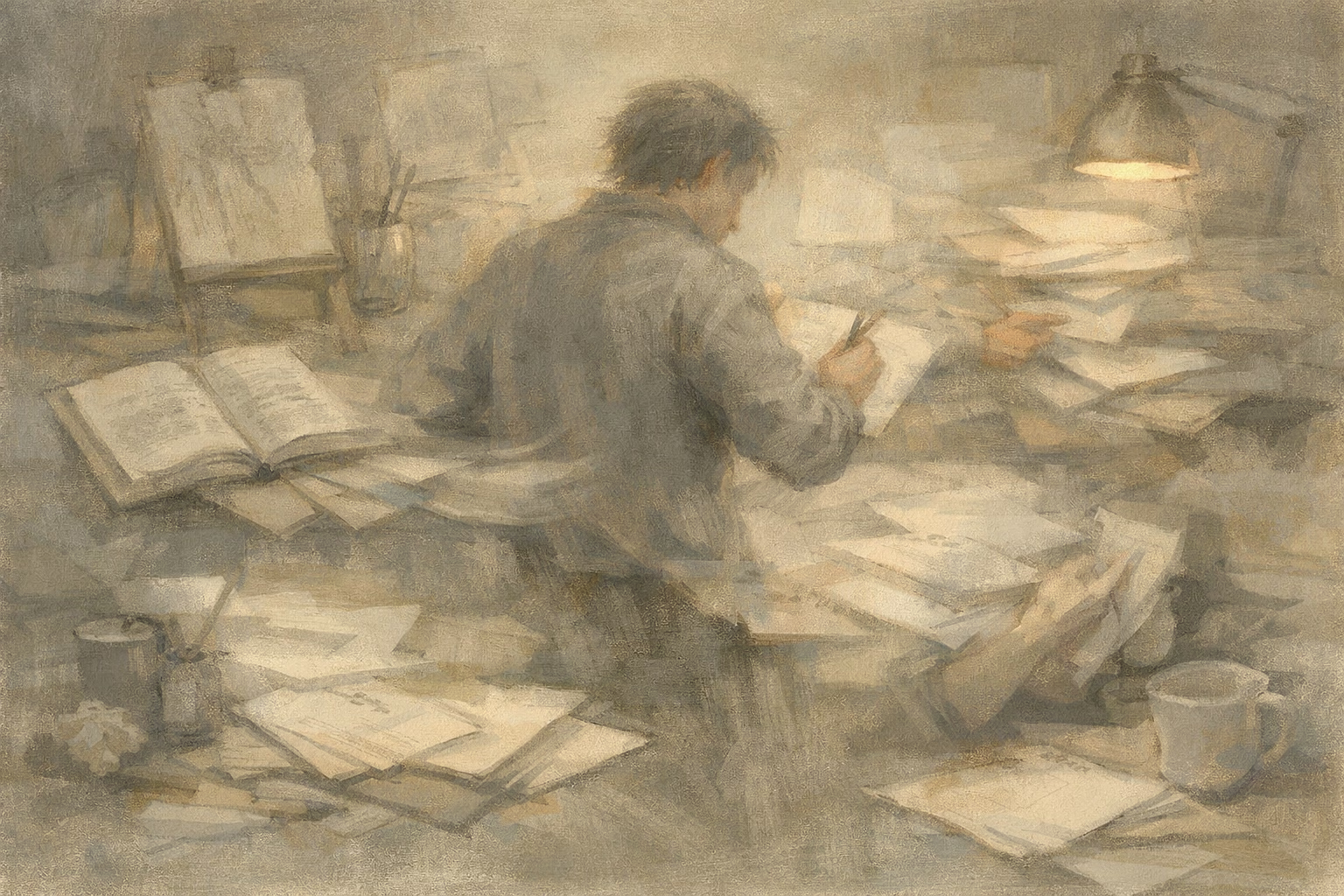
It’s hard to describe an unfinished life feeling without turning it into a complaint, so I’ll name it in plain language.
You know it.
Busy but not directed. Stimulated but not fed. Full calendar, empty center. Motion everywhere, arrival nowhere. The subtle restlessness that appears even when “nothing is wrong,” because nothing ever fully ends, and the nervous system cannot close the brackets.
People mistook it for personal failure because it arrived inside them. They assumed the ache must be about their attitude, their gratitude, their discipline, their strength. But the ache was older than their opinions. It lived in the body’s need for conclusion—need for cycles to end cleanly enough that the inner systems can stand down and reset.
When closure thins, even good things can become strangely exhausting. A celebration can feel like another obligation. A victory can feel like a temporary pause before the next demand. A rest day can feel haunted by what it didn’t solve. The nervous system doesn’t only need pleasure or success; it needs the signal that says: this cycle is complete.
Without that signal, life becomes one long “almost.”
So people said, “I’m tired.”
Or, “I’m bored.”
Or, “I’m behind.”
Or, “I don’t know what’s wrong with me.”
Or they said nothing at all and kept moving—because motion itself becomes a kind of anesthesia. If you stay in motion, you don’t have to meet the quiet question underneath the motion: what would be enough?
That unfinished feeling is not dramatic… a subtle sense that you’re “on” but not quite in.
Regulatory Shift — The Mind Reaches for Regulation Before Meaning
The mind is not a philosopher by default.
It is a regulator.
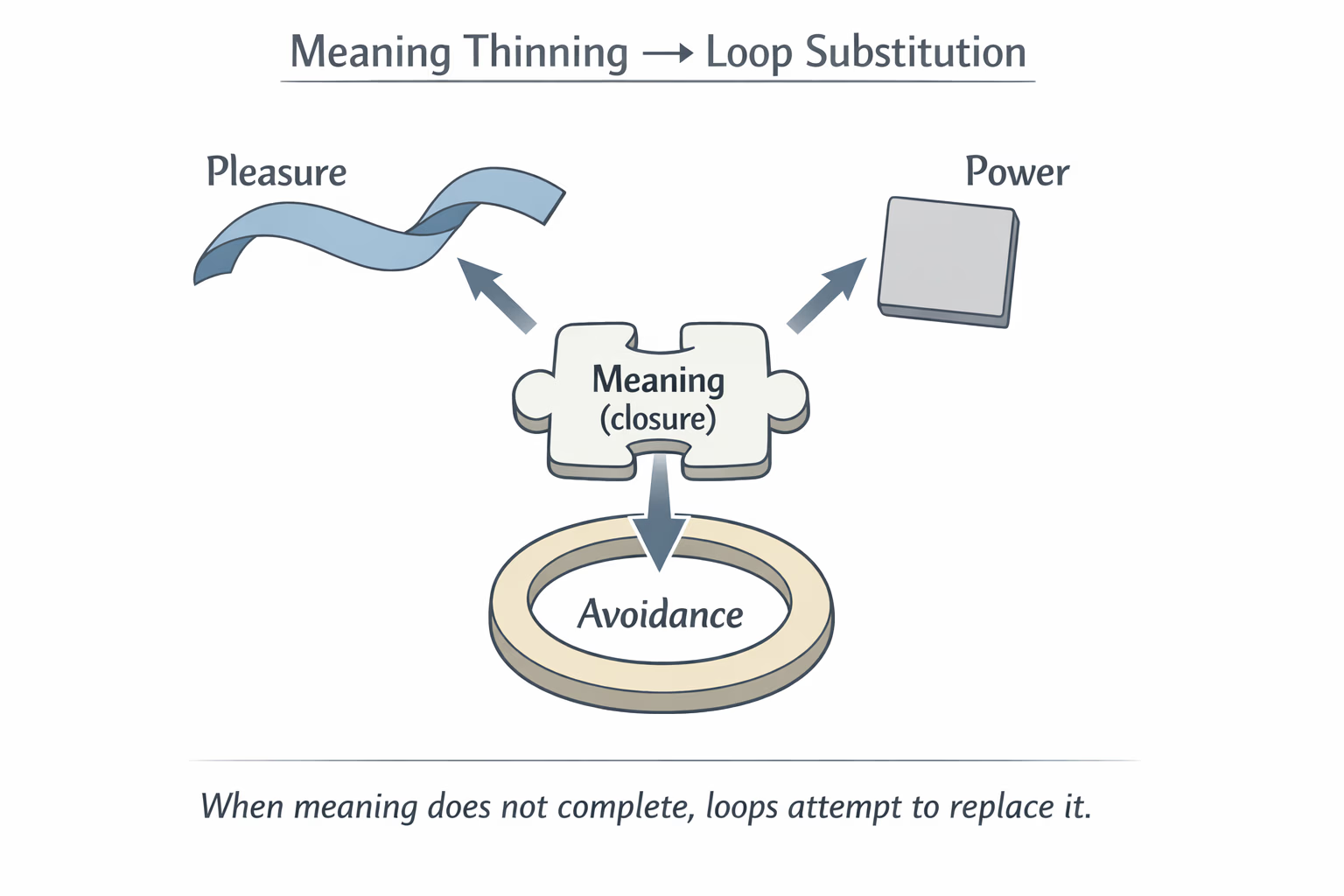
When the system feels unstable, it reaches for regulation first—fast regulation—before it reaches for understanding. It looks for something that can reduce discomfort now, even if the deeper imbalance remains untouched. It doesn’t begin by asking for truth. It begins by asking for relief.
So humans reached.
Not for purpose.
For something that would quiet the unfinished feeling just enough to get through the day.
And here is the strange part: the day itself began supplying that reach. The world offered more levers that could be pulled quickly—small interventions that didn’t require the long arc of effort → outcome → closure. Some were physical, some social, some ritual, some private. None were evil. Many were understandable. Some were even beautiful in the moment.
But when the lever works, the nervous system repeats it.
And when it repeats, a move becomes a pattern.
And when a pattern becomes reliable, it starts to look like a way of living.
That is how three substitute regulators emerge—not as moral failure, not as identity, but as moves that stabilize pressure when the deeper integrator is missing.
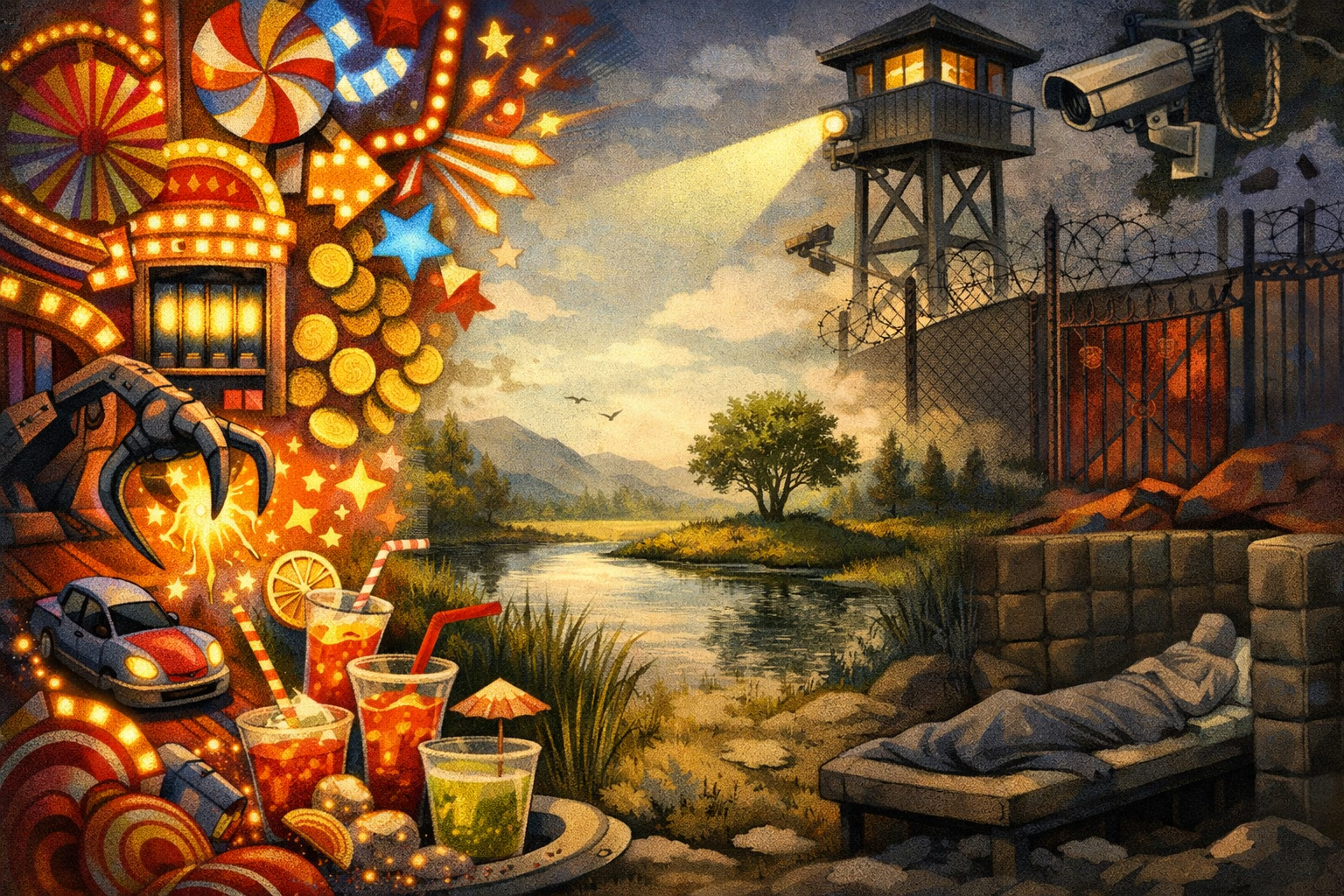
The Pleasure Loop. The Power Loop. The Avoidance Loop.
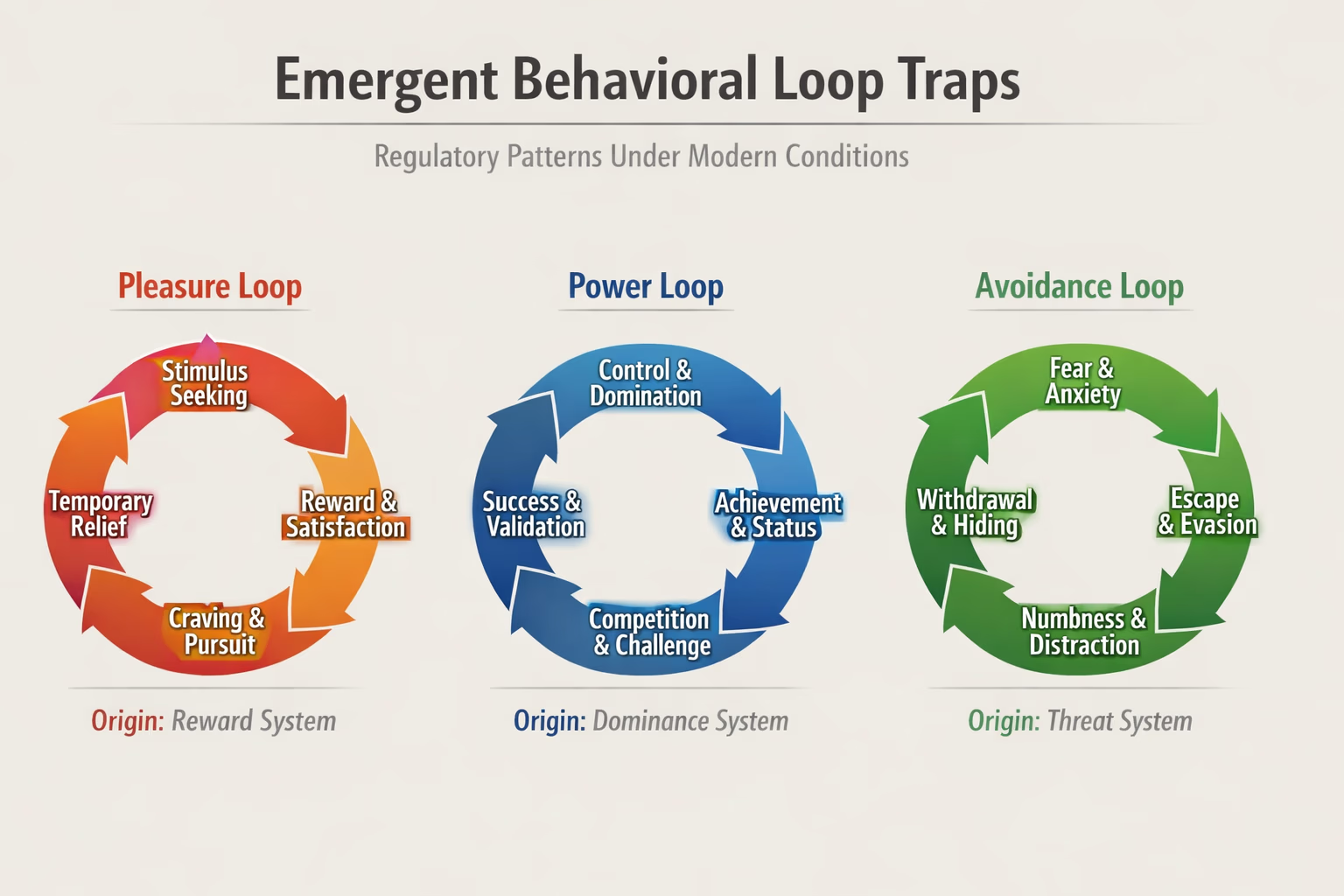
Substitute Regulator 1 — The Pleasure Loop: Relief on Demand, Novelty Stacking

The first substitute is the simplest: relief on demand.
It begins innocently. A small bright thing. A small “yes.” A small moment that interrupts discomfort without asking for a story. Food that’s richer than you need. Drink that warms you faster than the fire. A game of chance that makes the heart feel alive again. Music that replaces your inner noise with a rhythm you can borrow. A crowded festival that floods the senses until there’s no space left for the unfinished feeling to speak.
In the old rhythm, reward arrived like a closing bracket after effort: you did the thing, you endured the cost, then the world replied and the nervous system could exhale.
But in the new rhythm, reward began arriving like a button. Frequent. Immediate. Sometimes unpredictable. Sometimes granted by chance, charm, novelty, distraction, indulgence—things that could be obtained without the long discipline of completion.
A learning system doesn’t treat that as “fun.” It treats it as training.
So Reward & Motivation—faithful as ever—did what it was built to do. It learned the fastest path to lowering discomfort.
Discomfort rises for any reason—fatigue, uncertainty, loneliness, the vague emptiness of a day that never ended—and the hand reaches.
Relief arrives.
Discomfort drops.
The brain says: good—repeat.
Except the relief decays quickly. That is part of the design. Reward was never meant to be a place you live. It was meant to be a signal that points you back to the world.
So the signal grows louder. More sweetness. More drink. More spectacle. More novelty. More “just one more.” More stacking: not one pleasure, but pleasures layered to drown out the return of discomfort—food with drink, drink with music, music with gambling, gambling with lust, lust with another drink.
This is not greed. It is literalness. The machine is not trying to ruin you. It is trying to lower pain quickly in a world that stopped lowering pain through endings.
And this is why the Pleasure Loop starts to take a loop shape: relief becomes the thing you reach for whenever discomfort rises—yet the reaching makes ordinary moments feel flatter, which makes discomfort rise faster, which makes the reaching more urgent. The solution becomes the trigger.
In that era, you can see the early outlines everywhere: indulgence cycles after hard seasons, binge festivals after long restraint, tavern warmth as medicine for social fatigue, spectacle as escape from the thinness of daily work.
Pleasure didn’t appear because humans became shallow. Pleasure became louder because closure became quieter.
Substitute Regulator 2 — The Power Loop: Control and Optimization as Safety
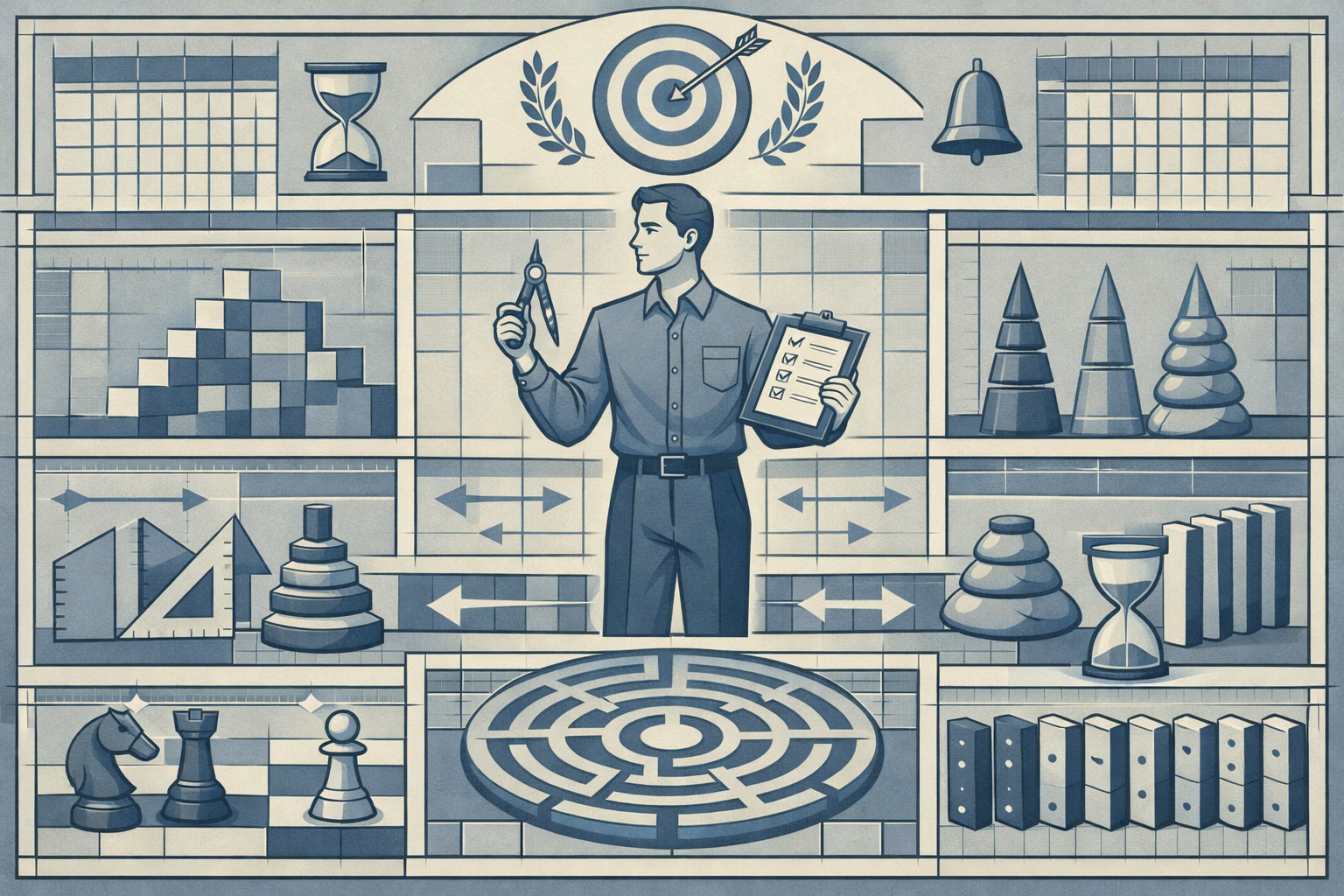
The second substitute appears when relief doesn’t restore steadiness: control as safety.
When uncertainty stops resolving on its own—when threats become abstract and constant—many humans try to build closure with their own hands. They organize. Improve. Plan. Perfect. Measure. Track. Tighten. They treat life as something that can be stabilized through grip.
From the inside, it doesn’t feel like domination. It often feels like responsibility. Like competence. Like “If I can just get this handled, I can finally rest.”
But the nervous system doesn’t rest, because the uncertainty has no edges.
So the Status & Control system—originally meant to coordinate life inside bounded groups—begins behaving like a watchman who never gets told the threat is over. It scans. It compares. It tightens. It hunts certainty the way a hungry body hunts food.
In older life, control was practical: coordinate the hunt, keep the fire, protect the boundary. It had immediate feedback. It concluded.
But as societies grow more layered, control becomes symbolic and endless. It migrates into reputation, rank, visible competence, public standing, the fear of losing face, the fear of falling behind, the fear of being insignificant in a widening field.
So people build internal bureaucracies before they build external ones. They keep lists in their mind. They rehearse conversations. They refine their image. They chase mastery not only for usefulness, but for insulation—because competence starts to feel like the only reliable shelter.
The early versions of this are recognizable:
A guild member who cannot stop proving his worth.
A court official who lives inside etiquette and vigilance.
A merchant who never stops calculating.
A devout person who turns discipline into a fortress, because chaos feels like spiritual danger.
A household leader who tightens everyone’s routines because the world feels too uncertain to be loose.
Again, none of this begins as evil. Many forms of discipline are honorable. Many forms of ambition build real stability. The loop doesn’t come from striving. The loop comes from control replacing closure.
Because control can always be improved. There is always a better plan, a safer strategy, a sharper performance. And in a world of “maybe,” the system escalates.
More proof. More output. More optimization rituals. More standards. More tightening.
This is how the Power Loop begins to look like a loop: the more you tighten, the more you notice what could go wrong; the more you notice what could go wrong, the more you tighten. Certainty becomes the reward, and the reward never fully arrives.
It feels like life because it produces motion, identity, and meaning-by-structure: I am the capable one. I am the responsible one. I am the one who holds it together.
But inside, it rarely concludes.
Substitute Regulator 3 — The Avoidance Loop: Withdrawal and Procrastination as Preservation
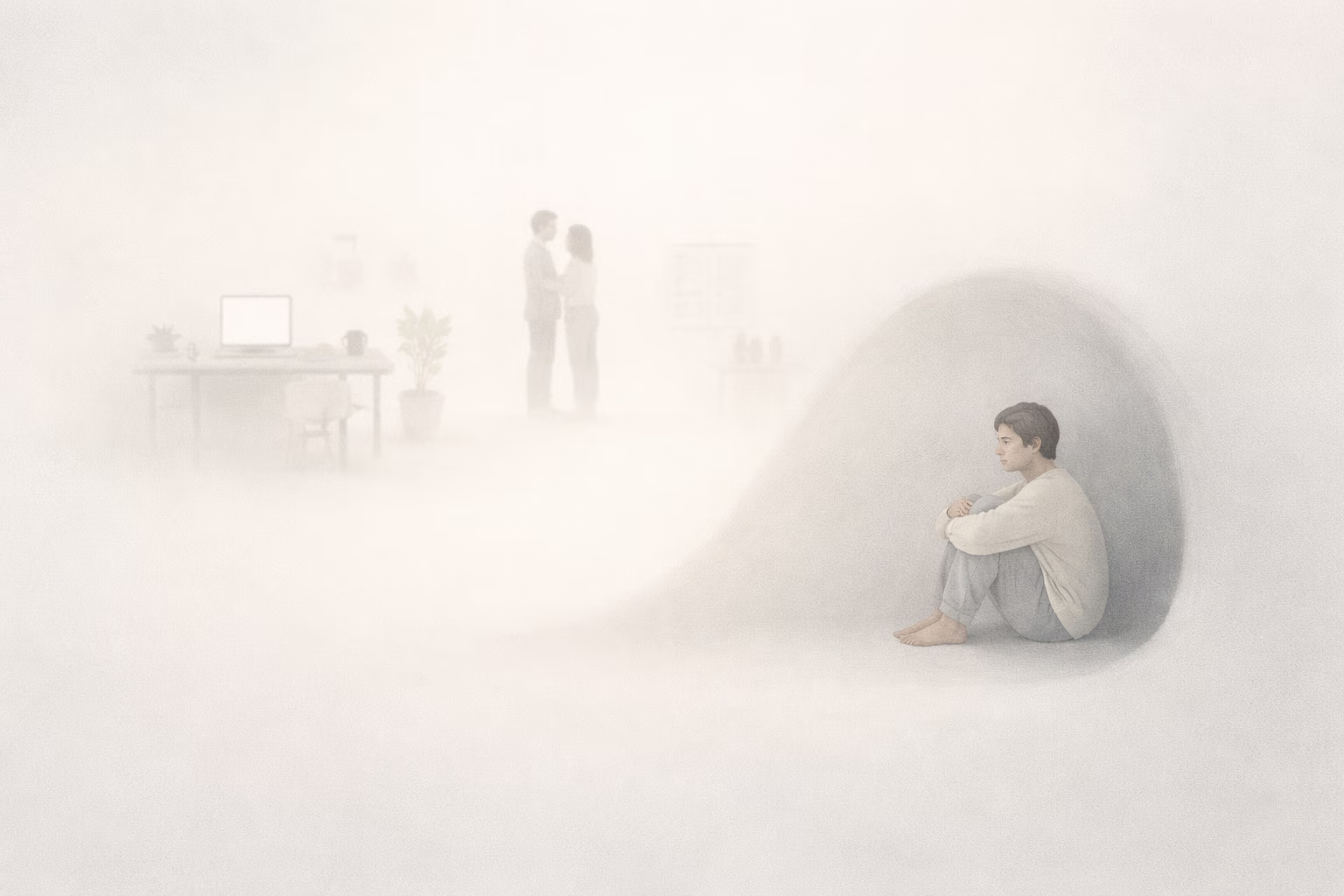
The third substitute arrives when both relief and control fail to restore capacity: withdrawal as preservation.
This one is misunderstood the most, especially by the people living inside it.
Withdrawal doesn’t begin as laziness. It begins as conservation. A system that can no longer afford contact with weight creates distance instead. It delays. It defers. It numbs. It reduces load—not because the person doesn’t care, but because caring has become expensive.
Sometimes it looks gentle: procrastination, “I’ll do it later,” drifting into minor tasks that feel safe because they don’t require full entry. Sometimes it looks sharp: numbness, dissociation, sleeping too much, disappearing into distractions, avoiding messages, avoiding decisions, avoiding the very thing that matters most because meaning has weight and weight feels unaffordable.
Here is the cruel part: withdrawal often targets what is most meaningful.
Not because the person is hollow. Because meaning asks you to meet reality, and meeting reality requires the capacity to metabolize discomfort. When capacity is low and the world will not stop, the system protects itself by shrinking contact.
In that era, the early shapes are visible:
Retreat into solitude not as wisdom, but as escape.
Delay becoming a lifestyle.
Avoiding confrontation because the social cost feels endless.
Avoiding commitments because nothing feels finishable.
Even choosing numbness—not necessarily through dramatic means, but through the steady dulling of engagement.
Withdrawal feels like life because it creates quiet, distance, and temporary relief from demands that have become endless. It gives a person the sensation of safety—at least in the short term—because if you do not enter fully, you cannot be fully hurt.
But avoidance, repeated, becomes a loop: the longer you stay out, the heavier re-entry feels; the heavier re-entry feels, the more you stay out. Protection becomes a prison made of postponed days.
Subjective Reality — Why the Loops Feel Like Life
What made these regulators so convincing was not just their relief. It was their aliveness.
They generate motion. They generate urgency. They generate identity. They generate noise—enough noise to cover the unfinished feeling, enough motion to look like purpose.
Pleasure says: Here—feel better now.
Power says: Here—make it safe through mastery.
Avoidance says: Here—disappear until it hurts less.
And each one supplies a daily storyline that doesn’t require true conclusion. There is always something to chase. Something to manage. Something to delay.
They don’t feel like coping mechanisms. They feel like living. They produced movement that looked like purpose.
A person inside the Pleasure Loop isn’t thinking, I’m avoiding meaning. They’re thinking, I’m finally feeling something.
A person inside the Power Loop isn’t thinking, I’m scared. They’re thinking, I’m being responsible.
A person inside the Avoidance Loop isn’t thinking, I’m failing. They’re thinking, I’m protecting what’s left of me.
That is why these loops spread without anyone needing to teach them. They are not ideologies. They are regulation moves that the body recognizes immediately.
Meaning Crowded Out — Quiet Integrator vs Loud Regulators
Meaning did not vanish when these regulators took over. It was still present—but it was quiet.
Meaning doesn’t shout. It integrates. Meaning waits for completion. It asks for patience, contribution, and endings. It needs effort to land somewhere real, and it needs cycles to conclude so that something can settle.
Meaning is the part of you that recognizes the difference between motion and direction. It is the part of you that can endure discomfort if the discomfort is leading somewhere. It is the part of you that can accept sacrifice when sacrifice has a coherent place in the story of your life.
But meaning is slow. Meaning rarely arrives as a spike. Meaning does not refresh itself every few minutes. Meaning does not demand response right now. Meaning often feels like quiet steadiness—so quiet you might overlook it unless the environment gives you space to hear it.
The substitute regulators do not wait. They do not require completion. They operate faster, louder, more reliably—especially in a world where closure has thinned.
Pleasure interrupts discomfort quickly. Power manufactures certainty quickly. Avoidance reduces load quickly.
Meanwhile, meaning doesn’t vanish. It gets crowded out.
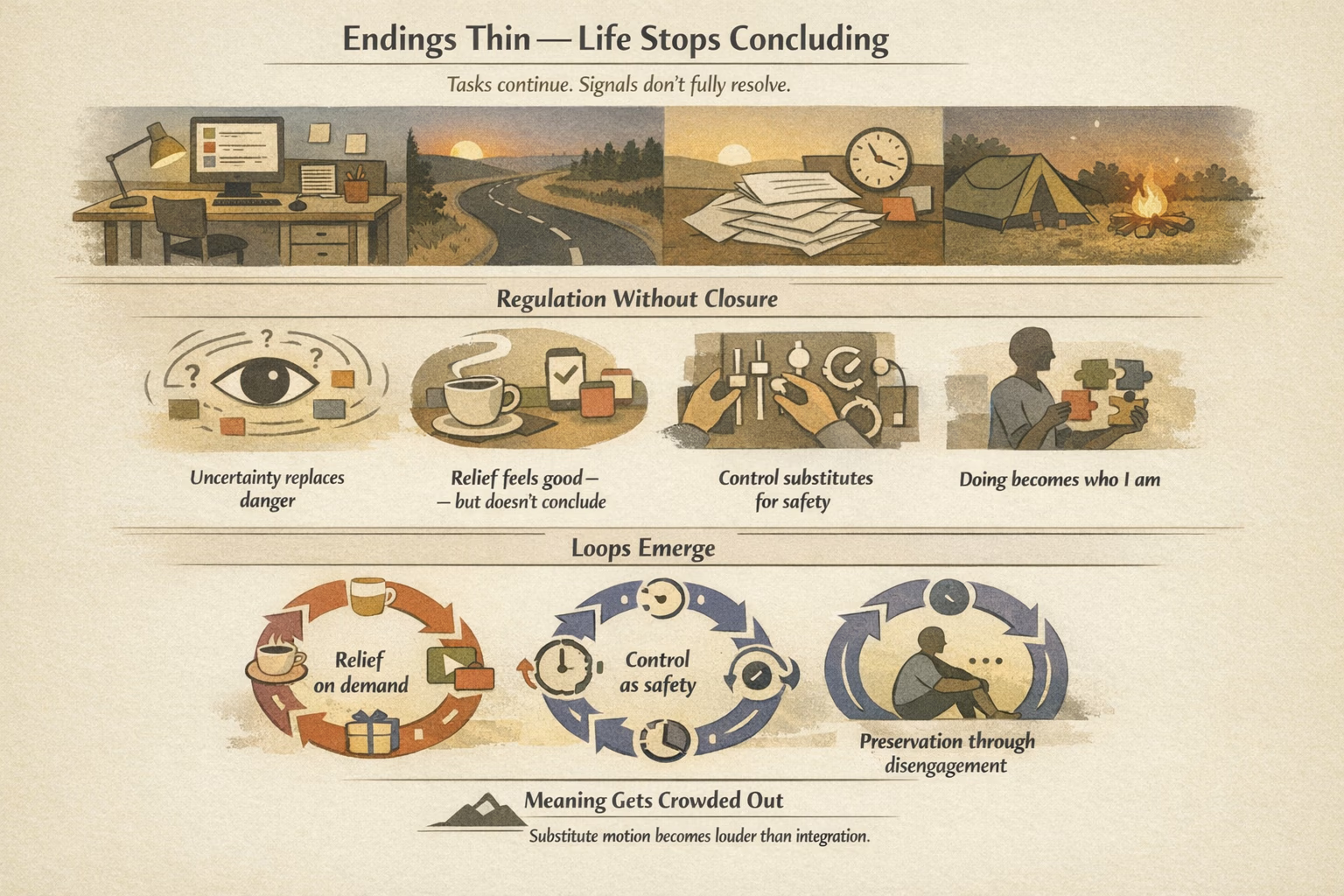
It is outcompeted. It is crowded out. Displaced. Drowned beneath systems that regulate more aggressively in a world where endings have become optional and threats have become abstract and time no longer rests inside natural edges.
This is why people can live for years without saying, “I have no meaning,” while still feeling disoriented. The loud regulators keep life moving. They keep the foreground busy. They keep the inner noise managed.
But the cost appears as that constant unfinishedness: always engaged, rarely concluded. Always responding, rarely arriving. Always moving, rarely settling.
And because the loops can look functional—because they can produce work, skill, discipline, even beauty—many never notice what has been displaced. They only notice that they are always busy, always managing, always reaching for something, and never quite finished.
That is how the loops took shape—not as failures of character, but as faithful systems doing the best they could in an environment that no longer taught them how to stop.
And once you understand that, you can see why the next shift was inevitable. Humans don’t only repeat patterns inside themselves. They build environments that repeat patterns too. Eventually, these loops didn’t just live inside individuals.
They found scaffolding.
They found infrastructure.
They scaled.
And the moment they scaled, history began to look different—less like moral collapse, more like regulation multiplied. That is the next story.
Exit — The Next Story
Humans don’t only repeat patterns inside themselves. They build environments that repeat patterns too.