

I don’t think the world suddenly became chaotic.
I think regulation scaled faster than meaning.
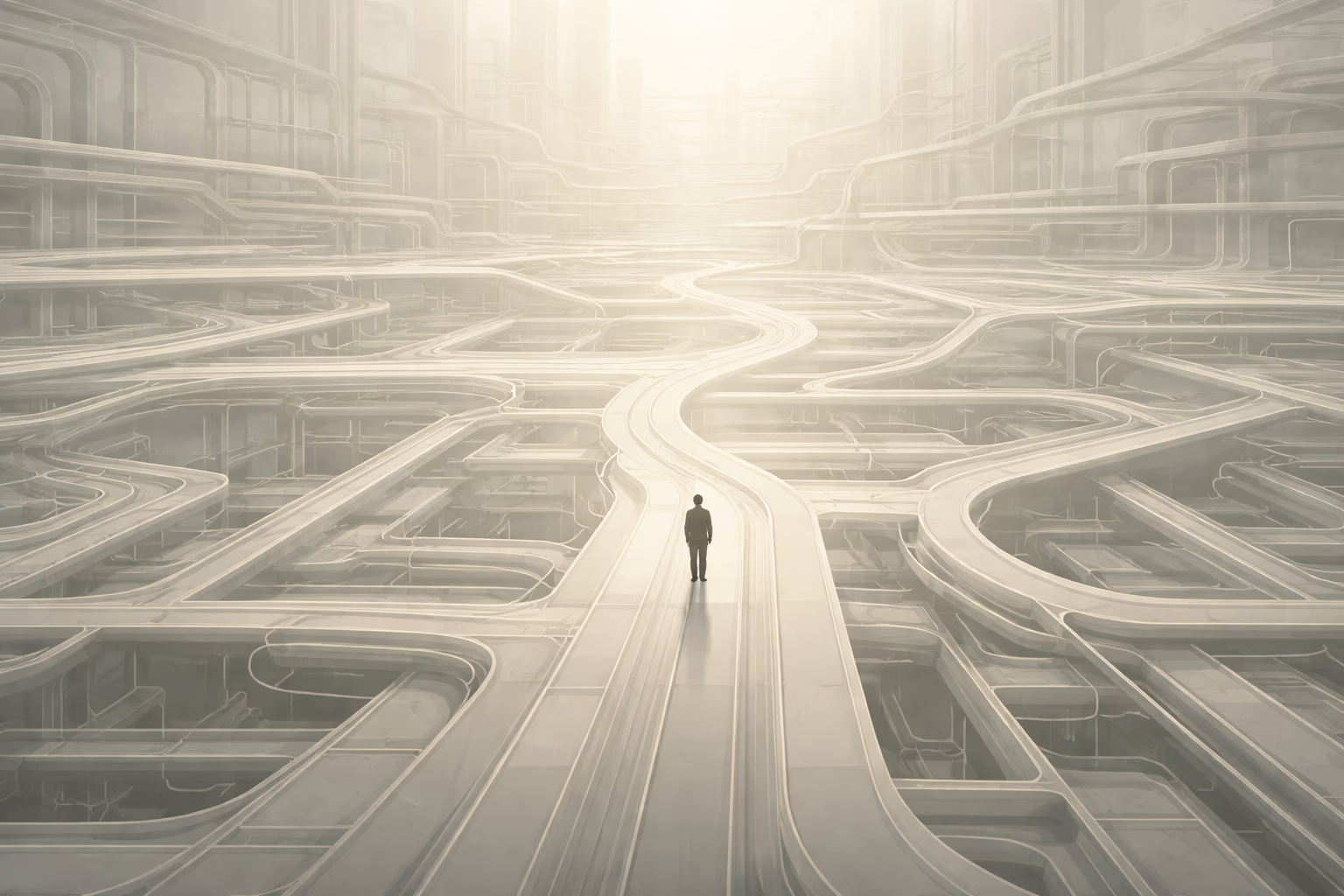
For most of human history, when a nervous system misfired, it misfired locally. A person reached too hard for relief, tightened control too much, or withdrew too deeply—and the effects stayed close: near the body, the household, the tribe. The group noticed. The seasons corrected. Night arrived. Hunger returned. Something ended the pattern before it could harden into a permanent culture.
But modern life removed the walls.
The same regulation moves that once lived inside individuals began to find scaffolding outside them—institutions, markets, media, and technology that could carry the pattern even when a person didn’t choose it. Technology didn’t invent the loops. It gave them reach. Institutions didn’t corrupt the nervous system. They amplified it. What used to be a coping move became an organizing principle.
That is what I mean when I say: the loops went global.
Scale threshold: when the human-sized world became a system
Once environments scaled beyond what a nervous system can “feel” directly—once attention was mediated, once competition was quantified, once the social field expanded past face-to-face belonging—regulation stopped being a private event and started becoming a public architecture. Life became less like a village and more like a network: distributed, abstract, continuous, and difficult to conclude.
This story begins where large systems always begin.
State formation and early empires: organized safety built on chronic vigilance
Borders. Law. Tax. Armies. A new kind of safety—organized safety—built on continuous monitoring. When war becomes structured at scale, Threat & Safety stops being an occasional alarm and becomes a governance tool. Not because leaders are monsters by default, but because large groups coordinate through shared threat.
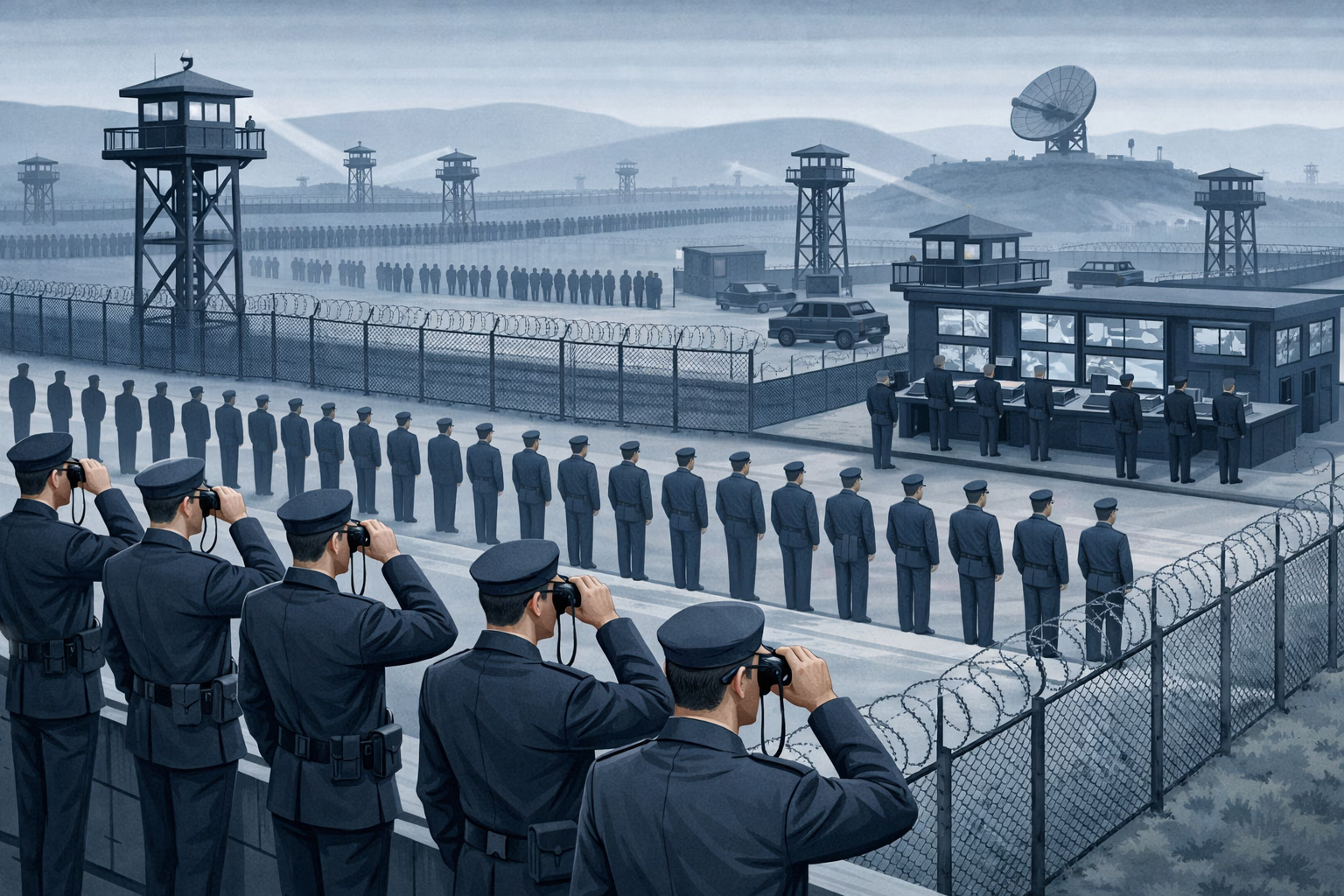
“Us versus them” is a grammar the nervous system understands instantly. Fear synchronizes attention. Suspicion creates cohesion. A population that shares danger shares direction.
Then came the rise-and-fall rhythm of empires—civilization-scale status competition. Empires rise when systems synchronize: people share a rule set, a currency, a story, a chain of command, a sense of order. Empires fall when synchronization breaks: legitimacy collapses, trust fractures, meaning thins, the center cannot hold.
And when empires rise and fall, Status & Control isn’t just personal ambition anymore. It becomes legitimacy, dominance, prestige—comparison so large it starts to feel like destiny. You can feel it in how societies begin to speak: not “we want to live,” but “we must be great.” The status game grows so big it becomes a national mood.
Trade networks, money, and the abstraction of value
As trade networks expanded—markets, mobility, incentives—value began to travel. And once value travels, it changes shape.
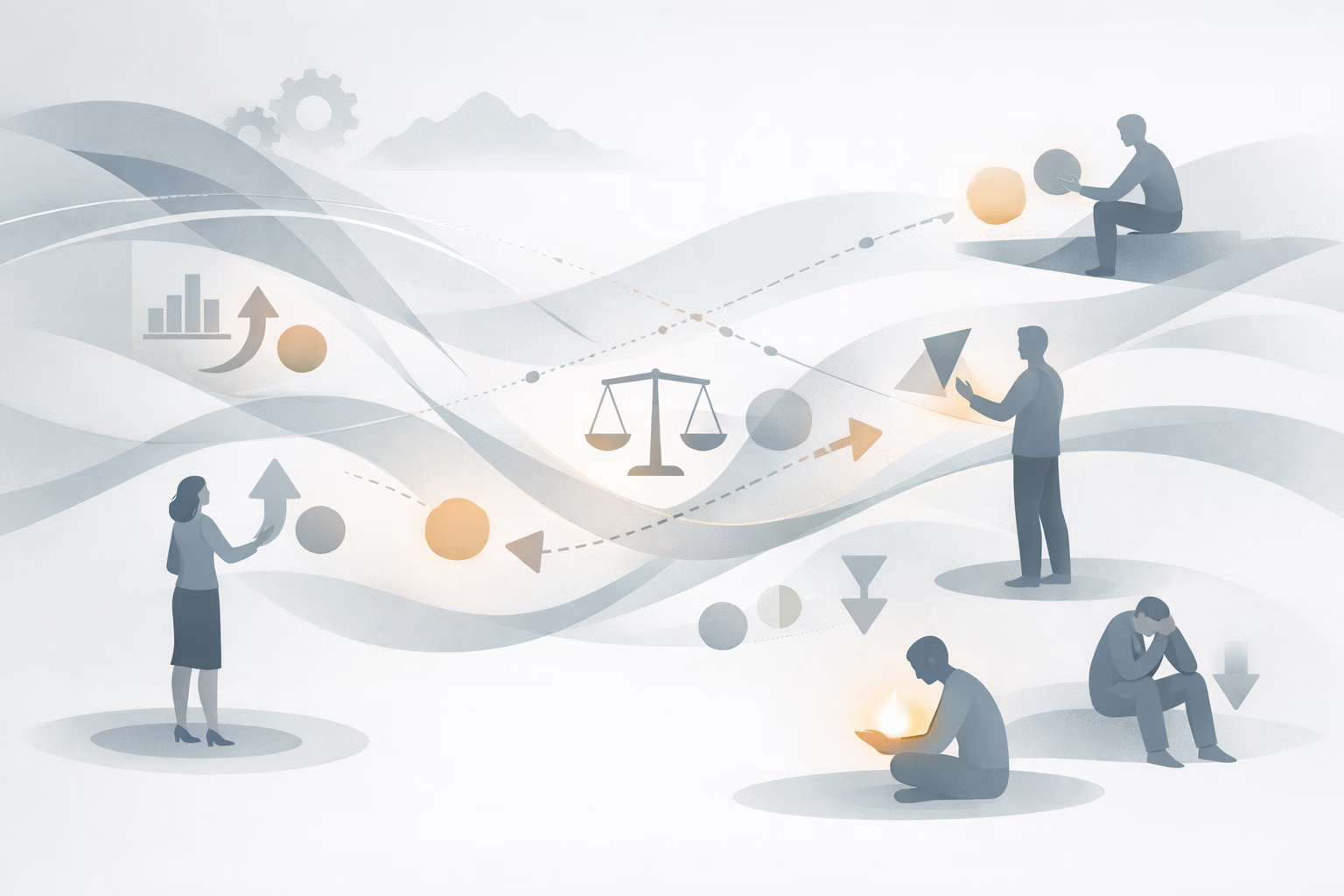
Money is powerful because it compresses effort and outcome into a symbol you can carry. It turns labor into a token. It turns time into a unit. It lets you exchange without intimacy. It makes scale possible.
But compression has a side effect: the effort → reward pathway becomes harder to feel.
The thread that used to connect a body’s work to its relief becomes thin, indirect, and often invisible. Reward can arrive without a readable story. A person can benefit from systems they didn’t witness and be harmed by systems they can’t identify. And once value travels as symbols, inequality becomes more salient. People don’t just want comfort; they want relative position. Status anxiety intensifies because comparison widens faster than belonging.
Even before modern technology, the nervous system was already being trained by abstraction: outcomes arriving through layers, not through touch. The world starts to feel like an interface.
A structural triangle forms: threat warmed, comparison widened, reward made portable
Zoom out and you can see the mechanical pattern forming:
• War and governance keep threat warm.
• Empires and hierarchy keep comparison wide.
• Markets and money make reward portable—and opaque.
These are not moral claims. They are structural realities. And once those realities exist, people begin to feel a particular kind of pressure: not only to survive, but to stay positioned inside a moving system that never fully stops.
Axial Age meaning frameworks: mass scaffolding, not decoration
When the center starts thinning, humans do what humans always do: they build meaning frameworks big enough to hold the load.
Religion. Ethics. Duty. Virtue. Cosmology. Not as decoration, but as scaffolding. Because when systems scale, people need shared floors again—shared obligations, shared explanations for suffering and death, shared reasons to endure when instinct alone can’t hold the complexity.
These weren’t luxuries. They were load-bearing.
They provided something modern life still struggles to provide at scale: a shared grammar for endings, limits, obligations, and what counts as a life well lived. They didn’t just answer “why.” They answered “how to carry this.”
Eastern liberation traditions: desire reduction and attention repair
In some places, repair took a distinctive form: restraint and attention training—movements designed to reduce craving, soften grasping, and restore inner closure when outer life became noisy.
Traditions like Buddhism, Taoism, and Yoga lineages aimed directly at suffering: not by increasing control of the world, but by changing the relationship to desire, attachment, and the mind’s restless reaching.
They treated the inner system as trainable. Not perfectible. Trainable. They recognized something crucial: when the outside world becomes too stimulating, the inside must learn how to conclude.
Western philosophical projects: coherence, virtue, rational order
In other places, repair took the form of philosophical projects: virtue ethics, stoic practice, rational inquiry into what a good life is when life is no longer simply survival.
Aristotle, Stoicism, and later Enlightenment ethics weren’t merely intellectual hobbies. They were attempts to restore coherence in a world where social complexity and abstraction were outgrowing inherited instinct.
Different cultures, different languages—but a shared motive: rebuild integration when life is no longer automatically integrating.
Scientific revolution and institutions: measurement, prediction, control
Then came another acceleration: the scientific revolution and modern institutions—measurement, prediction, control. A new kind of confidence arrived: if we can quantify the world, we can manage it.
This worked—up to a point. It delivered astonishing capacity. But notice what scales here: control scales faster than integration. Knowledge grows faster than coherence. Capability outruns context.
And when capability outruns context, nervous systems don’t respond with wisdom. They respond with regulation. The question becomes less “What is true?” and more “What keeps me safe inside a world that changes faster than I can metabolize?”
Industrial revolution: mechanization, urban density, time discipline
Industrial life amplified the gap. Mechanization increased output. Urban density increased stimulation. Time discipline turned days into engineered arcs instead of natural cycles. Work reorganized around clocks. Cities became machines made of humans.
Life became faster, louder, more continuous. The day stopped ending because it was finished. It ended because the shift ended—or didn’t, depending on the economic pressure. The nervous system was pulled into a new posture: always slightly behind, always slightly urged, always slightly incomplete.
Modern psychology: navigation tools for minds under new loads
As the environment grew more engineered, humans began studying themselves the way they studied machines. Modern psychology emerged—mind as system under stress, learning, and identity. Again: not vanity. Navigation. Because the world had become too abstract for intuition alone.
But “navigation” is not the same as “integration.” You can map a storm and still drown in it.
Mass media: shared narratives at scale, synchronization at scale
Then the attention layer scaled. Print to radio to TV: shared narratives at scale. A population can be synchronized by the same images, the same heroes, the same fears, the same enemies.
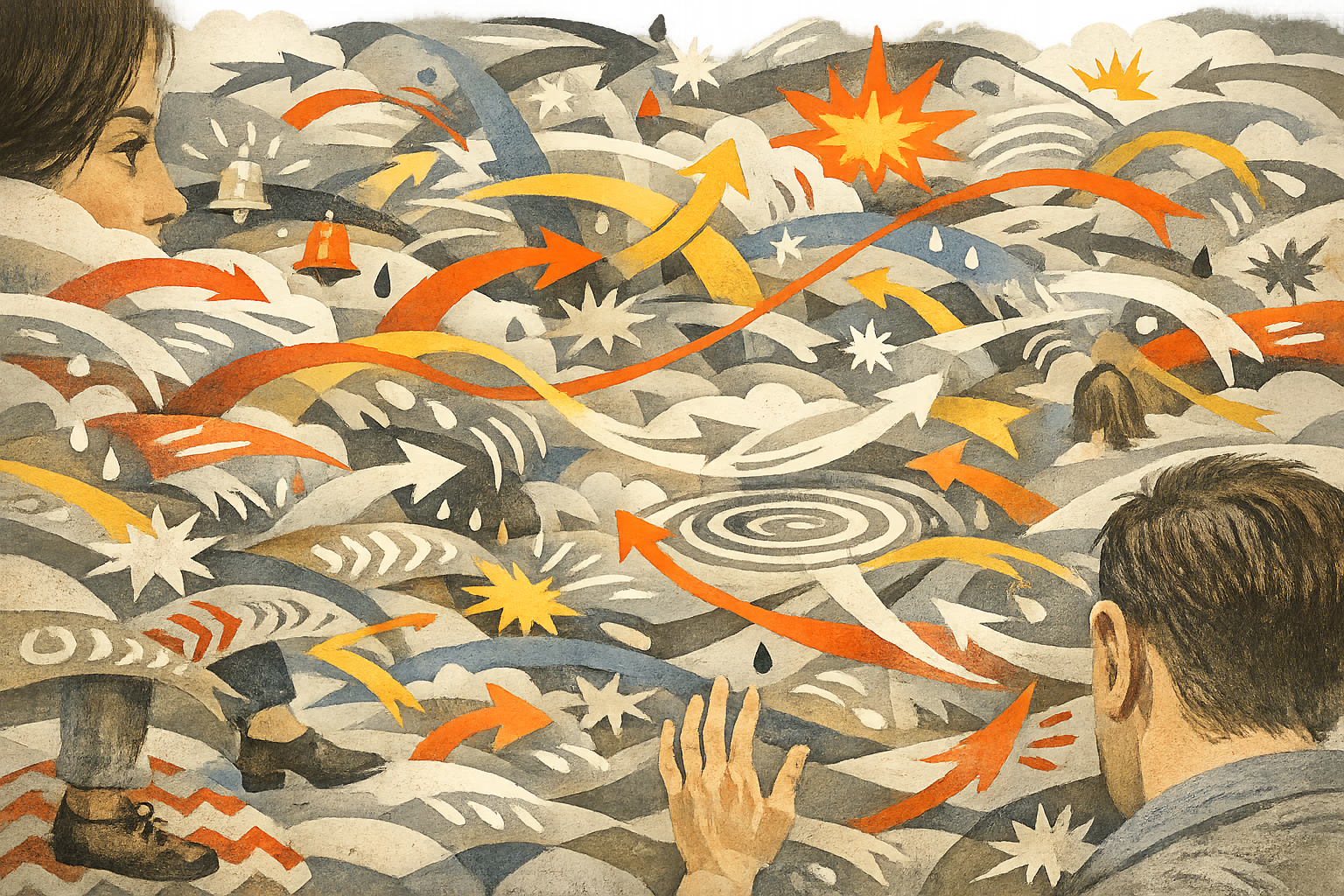
This can hold a society together—and it can also make manipulation easier, because attention is the doorway to regulation. Whoever controls the doorway can shape what a nervous system rehearses every day: danger, desire, envy, identity, outrage, belonging.
Advertising and consumer culture: engineered reward cues
Then advertising and consumerism: reward cues engineered deliberately—desire manufactured, novelty packaged, urgency injected.
The learning system doesn’t know the difference between a fruit tree and an advertisement. It knows cues, prediction, reinforcement. Cheap, frequent, variable reward at scale doesn’t just entertain people. It trains them.
Not only “buy things.” More subtle than that: reach more often. Interrupt discomfort instantly. Treat craving as instruction. Turn mood into a market.
20th-century total war and propaganda: threat saturation as forced coherence
Add the 20th century’s threat saturation—geopolitics, total war, propaganda—and you get another brutal amplifier.
War offers a terrible kind of closure: clear sides, clear stakes, clear urgency, victory or defeat. When meaning thins, conflict can look like coherence—not because humans love suffering, but because the nervous system loves clarity.
A frightened mind will accept almost any story if the story provides a clean enemy and a clean direction.
Global sports culture: tribal identity and status at scale
Something else rose alongside mass media: global spectacles.
Sports—especially football—became a clean, repeating ritual of tribal identity at scale: belonging without proximity, status without direct survival, emotional synchronization without local community.
Competition itself is not the problem. Competition can be play, skill, community, tradition, beauty. The problem is what happens when tribal identity fuses so tightly with an external scoreboard that the nervous system treats a match like a threat event and a loss like a personal collapse.
You see it when a club becomes a substitute self. When a season becomes a nervous system calendar. When the weekend’s mood depends on ninety minutes. When rage, despair, bingeing, fighting, or self-destruction follows a loss—not because someone is “crazy,” but because the body has been trained to outsource belonging and status to a spectacle that never truly concludes.
There is always another match, another rivalry, another injustice, another humiliation, another redemption arc. The story never ends. The nervous system stays hot.
Football fandom becomes, for many, a globalized tribe: identity via colors, chants, enemies, and wins. A portable belonging. A portable status. A portable threat.
Trends and virality: identity via participation
Then trends and virality: social proof accelerates, identity via participation. A new kind of tribe forms—not bounded by geography, but by attention.
You don’t only join a group now; you perform membership continuously. You don’t only have an identity; you refresh it. You don’t only belong; you signal belonging. And signals invite measurement.
Internet, feeds, smartphones, algorithms, AI: the modern reinforcement stack
And then came the largest shift of all: the internet era—endless information, constant possibility. The end of natural endings.
Feeds turned reinforcement into architecture: variable rewards, constant novelty, constant evaluation, constant comparison. Smartphones made it always-on: notifications as alarms, no forced rest, no forced closure. Algorithmic attention economies optimized capture and retention as a business model.
And now the newest acceleration: AI—hyper-personalized stimulation and persuasion, faster content, more precise targeting, less friction between desire and delivery.
Not just “more content,” but content that adapts to your weak spots: your boredom patterns, your outrage triggers, your longing for approval, your fear of missing out.
The system doesn’t have to guess anymore. It tests, learns, and adjusts.
The three loops at global scale: pleasure, power, avoidance
Pleasure went global.
Not merely “people like fun,” but a planetary infrastructure for on-demand reward: cheap, portable, endlessly variable. Markets, media, advertising, feeds—reward warmed continuously, so craving spreads even when comfort exists.
Modern examples are everywhere: infinite scroll, autoplay, short-form bursts, delivery in minutes, one-click purchasing, constant novelty, dopamine-by-design interfaces, gambling-like mechanics in games and apps, curated desire loops that never require completion—only continued engagement.
Power went global.
Not merely “people like achievement,” but hyper-competition, metrics, optimization culture—status without edges. Empires become corporations, scoreboards become dashboards, comparison becomes a permanent background process.
Modern examples: KPI worship, personal branding as survival, performance metrics that follow you home, productivity systems that never finish, rankings and leaderboards for everything, quantified selves, visibility economies where recognition becomes a resource and anonymity feels like failure.
Avoidance went global.
Not merely “some people withdraw,” but overwhelm becomes structural. Endless work. Endless messages. Endless crisis. Endless information without digestion.
Disengagement becomes normalized—not always as laziness, but as survival in a world that won’t stop. Modern examples: chronic procrastination in the face of infinite tasks, binge-escaping into content after overloaded days, ghosting responsibilities because the entry cost feels impossible, doomscrolling as anesthesia, “quiet quitting” not as rebellion but as nervous system triage, social withdrawal not from hatred but from depletion.
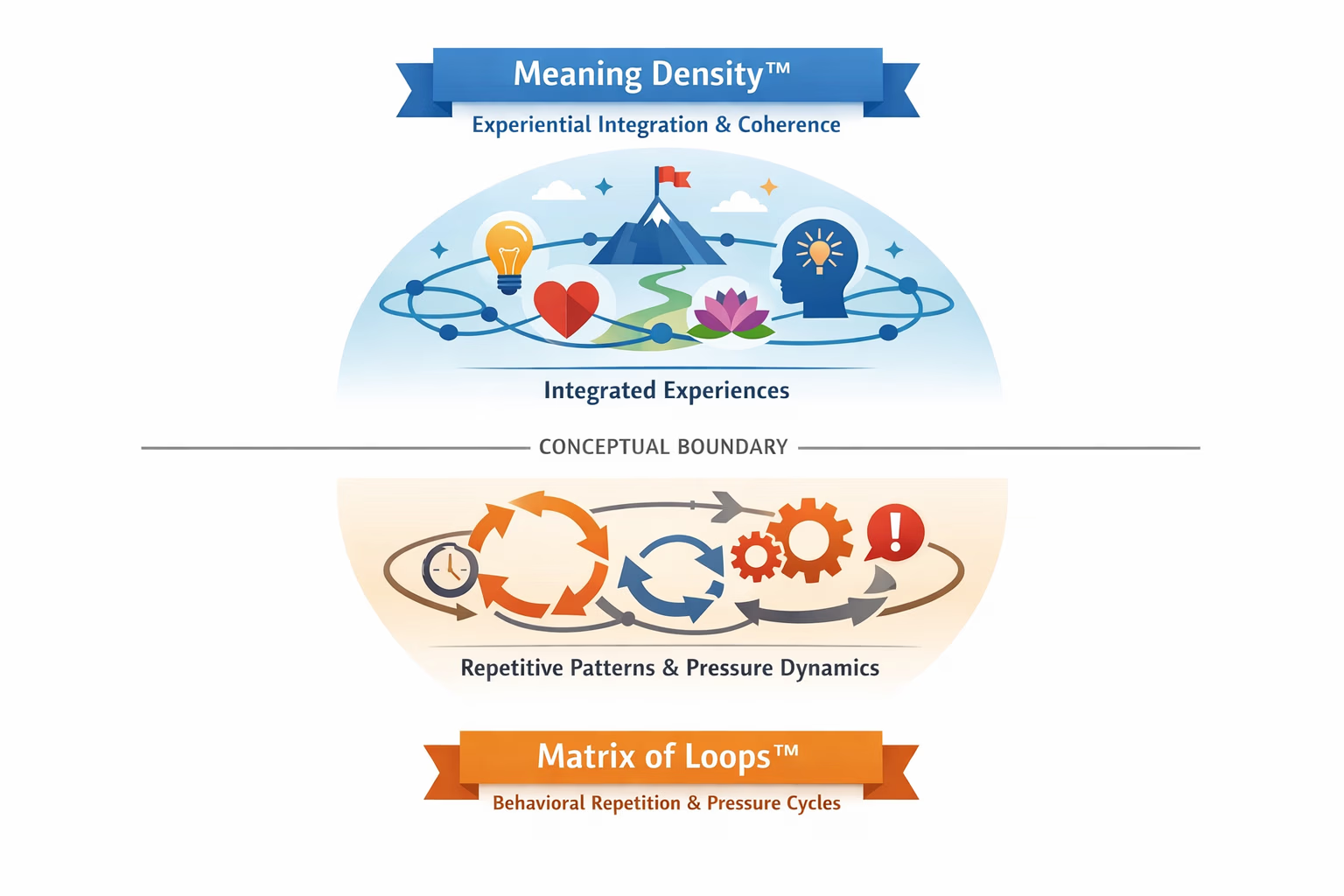
And here is the key: once loops find infrastructure, they stop looking like symptoms. They start looking like culture.
Entertainment organizes time.
Competition defines worth.
Distraction becomes normal.
Disengagement becomes default.
Because each loop offers partial relief, none looks pathological on its own.
Together, they form a self-reinforcing system:
Pleasure soothes the discomfort created by power.
Power justifies the exhaustion that leads to avoidance.
Avoidance creates the emptiness that pleasure promises to fill.
Round and round—now with supply chains, platforms, institutions, and algorithms feeding the motion.
Meaning response waves, and the modern trap
And meaning responds—again and again—through waves: therapy cultures, values work, community revival, spirituality returning in new forms. The system tries to repair itself whenever overload becomes undeniable.
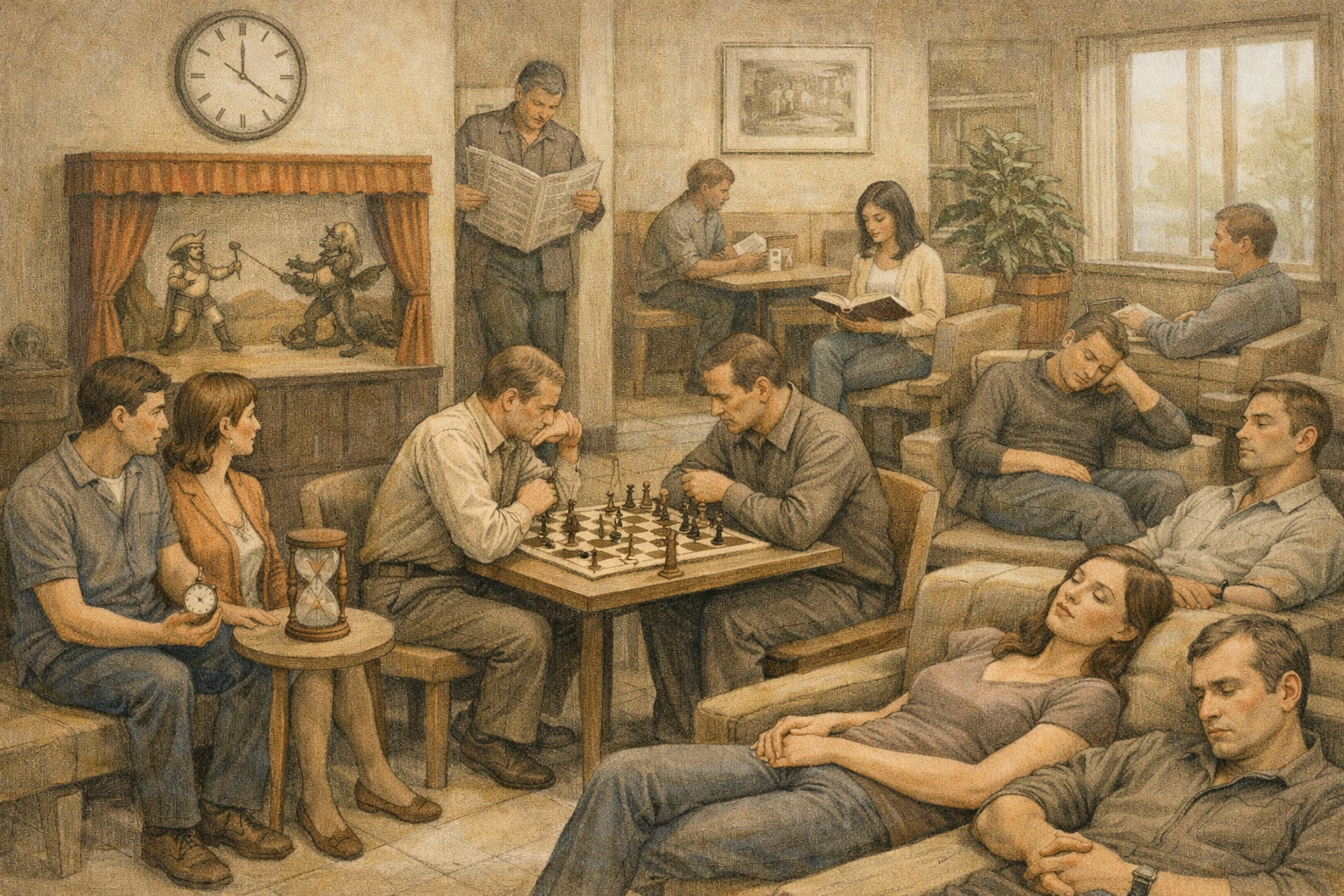
But modernity introduces a new danger: repair can be packaged as content.
Wisdom becomes scrollable.
Practice becomes performance.
Depth becomes branding.
Stillness becomes another product.
Even “meaning” can be turned into a feed—another stimulus, another identity, another metric, another marketplace.
That is the trap: when the repair becomes another loop.
And it leads to the insight that matters most: alignment is now a design problem, not a moral one. The question is not “Why are humans weak?” The question is “Why are modern conditions shaped in a way that forces ancient systems to regulate themselves with substitutes?”
Because the nervous system is small.
The world is vast.
And the environments we built removed endings faster than biology could adapt.
So the next story is not about rejecting modernity or romanticizing the past. It’s about the people who remain coherent inside modern life—not louder, but quieter—and what, exactly, is holding them together.
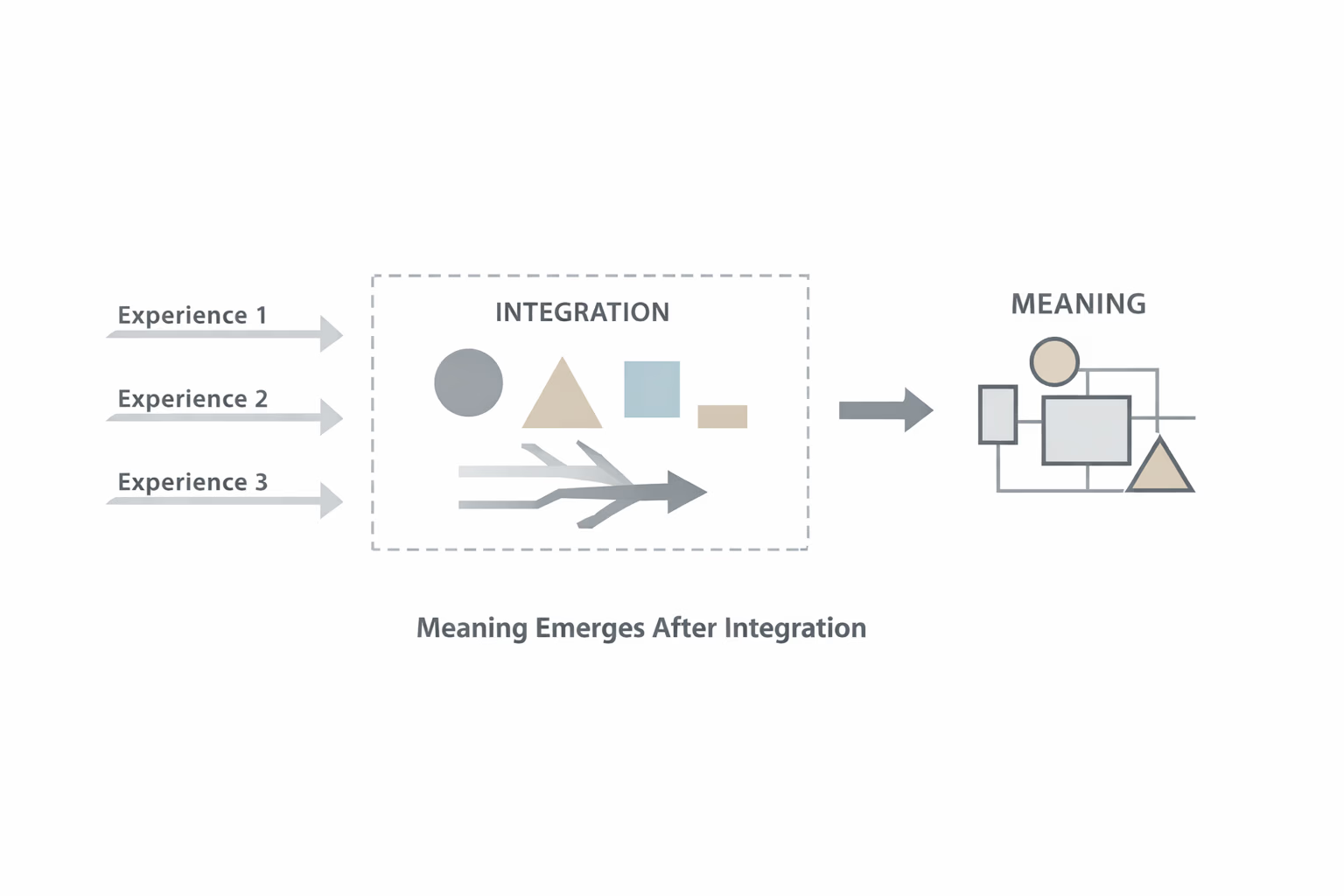
Meaning doesn’t fight the nervous system. It gives it context.
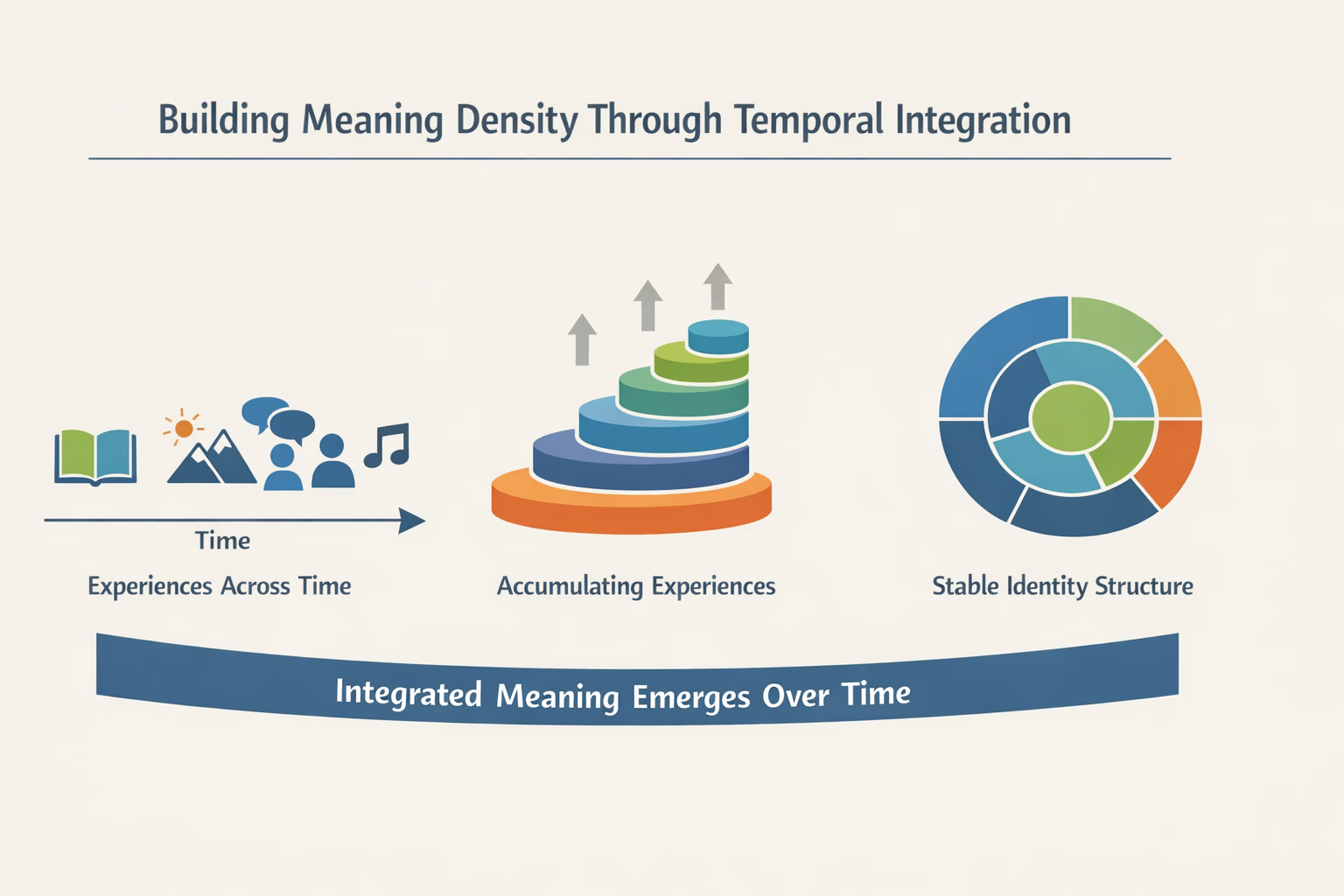
I’ve seen what happens when the old systems are running alone.
And the ones who hold together aren’t the ones who finally perfect a routine.
Exit
Alignment is now a design problem, not a moral one.