

Storage begins — hunger gets delayed, not defeated
I noticed the change when humans stopped waiting for hunger to arrive like weather.
It began quietly, with storage.
Grain sealed away. Roots dried. Meat smoked and hung where animals couldn’t reach it. Clay jars tucked into cool earth. Pits lined with stone. The first real surplus wasn’t endless, and it wasn’t guaranteed—but it was buffered. A margin appeared between need and pain. Hunger became something you planned around instead of something that knocked, hard, without schedule, at the edge of the body.
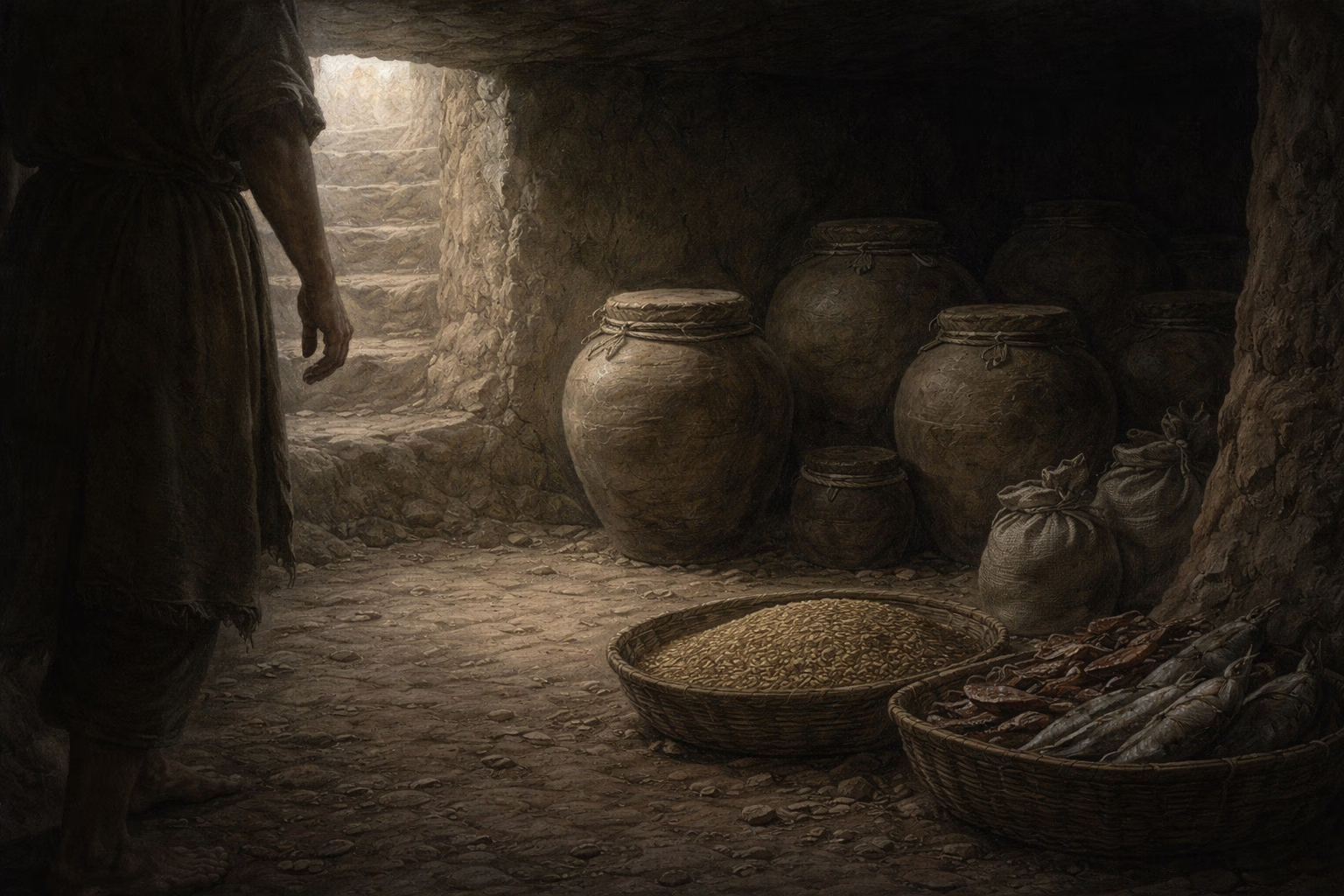
At first, it felt like mercy—because it was.
Fewer children cried through the night with the thin, helpless sound of empty bellies. Fewer bodies weakened before winter was done with them. Less frantic searching. Less living like each day was a chase after a rumor that might disappear before you reached it. The nervous system—so used to the sharp edge of scarcity—met something it hadn’t known how to expect: a little space.
But the change wasn’t only practical. It was instructional.
When hunger is immediate, it is a strict teacher. It trains attention with consequence. It makes priorities obvious without debate. And when hunger is delayed—when the signal softens—something else happens: the body stops receiving the same clean lessons. Need becomes negotiable. Pain becomes postponable. The message still arrives, but later, and sometimes it arrives with fewer teeth.
That sounds like relief, and it is relief. But it also begins a quieter process: systems start looking for new signals to trust.
Predictability increases — humans stay, and the land starts answering to planning
Then humans stayed.
Not just camping, not just pausing between movements—but settling. Agriculture expanded. Knowledge of cycles deepened. Calendars formed in the mind before they formed on stone. Fields replaced long wandering. Predictability increased—not because nature became gentle, but because humans learned how to participate in nature with a longer horizon.
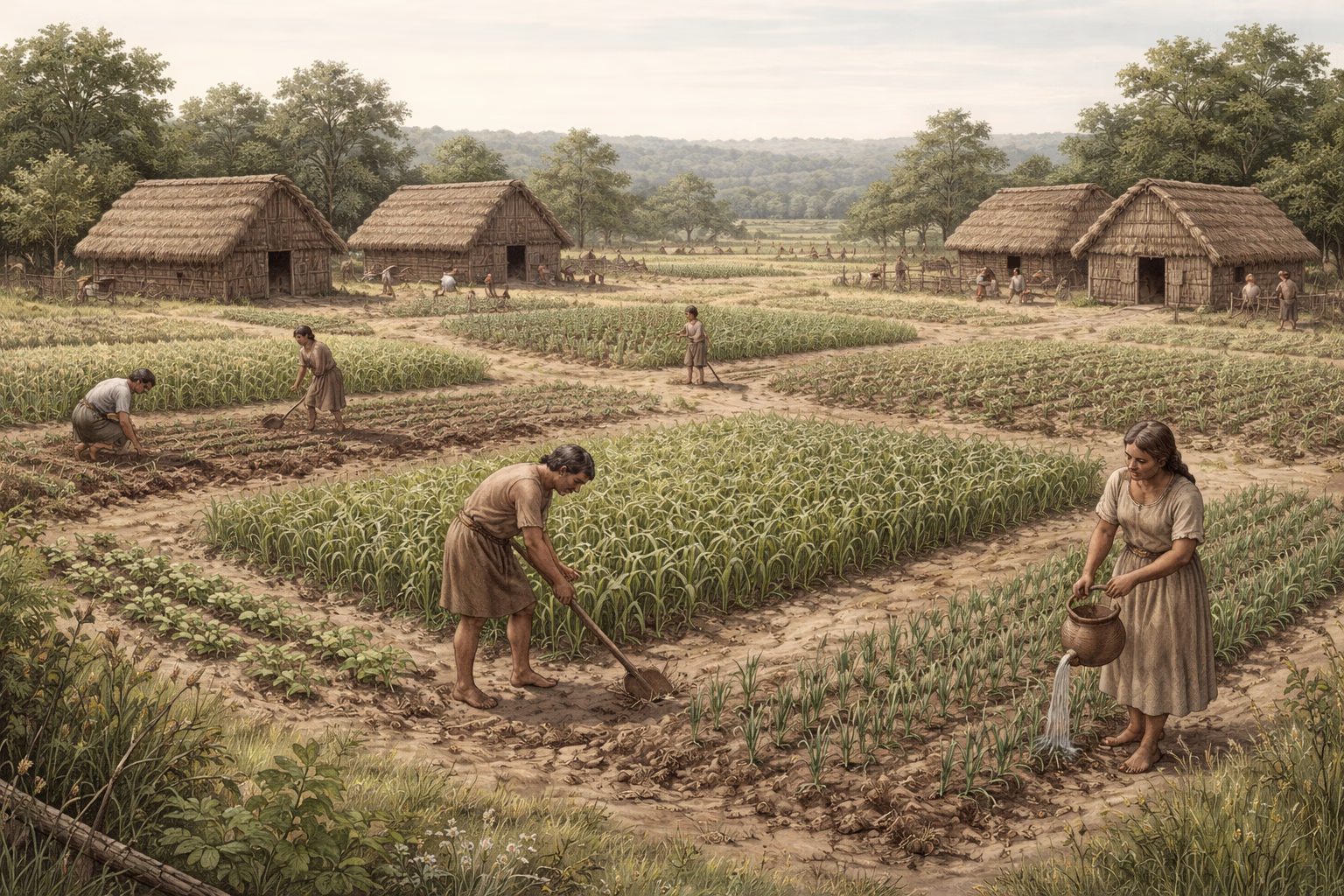
Planning is powerful. It creates stability that no single strong person could create alone.
Seeds disappeared into the ground and offered no reassurance. Weeks passed. Weather argued back. A person couldn’t rush a field the way they could rush a hunt. In that sense, the old order still held: cost before reward, patience before relief. A season still had edges. You planted, you tended, you waited, you hoped. When food finally rose from the earth, it carried the memory of waiting inside it. The reward still had a story.
But settlement did something else at the same time. It widened the structure of life.
When you remain in one place long enough, you build more than shelter—you build systems. You build storage, roles, trade, rule, custom, obligation. You build a life that can be repeated without starting over each morning. The day becomes less of an improvisation. The environment becomes less of a direct argument. Certain kinds of friction soften—not because the world stopped pushing back entirely, but because humans placed buffers between their bodies and the push.
That buffer is the beginning of mismatch.
Cities and specialization grow — the full sentence of survival gets split across many mouths
Once settlement holds, specialization follows.
A person can spend a whole day doing one kind of work instead of many: shaping tools, grinding grain, weaving fiber, managing animals, building walls, keeping accounts, carrying messages, guarding storage, negotiating trade. Specialization looks like progress from the outside—and it is. It reduces certain kinds of suffering. It increases capacity. It allows civilizations to exist.
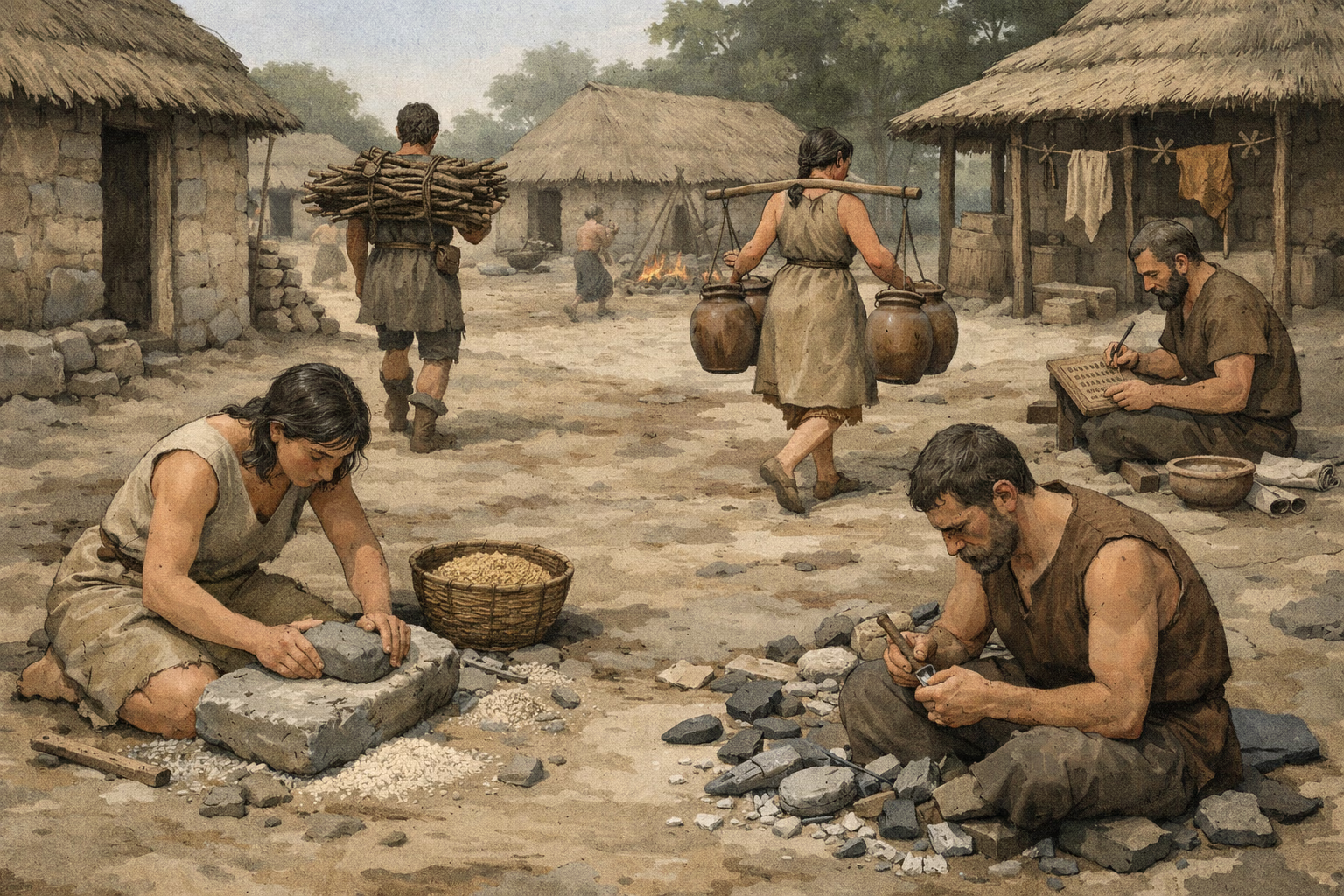
But specialization also changes the nervous system’s relationship with consequence.
In the older world, effort and outcome lived close together. Contribution had visibility. The arc was short enough for the body to read it: I did this → the world replied → we live.
In the new structure, that arc begins to stretch.
Work becomes segmented and opaque. People stop seeing the full pathway from effort to outcome. Survival becomes distributed—carried by networks, roles, and exchanges that no single body can hold in its mind.
No single body now carried the whole sentence of survival.
One person’s labor became another person’s comfort without either seeing the full path. Food arrived through systems rather than direct contact. Tools were made by hands you didn’t know. Shelter could be built by people who wouldn’t sleep in it. The lines between effort and reward started to lengthen, like rope pulled taut between distant posts.
This is not corruption. It’s scale.
But scale has a cost: legibility.
And when legibility thins, the nervous system loses one of its quiet regulators—the ability to feel why effort matters.
Time gets engineered — days stop ending naturally
Then the day itself changed.
Not the sky. Not the sun. The day as the body experiences it.
Time became engineered. Not sun-time. Not season-time. Not body-time. Hours appeared. Schedules. Bells. Ledgers. The day became something that could be divided, bought, sold, demanded, postponed, extended. Work no longer ended because the sky went dark or the body could not continue. It ended because something said it should.
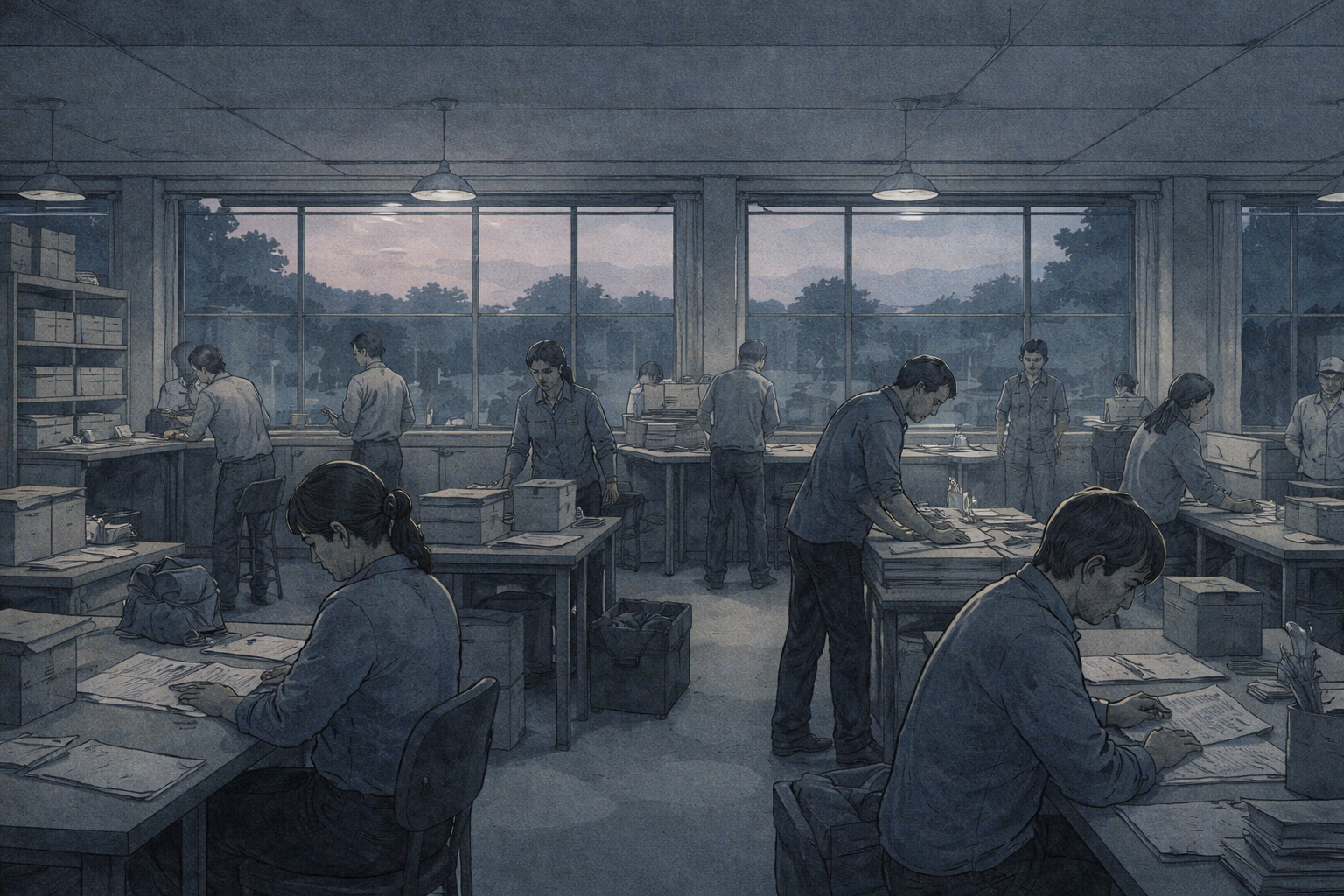
And sometimes it didn’t end at all.
At first, engineered time looks like efficiency. And it is. It coordinates groups. It allows large efforts to move together. It makes trade possible. It makes cities function.
But natural endings used to do something that schedules cannot do as cleanly: they forced closure without negotiation. When the dark ends the workday, the body receives a non-optional conclusion. When exhaustion ends the day, the nervous system gets an undeniable signal: stop. When seasons turn, priorities reorder themselves without debate. The environment closes chapters.
Engineered time weakens that automatic closure. It replaces it with agreement. And agreement is not the same as physiology.
This is where the evolutionary mismatch begins to feel personal: the sense that stopping points are movable, and the body is asked to negotiate its own endings.
This is where the “always-on” posture begins—not as a screen, not as a device, but as a cultural shape: the sense that there is always more to do, and the stopping point is movable.
When endings weaken, the body carries yesterday into today. When it carries today into tomorrow, life starts to feel subtly unclosed. Not tragic. Not dramatic. Just unfinished—like a door that never fully clicks shut.
Reward decouples from cost — reinforcement becomes frequent, immediate, inconsistent
At the same time, reward began to change shape.
In the older pattern, reward tended to follow cost. Even when unfair, the sequence taught something. You did, then you got. You risked, then relief arrived. A nervous system could exhale because a chapter had finished.
As systems grew larger, reward began arriving without the same visible strain. Effort and outcome separated. And reward cues became more immediate, more frequent, and sometimes unpredictable in their timing—delivered by structures too complex for the nervous system to fully interpret.
But in abundance, reward learned a new rhythm.
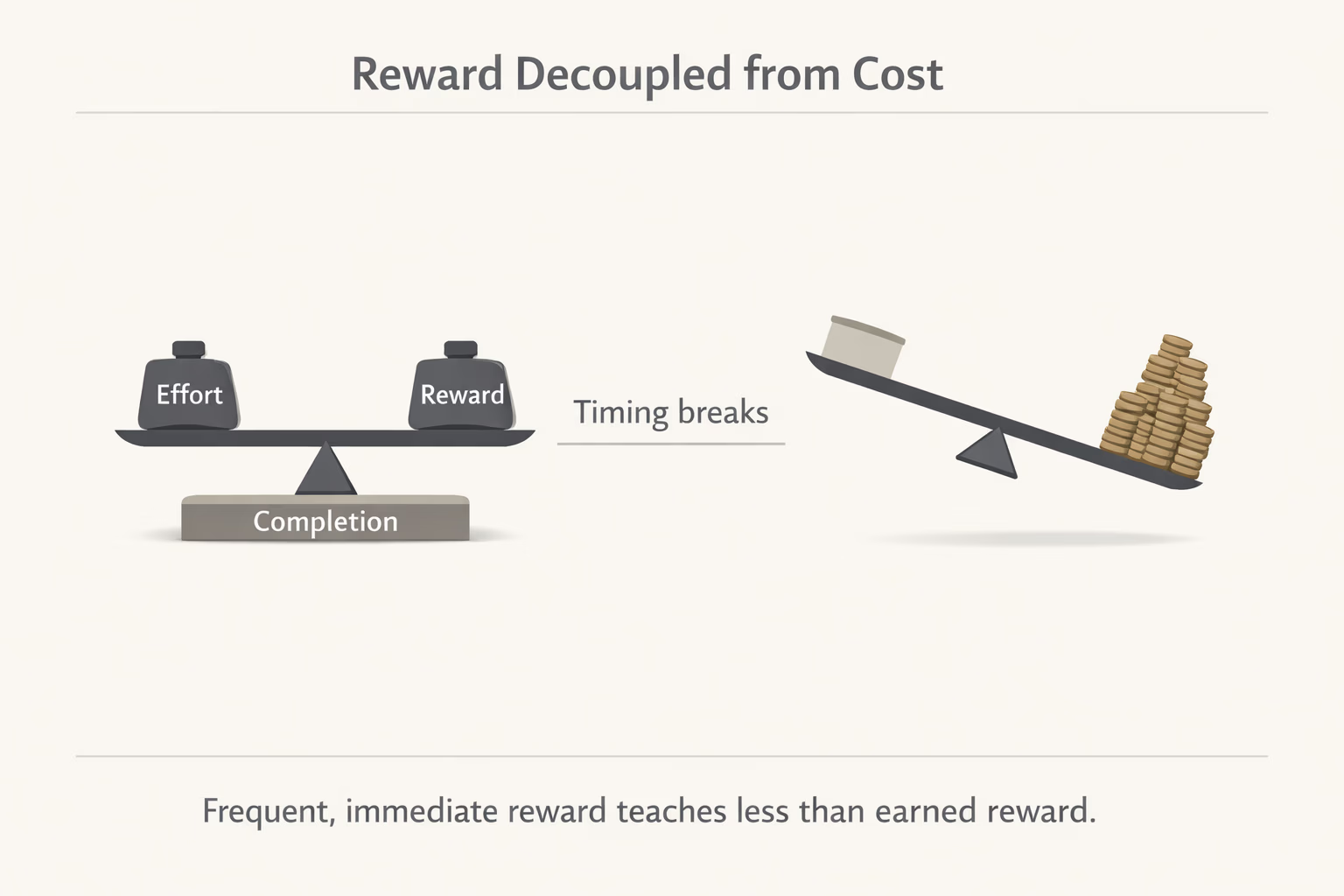
Relief arrived more often—but taught less clearly.
This matters more than it seems.
The Reward & Motivation system is not a poet. It is a learning machine. It learns by timing. When the pattern is clear—cost, then outcome—it builds confidence. It builds steadiness. It knows what to repeat. It can tolerate waiting because waiting makes sense inside the sequence.
When reward becomes frequent, immediate, and inconsistent, learning grows noisy—not broken, noisy. Sometimes effort pays quickly. Sometimes it pays late. Sometimes it pays without clear cause at all. Sometimes reward arrives through exchange, not through completion. Sometimes it arrives as a symbol, not a meal.
Satisfaction thins—not because humans suddenly became ungrateful, but because the body can’t always trace the line between doing and receiving. When the line becomes hard to see, reward stops feeling like closure and starts feeling like consumption. And consumption, unlike closure, does not always tell the nervous system: cycle complete.
Threat becomes abstract — “maybe” replaces “now”
Threat changed too.
In the old world, threat wore a face. An animal. A storm. A rival group. Even illness had a blunt honesty: you either got better or you didn’t. Danger had edges. It either happened or it didn’t. And when it ended, the body could return.
In the newer world, the threats grew abstract. Symbolic. Social. Future-based.
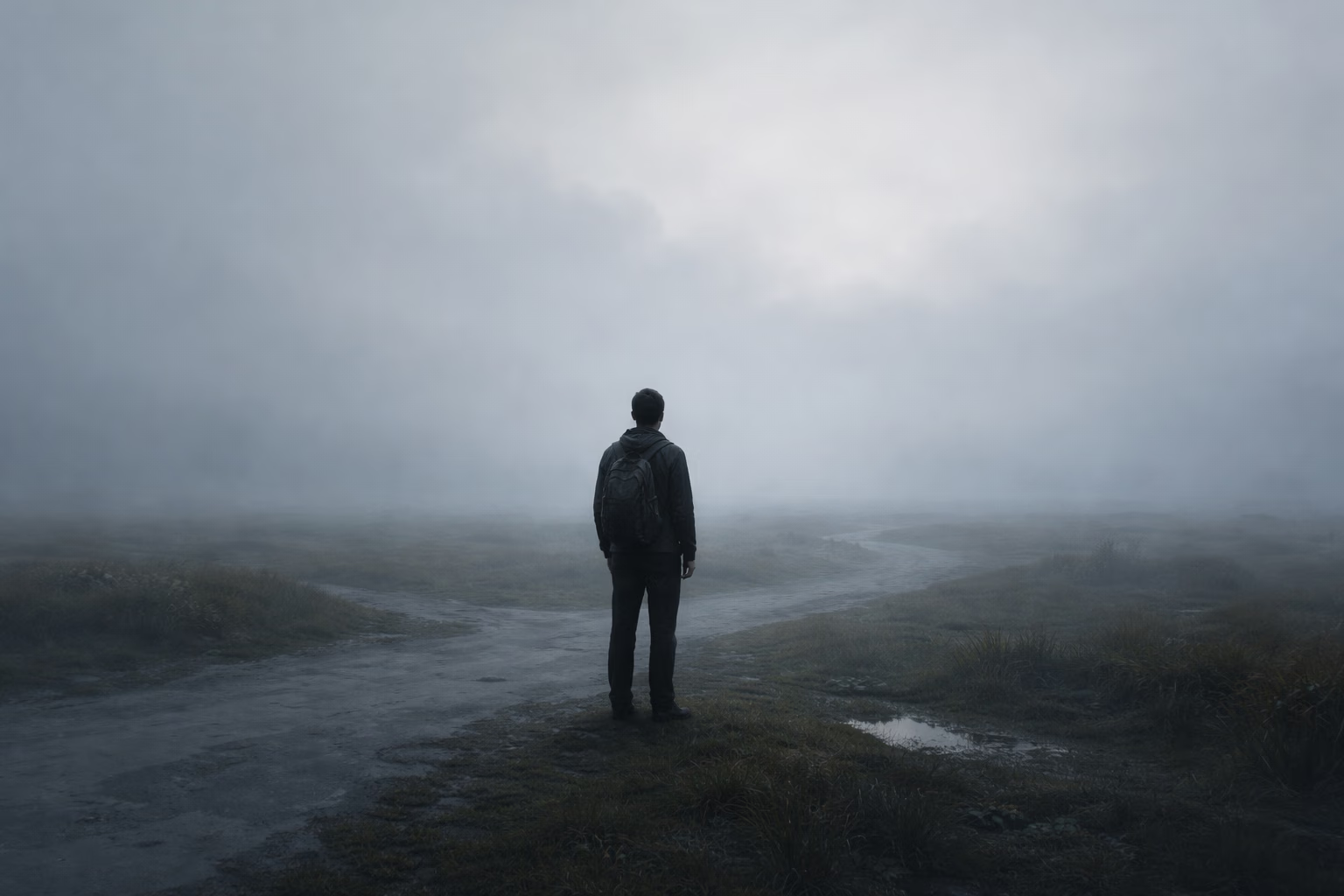
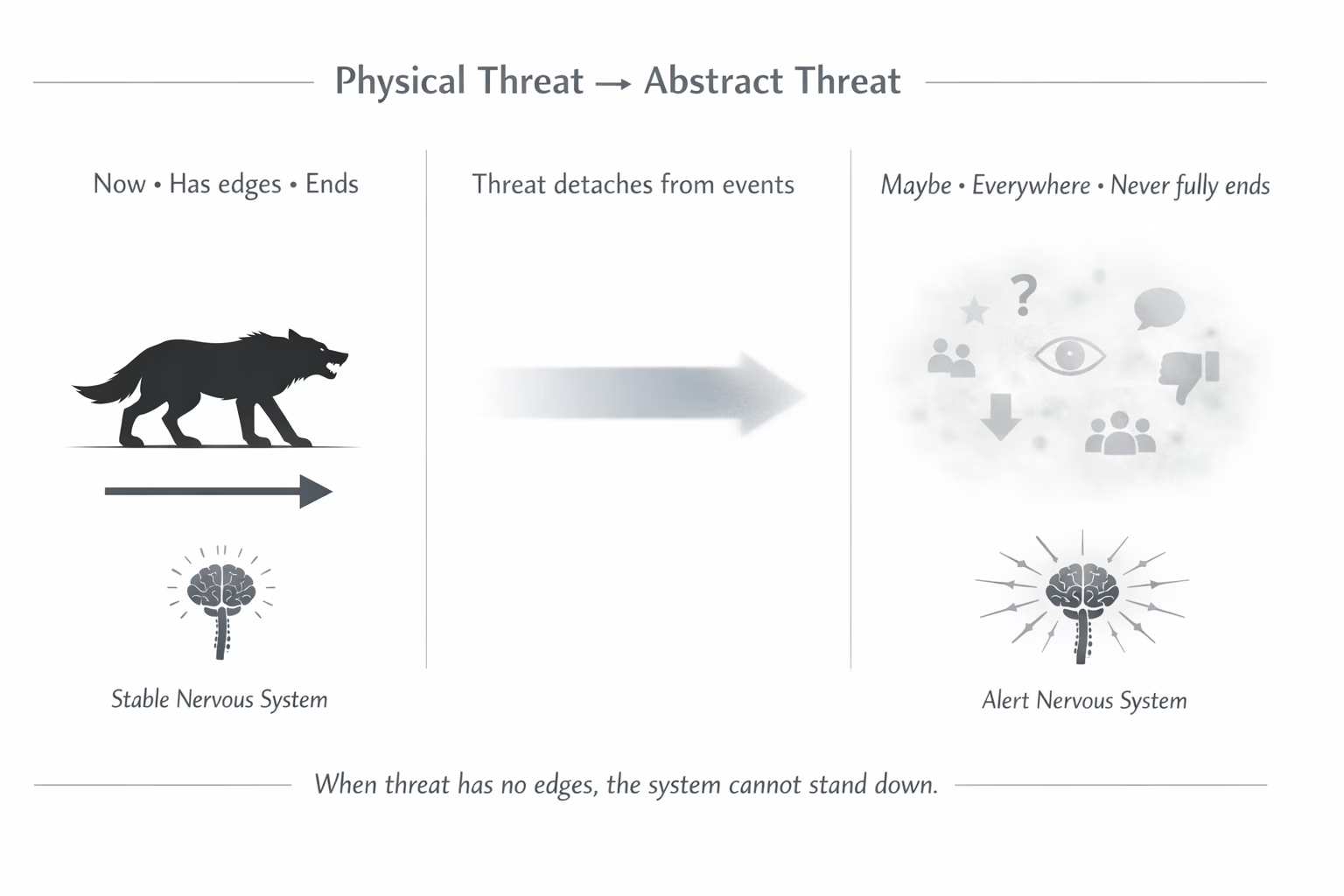
Reputation. Uncertainty. The future. A “maybe” that never resolves. The possibility of being excluded. Losing standing. Falling behind. Being blamed. Being exposed. Threat migrated from what is to what could be.
And because the Threat & Safety system is built to prevent disaster, it treats uncertain threat as something to monitor. It begins living in continuous scan—not for teeth in the dark, but for signals that never fully conclude.
A predator either appears or doesn’t. A “maybe” can last forever.
So vigilance becomes a background state. Not because anyone chooses anxiety as a lifestyle. Because the alarm system is doing what it was built to do with the new kind of input it’s receiving.
Status goes “global-ish” — comparison escapes tribe boundaries; contribution becomes harder to see
Status changed alongside it.
In a bounded group, status has edges. There are only so many people. Only so many roles. Only so many comparisons a nervous system can carry. Contribution is visible. Absence has weight.
In larger systems, comparison widens.
The field grows beyond village into networks of strangers—linked by trade, law, hierarchy, and story. Status becomes more symbolic—less about immediate usefulness, more about standing within a widening structure. And as contribution becomes less visible, recognition becomes less reliable.
You could work and still feel invisible.
This is a new kind of ache: not hunger, but invisibility. Not injury, but unacknowledged effort. The mind begins reaching for proof in other ways—markers, endorsements, proximity to power, symbols that can be counted and displayed.
Narrative scaffolding loosens — meaning frameworks rise to carry what daily life no longer carries cleanly
Narrative changed too.
The old scaffolding—shared roles, shared thresholds, shared rhythms—didn’t vanish overnight, but it loosened as societies grew more complex. More choice appeared. More mobility. More identities to try on. More competing obligations. Less shared floor that everyone agreed to stand on.
The self inherited less structure and carried more responsibility.
This is the moment where meaning begins to require more assembly—not because humans become confused by nature, but because life becomes too layered for instinct to hold alone. And when a structure loosens, people build new structures.
So you see large, recognizable meaning frameworks rise: religion, ethics, duty, virtue, cosmology. Not as decorations. As load-bearing scaffolding—shared explanations for suffering and death, shared obligations, shared rituals, shared endings.
When societies grow, instinct stops being enough to coordinate hearts.
Story becomes infrastructure.
And later, as abstraction and desire intensify—and as people notice that stability does not automatically end suffering— another recognizable wave appears: traditions explicitly aimed at liberation from suffering. Buddhism and its neighbors in spirit: Taoist return to naturalness, yogic discipline and attention training, contemplative practices that teach desire can be observed rather than obeyed.
These movements are not “extra spirituality” added onto a finished life. They are a response to a specific pressure: when the outer world grows more engineered, the inner world needs new methods of closure.
If the day doesn’t end itself, practice tries to end it.
Mismatch accelerates — biology lags behind engineered environments
And here is the central point—the one that matters more than blame:
The ancient systems inside you did not receive the memo.
Threat & Safety still watches. Reward & Motivation still learns. Status & Control still scans the social field. Narrative & Identity still tries to make a life into a story that holds.
These systems don’t ask whether the world is “modern” or “civilized.” They ask: Am I safe? Is this worth doing? Do I belong? Does this make sense? They are not wise. They are functional.
When the world began pushing back less in those old physical ways—when buffers, scale, abstraction, and engineered time softened friction— those systems didn’t switch off. They stayed on duty. They simply started working with new inputs: easier, faster, more abstract, larger, and less likely to conclude cleanly.
This is where the mismatch begins—not as a failure, not as decay, but as a timing problem between two kinds of evolution.
Humans altered the environment faster than biology could recalibrate. You can feel the mismatch in the way days started to lose their endings. In the way effort and reward began to separate. In the way threat moved into “maybe.” In the way comparison widened. In the way the shared story had to be rebuilt as scaffolding rather than inherited as atmosphere.
Nothing is “wrong” yet in the obvious sense. But something begins to feel unfinished.
And when life begins to feel unfinished, the nervous system does what it always does: it starts searching—for a way to conclude what the world no longer concludes for you.
Exit line — the first taste of the unfinished
Nothing inside the human changed to cause this. The systems did not fail. They remained ancient, precise, and faithful to their design. What changed was the environment around them.
The world became more buffered, more engineered, more abstract—faster than calibration could follow. And in that widening space—between effort and outcome, between danger and certainty, between contribution and recognition, between day and ending—the first modern feeling began to form:
Not despair. Not collapse.
Just the quiet sense that something, somewhere, is still open.