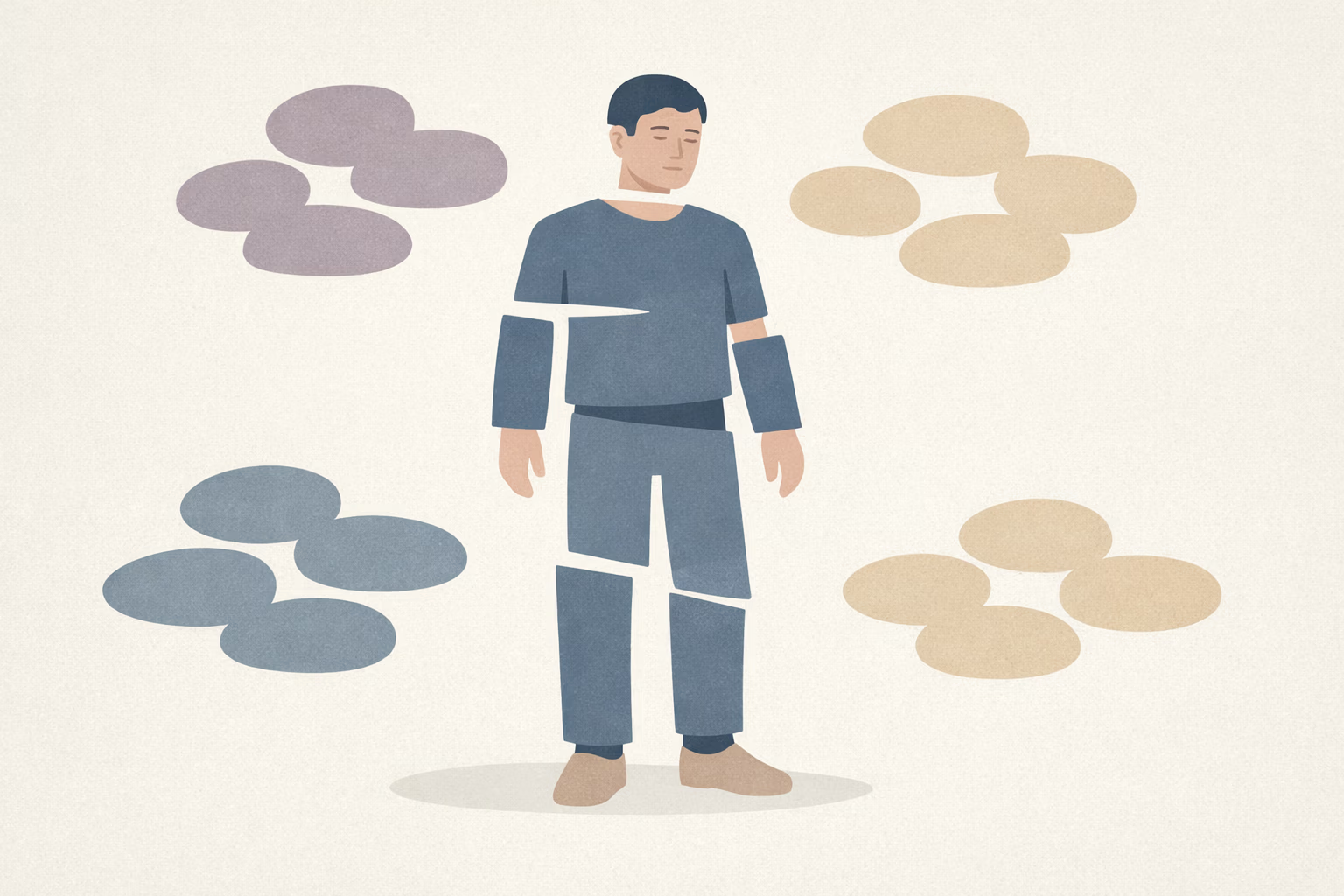
Emotional Fragmentation & Inner Parts
Understand emotional fragmentation and how to reintegrate.
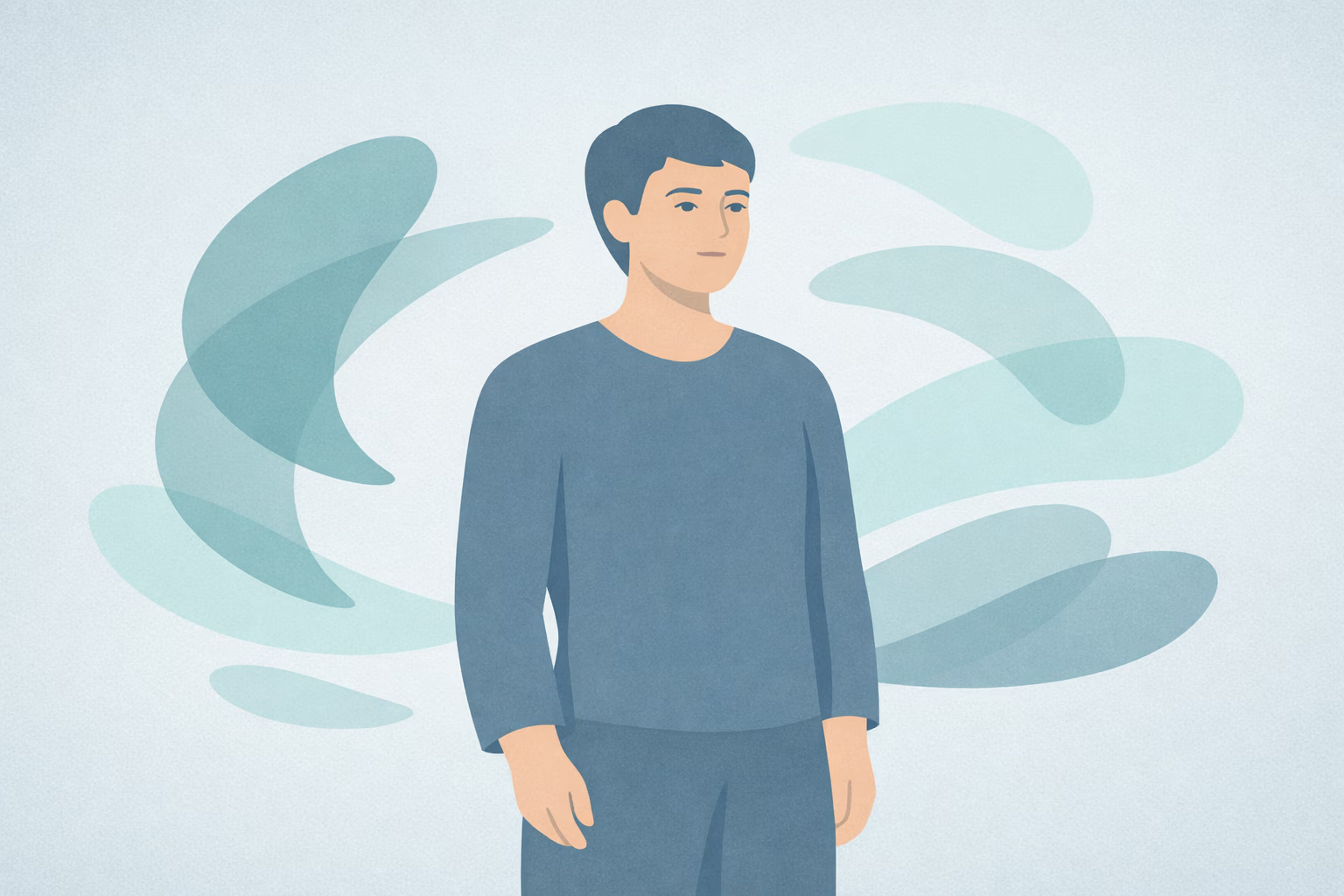
In context: That “wall“ is an emotional boundary your nervous system has erected for protection. It's not that you've stopped loving them; it's that your “Narrative & Identity“ system is currently too fragile to handle the high-intensity data of deep connection. The Meaning Density Model™ views this as being “close enough, but not inside.

You are close enough to see, but not inside.
The world is reachable, yet something holds you at the threshold.
This boundary is not rejection.
It is regulation.
Being partially outside keeps intensity manageable.
There is no urgency to cross.
Doors can remain open without being entered.
Safety grows when boundaries are respected, not forced open.
Learn to respect emotional boundaries with DojoWell.
Explore DojowellArticles exploring the psychology behind these patterns.
That "wall" is an emotional boundary your nervous system has erected for protection. It’s not that you’ve stopped loving them; it’s that your "Narrative & Identity" system is currently too fragile to handle the high-intensity data of deep connection. The Meaning Density Model™ views this as being "close enough, but not inside." This gap protects you from being "overwritten" by others' emotions. Respecting the wall actually preserves the relationship by preventing you from experiencing a total burnout or a deeper withdrawal.
Explain it as "architectural protection," not a lack of affection. You can say, "I am here with you, but my system is currently keeping a protective distance to stay regulated." This clarifies that the distance isn't about them; it’s about your internal structure. By maintaining this "safe separation," you prevent the resentment that comes from forcing a closeness you can't currently sustain. This honesty closes the "Status & Control" loop of feeling like a "bad" partner, which actually helps the wall eventually lower.
One Quiet Window, one insight, one reflection — every Sunday