Trauma Responses in Daily Life
Learn how trauma responses show up in everyday moments without you noticing.
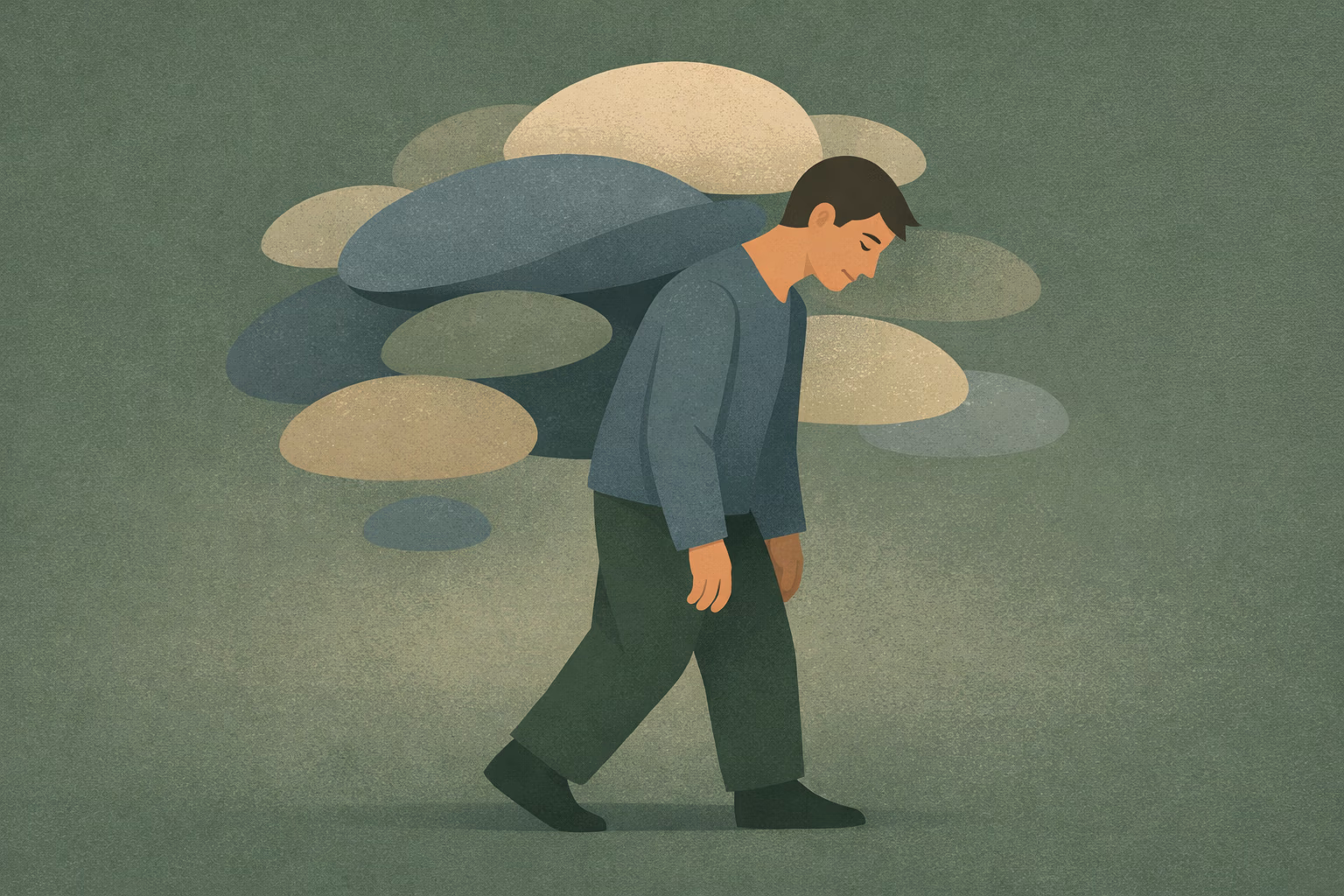
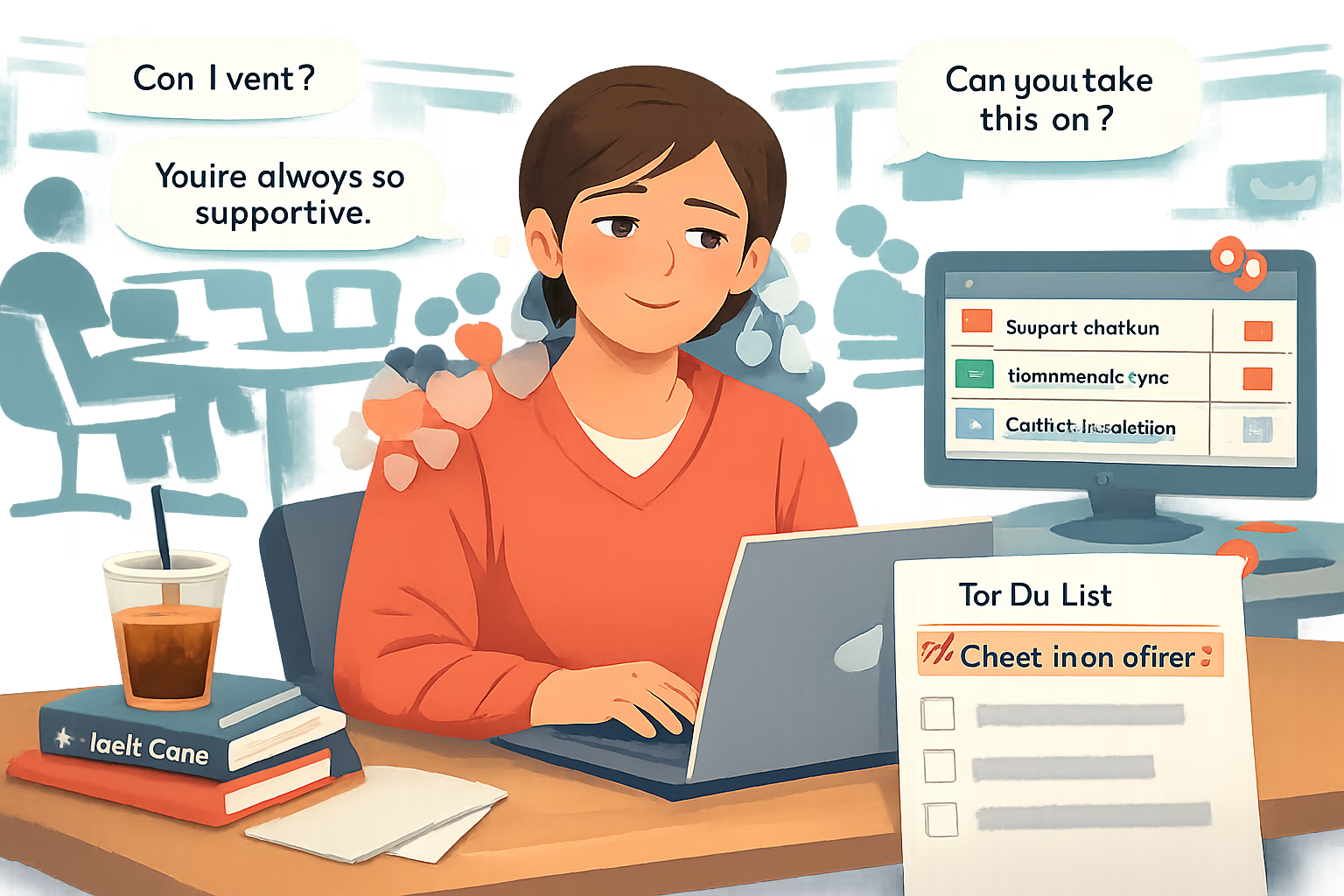
In context: You are “holding things that weren't yours to carry.“ Often, we absorb the “unclosed loops“ of people around us—their anxieties, their tasks, their crises—out of a sense of loyalty or safety. In the Meaning Density Model™, these are “borrowed densities.

Some of what you carry was never yours.
Responsibilities absorbed.
Emotions held for others.
Weight accepted quietly.
Introducing boundary awareness does not require confrontation.
It begins with noticing.
Seeing what does not belong to you creates relief without rupture.
You are allowed to recognize misassigned weight.
Recognition alone begins redistribution, without conflict or guilt.
Build gentle boundary awareness with DojoWell.
Explore DojowellArticles exploring the psychology behind these patterns.
You are "holding things that weren't yours to carry." Often, we absorb the "unclosed loops" of people around us—their anxieties, their tasks, their crises—out of a sense of loyalty or safety. In the Meaning Density Model™, these are "borrowed densities." They take up the same structural room as your own burdens but offer none of the "meaning" that comes from personal completion. You are carrying the weight without the possibility of the "landing."
Start by "gently noticing" the origin of the weight. Ask: "Whose loop is this?" Once you identify a burden as external, its "Meaning Density" changes. You can still care for the person without "storing" their loop in your own architecture. DojoWell suggests "returning the loop" mentally—recognizing that the other person’s growth requires them to close their own circles. This creates a healthy boundary that preserves your capacity for your own life.
One Quiet Window, one insight, one reflection — every Sunday