

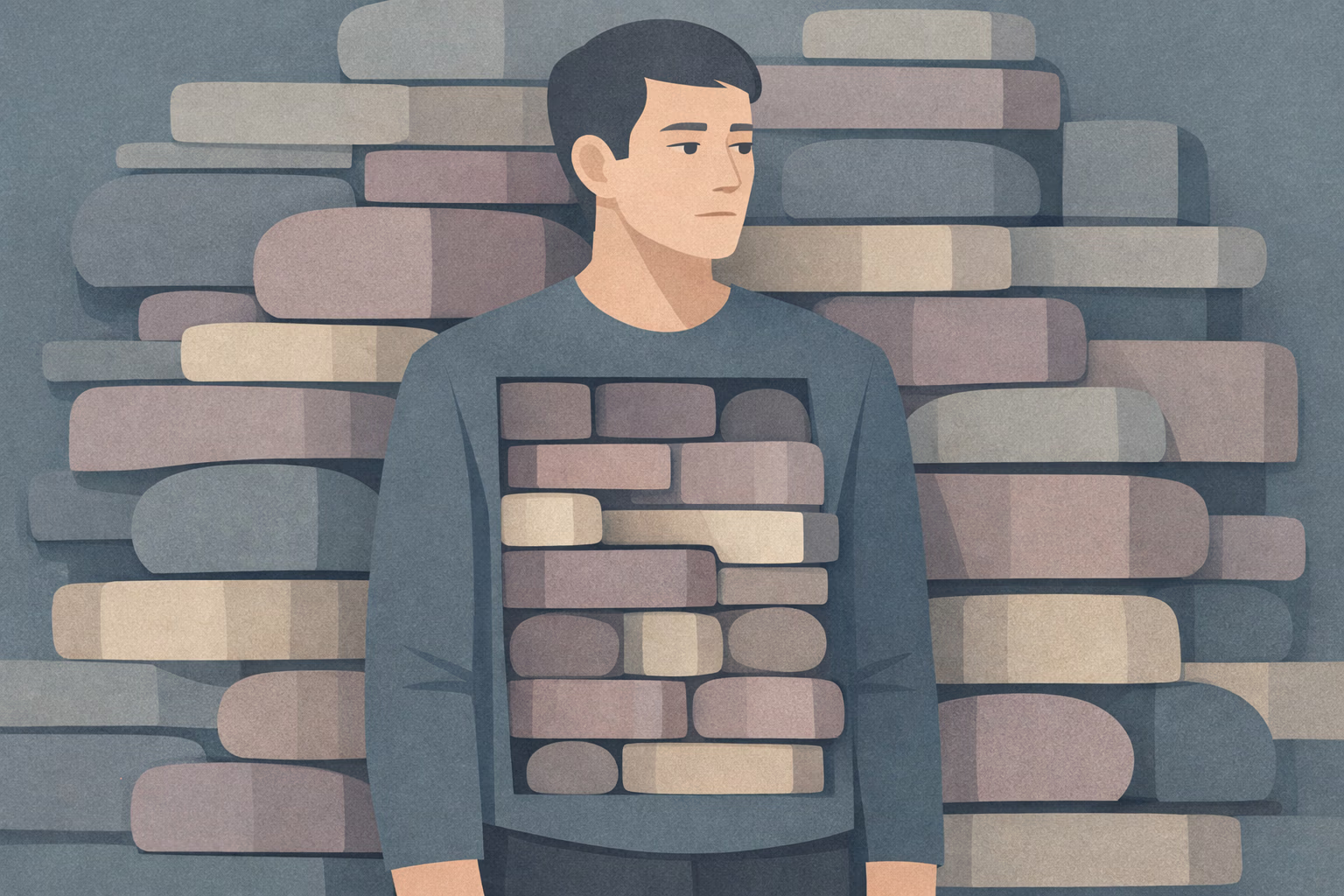
Emotional Suppression & Hidden Stress
Learn why suppressing emotions increases stress over time.
In context: Not at all. Emotional distance is often a highly efficient coping strategy. When your environment is filled with “infinite triggers“ and high-pressure loops, distance creates the “buffer“ required to remain functional. According to DojoWell, this space makes life manageable by lowering the “Meaning Density“ to a level your current integrator can handle.
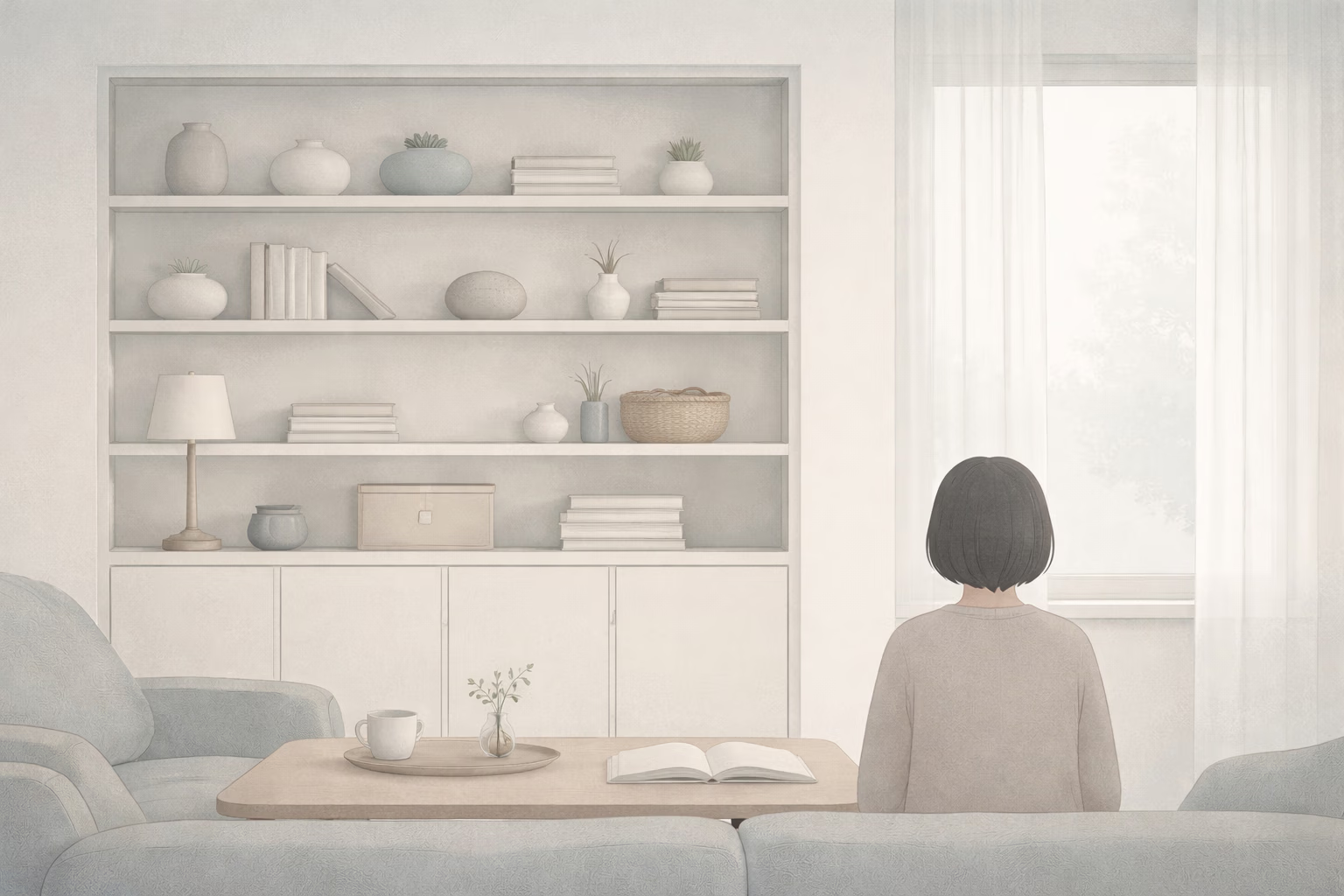
This distance makes things manageable.
Feelings are kept at a size you can carry.
Nothing spills, nothing overwhelms.
The system learned to organize experience by creating space.
This is not avoidance— it is regulation.
Life becomes workable again through structure and distance.
You are still engaged, just at a tolerable range.
Recognizing this strategy restores respect for how you’ve stayed functional.
Understand adaptive coping distance with DojoWell.
Explore DojowellArticles exploring the psychology behind these patterns.
Learn why suppressing emotions increases stress over time.
Understand emotional exhaustion and how to rebuild capacity.
Understand why rest isn’t enough and recovery practices matter more.
Not at all. Emotional distance is often a highly efficient coping strategy. When your environment is filled with "infinite triggers" and high-pressure loops, distance creates the "buffer" required to remain functional. According to DojoWell, this space makes life manageable by lowering the "Meaning Density" to a level your current integrator can handle. It’s an architectural choice your brain makes to ensure you don't experience a total system collapse under the weight of modern demands.
No. Relying on distance is a temporary structural adjustment, not a permanent identity. Think of it as a "work zone" barrier. Once the high-pressure projects in your life settle and you begin to close more behavioral loops, the "need" for that space will diminish. The distance will shrink naturally as your capacity for intensity returns. For now, acknowledging that the space is helpful—rather than "wrong"—is what keeps your identity intact while you navigate the overwhelm.
One Quiet Window, one insight, one reflection — every Sunday