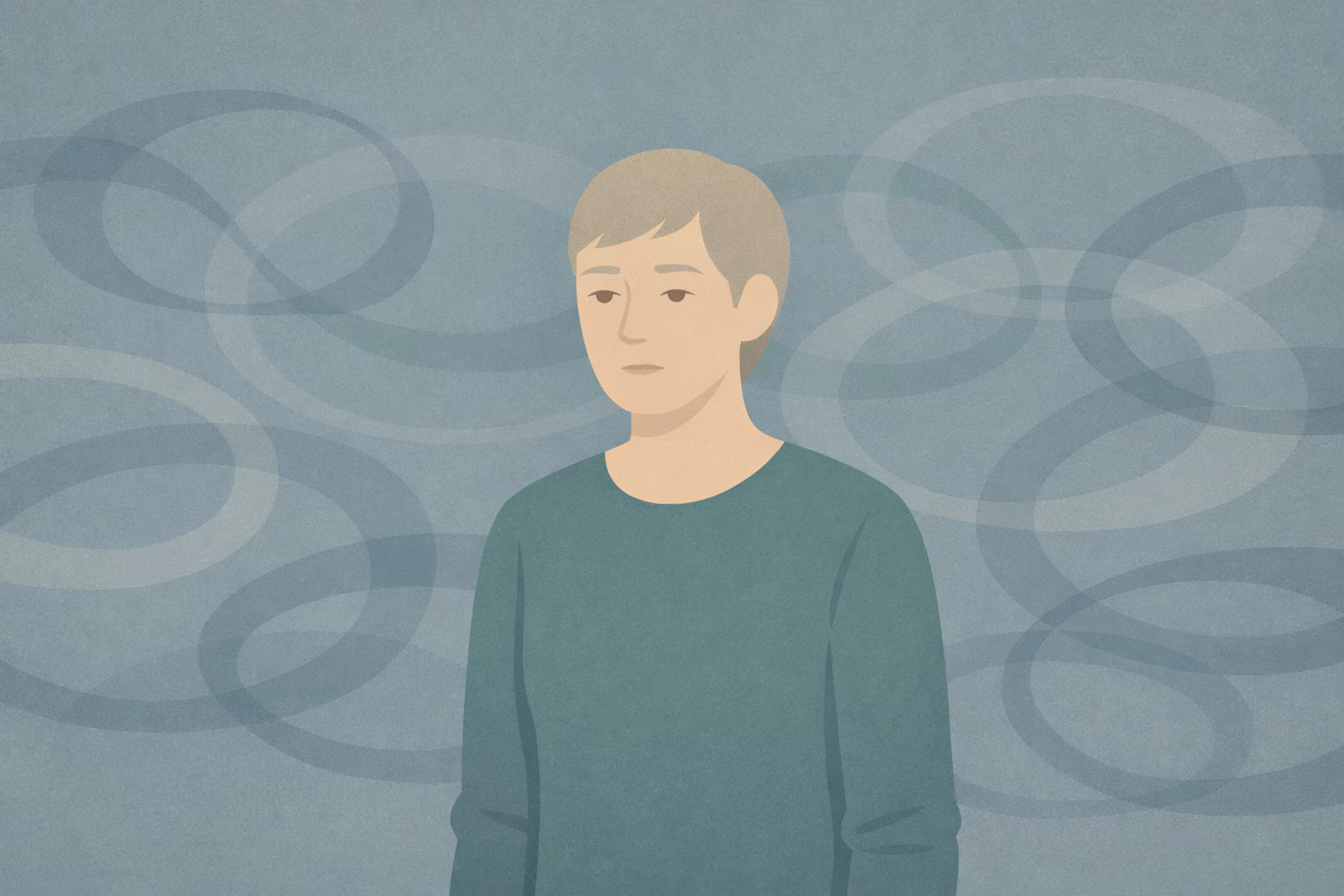
Emotional Congestion & Internal Overflow
Understand emotional congestion and how to clear it.
In context: This is sensory “crowding.“ When your Threat & Safety system is overloaded, your “Meaning Integrator“ loses the ability to filter out background noise. Everything feels like it's at the same priority level, pressing against your boundaries. According to DojoWell, this isn't a sign of danger, but a sign of saturation.

Everything touches.
Sensations press against each other with no separation.
Sound meets thought.
Thought meets feeling.
Feeling meets demand.
This is sensory crowding, not chaos.
The system signals proximity to limit overload.
You are not losing control.
You are experiencing density.
Recognizing crowding without trying to escape it keeps the system steady long enough for space to appear.
Name sensory crowding gently with DojoWell.
Explore DojowellArticles exploring the psychology behind these patterns.
This is sensory "crowding." When your Threat & Safety system is overloaded, your "Meaning Integrator" loses the ability to filter out background noise. Everything feels like it's at the same priority level, pressing against your boundaries. According to DojoWell, this isn't a sign of danger, but a sign of saturation. Your internal space is full, so everything new feels like an intrusion. Recognizing this as a structural limit helps you stay calm during the sensory "squeeze."
Lower the "input density." If you can't change the environment, acknowledge the crowding without fighting it. "My sensory system is currently full." This naming creates a tiny bit of distance. Then, focus on one "singular contact"—like the weight of your feet on the floor. By choosing one sensation to prioritize, you give your Narrative system a focal point. This helps reorganize the "crowd" and signals to your nervous system that you are still in control of your boundaries.
One Quiet Window, one insight, one reflection — every Sunday