

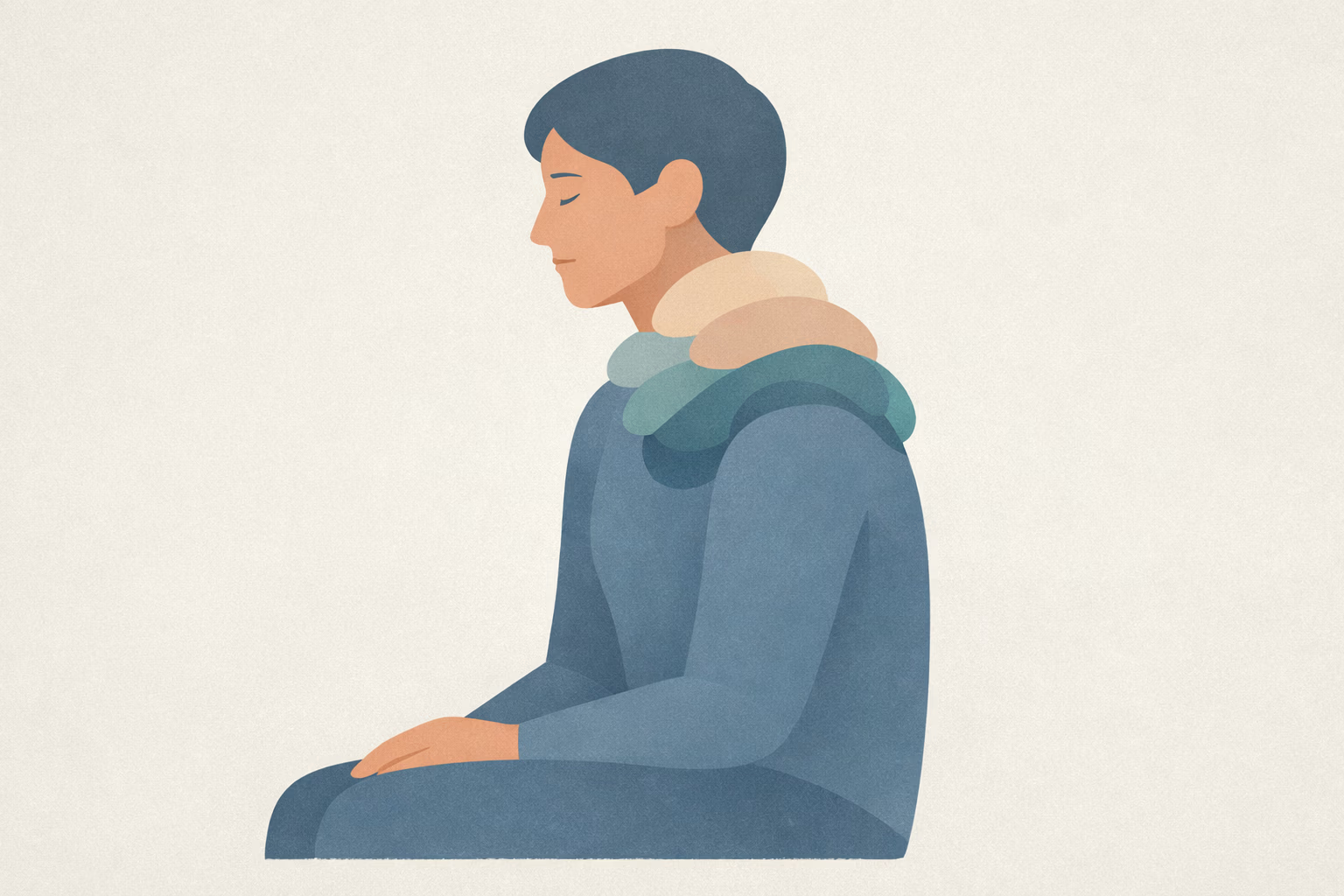
Tension Buildup & Stored Emotional Weight
Learn how emotional tension is stored in the body and how to release it.
In context: It doesn't actually happen fast; it's a “slow compression“ that builds quietly throughout the day. In the Meaning Density Model™, emotional tightness is a structural outcome of your Threat & Safety system narrowing your internal space as demands accumulate.

The tightness did not arrive suddenly.
It layered itself quietly, one thin stretch at a time.
Nothing alarmed you.
Nothing demanded attention.
And yet the space narrowed.
This is how compression forms— without drama, without a clear beginning.
Noticing the build matters more than tracing its cause.
Recognition loosens what urgency would only tighten.
You are not late in seeing it.
You are early enough.
Learn to notice gradual compression with DojoWell.
Explore DojowellArticles exploring the psychology behind these patterns.
Learn how emotional tension is stored in the body and how to release it.
Understand what determines your stress-breaking point.
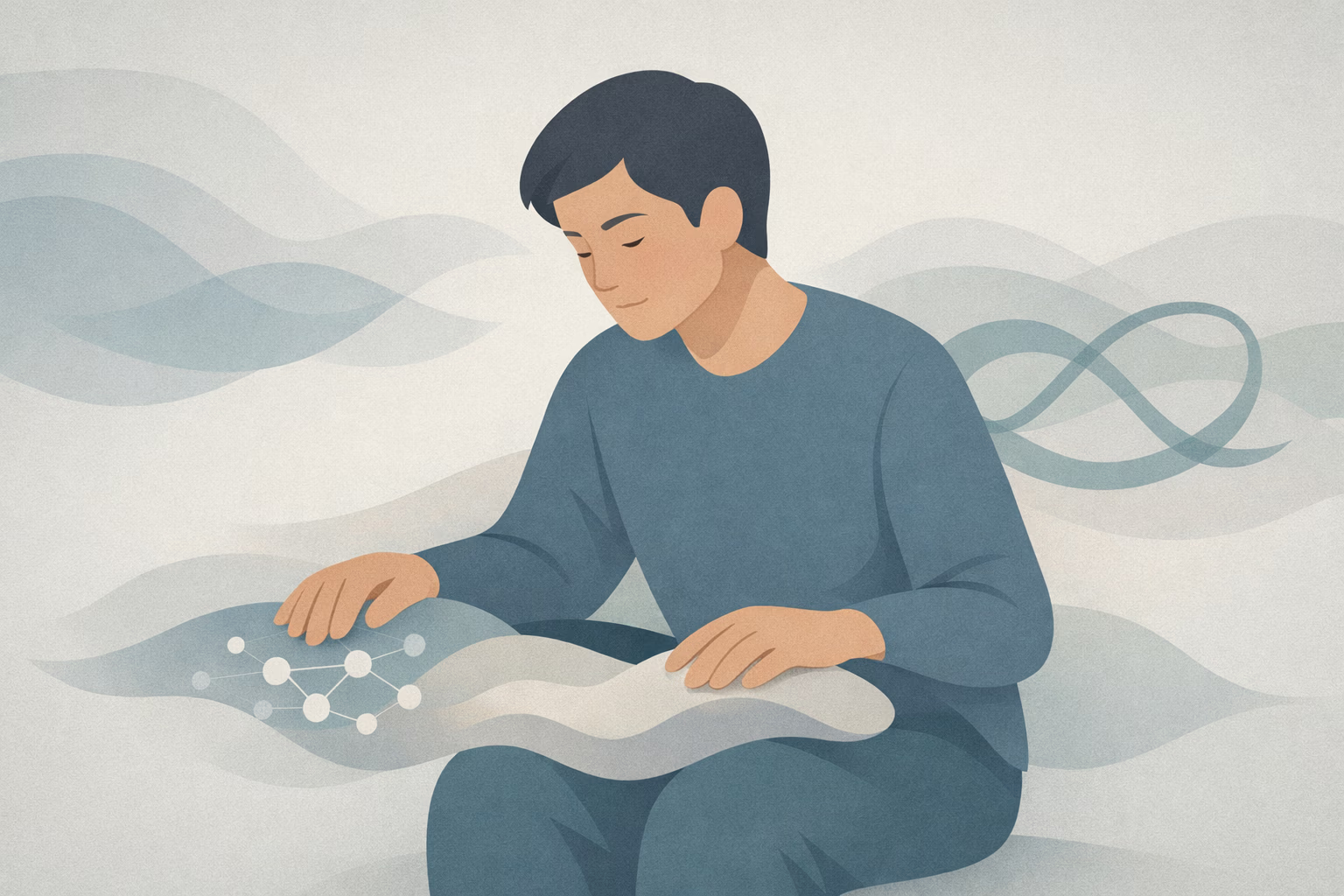
Discover how your nervous system becomes conditioned to stress—and how to reverse it.
It doesn’t actually happen fast; it’s a "slow compression" that builds quietly throughout the day. In the Meaning Density Model™, emotional tightness is a structural outcome of your Threat & Safety system narrowing your internal space as demands accumulate. Because the buildup is gradual and often below conscious awareness, it only feels "sudden" when you finally run out of capacity. Recognizing this tightness early allows you to address the compression before it escalates into a full-scale crisis.
Look for signs of "loop fragmentation"—feeling hurried even with small tasks or a subtle reluctance to pause. When your Narrative system starts rushing or you feel a background sense of "not enough time," that is the signal of slow compression. DojoWell suggests performing a "structural check-in" periodically. If your breathing is shallow or your mind is already "starting" the next three tasks, you are in the entry phase of overload. Naming it early stops the escalation.
One Quiet Window, one insight, one reflection — every Sunday