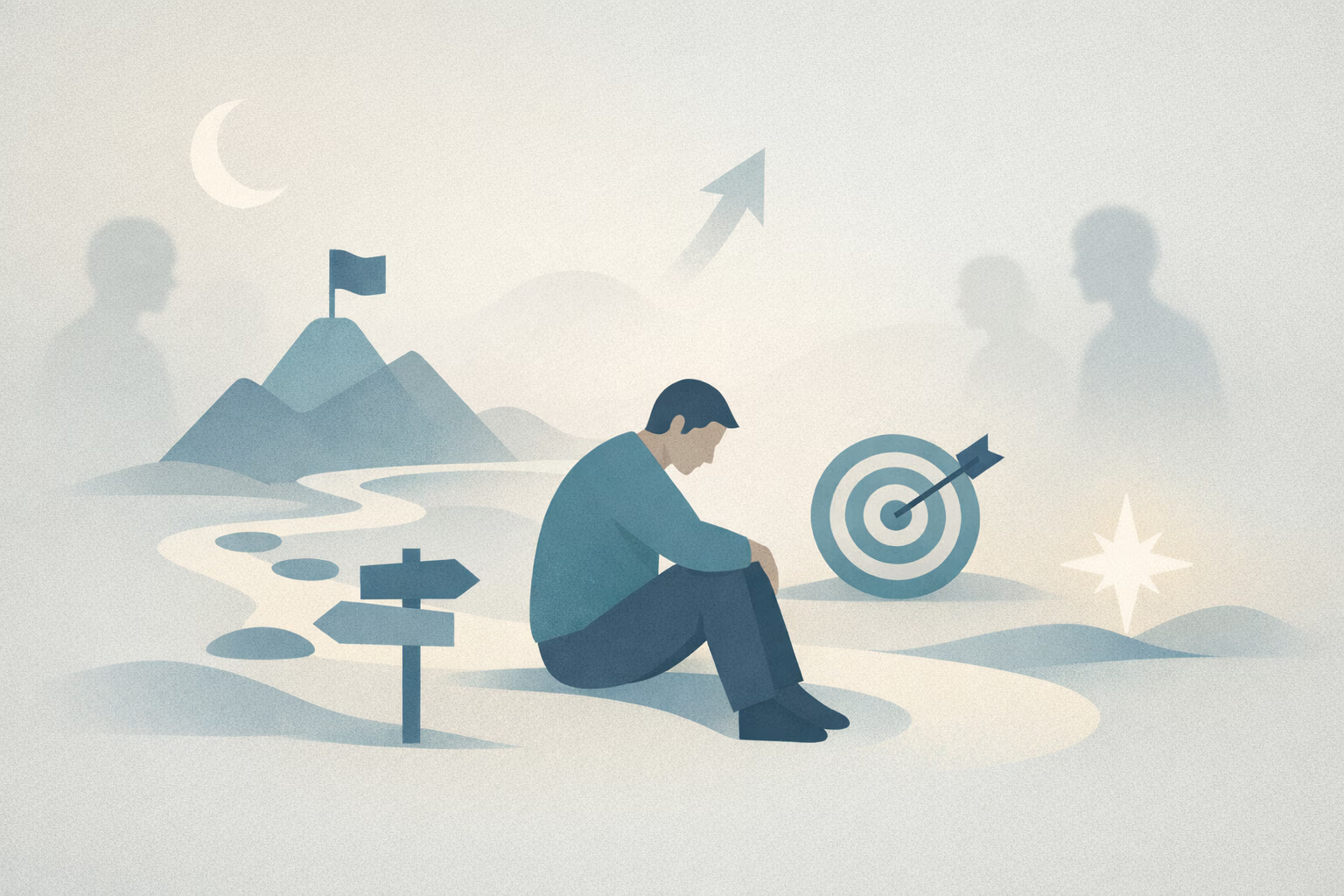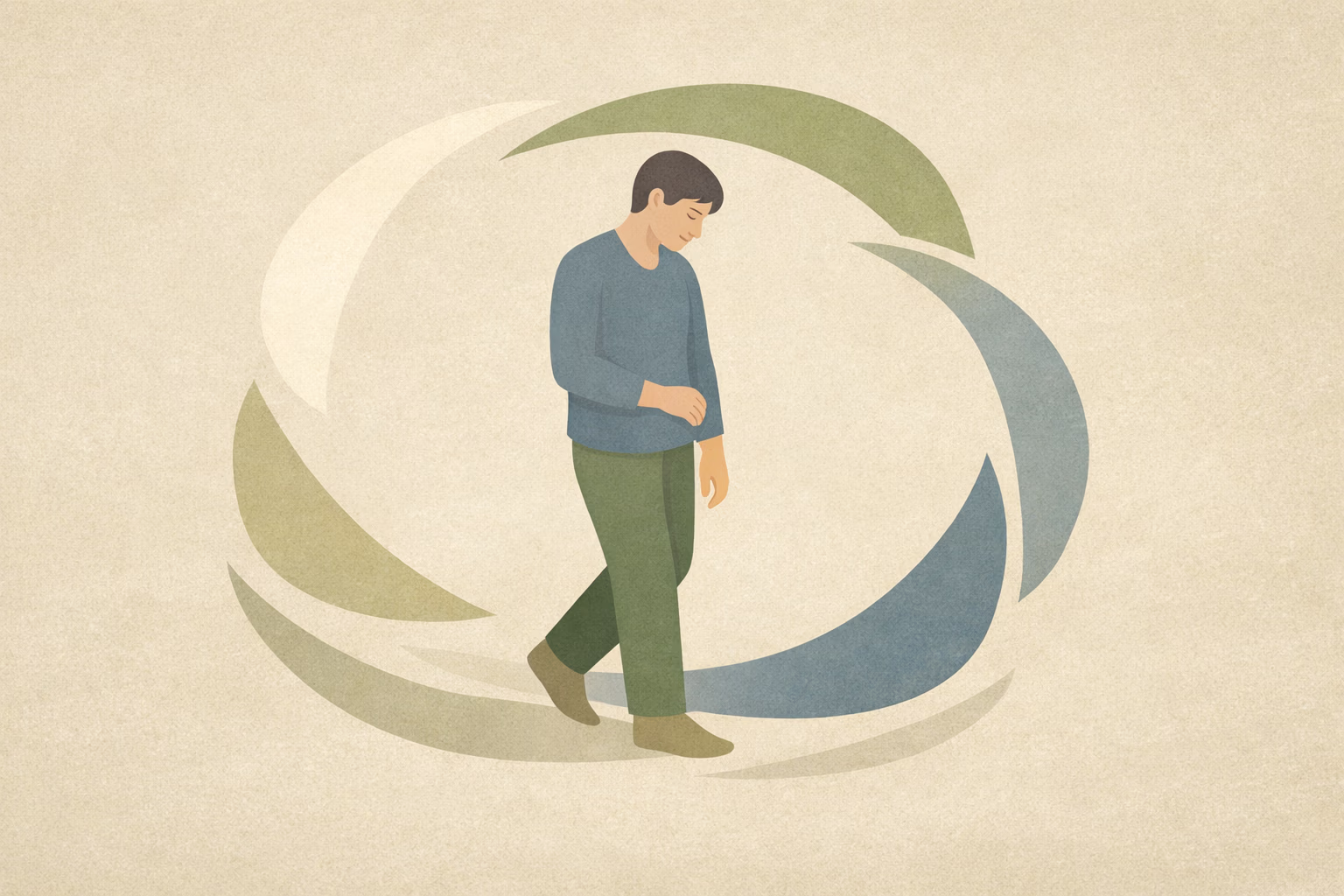
Avoidance Loops: Why You Delay What You Care About

In short: There’s a particular kind of tired that comes from “not doing the thing” when you actually care about it. Not the tired of a full day, but the low-grade drain of carrying something unfinished—an unopened email, an unmade call, a truth you keep circling, a change you keep delaying.
There’s a particular kind of tired that comes from “not doing the thing” when you actually care about it. Not the tired of a full day, but the low-grade drain of carrying something unfinished—an unopened email, an unmade call, a truth you keep circling, a change you keep delaying.
What if postponement isn’t a character flaw, but a protective pattern your system learned to use?
Avoidance loops often show up when something meaningful is on the line: belonging, identity, integrity, loss, grief, or a new chapter that would rearrange your life. In those moments, the body can treat “engaging” as a threat—not because you’re broken, but because your regulation system is doing its job under load.
Avoidance rarely feels dramatic from the inside. It often feels like mild restlessness, a scattered mind, or a strange sense of being busy without being fully present. You can be “functioning” while also sensing that something important is waiting in the background.
That background pressure isn’t just mental. When an experience doesn’t reach completion—when it doesn’t get a clear “done” signal—the nervous system can keep a low-level readiness online, as if it’s still tracking an unresolved situation. Over time, this can feel like living slightly off-center: moving through the day, but not landing in it. [Ref-1]
Sometimes the hardest part isn’t the task—it’s the constant inner tab left open.
Many people assume avoidance happens because the thing is unimportant. Often it’s the opposite: it happens because the thing is deeply important. Core needs—connection, honesty, repair, purpose, rest, belonging—tend to come with real consequences. Approaching them can signal loss of an old identity, disruption of a relationship, or contact with a long-delayed ending.
When the system predicts that contact with something meaningful might bring a surge of intensity, uncertainty, or irreversible change, it may shift toward withdrawal and delay. This isn’t a moral failure; it’s a protective calculation: reduce immediacy, reduce exposure, preserve stability. [Ref-2]
In many lives, there were periods when telling the truth, needing too much, or feeling too much didn’t come with enough support. If the environment didn’t reliably offer comfort, repair, or safety cues, the nervous system had to learn how to keep intensity manageable.
One way it does that is by narrowing contact with what’s activating. Not as “suppression,” but as a practical adaptation: keep life moving, keep the social surface smooth, keep the body from tipping into overwhelm. Avoidance can be the residue of earlier conditions—an old skill still running in a new chapter. [Ref-3]
So the loop isn’t “I’m scared.” It’s “my system doesn’t predict safe completion.”
There’s a reason avoidance persists: it works in the short term. When you postpone, your body often experiences a rapid drop in pressure—less urgency, less confrontation, fewer unknowns. That relief is a real state change.
And control is regulating. Delay can create the sensation of “I’ll handle this later,” which restores a temporary sense of order. Even if nothing is resolved, the system gets a momentary stand-down from activation. [Ref-4]
The problem isn’t that postponement reduces pain. The problem is that it reduces contact without creating completion. The need remains real, but the pathway to meeting it becomes less vivid. Over time, the system can start to feel disconnected: from people, from priorities, from the sense of “this is my life.”
This is one reason avoidance is linked with broader distress patterns. When the system repeatedly learns “relief comes from backing away,” it can lose access to the stabilizing effects of finishing, repairing, or choosing. The person doesn’t become worse; the environment inside them becomes less coherent. [Ref-5]
Relief can quiet the alarm, but it can’t build the bridge.
An avoidance loop is a self-reinforcing cycle: something meaningful activates the system; the system delays; relief follows; and the brain tags delay as effective. The next time the meaningful thing appears, the pathway of withdrawal is already primed.
Over time, this can create a split experience: one part of you keeps pointing toward what matters, and another part keeps organizing around not touching it. That’s fragmentation—not as a diagnosis, but as a structural result of repeated incompletion. Longitudinal work on experiential avoidance suggests that persistent avoidance predicts ongoing difficulty across emotional disorders, likely because the loop prevents resolution and reorganization. [Ref-6]
Not moving isn’t the same as resting—especially when something essential is still pending.
Avoidance doesn’t always look like hiding. It often looks like being “responsible,” “productive,” or “easygoing”—anything that keeps the deeper contact postponed. In grief and emotional pain, for example, avoidance can show up as staying functional while remaining uncompleted. [Ref-7]
None of these are identities. They’re regulatory moves—ways to keep intensity below threshold when completion feels risky.
Prolonged avoidance can dull the internal signals that normally guide a life: preference, aversion, longing, satisfaction, and the sense of “this fits.” When the nervous system repeatedly backs away from what matters, it often reduces overall sensitivity to protect against repeated activation.
That can look like numbness, flatness, or a vague sense that nothing is quite worth it. It can also look like becoming overly guided by external cues—metrics, approval, urgency—because inner orientation feels less available. The person hasn’t lost values; the system has lost clarity under load. [Ref-8]
When meaning is postponed long enough, it can start to feel unreal—even though it’s still true.
Relief is a powerful teacher. Each time you step away and feel better, your nervous system learns a simple association: “approach equals activation; withdrawal equals safety.” This can make the avoided topic feel increasingly charged, not because it became more threatening, but because your system has practiced not completing it.
Eventually, even small contact—thinking about the conversation, opening the document, acknowledging the need—can spike activation quickly. The body interprets that spike as proof that the thing is dangerous, which strengthens the loop. This is one reason avoidance can expand over time, generalizing into more areas of life. [Ref-9]
There’s a common misunderstanding that the solution to avoidance is more motivation. But avoidance isn’t primarily a motivation problem—it’s a safety-and-closure problem. When inner conditions don’t support completion, the system defaults to control and delay.
When safety cues increase—through predictability, support, enough time, and reduced overload—deep needs can surface with less volatility. Not as “insight,” not as a dramatic breakthrough, but as a quieter, more workable signal. The need becomes something the system can hold without immediate shutdown or urgency. [Ref-10]
Sometimes what changes isn’t the truth. It’s the capacity to stay with it long enough for it to become livable.
Humans regulate in connection. When a truth has relational consequences, the nervous system often looks—consciously or not—for signs that contact will be met with steadiness rather than escalation. A calm, non-punitive presence can change what the body predicts will happen next.
This is why safe relational spaces matter. Not because someone “fixes” you, but because being witnessed without pressure reduces the need for control. It becomes easier to stay in contact long enough for an experience to reach an ending, a clarification, or a clean next step. Many clinical writers note how distraction and numbing weaken this process by removing the stabilizing effects of contact and support. [Ref-11]
It’s not vulnerability as a virtue. It’s support as a nervous-system condition for completion.
As avoidance loosens, people often report something surprisingly simple: they can tell what matters again. Not as heightened emotion, but as clearer internal direction—less static, less second-guessing. The mind gets less busy because fewer “open tabs” are running in the background.
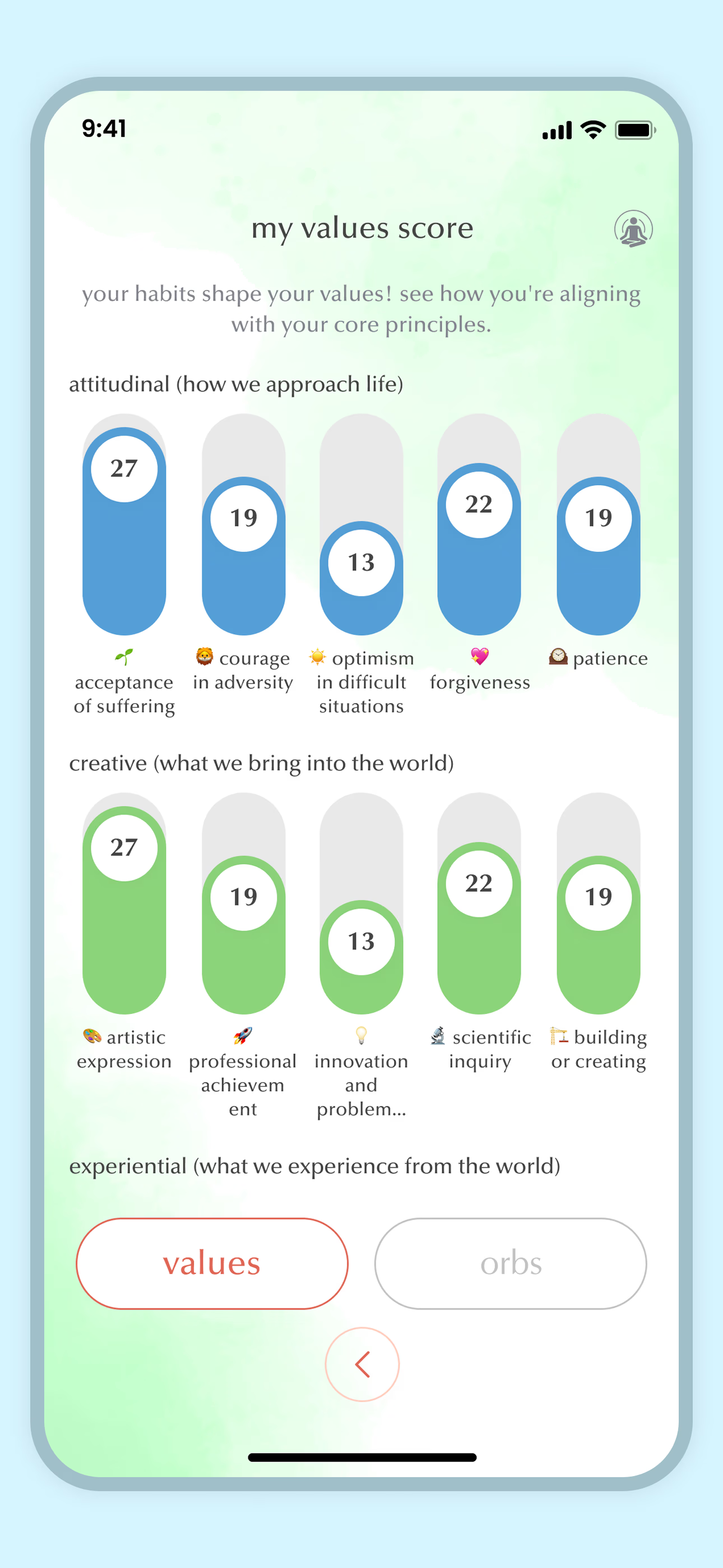
Values become easier to identify because they’re no longer constantly interrupted by the need to manage activation. There’s often a renewed ability to feel satisfied by completion—by a conversation that reaches an endpoint, a choice that becomes real, a season that gets a proper closing. Reflections on numbing often highlight how stepping away from constant distraction allows life to regain definition and depth over time. [Ref-12]
Clarity isn’t always a big revelation. Sometimes it’s just the return of clean signals.
Agency isn’t force. It’s the experience of having options while staying regulated enough to choose. When avoidance runs the show, options collapse: the only move that reliably reduces pressure is delay. When regulation improves and experiences reach completion, the option set widens.
This is the deeper shift: not “facing feelings,” but restoring the body’s ability to approach what matters without immediately needing escape. Over time, regulated contact allows the system to update its learning: approach can lead to closure, repair, or a clean ending—not only to overwhelm. Clinical discussions of experiential avoidance often describe how repeated avoidance maintains distress because it blocks this updating process. [Ref-13]
When the system trusts that contact can end well, avoidance no longer has to work so hard.
If you’ve been postponing what your soul needs most, it may not be because you don’t care. It may be because caring creates a level of consequence your nervous system hasn’t felt resourced to carry. Avoidance can be an intelligent attempt to prevent rupture—especially when your system predicts that truth will cost too much.
But meaning doesn’t disappear just because it’s delayed. It waits, and it keeps signaling. And when life begins to feel more coherent again, it’s often not through pressure, but through the gentle restoration of conditions that allow completion—so the need can move from “haunting” to “integrated.” This general idea—that emotional avoidance can quietly erode life satisfaction and direction—shows up often in popular writing as well. [Ref-14]
The most hopeful thing about avoidance loops is that they’re not identities. They are patterns that made sense under certain loads and conditions. When those conditions change—when support, safety cues, and time-to-complete return—what felt impossible can become simply human again.
Not perfect. Not optimized. Just more settled: fewer open tabs, more honest orientation, more space for what’s real. And in that space, meaning isn’t something you manufacture; it’s something that arrives when your life is allowed to finish what it started. [Ref-15]
From theory to practice — meaning forms when insight meets action.
Often it's the opposite of what you'd guess: you postpone because the thing matters too much, not too little. Core needs — connection, honesty, repair, purpose — come with real consequences: loss of an old identity, relational rupture, contact with a long-delayed ending. The Threat & Safety System reads that potential intensity and shifts toward delay and control. It's not laziness or weakness; it's a protective calculation under load. Avoidance loops form because your system doesn't yet predict safe completion. The question isn't 'why don't I care' — it's 'why doesn't my body trust this contact will end well.'
Each time you step away from something meaningful, your body experiences a real drop in pressure. That relief teaches a simple association: approach equals activation, withdrawal equals safety. The brain tags delay as effective, so the next time the same need surfaces, the withdrawal pathway is already primed. The Avoidance Loop strengthens through repetition rather than logic. Even small contact — opening the document, thinking of the conversation — starts spiking activation, which the body interprets as proof the thing is dangerous. The loop expands because relief quiets the alarm but never builds the bridge toward closure.
It rarely looks like hiding. Often it looks like being responsible, productive, or easygoing — anything that keeps deeper contact postponed. Staying busy so there's no quiet space for the real issue. Endless research and planning without entry. Numbing through scrolling, food, shopping, or constant audio. Chronic dissatisfaction that never crystallizes into a decision. Delaying conversations that would clarify a relationship. None of these are identities — they're regulatory moves to keep intensity below threshold when the system doesn't predict safe completion. Loop Sovereignty starts with seeing them as patterns, not character.
Avoidance isn't primarily a motivation problem — it's a safety-and-closure problem, so more pressure rarely helps. The loop loosens when conditions support completion: predictability, support, enough time, reduced overload, and compassionate witnessing through co-regulation. Humans regulate in connection, so a calm non-punitive presence changes what the body predicts contact will cost. As regulation improves, the system learns that approach can lead to repair or a clean ending, not only overwhelm. Then the Identity & Meaning System gets clearer signals back — fewer open tabs, cleaner orientation, and the renewed satisfaction of finishing what was started.
From Science to Art.
Understanding explains what is happening. Art allows you to feel it—without fixing, judging, or naming. Pause here. Let the images work quietly. Sometimes meaning settles before words do.
One Quiet Window, one insight, one reflection — every Sunday