
Stress Deactivation: Techniques to Exit Fight-or-Flight Fast
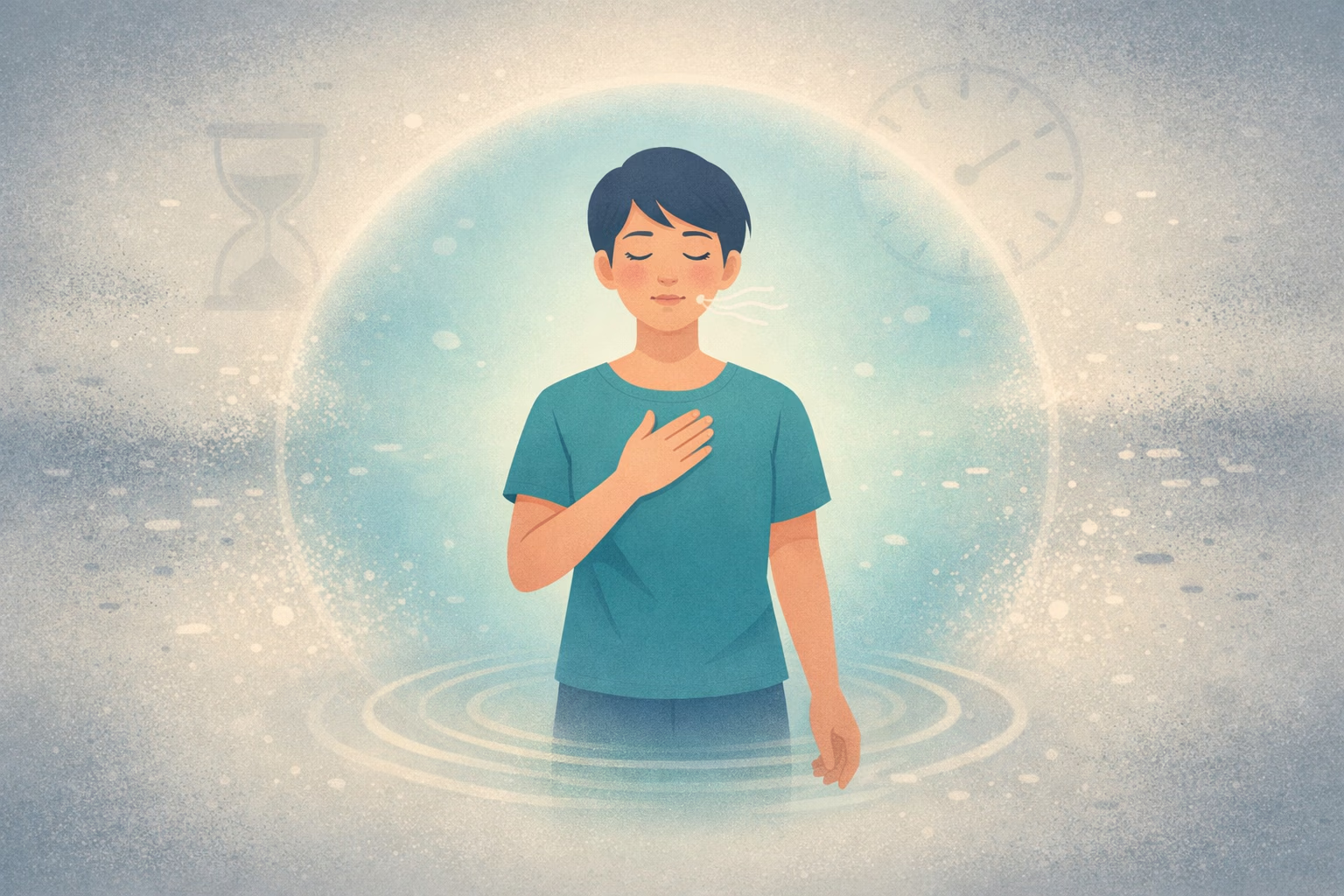
In short: Breathing apps can feel like a small miracle: a few minutes of paced inhale and exhale, and the body softens. The chest loosens, thoughts slow down, and life becomes more workable again—at least for a moment.
Breathing apps can feel like a small miracle: a few minutes of paced inhale and exhale, and the body softens. The chest loosens, thoughts slow down, and life becomes more workable again—at least for a moment.
But many people notice a confusing pattern: the calm fades quickly, and the same tension returns. That doesn’t mean the tool “isn’t working,” and it doesn’t mean you’re doing it wrong. It often means the nervous system got a short-term safety cue without the longer-term completion that tells it, we’re done now.
If breathing helps so much in the moment, why doesn’t it always stick?
For a lot of people, a breathing session creates a noticeable downshift—sometimes within 30–90 seconds. And then, later that day, the tightness is back. The urge to check the app returns. The body seems to “forget” the calm.
This isn’t proof that the calm was fake. It’s more like a temporary ceasefire. The system got a signal that things are safer right now, but the broader conditions that keep stress activated—uncertainty, unresolved tasks, social pressure, sensory overload—didn’t actually reach closure. So activation reappears when the next demand hits. [Ref-1]
Relief can change state. Closure changes the baseline.
Controlled breathing influences the autonomic nervous system—the part that adjusts heart rate, breathing rhythm, digestion, and readiness. Slower, steadier respiration tends to support parasympathetic activity, which is associated with calming and recovery. Many people feel this as warmth, a quieter mind, or a sense of space.
In other words, breathing apps can work because they provide a clear physiological cue: a rhythm the body can entrain to. That cue can briefly lower arousal and reduce the intensity of stress signals, especially during acute strain. [Ref-2]
But physiology is context-sensitive. If the environment continues to deliver “not done” signals—unfinished loops, rapid evaluation, ambiguous threat—the body may re-escalate quickly once the guided rhythm ends.
In more stable environments, nervous system regulation is often embedded in life: movement that resolves physical readiness, social contact that conveys safety, and predictable cycles of effort and rest. Regulation isn’t something a person repeatedly “does” to themselves; it’s something that happens when conditions allow stand-down.
Modern life asks for sustained performance without clear endpoints—messages without endings, work without boundaries, news without resolution. In that setting, tools can become substitutes for completion. You can feel calmer, but still be living inside a stream of unfinished signals.
When the system rarely receives a true “all clear,” it may start to rely on strong, immediate cues (like an app session) rather than developing trust in ordinary signals. Over time, that can resemble a kind of learned dependence on external resets. [Ref-3]
Breathing apps aren’t only about respiration. They also provide structure: a countdown, a soothing voice, predictable timing, and a clear endpoint. In moments of overwhelm, that structure can function as a portable safety cue—something reliable when everything else feels uncertain.
They also offer a sense of being accompanied. Even without another person present, guidance can reduce cognitive load: you don’t have to decide what to do next; you just follow. That reduction in demand can be part of why the body settles. [Ref-4]
So if the app reliably creates calm, why not just use it whenever stress appears?
It’s easy to assume that repeated calming experiences stack into lasting resilience. Sometimes they do, especially when the rest of life supports recovery. But frequently the pattern is different: the app becomes a reset button that restores function temporarily, while the underlying load continues.
When the practice stops, the system returns to the same pressures and the same incomplete loops. The result can feel like a personal inconsistency—“I was fine after the session, so why am I back here?”—when it’s often a structural reality: calm was achieved, but closure was not. [Ref-5]
An Avoidance Loop isn’t about cowardice or denial. It’s what happens when short-term symptom relief becomes the primary way a system manages ongoing strain. The body learns: when discomfort spikes, escape into a regulating cue. That can be smart in emergencies. The issue is when it becomes the main strategy in non-emergencies, because the original stressors stay uncompleted.
In that loop, breathing is used to mute consequences rather than to support completion. The person may feel temporarily steadier, but the environment stays unchanged, boundaries remain unclear, and the nervous system keeps receiving “still pending” signals.
This can show up especially in work contexts where demands are high and recovery is thin—conditions that already push people toward disengagement and short-term coping. [Ref-6]
None of these patterns are moral failings. They’re predictable outcomes when stress is chronic and the system is trying to keep you functional.
These are signals that regulation is being attempted inside a system that isn’t receiving enough completion.
Breathing can change state. But lasting stability often requires something deeper than a state change: experiences need to complete into a sense of self who can move through stress and come out the other side. That kind of settling is not an insight or a concept; it’s a whole-system “stand-down” that tends to happen when life contains real endpoints.
If breathing is the only lever, the nervous system may never get practice in the broader sequence: detect strain, orient to what matters, make a coherent response, and then receive closure. Without that sequence, the app can become a ritualized pause that feels good but doesn’t accumulate into identity-level trust.
This is part of why structured, multi-component programs often show broader benefits than isolated techniques—they create conditions for completion, repetition, and coherence, not just momentary calm. [Ref-8]
Quick relief is powerful learning. When a tool reliably reduces discomfort, the brain tags it as high value. The nervous system becomes more likely to reach for it again—especially when the surrounding environment keeps generating activation.
That reinforcement can happen without any long-term shift. The system isn’t being irrational; it’s doing what bodies do: prioritizing immediate stabilization under load. Over time, this can create a narrow pathway—stress arises, app is used, stress returns, app is used again—while the deeper conditions that would allow a lasting baseline change remain unaddressed.
By contrast, sustained changes in regulation tend to correlate with repeated experiences that include both downshifting and completion—enough for the brain and body to update what “normal” is. [Ref-9]
It can help to separate two different functions: downshifting and integration. Downshifting is the immediate physiological easing you may feel during guided breathing. Integration is the longer process where your system starts to expect safety because life contains completion—clear edges, recoverable pacing, and actions that align with what matters to you.
Breath can participate in that larger arc when it is not the entire arc. When breathing is paired with contexts that create closure—predictable routines, embodied settling, supportive relationships, and coherent choices—calm is more likely to persist beyond the session. That persistence isn’t willpower; it’s a nervous system that has started to receive consistent “done” signals. [Ref-10]
Not everything that calms you changes you. But calming can be part of change when the rest of life can actually land.
Many people assume the key is the right technique, done with enough effort. But adherence research around mindfulness practices repeatedly points to something more ordinary: structure, modeling, and cues in the environment. People tend to stay with practices when they are supported by context, not when they are asked to self-generate motivation indefinitely. [Ref-11]
This matters for breathing apps because the app provides a neat, controlled pocket of regulation—but the rest of the day may be un-cued, socially unbuffered, and constantly interrupted. Without supportive conditions, the tool is doing a difficult job alone.
When immediate relief is combined with experiences that build capacity over time, people often notice a different kind of change. Not “I can force calm,” but “my system returns to baseline more easily.” That return is a marker of reduced load and restored closure, not emotional intensity.
In research on mindfulness-based interventions, outcomes are often linked to consistency and integration into daily life rather than isolated sessions. Home practice and follow-through can be challenging, which is exactly the point: the barrier is often conditions and design, not a character flaw. [Ref-12]
The most stabilizing role for breathing often isn’t as an emergency exit, but as a small part of a coherent life system—one where demands have edges, recovery is real, and values are not constantly postponed.
In that role, breathing isn’t asked to erase modern overload by itself. It becomes a companion to completion: a way the body transitions between states when the day actually contains transitions. And because it’s no longer the only safety cue, it can feel less urgent and more trustworthy.
It’s also worth noting that many people abandon app-based mindfulness over time, especially when life is disrupted—another reminder that tools depend on conditions, cues, and support, not just personal intention. [Ref-13]
What would it be like if calm didn’t have to be generated on demand—because your day offered more natural “done” moments?
A breathing app can be a legitimate form of scaffolding: a temporary support that helps the nervous system downshift when life is loud. If you lean on it often, that’s not evidence that you’re broken. It may be evidence that your system is managing more load than it can complete.
Lasting change tends to come from environments and routines that allow closure, plus supports that help practices carry into real life. Many community and structured approaches show benefits not because they are “more disciplined,” but because they make completion more likely. [Ref-14]
When you view the app as one safety cue among many—rather than the thing that must keep you okay—agency tends to feel less like effort and more like orientation.
Breathing apps can offer genuine relief. And relief matters. But long-term regulation usually becomes sturdier when the body repeatedly experiences: activation, response, completion, rest—enough times that “settling” becomes believable.
That kind of stability is not a mindset and not a motivational achievement. It’s what emerges when tools are embedded in supportive conditions and identity-aligned rhythms—so the nervous system doesn’t have to keep starting over. Even studies that focus on building app habits point toward the same truth: adherence and context shape outcomes as much as the technique itself. [Ref-15]
From theory to practice — meaning forms when insight meets action.
A breathing session can downshift the body in 30-90 seconds, but the calm often fades because the broader conditions keeping stress activated — uncertainty, unresolved tasks, social pressure — never reached closure. The system received a temporary safety cue without the longer-term completion that tells it we're done now. Relief can change state; closure changes the baseline. Activation reappears the moment the next demand hits, not because the technique was fake, but because a controlled rhythm can't override an environment that keeps issuing not done signals to the Threat & Safety System.
It becomes an Avoidance Loop when short-term symptom relief turns into the primary way the system manages ongoing strain. The body learns: when discomfort spikes, escape into a regulating cue. That's smart in emergencies but costly as a default in non-emergencies, because original stressors stay uncompleted. Breathing then mutes consequences rather than supporting completion. Signs include repeated rescue sessions at the same moments each day, relief without transfer, decreased tolerance for ordinary activation, and shorter windows of calm. None of this is a moral failing — it's predictable when an app is asked to carry chronic load alone.
They can be, but only when paired with conditions that allow completion. Apps offer a clear physiological cue — a rhythm the body can entrain to — plus structure, soothing voice, and predictable timing that act as a portable safety cue during overwhelm. What they often miss is integration: experiences that complete into a sense of self who can move through stress and come out the other side. Sustained regulation correlates with repeated cycles of activation, response, completion, and rest — enough times for Meaning Density to build. Breath as one cue among many works; breath as the entire arc rarely transforms baseline.
Quick relief is powerful learning. When a tool reliably reduces discomfort, the brain tags it as high value and the Reward & Stimulation System makes you more likely to reach for it again — especially when the surrounding environment keeps generating activation. That reinforcement can happen without any long-term shift. The system isn't being irrational; it's prioritizing immediate stabilization under load. The narrow pathway becomes: stress arises, app is used, stress returns, app is used again. Lasting change requires the rest of life to actually land — predictable routines, embodied settling, supportive relationships — so calm isn't generated on demand.
From Science to Art.
Understanding explains what is happening. Art allows you to feel it—without fixing, judging, or naming. Pause here. Let the images work quietly. Sometimes meaning settles before words do.
One Quiet Window, one insight, one reflection — every Sunday