Emotional Eating: How Your Brain Uses Food to Escape Stress
In short: Emotional eating is often described as “eating your feelings,” but that phrase can miss what’s most true for many people: eating becomes a fast way to reduce internal pressure when the nervous system is running hot, stretched thin, or stuck in unfinished loops. What if the urge to eat isn’t a lack of control—what if it’s your system searching for a reliable downshift?
Emotional eating is often described as “eating your feelings,” but that phrase can miss what’s most true for many people: eating becomes a fast way to reduce internal pressure when the nervous system is running hot, stretched thin, or stuck in unfinished loops.
What if the urge to eat isn’t a lack of control—what if it’s your system searching for a reliable downshift?
In modern life, it’s common to carry too much that doesn’t fully resolve: stress that doesn’t complete, conversations that don’t close, work that never feels done, and emotions that don’t get a clear endpoint. Food can become an available, predictable “done signal”—even when the body wasn’t asking for fuel.
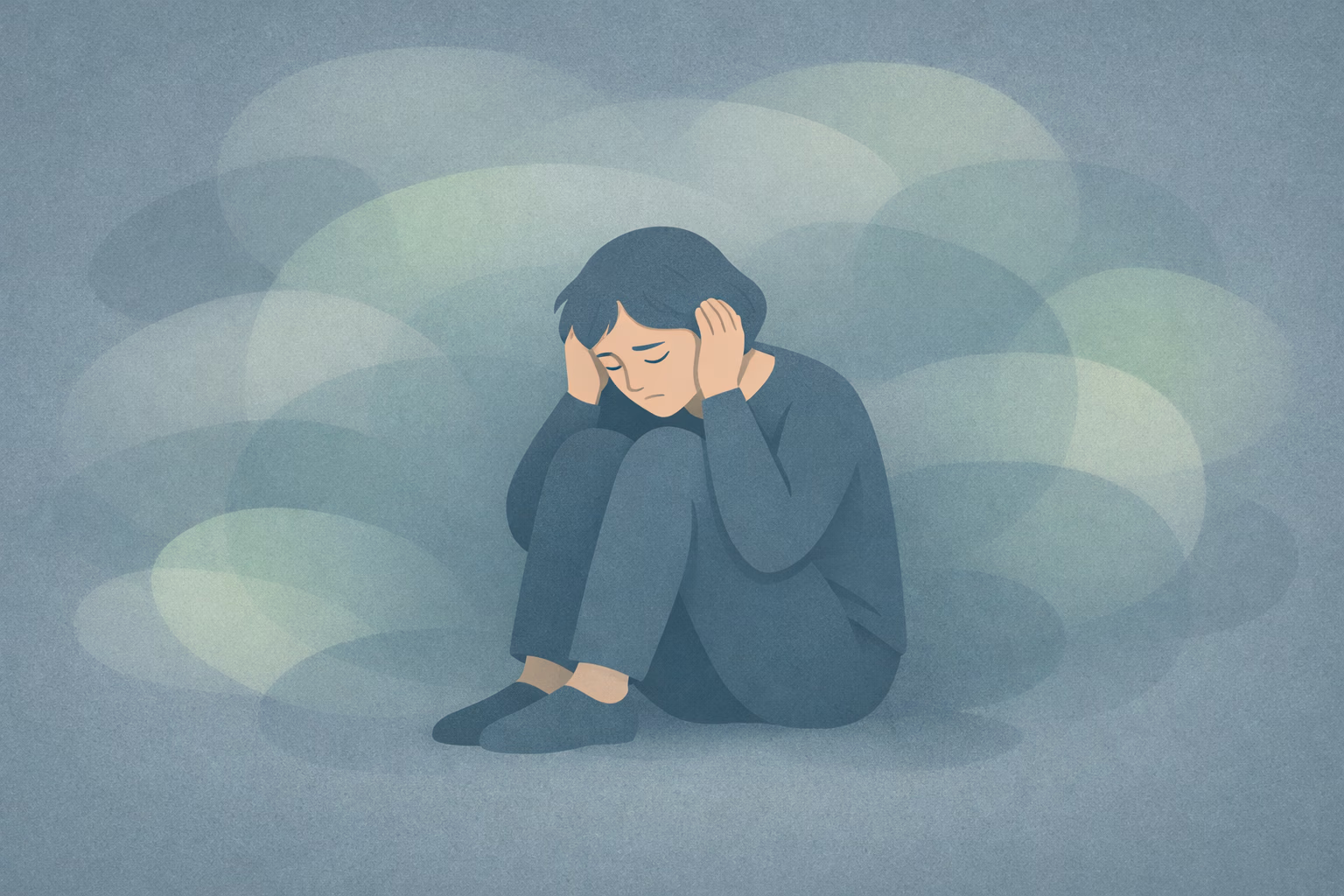
Emotional eating often shows up as a specific kind of urgency: not “I’d like something,” but “I need something now.” The body may not be asking for nourishment, yet the system registers a rising pressure that wants a quick exit.
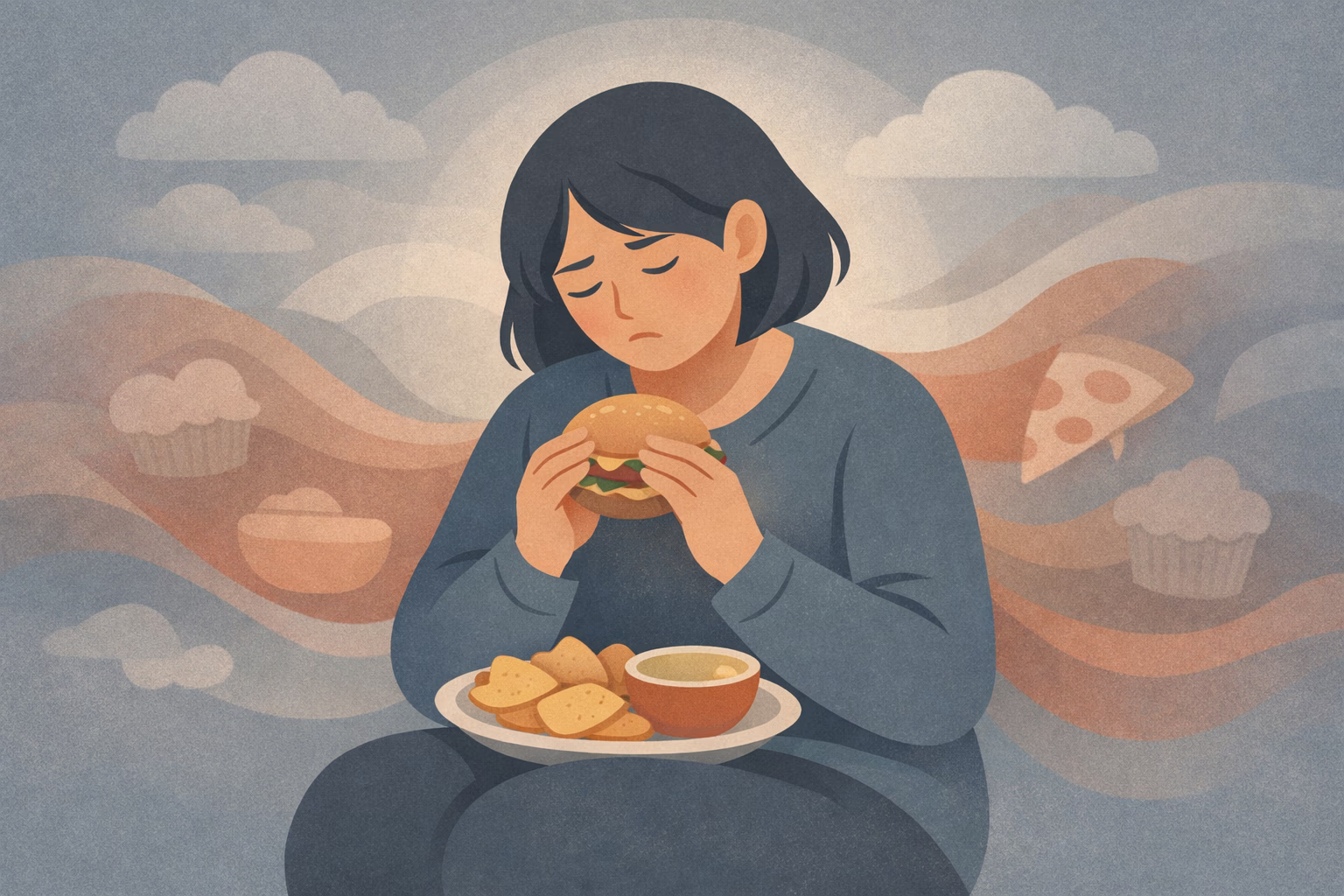
After eating, there’s frequently a brief settling—followed by guilt, disappointment, or a flattened emotional tone. That after-state can be confusing: relief and regret coexisting, as if the body got what it needed while the mind labels it a mistake. In many cases, what got soothed wasn’t hunger—it was activation. [Ref-1]
Sometimes the food isn’t the point. The quiet is.
Certain foods reliably shift the nervous system’s state. Sweet, salty, fatty, and highly palatable foods can activate reward and soothing pathways, creating a rapid sense of relief or “softening” inside the body. [Ref-2]
This is not imaginary and not a character issue. It’s a built-in biology: the brain is designed to pay attention to calorie-dense foods and to experience them as rewarding. When emotional intensity is high, that reward can function like a short-term stabilizer—reducing the felt spike without completing the underlying experience that created the spike.
Across human history, food has been tightly linked with safety: having enough meant survival, shelter, and future possibility. Warmth, fullness, and sweetness became cues that things were okay—especially during stress. [Ref-3]
In earlier environments, obtaining rich food required effort and time, and eating often happened within shared rhythms—meals, seasons, community. In modern abundance, the same soothing circuitry can be activated instantly and repeatedly, with very little friction. What once supported survival can become an overused regulation shortcut when life is chronically loaded.
When the system is overwhelmed, it looks for something concrete: a sensory anchor, a predictable sequence, a fast reduction in intensity. Eating offers a full stack of “calming inputs” at once—taste, texture, chewing, swallowing, temperature, and a clear start-and-finish ritual. [Ref-4]
That’s why emotional eating can feel grounding even when it doesn’t match physical hunger. It creates an immediate structure: a single task with a clear endpoint. In a day full of open tabs—mental, relational, logistical—food can deliver a momentary sense of completion.
The tricky part is that relief and resolution can feel similar in the moment. Relief lowers intensity; resolution creates closure. Emotional eating often delivers the first without the second, which is why the same pressure tends to return.
When an underlying state doesn’t complete—grief without a landing, conflict without a repair, stress without an endpoint—your system keeps a quiet “not done” flag running in the background. Food can temporarily mute that flag, but it rarely clears it. Over time, this can increase dependence on eating as the fastest way back to tolerable. [Ref-5]
In a Pleasure Loop, the sequence is simple and persuasive: discomfort rises, eating reduces it, and the nervous system learns that food is a reliable regulator. The learning isn’t moral; it’s associative. The body tags the behavior as effective because it changed state quickly. [Ref-6]
But because the original pressure didn’t reach closure, the system needs the same shortcut again later—often sooner than expected. This is how a pattern stabilizes: not through desire alone, but through repetition under load.
When relief is the reward, the loop doesn’t require enjoyment.
Emotional eating isn’t defined by a specific food or a specific amount. It’s defined by function: food is being used to manage internal pressure. Here are some common ways it can look:
These patterns often reflect a system trying to self-stabilize in the most available way, not a person “failing.” [Ref-7]
When food becomes the primary downshift, the nervous system gets fewer chances to complete activation through other pathways. Over time, this can narrow your internal signal clarity: it becomes harder to tell what you’re actually needing because the first response is to reduce intensity.
Many people notice a quieter cost: self-distrust. Not because they’re unreliable, but because the system keeps interrupting itself. The moment an inner signal rises—loneliness, frustration, fatigue, uncertainty—food steps in as a fast override, and the original signal loses continuity. That can make life feel less coherent and more reactive. [Ref-8]
It’s hard to trust your body’s messages when they keep getting rerouted.
The loop is self-reinforcing: discomfort triggers eating, eating reduces discomfort briefly, and the unprocessed state returns because it never reached completion. The return can feel like “I’m back here again,” which easily turns into shame. But structurally, it’s simply an unfinished loop resurfacing. [Ref-9]
In this cycle, guilt often functions as additional load. It adds threat and evaluation on top of the original discomfort, which increases the need for regulation—making the loop more likely to repeat. The system isn’t choosing chaos; it’s responding to stacked pressure without enough closure.
There’s a form of steadiness that isn’t willpower and isn’t constant self-monitoring. It’s what emerges when internal pressure can rise and fall without immediately needing an override. When that capacity grows, the urge to eat for relief may still appear—but it has less authority, less inevitability.
This change is often subtle at first: more space between impulse and action, less “emergency energy,” more tolerance for an unfinished moment without instantly converting it into eating. It isn’t insight alone. It’s a physiological shift—your system recognizing, over time, that it can move through activation and return without needing the same shortcut every time. [Ref-10]
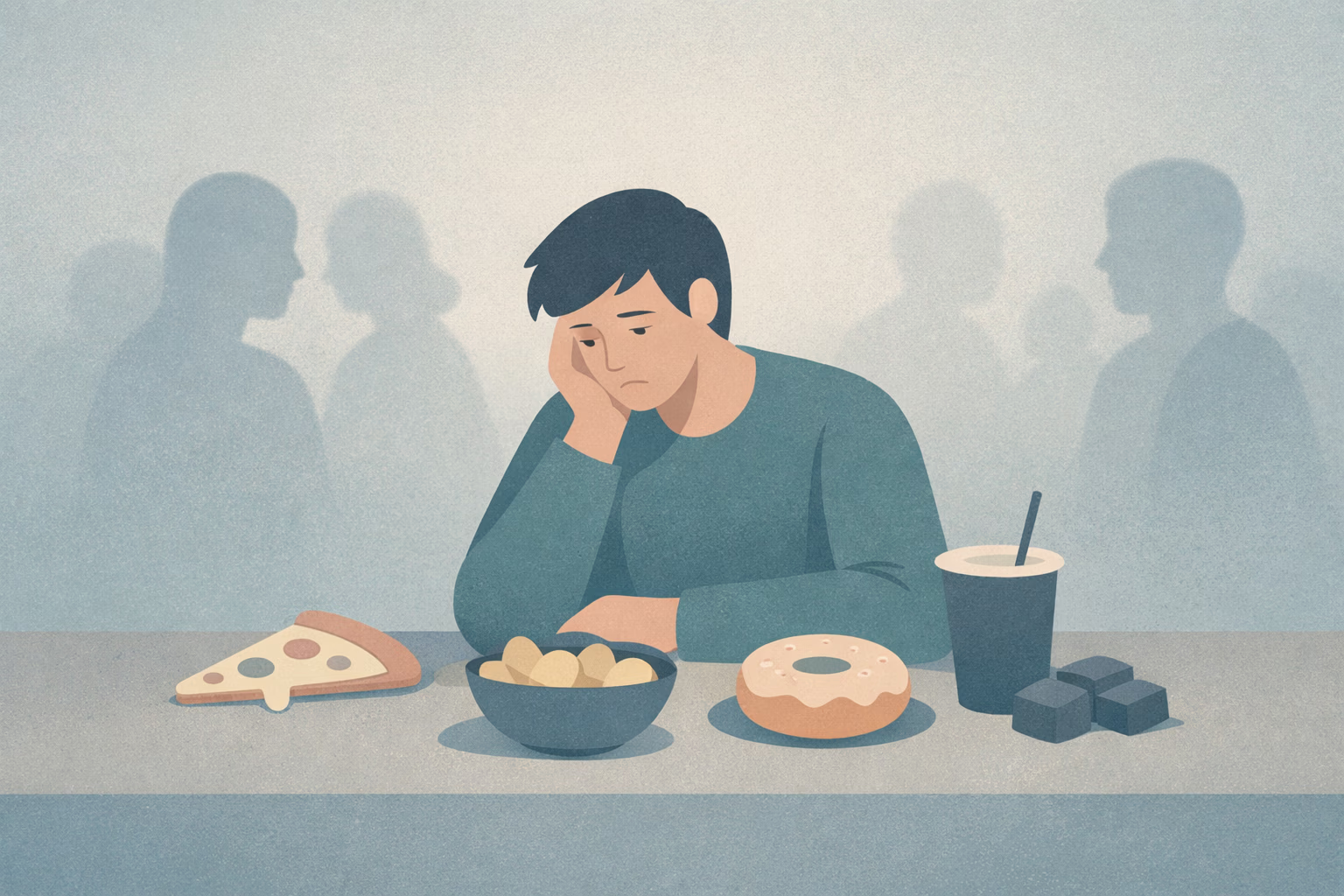
Emotional eating commonly happens in private, not because of “secrets” as a personality trait, but because the loop works best without interruption. Privacy reduces friction, reduces external cues, and allows the regulation sequence to complete quickly.
When food is less central as a silent regulator, connection often becomes more available—not as forced disclosure, but as a natural increase in social flexibility. People may notice they can stay present longer, respond with more range, and feel less divided between a public self and a private coping self. [Ref-11]
Not because you became “better,” but because your system is carrying less hidden load.
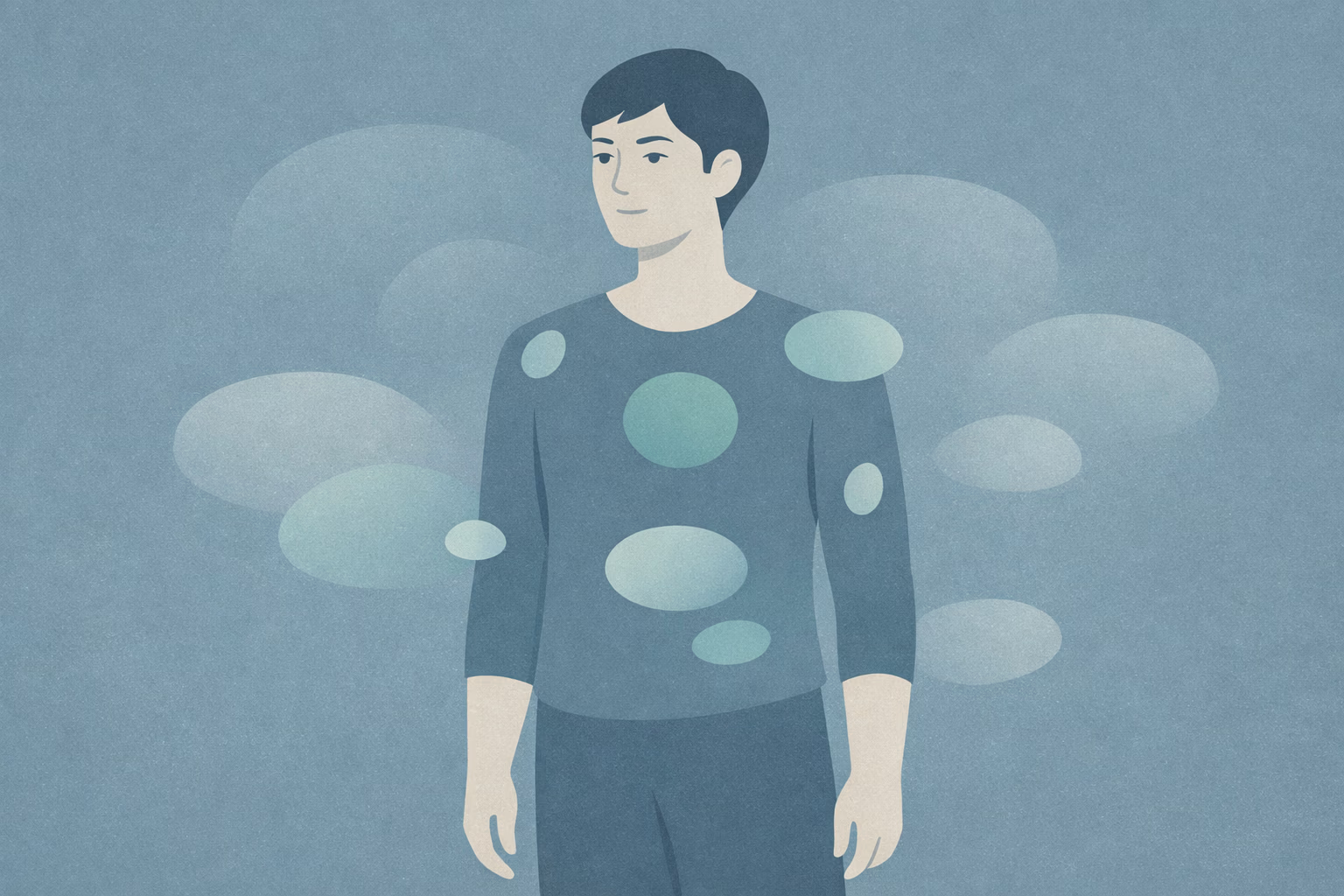
As regulation strengthens, internal signals tend to separate into clearer categories. What once arrived as a single, overwhelming mass (“I can’t handle this”) becomes more differentiated—fatigue, disappointment, tension, loneliness, worry. That distinction matters because it reduces total intensity.
When signals are distinguishable, they’re also more time-limited. They can crest and settle. The nervous system gets more “return” experiences—activation followed by stand-down—which gradually reduces the need for immediate dampening through food. This isn’t about amplifying emotion; it’s about improving signal resolution and completion. [Ref-12]
When the loop loosens, choice becomes less about resisting food and more about regaining orientation: “What matters here?” Values—care, steadiness, connection, health, dignity, creativity—become easier to access when you’re not in a narrowed urgency state.
Emotional clarity doesn’t mean life stops being stressful. It means the system can complete more experiences instead of carrying them forward as background pressure. In that space, eating can return to its primary roles—nourishment, enjoyment, culture, belonging—rather than serving as the main tool for emotional modulation. [Ref-13]
Coherence feels like having options again.
Emotional eating is rarely about food in the first place. It’s about capacity: how much intensity your system can hold before it reaches for a fast “off switch.” Seen this way, the pattern is information—an indicator that something in your environment, rhythms, or relational world is exceeding available bandwidth.
This frame doesn’t romanticize the loop or dismiss its consequences. It simply removes the moral storyline. When food is doing the work of calming, grounding, and concluding an otherwise unending day, it makes sense that the body would learn it. And when life starts offering more genuine closure—real endpoints, repaired ruptures, cleaner transitions—food doesn’t have to carry that role as often. [Ref-14]
Overwhelm can make any nervous system reach for the most reliable relief available. That doesn’t define you. It describes a human organism trying to stabilize under pressure.
When experiences are allowed to complete—when the system gets enough closure to stand down—feelings become less like emergencies and more like signals that move through. Capacity grows quietly, not through intensity, but through repeated returns to settled states. And in that settling, agency tends to reappear as something simple and dignified: the sense that you can meet your life without needing to mute it. [Ref-15]
From theory to practice — meaning forms when insight meets action.
Because food can serve as a fast nervous-system shortcut — not for fuel but for state change. Sweet, salty, fatty, highly palatable foods reliably activate reward and soothing pathways, creating rapid relief or softening when emotional intensity is high. The body isn't asking for nourishment; it's looking for a reliable downshift. Eating offers a full stack of calming inputs at once: taste, texture, chewing, swallowing, a clear start-and-finish ritual. In a day full of open tabs, food can deliver a momentary sense of completion. The urgency isn't lack of control — it's a system searching for a Done Signal.
Because relief and resolution feel similar but aren't the same. Relief lowers intensity; resolution creates closure. Emotional eating delivers the first without the second, which is why the same pressure returns. When grief doesn't land, conflict doesn't repair, or stress has no endpoint, the system keeps a quiet "not done" flag running. Food temporarily mutes that flag but rarely clears it. That's the Pleasure Loop: discomfort rises, eating reduces it, the body tags food as a reliable regulator. The original pressure didn't reach closure, so the same shortcut gets needed again — often sooner than expected.
Because guilt adds load on top of the original discomfort. It introduces threat and evaluation, which increases the need for regulation — making the loop more likely to repeat. The cycle becomes self-reinforcing: discomfort triggers eating, eating reduces discomfort briefly, the unprocessed state returns, guilt arrives, and the system reaches for relief again. The return can feel like "I'm back here again," which easily turns into shame. Structurally, though, it's just an unfinished loop resurfacing — not proof of brokenness. Removing the moral storyline often loosens the pattern more than willpower ever does.
Yes — through capacity, not control. Steadiness emerges when internal pressure can rise and fall without immediately needing an override. The urge may still appear, but it has less authority. As regulation strengthens, signals separate into clearer categories: fatigue, disappointment, tension, loneliness, worry. Distinguishable signals are also time-limited — they crest and settle. The system gets more return experiences (activation followed by stand-down), which gradually reduces the need for immediate dampening through food. Food then returns to its primary roles — nourishment, enjoyment, culture, belonging — instead of being the main tool for emotional modulation.
From Science to Art.
Understanding explains what is happening. Art allows you to feel it—without fixing, judging, or naming. Pause here. Let the images work quietly. Sometimes meaning settles before words do.
One Quiet Window, one insight, one reflection — every Sunday