Emotional Eating: Using Food to Regulate Overwhelming Feelings
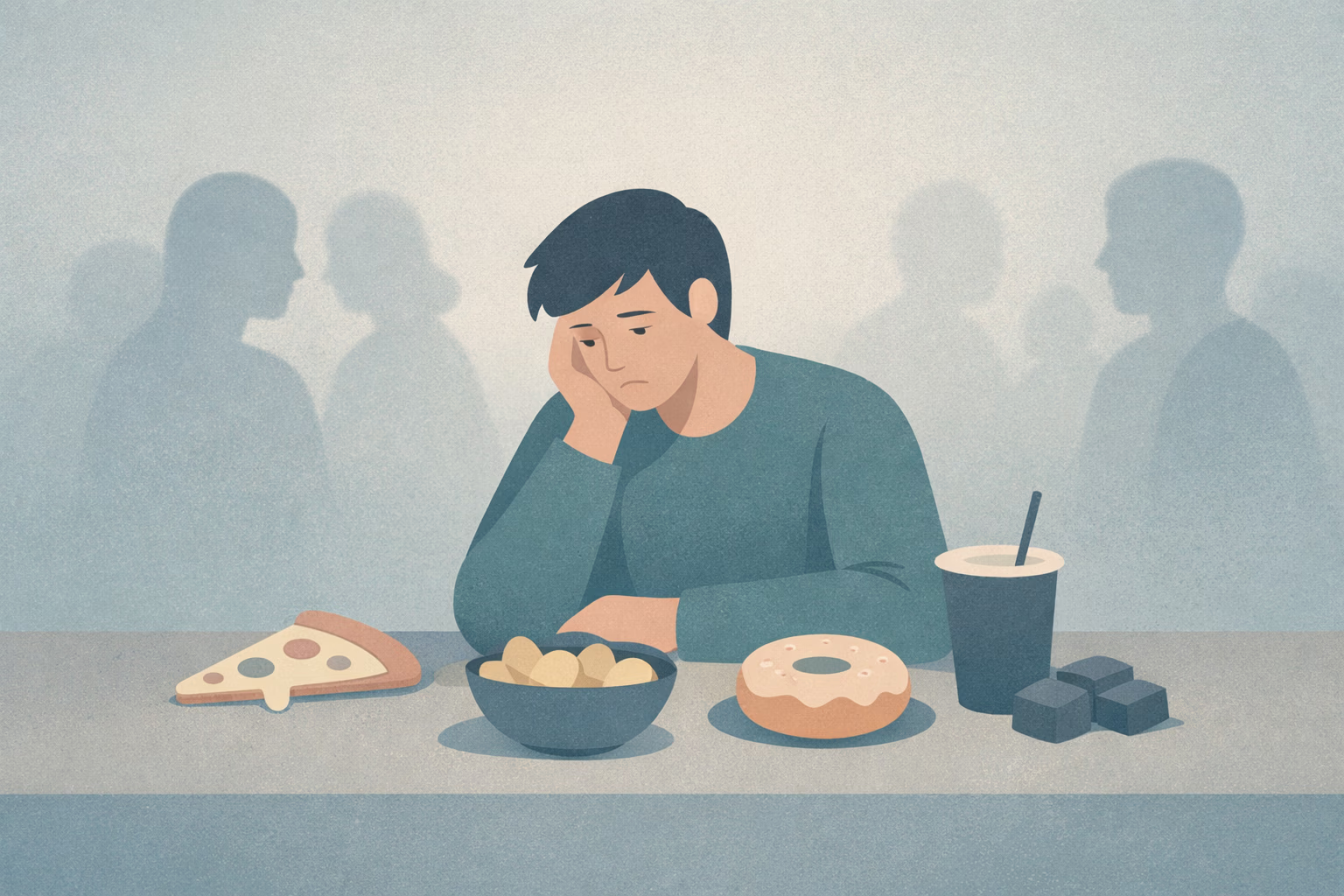
In short: A lack of discipline, a “bad habit,” or proof that you’re not in control. But from a biological perspective, it’s more accurately understood as a regulation strategy—one that works quickly, especially when your system is carrying more pressure than it can comfortably hold.
Emotional eating is often described like a character problem: a lack of discipline, a “bad habit,” or proof that you’re not in control. But from a biological perspective, it’s more accurately understood as a regulation strategy—one that works quickly, especially when your system is carrying more pressure than it can comfortably hold.
Food is one of the most reliable sources of rapid state change available to a human nervous system. It can soften intensity, narrow attention, and create a short-lived sense of safety. That doesn’t mean it’s “the answer.” It means it’s a tool your brain already knows how to use.
What if the urge to eat isn’t the problem—what if it’s the signal?
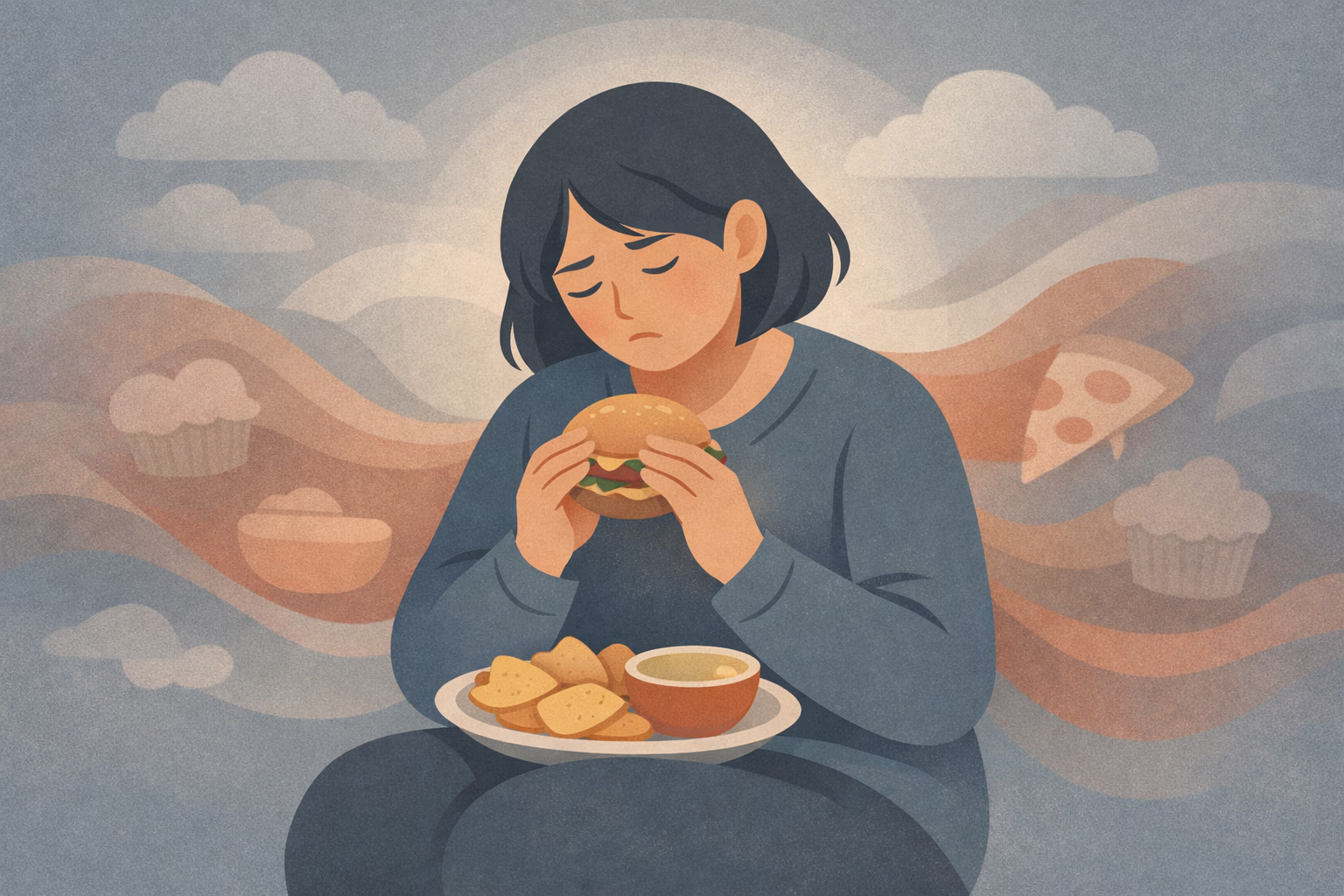
Many people recognize a pattern: a day that feels tight, relentless, or emotionally noisy; a moment where food becomes the easiest landing place; and then a later sense of heaviness—physical or mental—once the brief calm passes. This arc can happen even when you weren’t physiologically hungry.
In that sequence, food isn’t just “food.” It becomes a fast way to step out of internal pressure. During eating, attention often narrows, the body can feel more grounded, and urgency temporarily quiets. Later, when the nervous system returns to baseline, the original load is still there—plus the added weight of confusion, self-judgment, or discomfort. [Ref-1]
It can feel like relief in the moment, and like consequence afterward—without ever feeling like closure.
Under stress, threat circuitry increases activation: scanning, bracing, urgency, and a general sense that something needs to be handled. At the same time, highly palatable food can trigger reward pathways that signal “this matters” and “this helps,” nudging the body toward a calmer state through neurochemical shifts.
This is not a moral weakness; it’s a predictable coupling between two systems: the one that detects strain and the one that reduces strain quickly. When those systems meet, the brain learns a simple equation: stress → food → relief. The speed of that relief is a big part of why the loop repeats. [Ref-2]
In environments shaped by scarcity and unpredictability, calorie-dense food offered both survival value and a stabilizing signal: energy availability reduces physiological uncertainty. For much of human history, finding rich food was intermittent and meaningful, not constant and engineered.
So when modern stress rises, it’s not strange that older wiring reaches for a reliable resource. The system isn’t trying to sabotage you; it’s trying to stabilize you. The issue is that the modern environment provides high-reward food with near-zero friction—so the stabilizing signal arrives often, fast, and without the kind of “completion” that would naturally end the cycle. [Ref-3]
Emotional eating is often less about “liking food” and more about what food does to attention and sensation. Eating can create a small tunnel where fewer things exist at once: the inbox, the relationship tension, the uncertainty, the unfinished tasks. The body gets a repetitive sensory rhythm—taste, chew, swallow—that can feel organizing when everything else feels scattered.
This is why people sometimes describe it as “shutting off my brain,” “finally exhaling,” or “getting a break.” It’s a short-term regulation effect: a state change that reduces internal noise and gives the nervous system a temporary safety cue. [Ref-4]
When your day has no natural stopping points, where does your system go to get a “pause” signal?
Relief can feel like resolution, but they’re not the same physiological event. Relief changes state; completion closes a loop. When food is used to lower pressure, the pressure may drop briefly—yet the original drivers (overload, uncertainty, social strain, relentless evaluation) often remain active in the background.
Because the underlying loop didn’t complete, the nervous system doesn’t get a strong “done” signal. Instead, it learns: the quickest way out is the same way out as last time. Over time, urges can return sooner and with more insistence, not because you’re getting worse, but because the brain is conserving energy by repeating what reliably worked. [Ref-5]
A pleasure loop forms when reward repeatedly substitutes for regulation. Stress hormones and appetite-related hormones interact in ways that can increase wanting—especially for foods that deliver fast energy and strong sensory payoff. [Ref-6]
What makes this loop sticky is timing: stress is ongoing, but eating produces a rapid shift. The nervous system favors fast, certain relief when capacity is low. And because the relief is real (even if brief), the brain files it under “useful.” The loop can strengthen even when the person doesn’t especially enjoy it afterward.
Emotional eating doesn’t always look dramatic. Often it looks ordinary—just frequent, automatic, and hard to interrupt when the day has been demanding. Stress-related eating can also track with cortisol shifts and situational pressure, which helps explain why it can feel intensified in specific windows (late afternoon, after conflict, before bed). [Ref-7]
Some patterns people commonly notice include:
Repeatedly using food for regulation can unintentionally blur the body’s signaling. Hunger, appetite, satiety, fatigue, and stress can begin to feel like one blended message: “something is off.” This isn’t a failure of awareness; it’s what happens when the same intervention is used for multiple kinds of discomfort.
Over time, the body may learn that stress and eating travel together. That can shift energy patterns, sleep rhythms, and the clarity of appetite-regulating hormones, making the system feel less predictable. [Ref-8]
When every signal gets routed through the same solution, the signals start to lose their distinct edges.
Habit learning is efficient: the brain links cues to actions that reduce load. If stress reliably precedes eating and eating reliably lowers activation, the cue (stress) becomes more salient over time. Eventually, the body can start preparing for food the moment strain appears—sometimes experienced as a sudden craving, mental fixation, or urgency.
There are also biological messengers involved in stress-related food motivation. Research in animals suggests hormones like ghrelin can play a role in stress-induced food reward behavior, helping explain why “wanting” can increase during pressure even if the body has enough energy. [Ref-9]
In this frame, cravings aren’t proof of broken willpower. They’re the nervous system anticipating a known off-ramp.
There’s an important distinction between removing stress and having capacity for stress sensations. When capacity is low, sensations of pressure can feel like emergencies. When capacity is higher, the same sensations can register as information—uncomfortable, but not automatically requiring immediate escape.
This shift is not about insight, pep talks, or “being stronger.” It’s about the nervous system having enough room to let activation rise and fall without needing an instant override. As urgency decreases, the urge to use food as a rapid regulator can loosen, because the system no longer needs the same speed of relief to stay coherent. [Ref-10]
What changes when stress stops being an emergency inside the body?
Humans regulate in context. Reassurance, predictable connection, and feeling understood can reduce threat load—sometimes more effectively than any internal debate. This isn’t about “depending” on others; it’s about biology responding to safety cues.
When support is present—through relationships, community, or environments that feel less evaluative—food doesn’t have to carry as much of the comfort function. Appetite and stress systems are interlinked, and social safety can change the baseline those systems operate from. [Ref-11]
When the world feels steadier, the body doesn’t need as many emergency exits.
As overall load reduces and life contains more natural closure points, people often notice a quiet but meaningful shift: hunger feels more specific, satiety feels more reliable, and stress spikes are less likely to convert into immediate urgency for comfort food.
This isn’t a constant calm. It’s more like smoother recovery—fewer sharp rebounds after stress, fewer “blank” moments where eating happens before choice can show up, and less of the whiplash between restraint and overreach. Hormone patterns related to stress and craving can also prospectively relate to changes in cravings and weight, which helps explain why the experience can shift as the broader stress context shifts. [Ref-12]
Food has a natural role: energy, satisfaction, culture, pleasure, and care. When it isn’t carrying the job of emotional exit, it can return to that role with less intensity and less charge. Eating becomes less like a negotiation with urgency and more like a coherent act that fits the day.
Biology supports this reframing: stress can increase motivation for food reward through pathways that include hormones like ghrelin, showing how deeply “stress eating” is embedded in survival-linked circuitry. [Ref-13] When the system no longer needs food to create immediate safety, that circuitry doesn’t have to fire as often or as loudly.
In other words, the goal isn’t to make food irrelevant. It’s to make it appropriate—a response to hunger, appetite, and enjoyment, rather than a primary tool for managing relentless strain.
Emotional eating often points to something simple and human: the system is carrying more activation than it can comfortably process in real time. From a relief perspective, overeating can be understood as a transitory regulator—an attempt to come back into tolerable range as quickly as possible. [Ref-14]
Seen this way, the pattern doesn’t need shame to explain it. It needs context. It asks, gently, what has been left without closure: the day that never ends, the pressure without recovery, the roles without replenishment, the strain without a clear “done.” Meaning starts to rebuild when life contains more completed moments—moments that settle into identity as lived proof that you can move through stress without disappearing into it.
Emotional eating is not an identity. It’s a regulatory response that becomes more likely when stress is chronic, attention is fragmented, and the nervous system rarely receives a clean stand-down signal. Developmental and contextual models of emotional eating highlight how patterns can form over time in response to environments, not defects. [Ref-15]
When experiences complete—when pressure has endpoints, when support is real, when the day contains closure—food is freed to be what it was always meant to be: nourishment and enjoyment, not a place to store unfinished strain.
From theory to practice — meaning forms when insight meets action.
Because relief and completion aren't the same physiological event. Relief changes state — pressure drops briefly during eating because attention narrows and a sensory rhythm grounds the body. But the underlying drivers (overload, uncertainty, social strain) stay active in the background. Without a real Done Signal, the nervous system files away 'food worked' and the urge returns sooner next time. The arc is familiar: tight day, food becomes the easiest landing place, brief calm, then heaviness physical or emotional. It feels like consequence afterward without ever feeling like closure — because the loop didn't actually finish.
Because two systems meet predictably. The Threat & Safety System spikes activation — scanning, bracing, urgency. Highly palatable food triggers reward pathways that signal 'this matters, this helps,' nudging the body toward calm through neurochemical shifts. The brain learns a simple equation: stress equals food equals relief. This isn't moral weakness; it's an Evolutionary Mismatch. In ancestral environments, calorie-dense food was scarce and meaningful — finding it offered both survival value and stability. Modern life provides high-reward food with near-zero friction, so the stabilizing signal arrives often, fast, and without the natural completion that would end the cycle.
When the same intervention is used for multiple kinds of discomfort, the body's distinct messages start blending. Hunger, appetite, satiety, fatigue, and stress can begin to feel like one signal: 'something is off.' The Avoidance Loop strengthens because cravings aren't proof of broken willpower — they're the nervous system anticipating a known off-ramp the moment strain appears. You may eat quickly without choosing, crave specific textures rather than meals, snack right after meetings or conflict, feel unsatisfied even after enough food. When every signal gets routed through the same solution, the signals lose their distinct edges and body trust quietly erodes.
Hunger feels more specific. Satiety feels more reliable. Stress spikes are less likely to convert into immediate urgency for comfort food. This isn't constant calm — it's smoother recovery, fewer sharp rebounds, less whiplash between restraint and overreach. The shift comes from capacity, not willpower: when the system has room to let activation rise and fall without needing instant override, the urge to use food as a rapid regulator loosens. Co-regulation accelerates this — when relationships and environments feel less evaluative, food doesn't have to carry as much of the comfort function. Eating returns to what it was: nourishment and enjoyment, not storage for unfinished strain.
From Science to Art.
Understanding explains what is happening. Art allows you to feel it—without fixing, judging, or naming. Pause here. Let the images work quietly. Sometimes meaning settles before words do.
One Quiet Window, one insight, one reflection — every Sunday