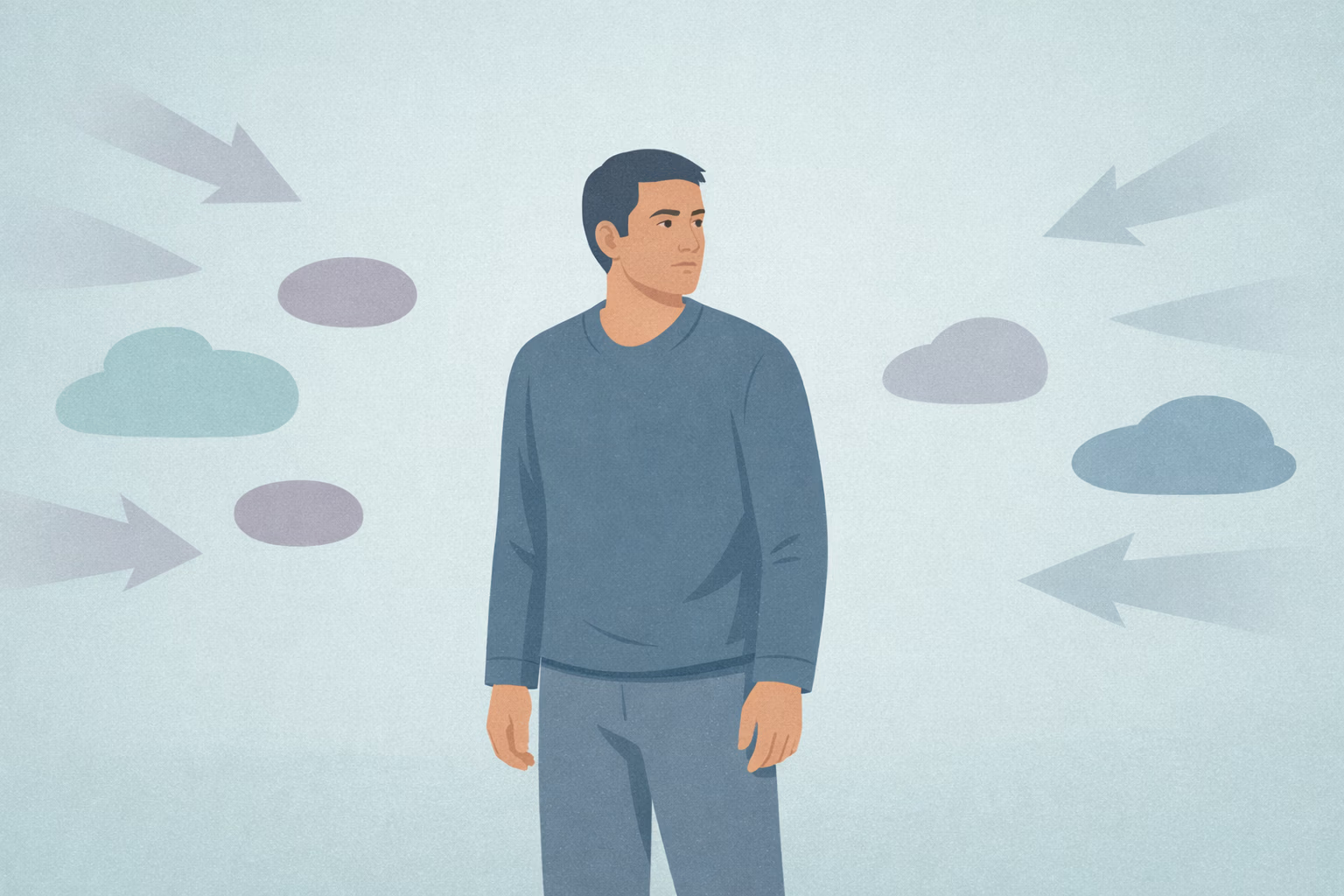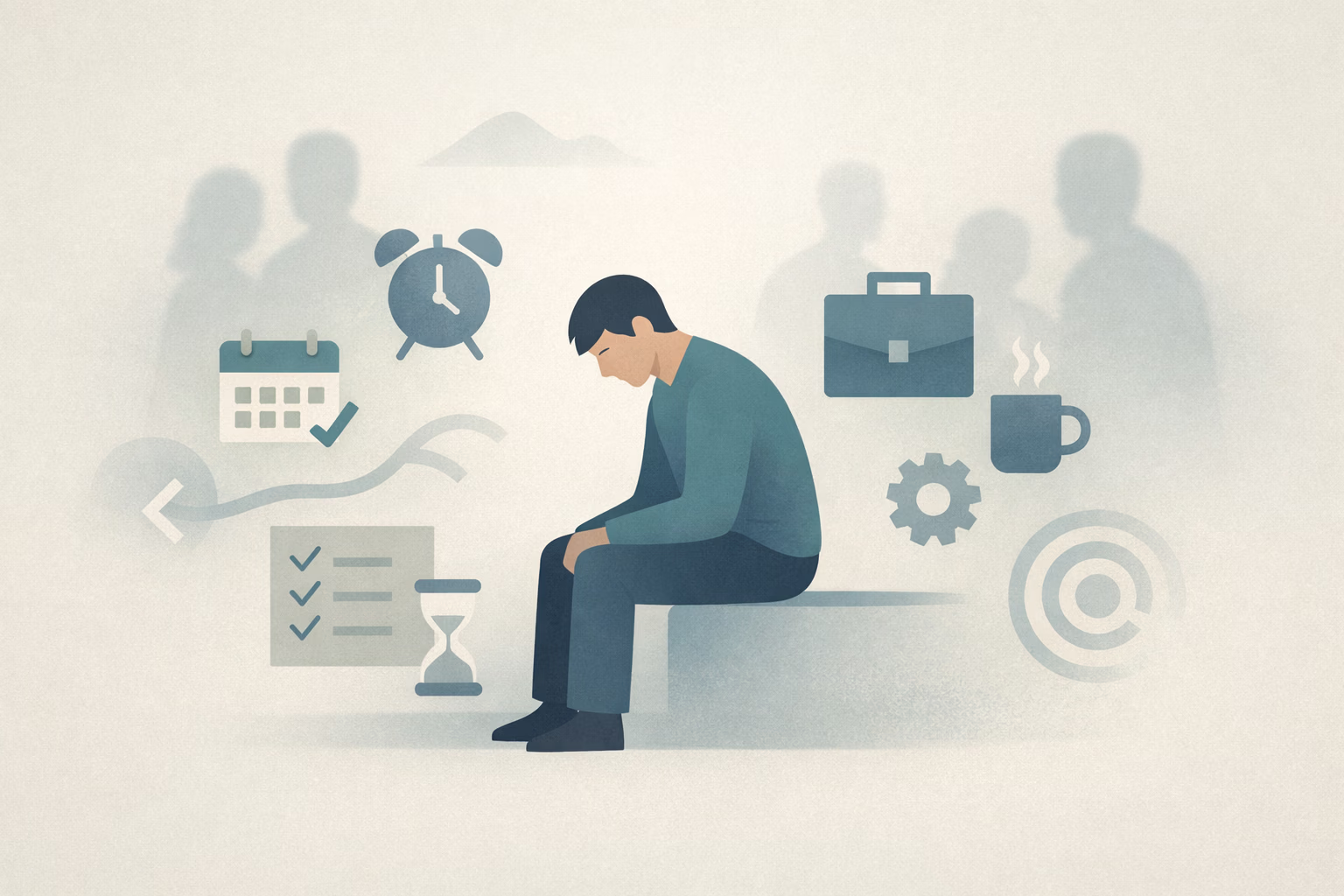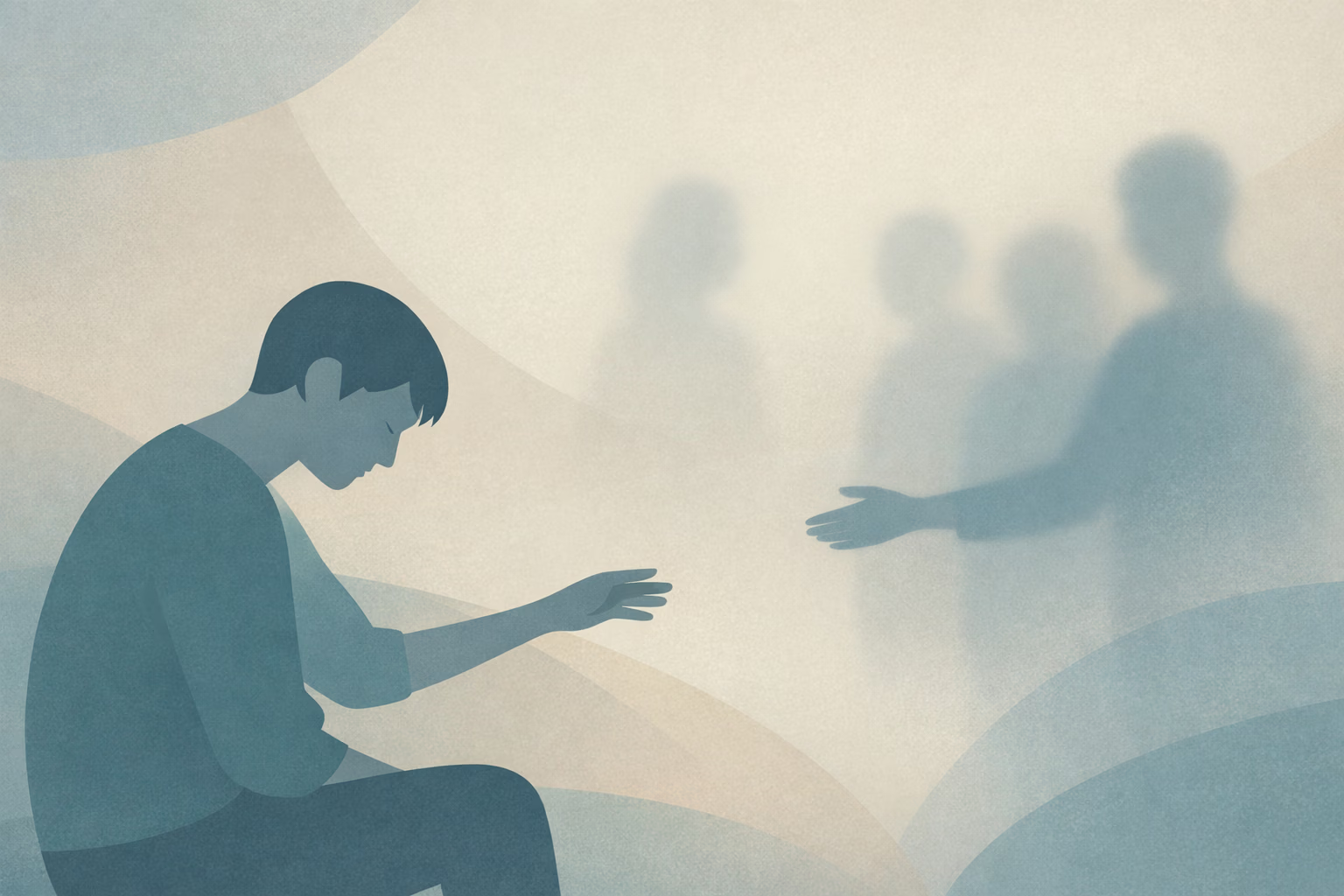
Emotional Outsourcing: Expecting Others to Regulate Your Feelings
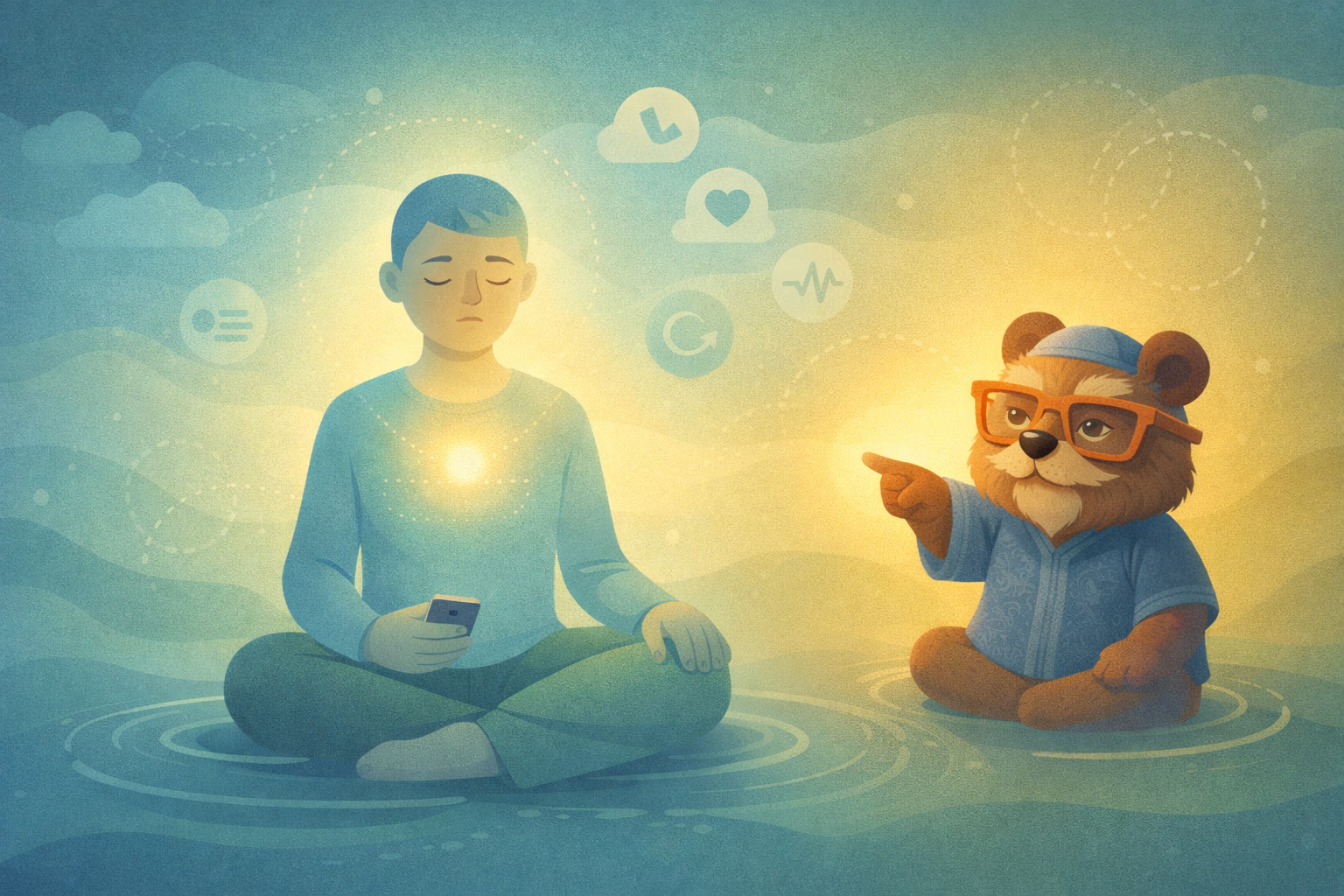
In short: A place to log a mood, answer a prompt, or follow a short exercise when your system is overloaded. For many people, that structure creates immediate relief—less spinning, more direction.
Emotional health apps can feel like a small pocket of order inside a loud day: a place to log a mood, answer a prompt, or follow a short exercise when your system is overloaded. For many people, that structure creates immediate relief—less spinning, more direction.
And then, sometimes, the same feeling returns the next day. Not because you “did it wrong,” but because many human needs don’t resolve through information or routines alone. They resolve when experiences reach a kind of internal completion—when the nervous system gets a “done” signal and your sense of self can hold what happened without staying on alert.
So can a phone support emotional healing—without becoming the only place you feel held?
It’s common to open an app in a moment of urgency and feel a quick settling: your attention narrows, your breathing changes, the day becomes more manageable. That’s not imaginary. It’s a real shift in state, often created by structure, predictability, and a sense that something is being “handled.” [Ref-1]
But deeper stability often depends on whether the original loop that activated you gets completed. Many modern stressors don’t end cleanly—there’s no clear finish line, no repair moment, no shared understanding, no consequence that lands and resolves. In those conditions, an app can reduce intensity while the underlying “unfinished” signal continues to run in the background.
The relief is real. The question is whether the system gets closure—or just a pause.
Many emotional health apps offer journaling prompts, mood tracking, psychoeducation, and guided skills drawn from approaches like CBT, mindfulness, and stress management. In research, these tools often show small-to-moderate improvements for some people, especially when used consistently and when the content is evidence-aligned. [Ref-2]
What they’re especially good at is scaffolding attention: helping you name what’s happening, notice patterns, and interrupt spirals long enough for signals to return. This can reduce immediate nervous system load—like taking weight off a strained muscle.
What they can’t fully do is supply the missing ingredients that the attachment system expects when you’re distressed: nonverbal attunement, shared context, real-time repair, and the felt sense that another nervous system is with you. Those are not “nice extras.” They’re part of how humans regulate.
Human nervous systems are shaped by social survival. From an evolutionary angle, safety is not only “no danger”—it’s also “I’m not alone in this.” When support is present, the body can downshift: threat monitoring reduces, muscles soften, attention widens, and your inner narrative becomes less urgent.
Apps can be helpful tools, but they are limited as social signals. A screen rarely provides the micro-cues that tell a system it is safe to stand down: timing, tone, facial expression, the pacing of a conversation, the experience of being understood without having to perform your explanation. This is one reason digital mental health tools can improve symptoms for some users while still leaving relational circuits under-fed. [Ref-3]
In other words: you can gain clarity on a phone, while still needing contact to feel complete.
When stress load is high, the brain becomes less interested in nuance and more interested in certainty. Too many options can feel like danger. This is where apps often shine: they reduce choice, offer a sequence, and create a simple next step (a prompt, a timer, a short check-in).
That kind of structure can prevent escalation. It can also create a container for reflection that’s otherwise hard to access in the middle of a busy life. In blended care, apps are often most useful as supports between sessions—helping people hold continuity rather than starting over each time. [Ref-4]
There’s a modern promise baked into many tools: if you track enough, reflect enough, optimize enough, you’ll feel better. But healing isn’t only the accumulation of insights. Stability tends to arrive when life events settle into a coherent story and your body registers completion—often through repair, consequence, or changed conditions.
Unguided self-help apps can be limited for this reason. Even when the content is thoughtful, results are often modest without relational support or a broader context that helps experiences land. [Ref-5]
This isn’t a critique of the person using the app. It’s about scope. A phone can help you organize signals; it usually can’t provide the lived, interpersonal “resolution moments” that close loops.
In meaning terms, many people aren’t missing effort—they’re missing completion. Apps can function like scaffolding around an unfinished structure: they provide temporary stability while something is being built. Features like mood tracking, guided exercises, and reflective prompts can support pattern recognition and reduce overwhelm. [Ref-6]
But scaffolding isn’t the building. A Meaning Loop completes when what happened can be held in identity without ongoing activation—when the nervous system stops checking for the next hit of uncertainty. That kind of settling usually depends on conditions outside the app: the way conversations go, boundaries are respected, grief has an endpoint, conflict gets repaired, or life becomes more coherent.
An app can help you notice the loop. Completion is what lets the loop release.
When an emotional health app is well-designed and fits the user’s life, the benefits are often practical and real. Many curated lists of mental health apps emphasize these tools as supports—especially for tracking, journaling, and coping prompts. [Ref-7]
Notice that many of these are about reduced load and better orientation. They’re not the same as completion, but they can make completion more possible.
Overreliance doesn’t always look like “addiction” or dramatic dysfunction. Often it looks like a quiet narrowing: the app becomes the only place you process, the only place you feel organized, the only place you can be honest. That can create a kind of false safety—calm inside the tool, and then immediate reactivation outside it.
Structurally, this can keep key loops incomplete. Not because you’re avoiding feelings, but because real-world resistance and consequence are bypassed: a hard conversation doesn’t happen, a boundary isn’t tested, repair isn’t attempted, support isn’t requested, grief isn’t witnessed.
Professional guidance on choosing CBT apps often emphasizes limits and the importance of seeking appropriate care when symptoms are significant or persistent. [Ref-8]
Many apps use notifications, streaks, badges, and reminders. Sometimes this supports consistency. But it can also train a pattern: “I feel okay when the app says I’m on track.” The nervous system begins to outsource reassurance to external cues rather than internal completion.
In that setup, the app becomes a regulator—like a portable safety signal. And because digital cues are immediate, they can compete with slower forms of closure: conversation, repair, rest, or time. Some over-monitoring can even increase preoccupation with mood shifts, keeping attention on activation rather than on the conditions that would let the body stand down. [Ref-9]
It’s not that tracking is wrong. It’s that tracking can become the “done” signal when life doesn’t provide one.
There’s a middle ground between “apps are useless” and “apps will fix me.” Emotional stability often grows when tools are paired with the kinds of experiences that close loops: being understood, repairing misattunements, making values-based choices that hold under pressure, and living through outcomes that confirm you can handle reality.
In that pairing, an app is less like a replacement and more like a bridge—helping you stay oriented between moments of real contact and real life. It can support language and sequencing so that when you meet complexity, you’re not starting from zero.
Many modern apps also include coaching-style features or AI-guided prompts. These can feel supportive day-to-day, especially for organizing thoughts, but they still operate within a mediated channel with limited attunement and limited shared stakes. [Ref-10]
When a therapist, mentor, coach, or trusted relationship is in the picture, digital tools often work better—not because the app suddenly becomes more powerful, but because experiences gain a place to land. Another person can track context with you, notice what you can’t see, and provide the kind of steady “you make sense” signal that helps nervous systems downshift.
Apps can then serve as continuity: a record of patterns, questions, and language that strengthens the thread between meetings or conversations. Many overviews of wellness apps frame them as supports that complement care rather than replace it. [Ref-11]
When someone else can hold the thread with you, your system doesn’t have to grip so hard.
It’s easy to confuse insight with integration. Understanding a pattern can be useful, but integration shows up differently: the body stops re-sounding the same alarm; choices become less urgent; attention returns to the present; identity feels less split between “who I am” and “what I’m managing.”
When app-based reflections are connected to real relational practice—conversations that go differently, support that arrives, boundaries that hold—people often report less reactivity and more self-trust. Not as a motivational high, but as a quiet expectation: “I can meet this and come back to myself.” Research on online and blended therapy suggests symptom reduction can be comparable in some contexts, while also noting the limits of digital channels for nonverbal attunement and depth. [Ref-12]
Stability often feels like fewer internal emergencies—not constant positivity.
One sign of restored coherence is that the tool becomes less central. Not because you’ve “graduated,” but because your system has more internal closure and more external support. You may still use an app, but it’s no longer the main place where relief happens. It becomes a supplement—like notes on the side of a life that is more complete.
In this phase, regulation is less about constant prompting and more about orientation: values feel clearer, relationships feel more real, and you can move through activation without having to immediately outsource the “all clear” signal. Digital therapy can help create this arc for many people, while still carrying known limits compared to in-person attunement—especially when higher levels of support are needed. [Ref-13]
The phone can help you practice language. Life is where the nervous system learns it’s safe to settle.
A phone can support emotional healing in the way a compass supports a journey: it can orient you, reduce confusion, and help you stay with yourself when the path is noisy. That matters—especially when access to care is limited or when you need immediate structure.
But most deep change is not an app feature. It comes from completion: experiences that end, repairs that happen, meanings that consolidate, and relationships that provide real safety cues. Digital tools can lower barriers and extend support, yet they can also thin out the relational bond if they become the primary container for your inner life. [Ref-14]
In a coherent frame, apps are companions for reflection and continuity—not replacements for the human and lived conditions that allow a nervous system to stand down.
If an emotional health app helps you feel less alone, less scattered, or more oriented, that’s not trivial. It’s a real form of support under real modern conditions.
And if it doesn’t feel like “enough,” that’s not a personal shortcoming. It may simply mean your system is asking for what phones can’t fully provide: attunement, shared reality, and the kind of completion that settles into identity. The strongest picture is often blended—digital scaffolds alongside internal capacity and real relationship—so support doesn’t just change your state, but helps your life feel more whole. [Ref-15]
From theory to practice — meaning forms when insight meets action.
Partly — like a compass supports a journey. Apps can orient you, reduce confusion, scaffold attention, and help you stay with yourself when the path is noisy. Structure, mood tracking, and guided exercises produce real state changes. But deep change usually doesn't come from app features. It comes from completion: experiences that end, repairs that happen, meanings that consolidate, relationships that provide real safety cues. Phones can lower barriers and extend support; they struggle to provide the nonverbal attunement and shared stakes the attachment system expects.
Because relief is a state change; closure is something else. When an app narrows your attention or guides a short exercise, the immediate effect is real — less spinning, more direction. But many human needs don't resolve through information or routines alone. They resolve when a loop completes: a hard conversation, a boundary that holds, a misunderstanding repaired. An app can lower intensity while the underlying 'unfinished' signal keeps running. The relief is real. The question is whether the system gets closure or just a pause.
When it becomes the only place you process. The article describes this as a quiet narrowing: the app becomes the only place you feel organized or honest. That can create false safety — calm inside the tool, immediate reactivation outside it. Streaks and reminders can train the pattern 'I feel okay when the app says I'm on track,' which outsources reassurance to external cues rather than internal completion. Tracking becomes the Done Signal when life doesn't provide one. That bypasses the real-world resistance and consequence that close key loops.
Companions for reflection and continuity — not replacements for the lived conditions that let a nervous system stand down. The strongest picture is blended: digital scaffolds alongside internal capacity and real relationship. An app can help you notice patterns, build language, hold continuity between conversations. Another person — therapist, mentor, trusted friend — provides the attunement and shared reality that helps experiences land. When tools and relationships work together, support doesn't just change your state; it helps your life feel more whole.
From Science to Art.
Understanding explains what is happening. Art allows you to feel it—without fixing, judging, or naming. Pause here. Let the images work quietly. Sometimes meaning settles before words do.
One Quiet Window, one insight, one reflection — every Sunday