Ultra-Processed Food Addiction: When Modern Meals Hijack Ancient Instincts
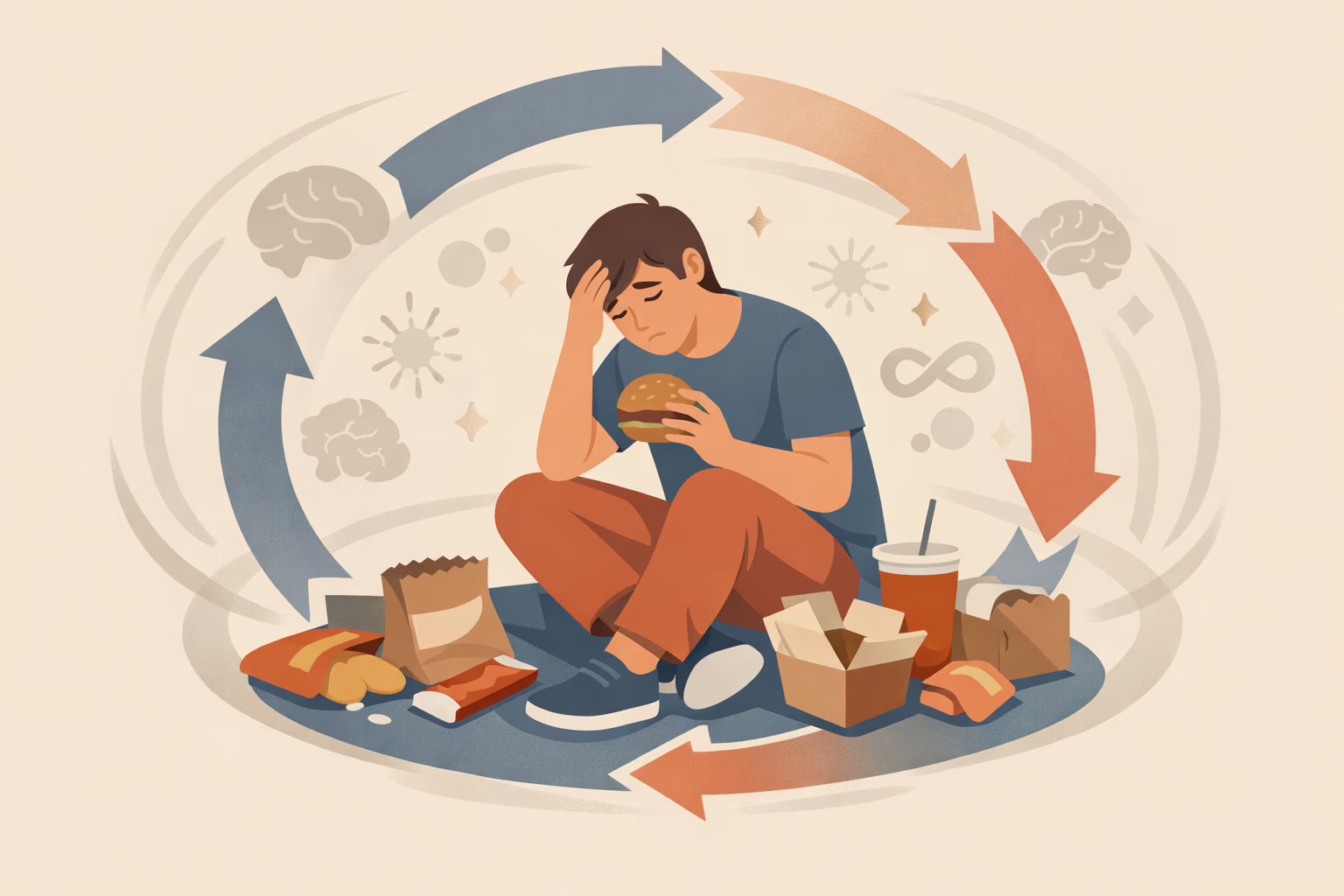
In short: Many people describe a particular kind of eating that doesn’t feel like hunger. It feels like pull: a narrowing of attention, a specific food taking up mental space, and a sense of inevitability that arrives before the first bite.
Many people describe a particular kind of eating that doesn’t feel like hunger. It feels like pull: a narrowing of attention, a specific food taking up mental space, and a sense of inevitability that arrives before the first bite.
What if the problem isn’t you—what if it’s a loop?
Food addiction loops aren’t a moral failure or a character flaw. They are predictable patterns that can form when modern, highly engineered foods repeatedly activate reward-learning circuits faster than the body can register “done.” In that mismatch, the nervous system keeps seeking closure—and doesn’t always find it.
In food addiction loops, the most distressing part is often not the eating itself, but the mental preoccupation around it: planning, bargaining, delaying, promising, then finding yourself doing it anyway. Afterward, there can be shame, confusion, and a harsh inner narrative that tries to explain what happened.
From a regulation standpoint, this pattern makes sense. When the brain learns that a specific food reliably produces a rapid, high-intensity shift in state, attention begins to reorganize around that option—especially under load. The “loss of control” is often the system prioritizing a fast lever, not a person failing to care. [Ref-1]
When a loop is running, the mind argues. The body just moves toward what it has learned will change the state fastest.
Ultra-processed foods tend to deliver reward signals that are unusually concentrated and rapid—often combining refined carbohydrates, fats, salt, and flavor enhancers in ways that are highly learnable. In the brain, dopamine isn’t “pleasure” itself; it’s part of a learning and salience system that tags what matters and what to seek again.
When a food repeatedly produces a strong, quick reward signal, the brain can begin to assign it outsized importance. That doesn’t mean everyone responds the same way—dopamine responses vary across people and contexts—but the learning mechanism is real: repeated high-intensity cues can strengthen seeking behavior even when nourishment needs are already met. [Ref-2]
Human brains evolved in environments where calorie-dense foods were relatively scarce and often required effort to obtain. In that setting, an “aggressive” reward system was protective: if sweet, fatty, or energy-rich food appeared, it was adaptive to pay attention, eat enough, and remember where it was.
Modern industrial food environments are different. Highly processed products can present the brain with reward combinations that are more intense, more consistent, and more available than ancestral conditions ever provided—turning a survival-oriented system into a repeatable capture point. This helps explain why “just eat less” can land like an insult to biology rather than a workable description of what’s happening. [Ref-3]
Many people notice that the strongest pull toward certain foods arrives when the nervous system is already taxed: late-day fatigue, social strain, sensory overload, loneliness, or the quiet pressure of constant self-management. In that state, ultra-processed foods can function like a rapid downshift—temporarily muting stress signals and providing an immediate “okay” feeling.
This isn’t about a psychological defect or a hidden weakness. It’s a predictable effect of using a fast-acting stimulus to change internal state. Relief can feel like completion, even when the deeper conditions driving the load remain unfinished. The result is often a brief stand-down followed by a rebound: the body is fed, but the system still doesn’t get a true “done” signal. [Ref-4]
It can look like the issue is willpower because the loop shows up right where intentions live: “I said I wouldn’t.” But repeated overstimulation doesn’t just test choice—it reshapes what choice feels like. Over time, the cue itself (a time of day, a drive-thru sign, a certain mood, a TV show) can start carrying its own urgency.
Then, strict pressure and constant monitoring can add extra nervous-system load—more evaluation, more friction, more internal noise. Under that kind of strain, the brain tends to prefer reliable, immediate regulators. So the very strategy of “try harder” can accidentally intensify the conditions that keep the loop appealing. [Ref-5]
When a system is overloaded, is it surprising that it reaches for the fastest lever?
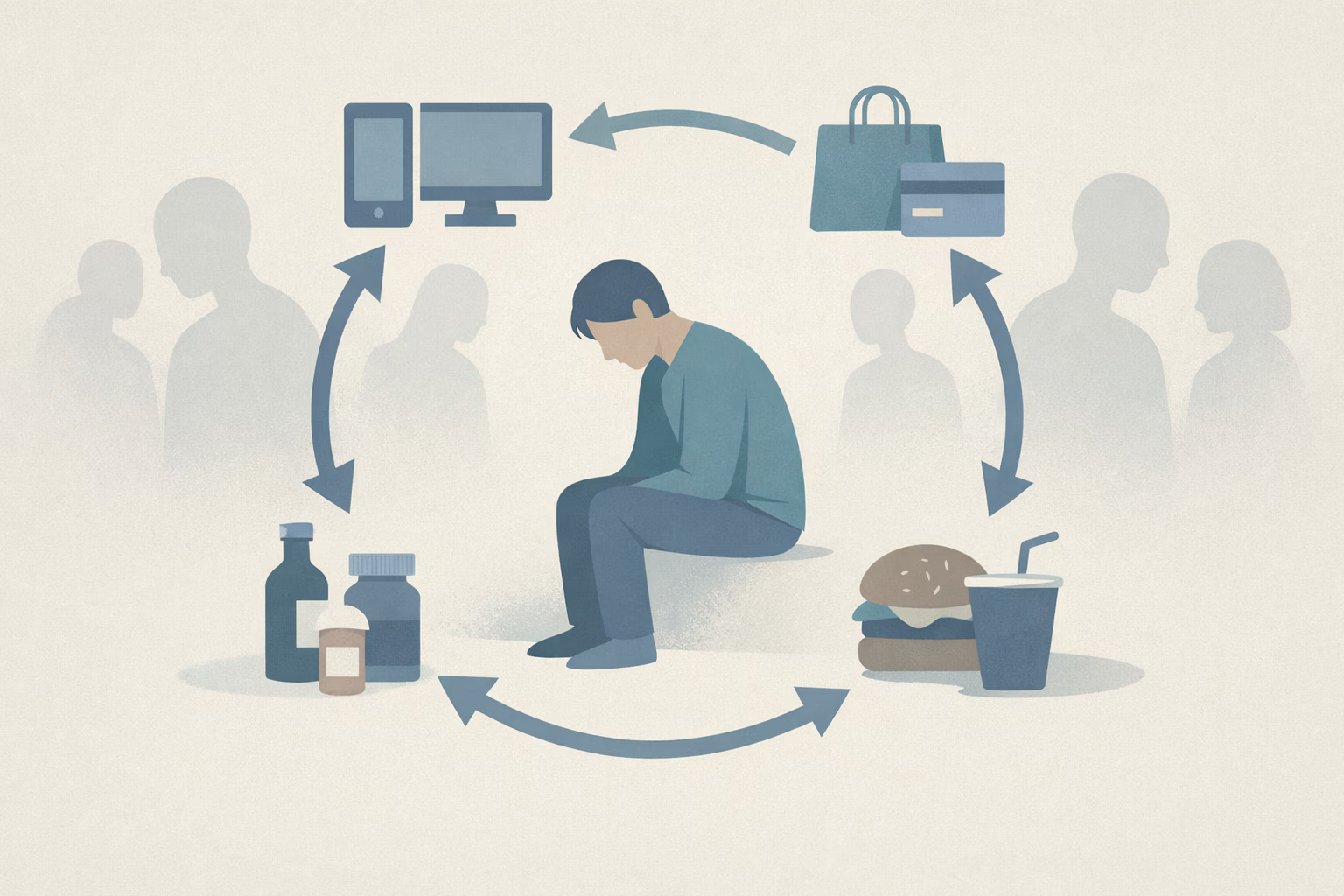
A helpful way to understand food addiction is as a Pleasure Loop: a repeating cycle where engineered reward signals become more influential than hunger, fullness, or long-term intention. In this loop, the behavior isn’t anchored by nourishment; it’s anchored by the promise of a rapid state change.
Ultra-processed food addiction has been discussed as a public health and clinical issue because the loop is reinforced not only by biology but by widespread availability, marketing, and social normalization. The environment supplies repeated cues and easy access, which makes the loop easier to maintain and harder to “outthink.” [Ref-6]
People often recognize the loop by its pattern more than by any single moment. The content of the food matters, but so does the repetitiveness: the sense of being “back here again,” even after sincere promises and plans.
Some commonly reported patterns overlap with measures used in research settings (like craving intensity, loss of control, and continued use despite negative consequences). These descriptions are not labels; they are ways of naming a nervous-system pattern that has become efficient at repeating itself. [Ref-7]
One of the quiet costs of food addiction loops is not only physical—though that matters—but relational and internal. When a pattern repeats against your stated intentions, it can produce a chronic sense of unreliability: “I can’t trust myself.” That belief becomes its own stressor.
Over time, shame and secrecy can narrow social eating, reduce connection, and make food feel like a private battleground rather than a shared part of life. And when the nervous system is repeatedly driven by high-intensity reward swings, baseline steadiness can become harder to access—not because you are broken, but because your system is spending a lot of time in activation and recovery instead of completion. [Ref-8]
When eating becomes a loop, it doesn’t just take calories. It takes confidence in your own signals.
Many people are surprised by how intense “not having it” can feel. That intensity often reflects adaptation in reward circuits and the power of learned cues. When the brain has linked a particular product to rapid state-change, removing it can register as a kind of missing regulator—like taking away the quickest off-switch in the room.
Availability adds pressure. In an environment where cues are everywhere and access is immediate, the loop doesn’t have to wait. Even brief exposure—seeing packaging, smelling food, passing a familiar store—can evoke conditioned wanting that feels bodily, not philosophical. Research tools like the Yale Food Addiction Scale operationalize these cue-driven, consequence-ignoring patterns, highlighting that this is a recognizable phenomenon rather than a personal oddity. [Ref-9]
There is a distinct difference between “white-knuckling” and a deeper settling. White-knuckling is noisy: constant negotiation, vigilance, and a sense of being one exposure away from collapse. Settling is quieter. It’s what can happen when the reward system is no longer being repeatedly hit with intense, engineered signals—and the body can start to re-learn what ordinary satisfaction feels like.
This isn’t a mindset shift or a motivational speech. It’s a physiological recalibration that shows up as reduced cue power, less mental preoccupation, and more room between impulse and action. Some staged models of ultra-processed food addiction recovery describe craving softening over time as systems adapt to less overstimulation—less “pull,” more neutral space. [Ref-10]
What changes when food stops being the fastest way to change your state?
Shame tends to isolate. It makes eating feel like a private issue that must be hidden or managed alone, which can intensify the loop by adding stress load and reducing safety cues that come from connection.
As secrecy dissolves, something practical and human can return: meals that are not a performance, food choices that are not a confession, and relationships that aren’t organized around concealment. Accounts from clinicians and people with lived experience often emphasize that this shift—out of moral struggle and into dignity—changes the whole texture of recovery, because it changes the conditions the nervous system is trying to regulate within. [Ref-11]
When food isn’t a secret, it stops carrying the same charge.
Agency is often described as “discipline,” but in real life it frequently looks like clarity: the ability to sense options without being flooded by urgency. When the nervous system isn’t constantly chasing reward spikes, it can spend more time in steadier baselines—where signals like hunger, fullness, taste satisfaction, and fatigue are easier to read.
This is why willpower is an incomplete explanation. If the loop is driven by conditioned reward-seeking under high availability, then the path back to choice is not self-punishment—it’s reduced capture. As the system becomes less dominated by compulsive reward learning, people often report more emotional steadiness and less obsessional bargaining around food. That isn’t “trying harder.” It’s the nervous system no longer being yanked around by a high-gain stimulus. [Ref-12]
When agency returns, food can move back into its rightful role: nourishment, pleasure, culture, convenience—without becoming the main regulator of internal state. Choices start to reflect longer arcs: energy, stability, health, and daily functioning. Not perfectly, but coherently.
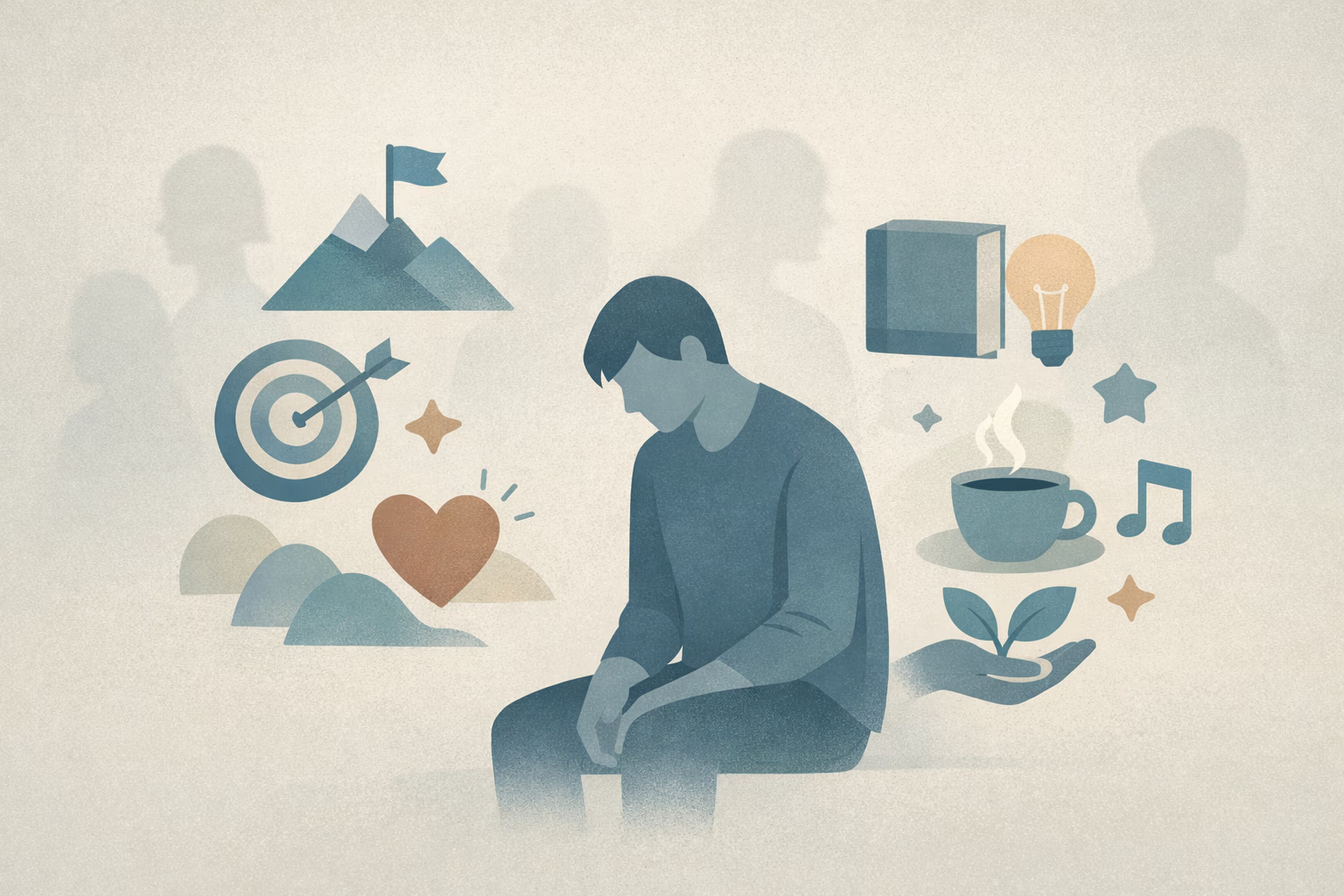
In Meaning Density terms, this is where life gets less fragmented. Eating no longer has to carry the weight of finishing every unfinished day. When a person’s actions and values align often enough, the identity-level story shifts from “I can’t be trusted” to something calmer and more accurate: “My system responds to conditions—and when conditions change, I have room to choose.” Policy and clinical discussions of ultra-processed food addiction emphasize that restoring choice is not only an individual task; it’s also shaped by the food environment people are living inside. [Ref-13]
Food addiction loops make more sense when you view them as a predictable response to engineered stimuli meeting a stressed, modern nervous system. This reframes the experience away from moral struggle and toward context: what your brain was built to do, what the environment is designed to trigger, and what happens when those forces repeat. [Ref-14]
In that frame, shame becomes less useful—not because accountability doesn’t matter, but because humiliation rarely creates closure. What changes patterns most reliably is when the loop loses its grip and life becomes more integrated: fewer unfinished stress cycles, more stable cues of safety, and more experiences that actually land as “done.”
Freedom with food is not proof of superior willpower. It’s often the natural result of a reward system no longer being constantly provoked—and a person no longer being asked to live in permanent negotiation with their own nervous system.
When you understand the loop, you can stop treating yourself as the problem. And in that dignity, choice has space to return. [Ref-15]
From theory to practice — meaning forms when insight meets action.
No, and treating it that way often makes the loop stronger. The pull toward certain foods isn't a moral failure — it's reward conditioning meeting an overloaded nervous system. When the brain learns that a specific food reliably produces a rapid, high-intensity state shift, attention reorganizes around that option, especially under load. The loss of control is the system prioritizing a fast lever, not a person failing to care. Strict pressure and constant monitoring add nervous-system load — more evaluation, more friction, more internal noise — and under that strain the brain prefers reliable, immediate regulators. So 'try harder' often intensifies the conditions that keep the loop appealing.
Human brains evolved where calorie-dense foods were scarce and required effort. An aggressive reward system was protective — pay attention, eat enough, remember the location. Modern industrial food environments deliver reward combinations that are more intense, more consistent, and more available than ancestral conditions ever provided: refined carbs, fats, salt, and flavor enhancers in highly learnable bundles. That turns a survival-oriented Reward & Stimulation System into a repeatable capture point. 'Just eat less' lands like an insult to biology rather than a workable description of what's happening, because the system is doing exactly what it was built to do — in conditions it was never built for.
It's a four-step cycle. Cue: a trigger appears — time, place, emotion, ad, fatigue. Seeking: attention narrows toward a specific food, sometimes hours before eating. Spike: rapid reward relief and temporary quieting of discomfort. Aftermath: shame, discomfort, or 'reset' pressure that becomes new load setting up the next cycle. The behavior isn't anchored by nourishment — it's anchored by the promise of rapid state change. Common signs include cravings feeling urgent rather than general hunger, difficulty moderating once started, eating past muted fullness, secrecy, and repeated reset cycles that reduce anxiety briefly without creating closure.
Through reduced capture, not self-punishment. When the reward system stops being repeatedly hit with engineered signals, it can re-learn what ordinary satisfaction feels like. This is physiological recalibration, not motivation: less cue power, less mental preoccupation, more room between impulse and action. Agency in real life looks like clarity — sensing options without being flooded by urgency. When secrecy dissolves and shame eases, food choices stop being confessions and the nervous system gets safety cues from connection rather than concealment. Freedom isn't proof of superior willpower; it's the result of no longer living in permanent negotiation with your own biology.
From Science to Art.
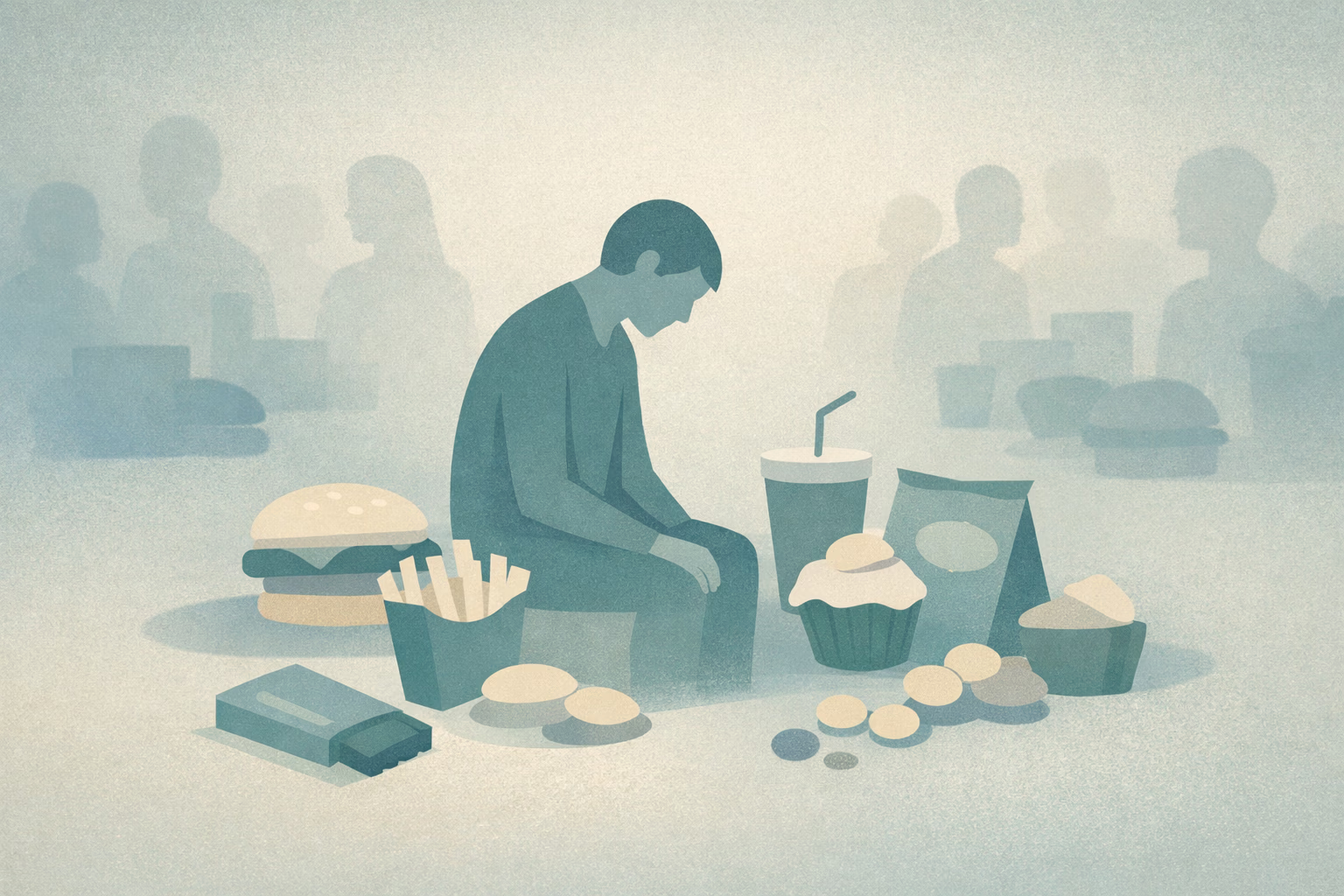
Understanding explains what is happening. Art allows you to feel it—without fixing, judging, or naming. Pause here. Let the images work quietly. Sometimes meaning settles before words do.
One Quiet Window, one insight, one reflection — every Sunday