Ultra-Processed Food & Dopamine Spikes: The Mood Rollercoaster
In short: Ultra-processed foods aren’t just “tasty.” Many are engineered to be easy to eat fast, hard to stop, and reliably comforting—especially when your system is already carrying a lot. When people describe feeling pulled toward certain snacks or meals even when they aren’t physically hungry, it can sound like a personal failure.
Ultra-processed foods aren’t just “tasty.” Many are engineered to be easy to eat fast, hard to stop, and reliably comforting—especially when your system is already carrying a lot. When people describe feeling pulled toward certain snacks or meals even when they aren’t physically hungry, it can sound like a personal failure. More often, it’s a nervous system meeting an environment that learned how to press its most ancient buttons.
What if the problem isn’t your willpower—but the way modern food removes closure from eating?
This article describes “ultra-processed food addiction” as a pattern: stimulation outpaces nourishment, reward outpaces satiety, and the body’s natural “enough” signals get drowned out. The point isn’t to label anyone. It’s to restore dignity by explaining how this loop forms—and why coherence, not pressure, is what brings eating back into a steadier relationship.
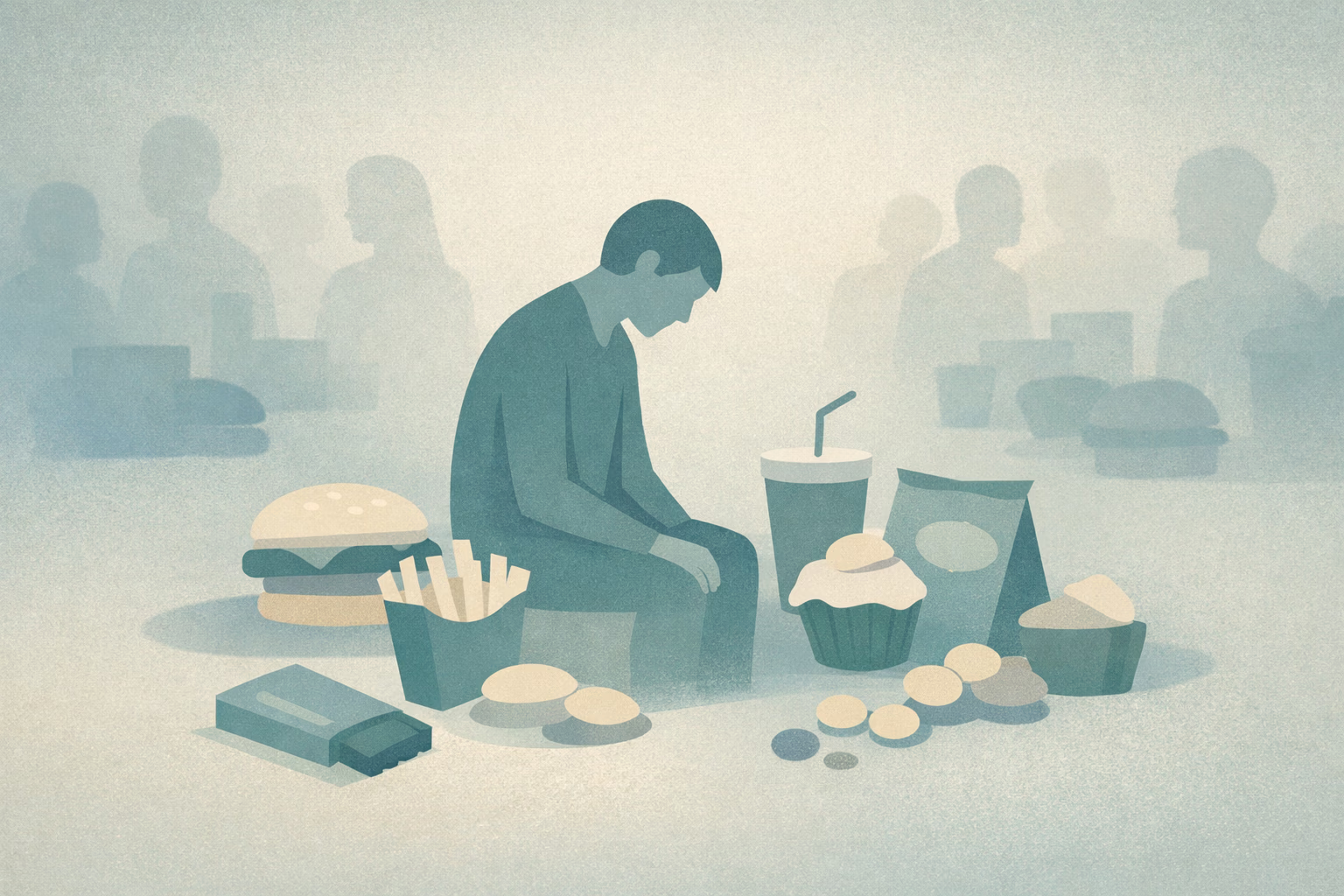
Many people recognize a specific feeling: you’re not exactly hungry, but something in you is scanning for a particular kind of food—salty-crunchy, sweet-creamy, or “just one more bite.” Once eating starts, stopping can feel strangely difficult, as if the off-switch is delayed.
This isn’t the same as enjoying food. It’s closer to being recruited into a short regulatory cycle: relief, stimulation, and quick quieting of internal noise. When that cycle repeats often enough, it can start to feel like food choices are happening to you rather than through you. That experience is real—and it’s also understandable when your nervous system is overworked and your environment is offering high-intensity, low-closure options. [Ref-1]
Ultra-processed foods often combine sugar, fat, salt, refined starches, and flavor enhancers in ways that create a strong reward signal. The textures are engineered for fast chew and swallow, the flavors are calibrated to stay interesting, and the “mouthfeel” is designed to feel satisfying before the body has time to register fullness.
In practical terms, this can mean the reward system gets a loud “yes” while satiety signals arrive later and quieter. The result isn’t simply “liking” the food—it’s a loop where the body learns: this is an efficient way to shift state. Over time, that learning can make ordinary hunger cues less influential than the promise of quick reward. [Ref-2]
Human appetites evolved in conditions where calorie-dense food was uncertain. When it appeared, eating more made sense. In that context, strong motivation for sweet, fatty, salty foods wasn’t a flaw—it was a survival advantage.
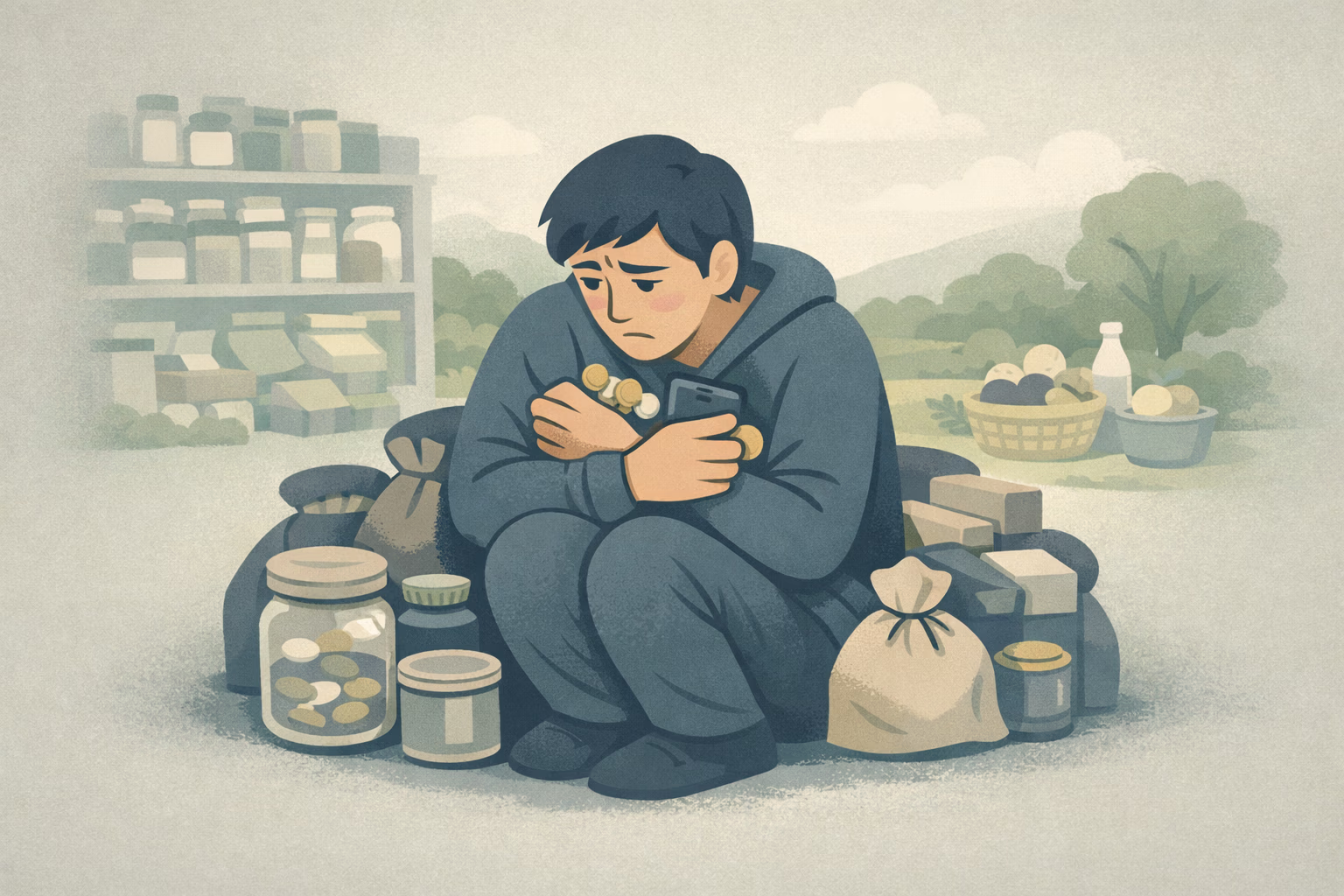
Ultra-processed foods create a modern shortcut: the “rare jackpot” is available all day, everywhere, at a relatively low cost of effort. That doesn’t just increase access; it changes the meaning the body assigns to food. The system starts responding as if it must secure a resource—while also being asked to act as if the resource is neutral and optional. That mismatch can create internal friction, urgency, and a chronic sense of unfinished appetite. [Ref-3]
Ultra-processed foods are often the fastest available way to shift state: a burst of pleasure, a softening of tension, a quick break from effort. There is little preparation, little waiting, and often little social negotiation. In a high-load life, that efficiency matters.
Notably, this isn’t about “emotional eating” as a personality trait. It’s about how a nervous system under strain will often select the quickest reliable regulator it can find. When eating becomes a primary regulator, it can temporarily mute discomfort while also postponing closure—because the body’s deeper signals (adequate nourishment, true fullness, stable energy) were never fully met. [Ref-4]
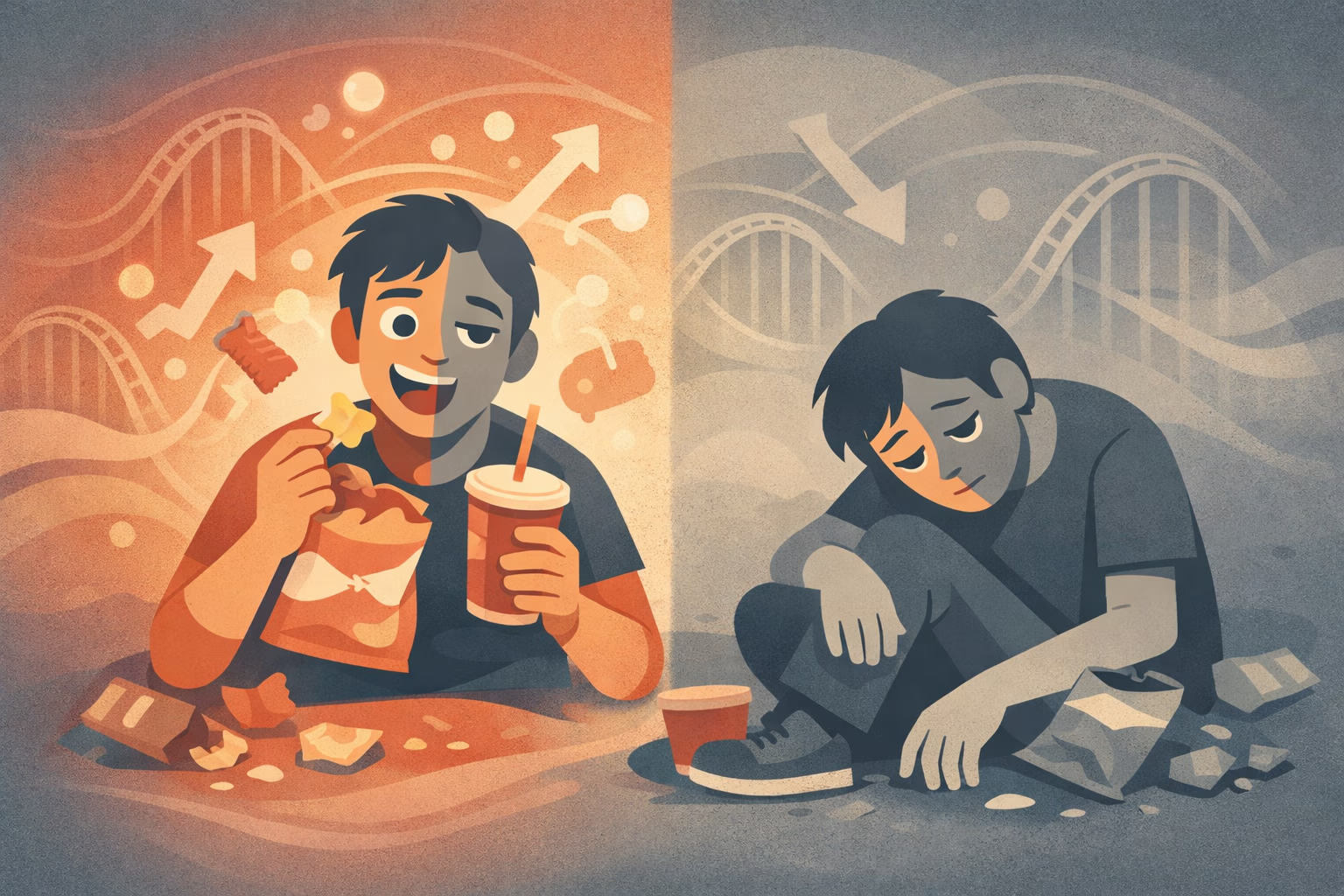
Ultra-processed foods can feel satisfying in the moment, but many people notice a confusing after-pattern: cravings return quickly, energy dips, and the desire to “fix the feeling” with more food shows up again. The mouth got a strong signal, but the system didn’t necessarily receive the kind of completion that lets it stand down.
One way to understand this is that the body is not only looking for stimulation—it’s looking for closure. When eating doesn’t create a dependable “done” signal, the loop remains partially open. That open loop can show up as restless snacking, grazing, or a background preoccupation with what’s next. Under ongoing life pressure, the brain becomes even more likely to reach for the fastest state-change available. [Ref-5]
A pleasure loop forms when a behavior reliably changes state quickly (calms, numbs, energizes, distracts), but doesn’t produce lasting completion. The nervous system learns the immediate effect, then re-requests it—especially when stress load is high or when days don’t contain clear endings.
With ultra-processed foods, the “reward now” part can become more dependable than the “nourished later” part. Over time, this can shift eating from a rhythm of hunger → eat → fullness → rest into a cycle of activation → stimulus → brief relief → renewed activation. The person isn’t irrational; the system is following the strongest, fastest signal it has been trained to trust. [Ref-6]
Because this is a regulatory loop, it often shows up in repeatable micro-patterns—not just big moments. People may notice that certain foods are chosen even when there were other options, and that the body’s signals feel inconsistent or hard to read.
None of these mean a person lacks character. They suggest a nervous system repeatedly choosing what works fast in the current environment. [Ref-7]
When eating becomes highly stimulated and irregular, the body can start sending mixed messages: hunger that arrives suddenly, fullness that arrives late, energy that rises and drops sharply, and mood that feels more reactive around food. This is not just “in the head.” It’s what happens when internal signals are competing with strong external engineering.
Over time, the person may lose trust in their own appetite. Hunger can feel urgent rather than informative; fullness can feel unreliable; and the space between the two can fill with negotiation and self-monitoring. That constant monitoring is its own form of load—and load tends to make the quick regulator even more attractive. [Ref-8]
Satiety is not a single switch; it’s a cascade of signals from the gut, hormones, sensory experience, and the brain’s interpretation of safety and sufficiency. Ultra-processed foods can disrupt that cascade by delivering concentrated reward quickly while offering fewer of the sensory and nutritional features that typically mark completion.
When the body doesn’t register a clean “enough,” it may keep seeking. This can look like escalating intensity—larger portions, stronger flavors, more frequent hits—because the system is trying to reach a threshold of satisfaction that keeps moving. In this way, repeated exposure doesn’t just maintain craving; it can amplify it by training attention toward the next reliable reward. [Ref-9]
It can be clarifying to separate state change from stability. Ultra-processed foods are excellent at state change: they can reliably shift stress, boredom, or agitation in minutes. Stability is different. It emerges when the body receives repeated experiences of completion—enough nourishment, enough rest, enough relational safety, enough predictable rhythm.
This is why the return of hunger and fullness cues is often less about “more insight” and more about conditions. When stress load is high and days lack clean endings, internal signals are easier to override. When life contains more physiological closure—pauses, predictable meals, less constant evaluation—those signals can re-emerge with less effort. Awareness can help you notice the loop, but integration looks like the body no longer needing to shout. [Ref-10]
Sometimes the most meaningful change is when eating stops feeling like a negotiation and starts feeling like a normal part of living again.
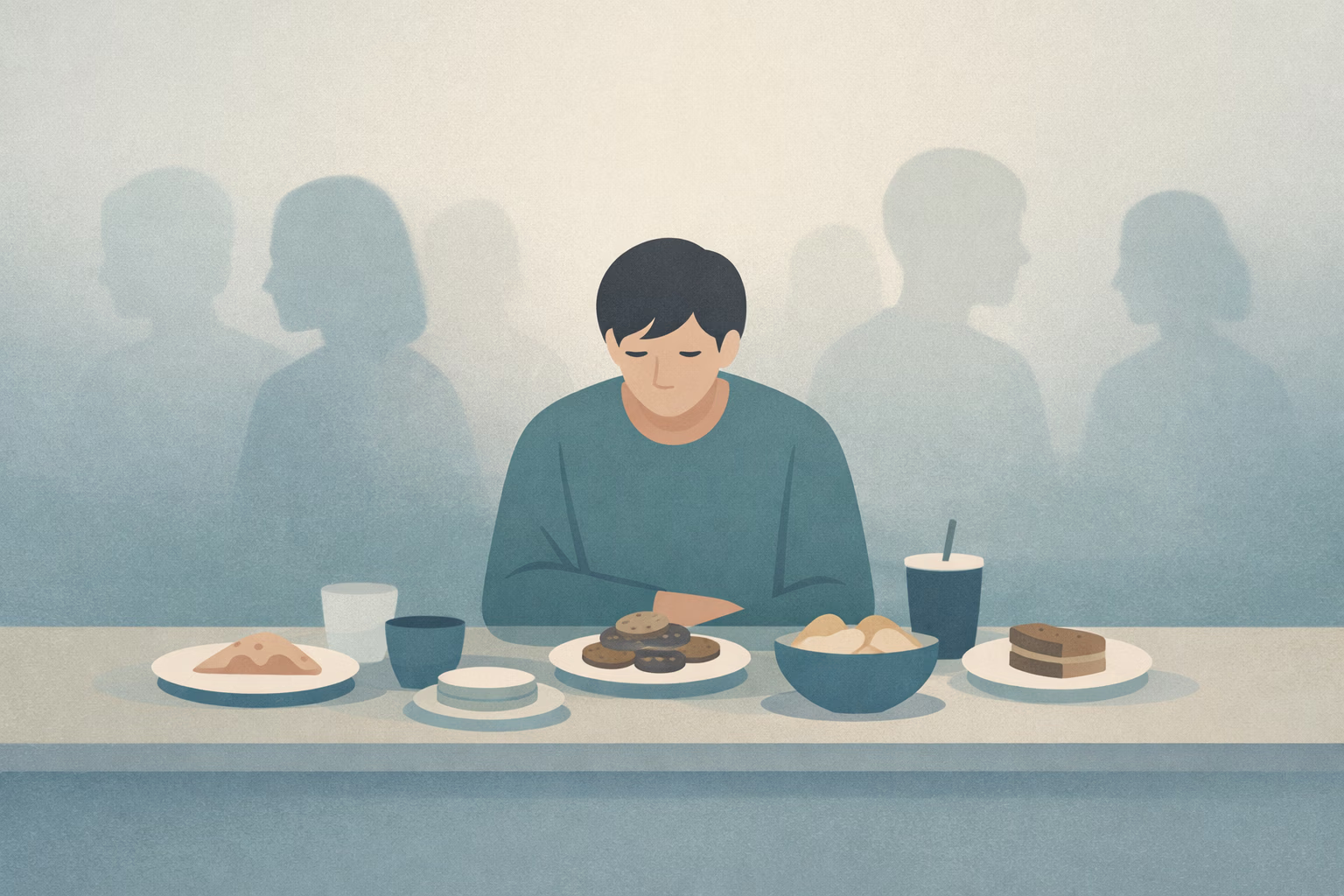
Compulsive loops tend to intensify in isolation and evaluation. Not because someone is “weak,” but because social safety cues and shared rhythm are powerful regulators. Eating in a non-judgmental context—where food isn’t a test and the person isn’t being measured—can reduce the background threat signal that drives urgent soothing.
In many cultures, meals are not only nutrition; they’re coordination: timing, belonging, and a shared sense of “we’re okay right now.” When that coordination is missing, eating can become a solitary regulation tool, tasked with doing too many jobs at once. Supportive environments soften shame, and reduced shame often reduces the need for immediate escape. [Ref-11]
As the nervous system gets more consistent closure, people often describe subtle but important shifts: cravings feel less urgent, hunger feels more gradual, and there’s more room between impulse and action. Not perfect control—more like the volume turns down.
Another common change is that simpler foods begin to register as “real” again. Instead of needing intense flavor to feel satisfied, satisfaction becomes linked to steadier energy and a quieter mind afterward. The body starts to trust that nourishment is coming, which reduces the drive to secure stimulation immediately. [Ref-12]
What changes when food no longer has to function as relief?
Often, the answer is capacity: more ability to wait, choose, and stop—because the system expects completion rather than chasing it.
When eating is dominated by ultra-processed stimulation, the “meaning” of food can shrink to one job: change my state now. As coherence returns, food can regain its older roles—fuel, steadiness, culture, care, shared time, and respect for the body’s limits.
This is an identity-level shift, not a motivational speech. It looks like eating aligning with who you are when you’re not under emergency pressure: someone who can feel hunger without panic, feel fullness without loss, and let meals be part of life rather than an escape hatch. When actions and values line up, behavior tends to stabilize with less internal fighting. [Ref-13]
Ultra-processed food addiction is often a mismatch between biology and industrial certainty: ancient survival circuits meeting products built to be irresistible and endlessly available. In that context, craving is not a confession of failure. It’s a predictable output of design plus load.
There is real agency available here, but it usually arrives through dignity and coherence—not through self-pressure. When nourishment becomes connected to care, rhythm, and a sense of “enough,” the nervous system can learn closure again. And when closure returns, choice stops feeling like a fight and starts feeling like a normal human capacity. [Ref-14]
It’s easy to assume that if food feels compulsive, something is wrong with you. A more grounded view is that your system adapted to what it was given: speed, intensity, and constant access. Adaptation is not identity.
Food often becomes satisfying again when it supports life rather than overwhelms instinct—when the body receives completion instead of just stimulation, and when eating belongs to a wider story than urgency. That wider story is where steadiness tends to live. [Ref-15]
From theory to practice — meaning forms when insight meets action.
Because ultra-processed foods often combine sugar, fat, salt, and refined starches in ways that create a strong reward signal. Textures are engineered for fast chew and swallow, flavors stay interesting, mouthfeel is satisfying before fullness registers. The reward system gets a loud 'yes' while satiety signals arrive later and quieter. The body learns: this is an efficient way to shift state. Once eating starts, stopping feels strangely difficult — the off-switch is delayed. This isn't lack of willpower; it's a Pleasure Loop where the mouth got a strong signal but the system didn't receive completion that lets it stand down. The loop remains partially open.
Structurally, it functions like one — but framing it as moral failure misses the point. Modern food creates a mismatch: ancient survival circuits (calorie-dense food was once uncertain, so eating more made sense) meet products engineered to be irresistible and endlessly available. Evolutionary Mismatch in everyday form. The pull isn't really hunger; it's a nervous system under strain selecting the quickest reliable regulator it can find. When eating becomes a primary regulator, it temporarily mutes discomfort while postponing closure — because deeper signals (adequate nourishment, true fullness, stable energy) were never fully met. Craving is a predictable output of design plus load, not a confession of failure.
Satiety isn't a single switch — it's a cascade of signals from gut, hormones, sensory experience, and brain interpretation of safety and sufficiency. Ultra-processed foods disrupt that cascade by delivering concentrated reward quickly while offering fewer of the sensory and nutritional features that mark completion. When the body doesn't register a clean 'enough,' it keeps seeking. This shows up as escalating intensity — larger portions, stronger flavors, more frequent hits — because the threshold of satisfaction keeps moving. Hunger feels urgent rather than informative, fullness arrives late and unreliable, and the space between fills with negotiation. Trust in your own appetite gradually thins.
It helps to separate state change from stability. Ultra-processed foods are excellent at state change — minutes of relief from stress, boredom, agitation. Stability is different: it emerges when the body receives repeated experiences of completion, including enough nourishment, rest, relational safety, and predictable rhythm. Compulsive loops intensify in isolation and evaluation; supportive environments and shared meals soften shame, which reduces the need for immediate escape. As coherence returns, cravings feel less urgent, simpler foods register as 'real' again, and satisfaction links to steadier energy and a quieter mind afterward. Adaptation isn't identity. Food becomes satisfying again when it supports life rather than overwhelms instinct.
From Science to Art.
Understanding explains what is happening. Art allows you to feel it—without fixing, judging, or naming. Pause here. Let the images work quietly. Sometimes meaning settles before words do.
One Quiet Window, one insight, one reflection — every Sunday