Emotional Eating: How Your Brain Uses Food to Escape Stress
In short: Binge eating patterns can be confusing from the inside: you may be physically full, uncomfortable, even mentally saying “stop,” and yet still feel pulled toward another bite. That tug doesn’t mean you’re broken or lacking discipline.
Binge eating patterns can be confusing from the inside: you may be physically full, uncomfortable, even mentally saying “stop,” and yet still feel pulled toward another bite. That tug doesn’t mean you’re broken or lacking discipline. It often means your system is running a powerful survival-and-reward program that’s temporarily outvoting slower body signals.
In modern environments, food can be engineered to be exceptionally compelling—fast pleasure, fast relief, fast distraction. When that kind of reward arrives on top of stress load, depletion, or ongoing pressure, “enough” can stop registering as a clear endpoint.
If your body has everything it needs, why can it still feel unfinished?
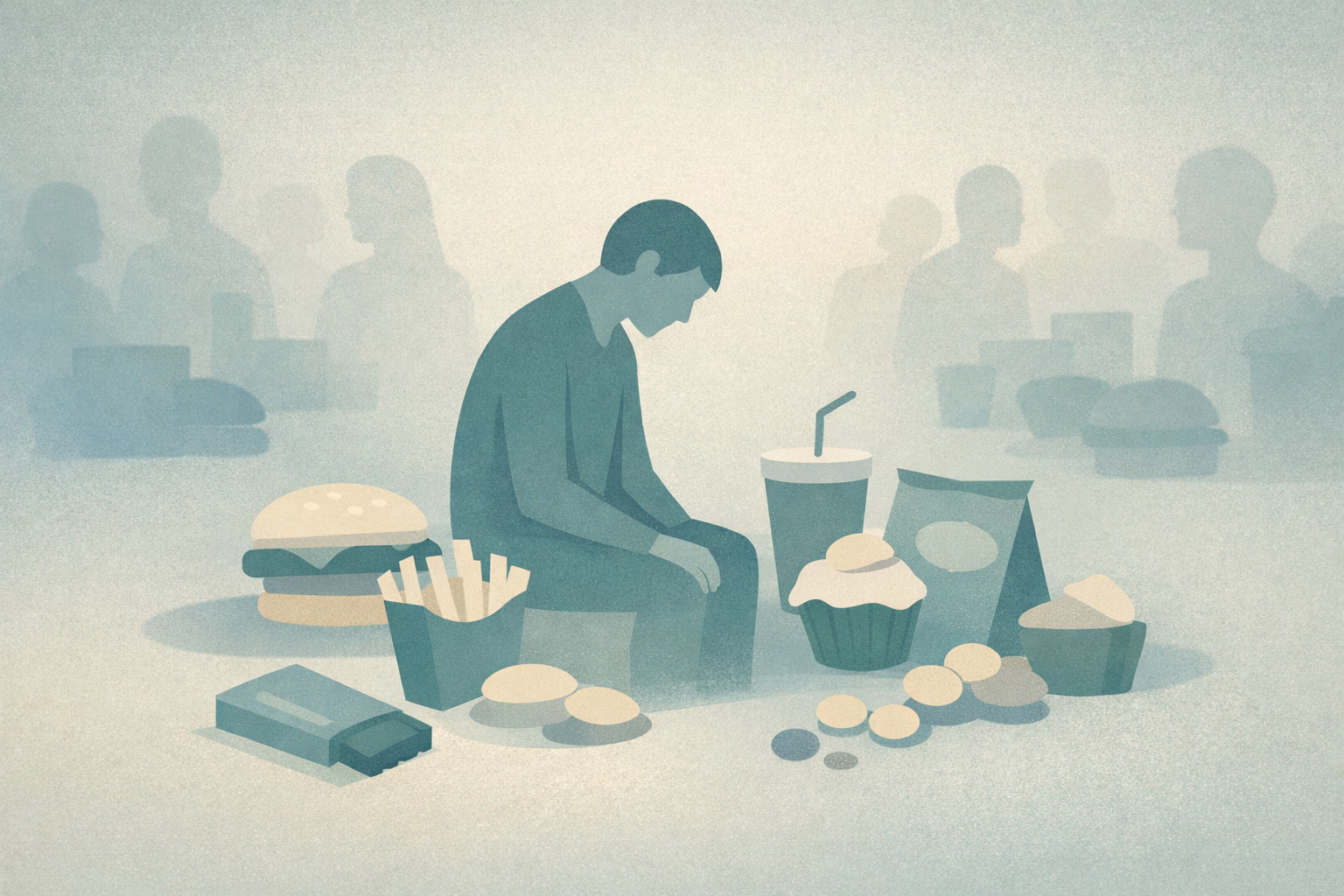
During a binge, people often describe two experiences at once: urgency and distance. Urgency looks like eating quickly, reaching for more before the last bite has landed, or feeling unable to pause. Distance can feel like autopilot—watching yourself do it, not fully present, not fully choosing.
That combination isn’t a character flaw. It’s a common outcome when reward circuits are driving behavior while the systems that track comfort, fullness, and long-term consequence are temporarily muted. In other words, the loop is running faster than the body’s ability to deliver a convincing “done” message. [Ref-1]
“It’s like my body is eating for comfort, but my mind is standing a few steps behind.”
Hunger and satiety are not just willpower experiences—they’re signals shaped by hormones, nerves, and brain networks. Highly palatable foods (often high in sugar, fat, salt, and refined texture) can intensify reward signaling and keep attention locked on the next bite.
At the same time, satiety signals are slower. They rely on stomach stretch, gut-brain messaging, and hormonal feedback that takes time to rise and become persuasive. When reward arrives fast and repeatedly, the system can keep reaching forward for another hit of “yes” before the physiology has time to register “enough.” [Ref-2]
This is why stopping can feel less like a decision and more like trying to interrupt a moving conveyor belt—especially when you’re eating quickly or distracted.
Human feeding systems evolved under conditions where calorie-dense food was uncertain. In that context, strong motivation to eat when food is available is not a problem—it’s protection. The body learned to treat richness and availability as a signal to secure energy while you can.
Modern life flips the math: access is constant, portions are large, and products are designed to be easy to consume rapidly. The same survival logic can become over-recruited, not because you’re failing, but because the environment continuously presses the “store energy” button without offering natural endpoints. [Ref-3]
When the surrounding cues say “more is available, more is rewarding, more is easy,” the nervous system may not receive the closure it needs to stand down.
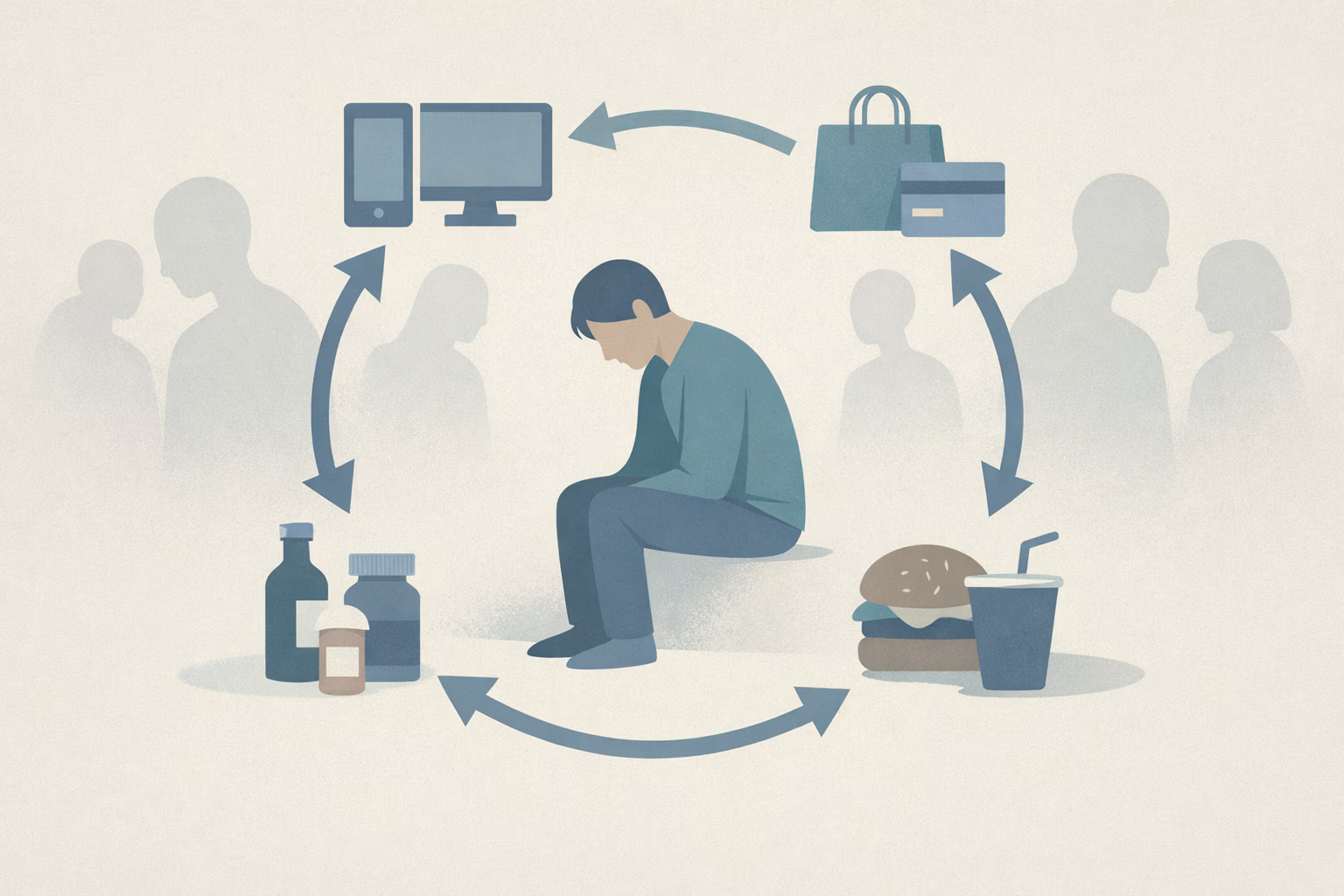
Binge eating is often described as “about food,” but structurally it can function like a rapid state-change: a way the body shifts out of overwhelm, agitation, or flatness. Eating can narrow attention, soften internal noise, and create a temporary sense of being held by something predictable.
This isn’t about hidden psychological motives. It’s about regulation under load. When stress is high or meaning is thin—when days are packed with evaluation, uncertainty, or social pressure—high-reward food can become a fast, reliable cue of safety and comfort.
In that moment, the system isn’t chasing calories. It’s chasing a nervous-system “settle,” even if the settling doesn’t last. [Ref-4]
“One more bite” often carries a promise: completion. The body expects that the next mouthful will create the final click into satisfaction—the internal full stop. But with highly stimulating food, completion keeps getting postponed. Reward stays loud while closure stays quiet.
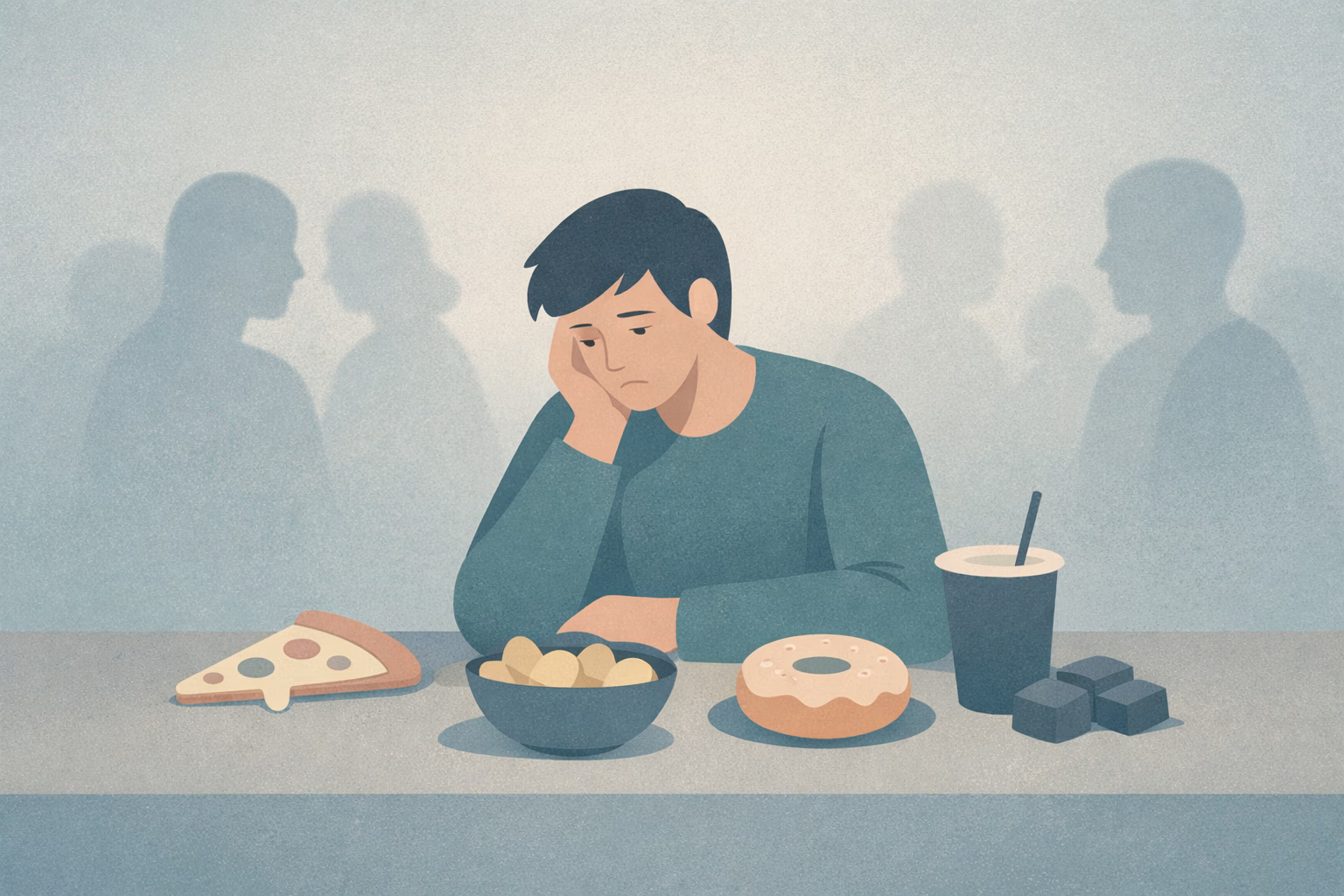
Afterward, many people feel an extra layer of discomfort that isn’t only physical. There can be a sense of mistrust: “If I can’t feel my own ‘enough,’ what can I rely on?” That loss of bodily trust is a meaningful consequence, not a moral one—and it can make the next eating moment feel higher-stakes. [Ref-5]
What if the problem isn’t appetite—what if it’s a missing “done” signal?
A “pleasure loop” is a cycle where immediate reward repeatedly overrides slower regulating inputs. In binge eating patterns, this can look like reward dominance: the next bite matters more than comfort, fullness, or even enjoyment.
Stress chemistry can intensify this. Under strain, appetite hormones and reward sensitivity can shift, making highly palatable food feel more urgent and more relieving in the short term. Meanwhile, regulation signals—satiety, interoception, future-cost awareness—can become harder to access in the moment. [Ref-6]
Once this loop is established, it can run even when the original need has passed, because the body is still trying to reach the endpoint it expected but didn’t receive.
Binge eating patterns often have recognizable features. These aren’t “symptoms to judge”; they’re clues about how the loop is operating—fast, private, and disconnected from satiety timing.
Some of these patterns are linked to satiety signaling differences and gut-brain feedback timing, which can make “enough” harder to register early. [Ref-7]
Repeated episodes of overriding fullness can create a confusing internal landscape. Hunger may feel urgent and abrupt. Fullness may feel unreliable—either absent until it’s intense, or present but unconvincing. That’s not because your body is “bad at cues.” It’s because cues are context-dependent and shaped by repeated high-intensity stimulation.
Over time, frequent reliance on ultra-processed, high-reward foods can be associated with changes in mood regulation, stress reactivity, and decision-making around reward—especially when combined with chronic stress and disrupted routines. [Ref-8]
When internal cues become less trustworthy, the system may lean even harder on external cues (packages, portions, screens, availability) to decide when eating is “over.” And external cues rarely provide true closure.
After a binge, many people respond with tightening: stricter rules, compensation, or deprivation. Structurally, this can backfire—not because you “failed,” but because deprivation amplifies reward value. When the body senses scarcity (real or perceived), the next encounter with palatable food can light up as more significant, more urgent, more worth securing.
Guilt also adds load. It keeps the nervous system in a self-monitoring posture—more threat scanning, more urgency to “fix it,” less capacity for steady satiety tracking. Under that pressure, the reward loop can become the fastest available off-ramp again. Neurobiological models of overeating describe how stress and restriction can heighten reward responsiveness and undermine regulatory balance. [Ref-9]
Restriction can look like control, but inside the body it can register as “prepare to secure food.”
In binge eating patterns, “stopping” often isn’t a moral decision; it’s a physiological threshold. Satiety has to become influential again—strong enough to compete with reward. And satiety tends to speak more clearly when the system is not running on threat, depletion, or relentless evaluation.
This is where the story can shift from “Why can’t I control myself?” to “What conditions would let my body complete the eating cycle?” That shift is not a pep talk. It’s a reorientation toward coherence: when the nervous system senses enough safety and enough time, the body’s braking systems can re-enter the conversation. [Ref-10]
Completion feels like a quiet internal landing—less negotiation, less chasing—because the loop finally receives a believable endpoint.
Secrecy is not a personality trait; it’s often a load-management strategy. When eating becomes charged with evaluation, privacy can feel like the only way to reduce pressure. But isolation removes regulating inputs: warmth, perspective, shared reality, and the gentle “you’re still okay” cues that help the nervous system settle.
When binge eating is met with non-judgment—by others or within a more spacious internal narrative—there is often less threat in the system. Less threat can mean fewer urgent escapes into reward. Research on compulsive-like patterns around ultra-processed foods highlights the role of craving, reinforcement, and distress, and why shame tends to deepen the cycle rather than resolve it. [Ref-11]
What changes when your pattern is treated as a response, not a verdict?
When the loop loosens, the change is often practical and bodily—not dramatic. Hunger becomes more gradated instead of spiking. Fullness becomes more readable earlier. The urge for “just one more” has less electrical intensity, because the reward signal is no longer the only strong signal in the room.
People often notice a return of small pauses: a moment where the next bite isn’t automatic, where taste registers, where stopping doesn’t feel like deprivation. That isn’t mere insight. It’s a sign of restored capacity—more bandwidth for satiety, more tolerance for “enough,” more access to the body’s timing. Changes in reward and decision dynamics around ultra-processed foods help explain why urgency can fade when conditions support regulation. [Ref-12]
When eating is aligned with nourishment, it tends to carry a different quality: steadier, less secretive, more integrated into daily life. Food can still be pleasurable, but pleasure no longer has to do the entire job of comfort, distraction, and closure.
This is also where values matter—not as rules, but as orientation. When your life contains other sources of completion (belonging, rest, competence, contribution, creativity), food doesn’t have to carry so much meaning by itself. Over time, eating can become one supportive thread in a coherent life, rather than the primary place your nervous system goes to feel finished. Broader discussions of ultra-processed food addiction emphasize how social and environmental conditions shape these patterns, not just individual choice. [Ref-13]
Coherence feels like less bargaining with yourself—and more quiet agreement between body and life.
Binge eating patterns often emerge where overwhelm and deprivation overlap—physiological deprivation, emotional depletion, social pressure, or chronic stress load. In that overlap, high-reward food can become a fast stabilizer, even when it later costs comfort and trust.
Relief is not the same as completion, and stimulation is not the same as satisfaction. When you view the pattern as a nervous-system attempt to find safety and closure, the shame story can soften. And when shame softens, there is more room for the conditions that help satiety regain its natural influence. Stress hormones and recovery states are part of this picture too, shaping vulnerability and timing. [Ref-14]
Agency often returns not through pressure, but through restored coherence: a life where the body is allowed to finish its loops and register “enough” without having to shout.
The most hopeful part of this topic is also the most humane: the “never enough” feeling is not a permanent truth about you. It is often a temporary outcome of high-reward input meeting a system that hasn’t had the chance to settle.
When eating is met with respect—when the body’s thresholds are allowed to matter again—satisfaction can become easier to reach and easier to believe. Over time, the quiet internal “done” signal can return, not as a rule, but as a lived, physiological kind of trust. [Ref-15]
From theory to practice — meaning forms when insight meets action.
Because reward circuits and satiety signals run on different timelines. Highly palatable foods (sugar, fat, salt, refined texture) intensify reward signaling fast and lock attention on the next bite. Satiety is slower — it depends on stomach stretch, gut-brain messaging, and hormonal feedback that takes time to rise. When reward arrives quickly and repeatedly, the system keeps reaching for another hit of yes before physiology can register enough. This isn't lack of discipline. It's the Pleasure Loop running ahead of your body's ability to deliver a believable Done Signal, especially when you're eating quickly or distracted.
Structurally, binges often function like a rapid state-change rather than a hunger event. Eating narrows attention, softens internal noise, and creates a temporary sense of being held by something predictable. When stress is high or meaning is thin — packed days of evaluation, uncertainty, social pressure — high-reward food becomes a fast, reliable cue of safety and comfort. The system isn't chasing calories; it's chasing a nervous-system settle. That's why this falls inside the Pleasure Loop and Threat & Safety territory: the Four Evolutionary Systems are using food to do regulation work nothing else is doing right now.
Because deprivation amplifies reward value. When the body senses scarcity — real or perceived — the next encounter with palatable food lights up as more significant, more urgent, more worth securing. Guilt adds another layer: it keeps the nervous system in a self-monitoring posture, more threat-scanning, less capacity for steady satiety tracking. Under that pressure, the reward loop becomes the fastest off-ramp available again. Restriction can look like control from outside, but inside the body it can register as 'prepare to secure food' — which is exactly the setup for the next binge.
Repeated episodes of overriding fullness create a confusing internal landscape. Hunger may feel urgent and abrupt. Fullness becomes unreliable — either absent until it's intense, or present but unconvincing. This isn't because your body is bad at cues; it's because cues are context-dependent and shaped by repeated high-intensity stimulation. When internal cues lose trustworthiness, the system leans harder on external cues (packages, portions, screens) to decide when eating is over — and external cues rarely provide true closure. Restoring satiety isn't a willpower task; it's about giving the body conditions where its own thresholds get to matter again.
From Science to Art.
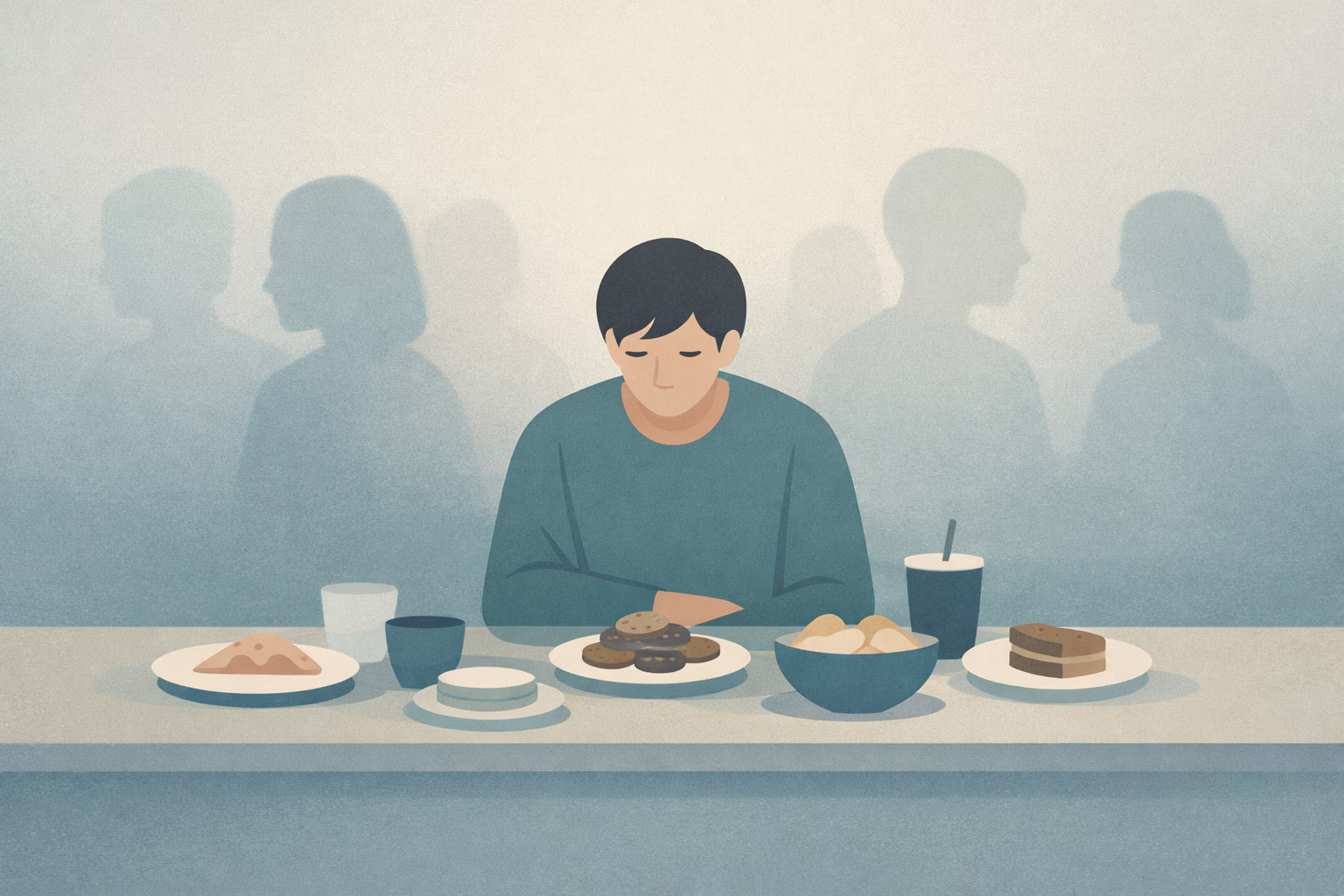
Understanding explains what is happening. Art allows you to feel it—without fixing, judging, or naming. Pause here. Let the images work quietly. Sometimes meaning settles before words do.
One Quiet Window, one insight, one reflection — every Sunday