
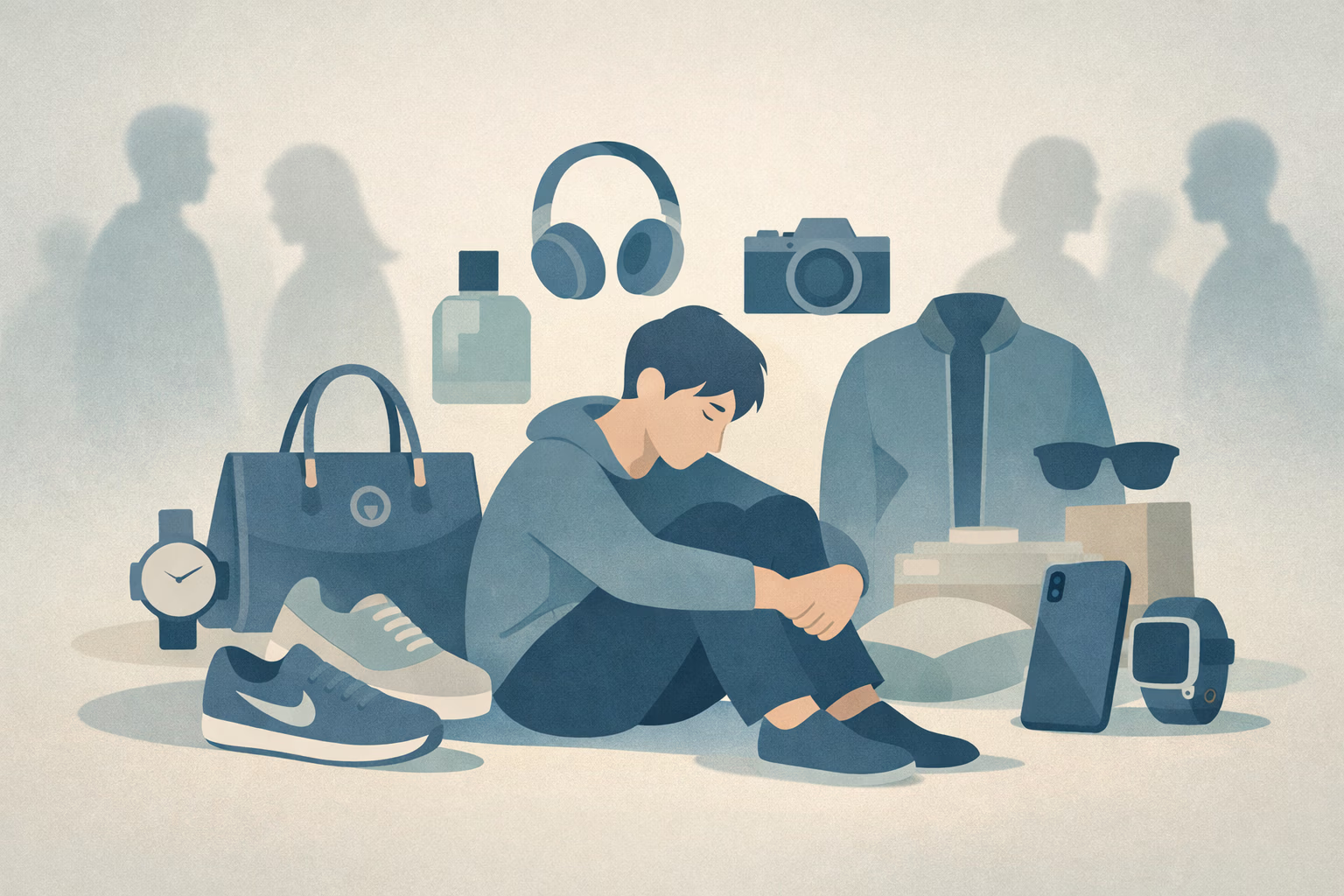
Brand Identity: When Your Purchases Become Your Personality
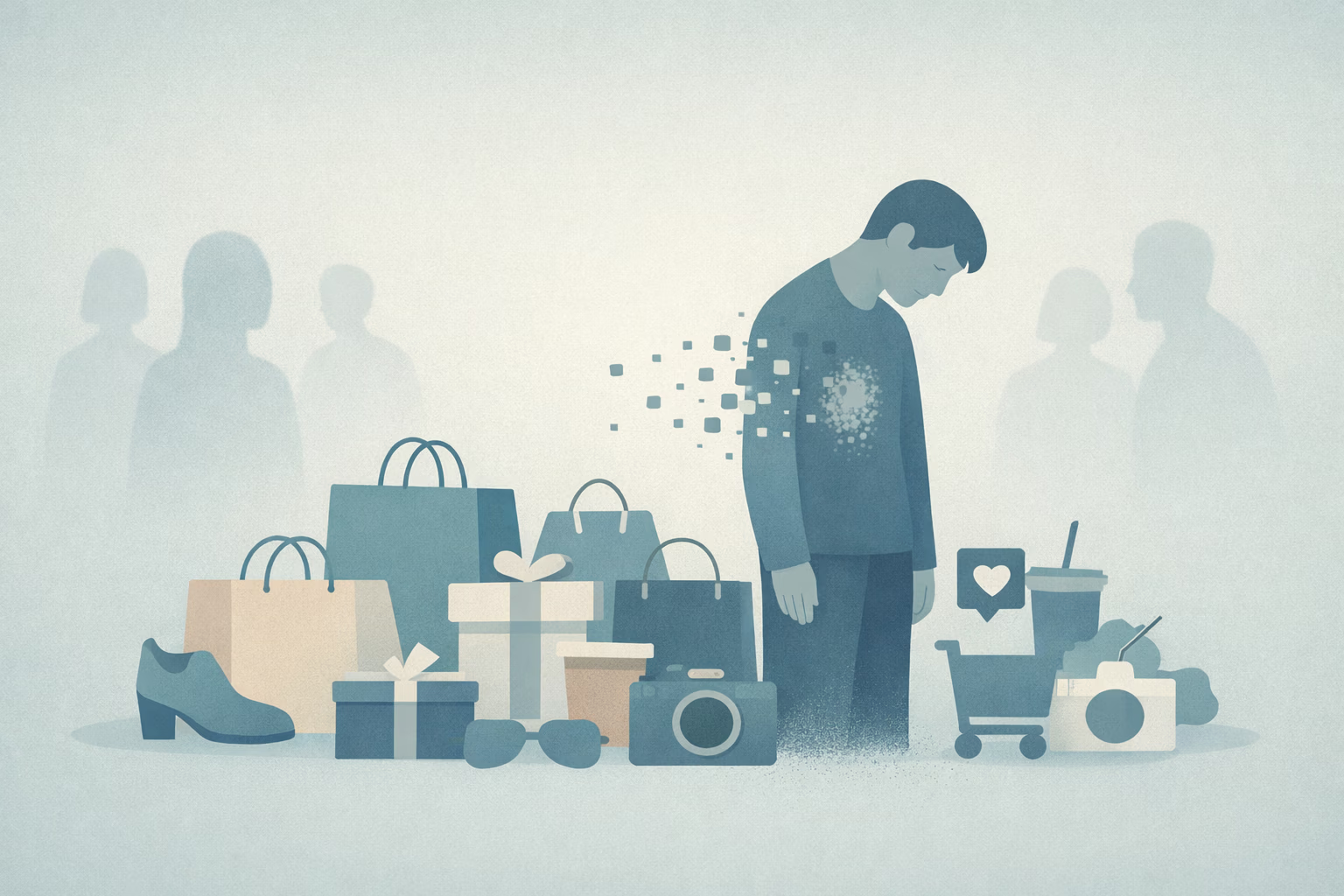
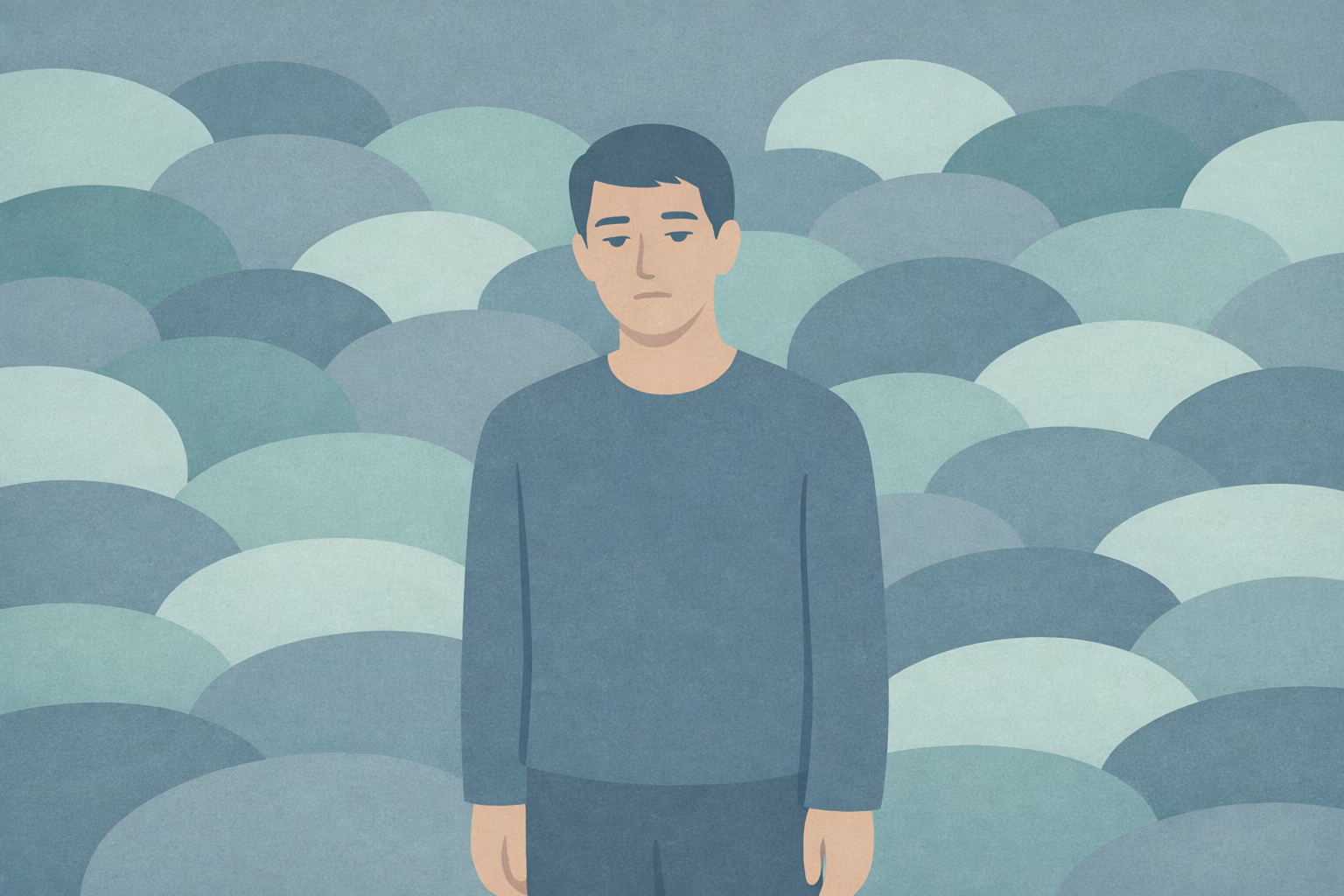
In short: There’s a specific kind of tired that doesn’t come from doing too much. It comes from taking in too much—videos, posts, news, commentary, entertainment—until your attention feels busy but your sense of self feels thin.
There’s a specific kind of tired that doesn’t come from doing too much. It comes from taking in too much—videos, posts, news, commentary, entertainment—until your attention feels busy but your sense of self feels thin.
What if the “hollow” feeling isn’t a character flaw, but a coherence problem?
Identity doesn’t consolidate through constant stimulation. It consolidates through completed experiences—choices that land, actions that finish, and moments that register as “this is me, in motion.” When overconsumption replaces those completions, the nervous system stays active while the story of you stays unfinished.
People often describe identity drain as foggy values, stalled decisions, or a low-grade sense of “I don’t know what I want.” That doesn’t mean there’s nothing inside you. It can mean your attention is continuously rented out to other people’s narratives, leaving less bandwidth for your own to take shape. [Ref-1]
When most of your day is intake, the self has fewer chances to become concrete. Identity becomes harder to locate because it’s usually formed in the aftermath of completion: you act, you see the consequence, your system updates. Without those loops closing, you can end up with a lot of stimulation and very little inner punctuation.
Not empty—unfinished.
Passive consumption tends to keep the brain in a receiving mode: tracking novelty, scanning social signals, and shifting attention rapidly. Over time, that can crowd out the slower, integrative work that supports identity consolidation—holding a thread, weighing tradeoffs, and forming a stable “this matters to me.” [Ref-2]
This is less about “self-control” and more about what gets exercised. When your day is dominated by externally paced input, the circuits that support reflective choice-making get fewer reps. You may still think a lot—but the thinking stays tethered to what you just consumed, rather than settling into a coherent internal stance.
So the problem isn’t ignorance—it’s missing closure.
Humans are designed for social learning. We track status cues, imitate what works, and use other people’s stories to build our own. Novelty and social information are not distractions by nature; they’re evolutionary advantages.
The mismatch is scale and speed. Digital environments can deliver endless novelty and social comparison without the natural limits that used to come from geography, community size, and the pace of real interactions. Overexposure can flood the learning system with fragments—so instead of “I learned something and integrated it,” it becomes “I absorbed a thousand micro-impressions and never finished processing them.” [Ref-3]
In that state, self-authorship weakens—not because you lack depth, but because the environment keeps interrupting the conditions required for a personal narrative to form.
Overconsumption often functions as quick state-shift: it reduces boredom, dulls uncertainty, and fills quiet spaces that might otherwise prompt a decision or a reckoning. The relief is real. The nervous system registers it as a temporary reduction in discomfort.
But the same move can also postpone completion. Instead of “I faced the unresolved thing and it concluded,” the system gets “I changed channels and the pressure dropped.” That can create the illusion of engagement—your mind is occupied—while the underlying loops that would clarify identity remain incomplete. [Ref-4]
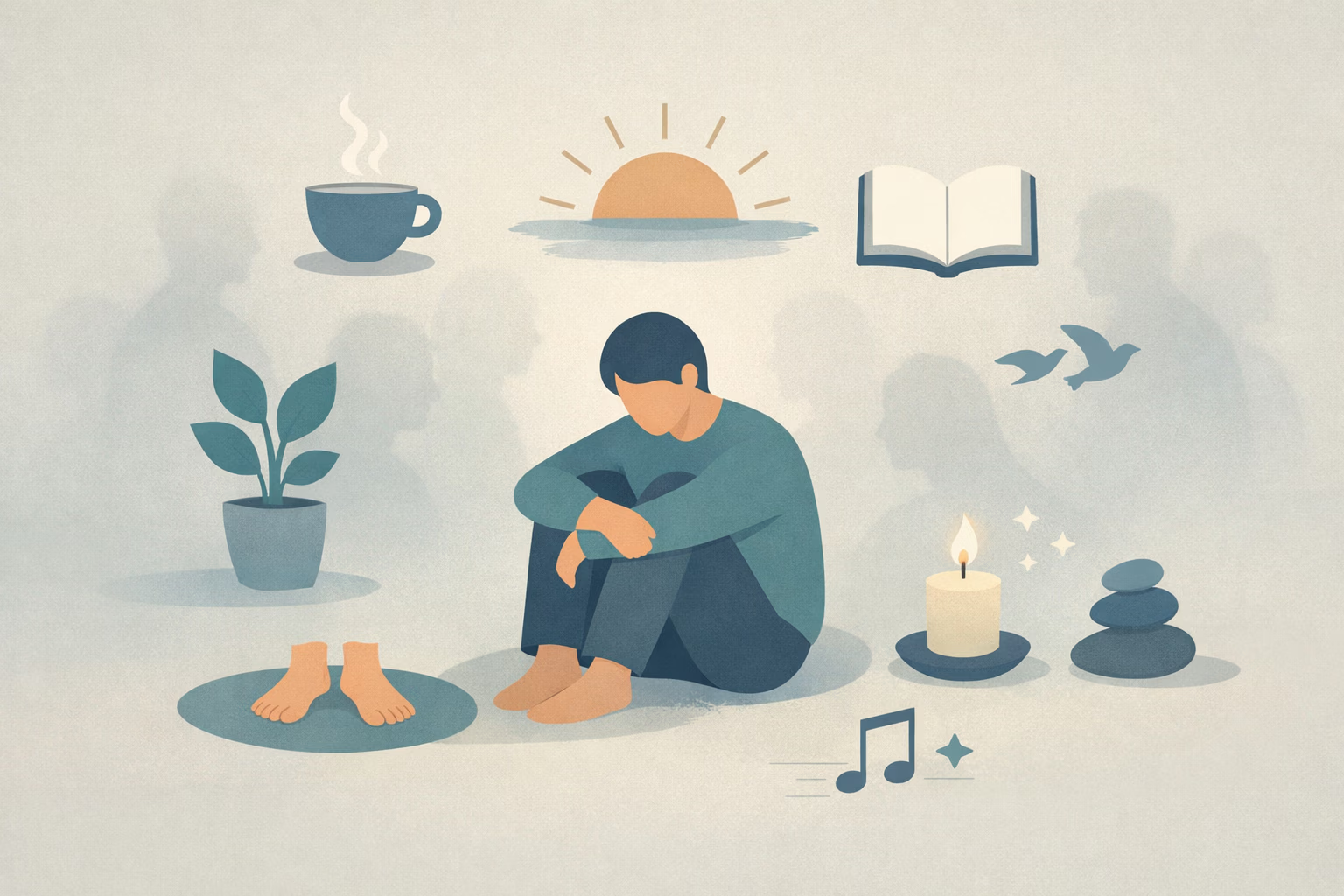
Some consumption is genuinely enriching. The issue isn’t that media is bad; it’s that identity requires proportion. If intake becomes the default response to every gap—waiting, discomfort, loneliness, indecision—the day can lose the spaciousness where personal meaning consolidates.
Over time, attention dilution can look like creativity drying up, preferences becoming hard to access, or self-image getting pulled by comparison. Even when content is “positive,” the structure is still externally authored: someone else sets the pace, the values, the framing, and the endings. [Ref-5]
Identity drift often isn’t dramatic. It’s quiet: fewer moments that feel authored, finished, and real.
When consumption reliably shifts your state—less restless, less uncertain, less alone—it can become the nervous system’s fastest route to relief. The brain learns: “input equals ease.” This is not a moral failure; it’s conditioning under pressure.
In an avoidance loop, the reward isn’t just pleasure. It’s also the muted consequence of not having to complete something difficult: a choice, a conversation, a creative attempt, a values-based boundary. Short-term relief reinforces the pattern, and the cost shows up later as lower clarity and thinner agency. [Ref-6]
It’s not that you’re avoiding your life. Your system is selecting the quickest downshift available.
Because the loop is structural, it often shows up as patterns rather than feelings. Many people recognize themselves in some of these:
There can also be relational effects: more passive observation, less active participation, and a subtle shrinking of initiative in social spaces. [Ref-7]
None of this means you’re shallow. It can mean your system is overloaded with input and underfed on completion.
Agency is not a personality trait—it’s a capacity that strengthens when actions produce clear feedback and closure. Chronic overconsumption can erode that capacity by reducing opportunities to initiate, choose, and complete.
When the day is mostly reactive, identity cohesion weakens. You may still have values, but they feel harder to access. You may still have preferences, but they don’t organize behavior the way they used to. The result can be a sense of being present for life but not fully in it. [Ref-8]
Attention goes somewhere; identity follows the trail.
Platforms are built to keep attention moving: variable rewards, social feedback, novelty bursts, and endless next items. Dopamine isn’t “the pleasure chemical” so much as a learning-and-seeking signal—it energizes pursuit and keeps the system oriented toward the next cue.
In passive social media use, you can be highly stimulated while remaining uncommitted: watching, tracking, comparing, saving, refreshing—without the kind of action that would create completion and identity consolidation. [Ref-9]
That’s how drift persists. The nervous system stays engaged, but the self doesn’t get the “I did something that landed” signal. And without that signal, coherence stays provisional.
Identity doesn’t return through insight alone. You can understand the pattern perfectly and still feel unchanged, because coherence is not a thought—it’s a settling that happens after experiences complete.
A useful reframe is to see “creation” in a broad way: anything that turns attention into authored reality—something that has an ending, a consequence, a footprint. This is where internal signals begin to come back online: preference, aversion, conviction, taste.
Not as a productivity project, and not as self-improvement—more like re-entering the kind of life where your nervous system can register: “This was mine. This is done.” [Ref-10]
Identity is personal, but it’s not formed in isolation. Healthy social contact provides reality-testing, mirroring, and shared endings—conversations that conclude, projects that ship, agreements that hold. Those closures support narrative coherence.
Mentoring, collaborative creativity, and steady peer relationships can act like scaffolding when your internal authorship feels faint. Not by telling you who to be, but by creating environments where your choices have shape and consequence, and where your presence matters in real time. [Ref-11]
Coherence often returns through being in contexts that complete experiences.
When identity begins to consolidate again, the change is often practical before it’s dramatic. Attention becomes less “sticky.” Decisions take fewer loops. You can sense what fits and what doesn’t with less negotiation.
Many people notice an increased capacity for signal return: hunger and satiety cues feel clearer, interest feels more specific, and values show up as organizing forces rather than abstract ideas. In research discussions of dopamine-scrolling, a key concern is how repetitive, high-frequency novelty can reshape attention and seeking—making it harder for quieter signals to register. [Ref-12]
Coherence is often experienced as a calmer continuity: the day doesn’t feel like a thousand unrelated clips. It feels like a life that can be followed.
As the loop loosens, energy that once went into monitoring, refreshing, and consuming becomes available for deliberate choices. Not constant willpower—more like regained traction.
Identity-affirming behavior tends to have a recognizable quality: it produces clean feedback and an endpoint. It doesn’t have to be grand. It just has to be authored and completed often enough that your system updates: “This is what I do. This is what matters here.”
Over time, this shift reduces identity drift because it restores the missing ingredient overconsumption can’t provide: lived endings that integrate into who you are. Patterns like dopamine-driven scrolling can keep the seeking system active without that completion, prolonging the drift. [Ref-13]
Overconsumption is often a signal of disengagement, overload, or too much unresolved life—not a sign that you’re vapid or undisciplined. In fast digital environments, attention gets pulled into loops that are expertly designed to continue, especially when the nervous system is already carrying stress load. [Ref-14]
When you view the pattern structurally, shame becomes less relevant. The question shifts from “What’s wrong with me?” to “What keeps my experiences from completing?” That shift alone can restore a sense of orientation—because it points toward coherence, not self-judgment.
Identity doesn’t need constant analysis. It needs enough lived authorship, consequence, and closure that your system can stand down and recognize itself again.
If your identity feels drained, it may be because your attention has been living in other people’s endings while your own loops stayed open. In that context, numbness, urgency, craving, or overcontrol can be regulatory responses—attempts to manage load and uncertainty.
Reclaiming coherence is less about becoming a “better version” of yourself and more about restoring the conditions where the self can form: paced attention, real-world consequence, and experiences that actually finish. And because modern platforms can leverage the brain’s reward-learning systems so efficiently, it makes sense that this is hard to resist by sheer effort alone. [Ref-15]
Identity is not something you force. It’s something that returns when your life gives you enough complete, meaningful moments to become undeniably yours.
From theory to practice — meaning forms when insight meets action.
Because identity doesn't consolidate through stimulation; it consolidates through completed experiences — choices that land, actions that finish, moments that register as 'this is me, in motion.' When most of the day is intake, the self has fewer chances to become concrete. Your attention has been continuously rented out to other people's narratives, leaving less bandwidth for your own to take shape. The hollow feeling isn't a character flaw; it's a coherence problem. Not empty — unfinished. The nervous system stays active while the story of you stays open in the background.
Over time, yes, in ways that are quiet rather than dramatic. Even when content is positive, the structure is externally authored: someone else sets the pace, the values, the framing, the endings. Identity drift looks like fewer moments that feel authored, finished, and real. Preferences become harder to access. Self-image gets pulled by comparison. Creativity dries up. The article frames this as an Avoidance Loop — input becomes the system's fastest route to relief, and the cost shows up later as lower clarity and thinner agency. It's not avoidance of life; it's the brain selecting the quickest available downshift.
Because dopamine isn't the pleasure chemical so much as a learning-and-seeking signal — it energizes pursuit and keeps the system oriented toward the next cue. In passive consumption you can be highly stimulated while remaining uncommitted: watching, comparing, saving, refreshing, without the kind of action that creates completion and identity consolidation. The seeking system stays active without ever receiving the 'I did something that landed' signal. Without that signal, coherence stays provisional. The drift persists not because you lack depth, but because the loop is structured to continue rather than complete.
Authored, completed experiences. The article uses 'creation' broadly — anything that turns attention into authored reality with an ending, a consequence, a footprint. Not as a productivity project, more like re-entering a life where the nervous system can register 'this was mine, this is done.' Healthy social contact also helps because identity isn't formed in isolation: conversations that conclude, projects that ship, agreements that hold provide narrative coherence. You're not behind — you're interrupted. Reclaiming coherence is less about becoming a better version and more about restoring the conditions where the self can form.
From Science to Art.
Understanding explains what is happening. Art allows you to feel it—without fixing, judging, or naming. Pause here. Let the images work quietly. Sometimes meaning settles before words do.
One Quiet Window, one insight, one reflection — every Sunday