Emotional Exhaustion: When Your Tank Is Empty but Life Keeps Going
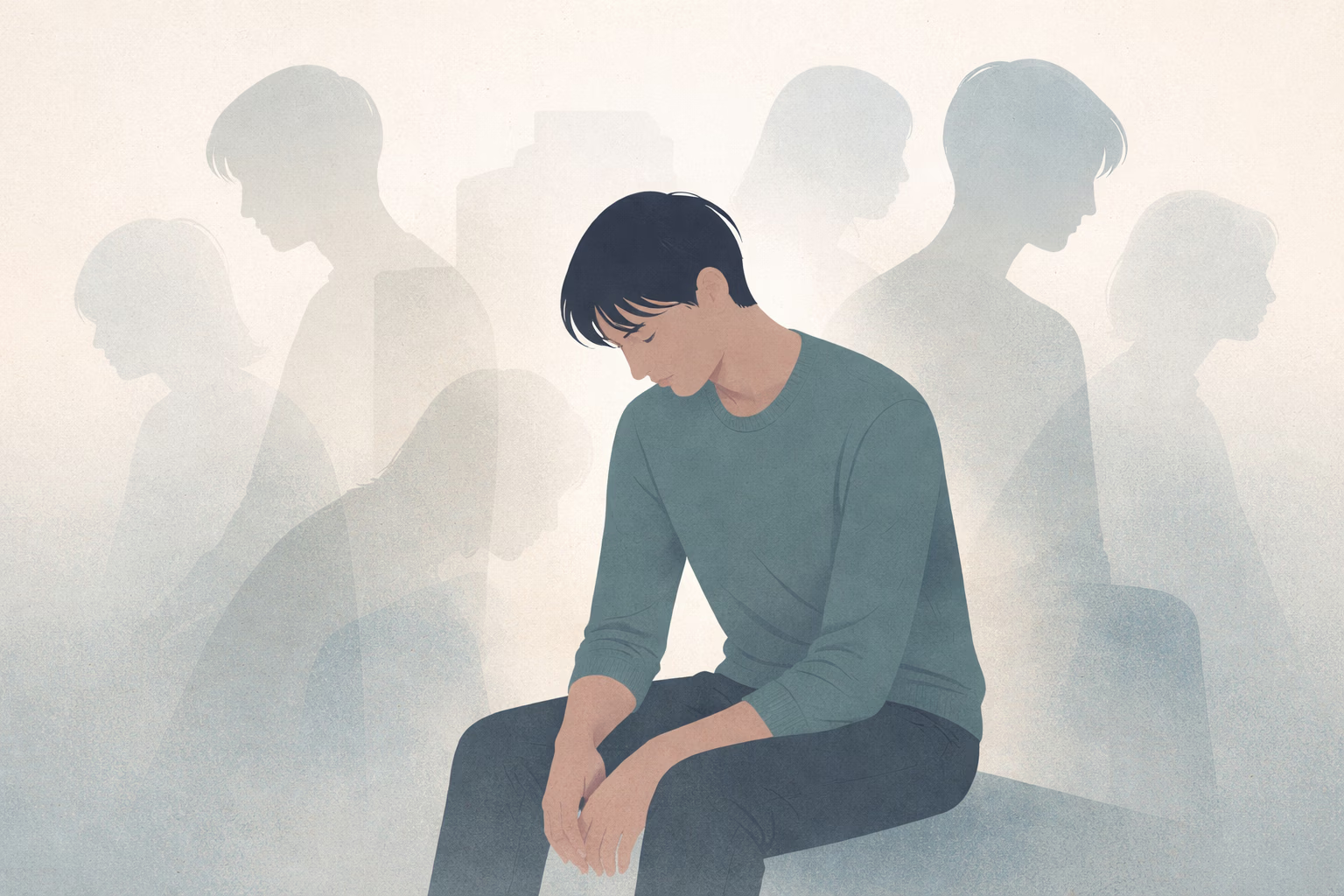
In short: There’s a particular kind of exhaustion that doesn’t come from doing too much. It comes from maintaining a version of yourself that once made sense—until it slowly stopped fitting. You can still “perform” it, still meet expectations, still sound like yourself on the outside.
There’s a particular kind of exhaustion that doesn’t come from doing too much. It comes from maintaining a version of yourself that once made sense—until it slowly stopped fitting. You can still “perform” it, still meet expectations, still sound like yourself on the outside. But internally, it starts to cost more and return less.
What if your fatigue isn’t a personal failure—but a load problem in the identity system?
Identity fatigue is often what shows up when your life has moved forward, but your self-concept is still running an older operating script. The nervous system spends energy holding the story together, smoothing inconsistencies, and keeping things socially predictable. Over time, that maintenance work can crowd out vitality, focus, and choice.
Identity fatigue can look like chronic tiredness, irritability, or a sense that everything takes more effort than it should—even if your calendar isn’t overflowing. The strain isn’t always from tasks; it can come from the internal labor of staying consistent with who you’ve been.
This is why someone can feel depleted while still “doing fine.” The outer structure remains intact, but inside there’s friction: values shifting, priorities reorganizing, or a capacity change that makes older habits and roles feel heavy. Maintaining the old pattern becomes a form of constant compensation. [Ref-1]
Notably, this isn’t a motivation issue.
It’s a coherence issue: the system is spending energy to keep a mismatched identity loop running, and that energy has limits.
Human brains don’t just “have” identities—they run them. A self-concept is a set of predictions: how you act, what you tolerate, what you want, what you’re allowed to need. When those predictions no longer match current reality, extra resources get used to patch the gaps.
That patching can show up as reduced focus, decision friction, and background stress. You’re not only navigating life—you’re also managing the story of yourself in life, correcting for inconsistencies and preventing “identity errors” that might create social confusion or internal dissonance. Over time, this draws on attention, inhibition, and working memory—the same limited resources you need for daily functioning. [Ref-2]
The result often feels like: “I can’t think straight,” “I’m behind even when I’m trying,” or “I don’t have the bandwidth for things I used to handle.”
From an evolutionary standpoint, a coherent identity isn’t just self-expression—it’s a stabilizer. It helps you anticipate yourself and helps others anticipate you. That predictability reduces conflict, increases belonging, and keeps social life manageable.
Because of that, identity shifts tend to come with an energetic price. The mind has to revise assumptions, update social strategies, and re-map what “counts” as safe, acceptable, or possible. Humans also have a strong drive toward growth and expansion—yet expansion requires reorganizing the narrative and the relational map around it, which is not a zero-cost process. [Ref-3]
So when you feel tired in the middle of becoming someone new, it may be because your system is doing a high-load rewrite while still running the old program in the background.
Even when an identity is constraining, it often carries something the nervous system recognizes as stabilizing: familiarity, predictability, a known social shape. Old roles can act like safety cues because they reduce uncertainty—both internally (“I know who I am”) and externally (“others know what to do with me”). [Ref-4]
This is why identity fatigue isn’t simply about “letting go.” Holding on can be a regulatory response: a way of keeping the environment readable and the social field less volatile. It can also be a way of preserving continuity during seasons where other parts of life already feel unstable.
Sometimes the old self is less a preference and more a life raft.
At first, staying in the old identity can feel protective. It avoids disruption. It keeps relationships smoother. It prevents awkward explanations. It helps you keep functioning while change is still undefined.
But prolonged attachment often changes the math. What began as protection can become ongoing labor: constantly editing yourself, constantly bracing for mismatch, constantly “showing up” in ways that don’t return nourishment. Over time, belonging can start to feel like work, and self-presentation can start to feel like a second job. [Ref-5]
When fatigue builds here, it’s not because you’re doing identity wrong. It’s because the system is paying maintenance costs for something that no longer creates true closure.
One reason identity fatigue persists is structural: energy gets spent defending the old self-concept, which reduces the capacity needed for the new one to consolidate. This is an avoidance loop—not in the sense of fear or weakness, but in the sense of bypassed resistance and muted consequence.
If the costs of staying the same are spread out and quiet (dullness, low-grade depletion, chronic friction), the nervous system may not receive a clear “done” signal. Meanwhile, the potential costs of changing can feel immediate and socially salient (questions, reactions, uncertainty). In fast, evaluative environments, that imbalance can keep the system running the familiar identity even as it exhausts you. [Ref-6]
In other words: the loop continues because it stabilizes the short term, even while it drains the long term.
Because identity maintenance is largely internal, identity fatigue often gets misread as laziness, lack of discipline, or “something wrong with me.” But the pattern is usually more coherent than it looks: your system is conserving energy where it can because it’s already spending so much on self-management.
Common presentations include:
These are not character flaws. They’re often signs that growth needs a new structure of meaning—one that can actually settle into lived identity instead of staying theoretical. [Ref-7]
When the gap between self-perception and lived behavior stays open for too long, the system adapts by narrowing range. You may become less flexible, less curious, less willing to experiment—not because you “don’t want change,” but because the nervous system is already loaded.
This narrowing can reduce life satisfaction in a specific way: not dramatic misery, but a muted sense of aliveness. The day-to-day may still function, yet it doesn’t complete. Experiences don’t land as nourishing; accomplishments don’t register as “done.” That’s one reason people describe identity fatigue as both tiredness and emptiness, even when life looks acceptable from the outside. [Ref-8]
Over time, the mismatch can make the idea of change feel more distant—not because it’s impossible, but because the system lacks spare capacity for reorganization.
Identity transitions are not powered by intensity. They’re powered by available capacity and by completion—small experiences that close loops and become part of “who I am now.” But when most energy is used to uphold the old identity, there’s less room for those completing experiences to occur and register.
This is where the loop can tighten: the more exhausted you feel, the more appealing the familiar identity becomes, because it’s already mapped. Yet the familiar identity is what’s generating the exhaustion. The result is a kind of stuckness that is structural, not moral.
Research and theory around “possible selves” suggests that identity change becomes more viable when the emerging self is not just imagined, but supported by cues and experiences that make it feel real and stable over time. [Ref-9]
In the middle of identity fatigue, it can be tempting to reach for more self-improvement, more insight, more analysis. But understanding isn’t the same as integration. Integration is what happens when the body and the social world start responding to the new identity as real—when the system receives closure signals that reduce the need for constant self-monitoring.
So the bridge is often less about “figuring yourself out” and more about reducing cognitive load and allowing clearer alignment to become livable. Reflection can help name the mismatch, and certain kinds of routine stability can reduce background stress—but the deeper shift tends to come when life generates confirming experiences that settle the new story into the nervous system’s expectations. [Ref-10]
What changes when your identity no longer needs defending?
Typically: less internal debate, fewer compensations, and more straightforward access to choice.
Identity is not formed in isolation. It’s reinforced—or strained—by the relational field around you: family roles, workplace expectations, cultural scripts, and the subtle feedback you receive about who you’re “allowed” to be.
Supportive structures can reduce the cost of transition by lowering uncertainty and providing steadier cues of acceptance and continuity. Sometimes that’s friendship; sometimes it’s mentorship, coaching, or a therapeutic space where the emerging identity can be reflected back without immediate evaluation. When the social environment becomes less reactive, the nervous system spends less energy on protection and more energy on updating. [Ref-11]
Change is easier when you don’t have to argue for your reality at the same time you’re trying to live it.
As alignment begins to restore, many people notice a specific kind of energy returning: not manic motivation, but usable capacity. Decisions take fewer steps. Small actions feel less dramatic. There’s less need to rehearse or justify yourself internally.
Clarity often returns as a byproduct of reduced load. The emerging self becomes easier to picture not because you’re “more positive,” but because the brain has more bandwidth to simulate the future in a stable way. The idea of possible selves becomes more grounded and less abstract when it’s paired with lived experiences that confirm, “Yes, this is me in motion.” [Ref-12]
You may also notice more reliable “done” signals: satisfaction after completing something meaningful, or a quieter baseline after social interactions that used to require heavy self-monitoring.
The turning point in identity fatigue is often when energy stops being used primarily for defense—defense of reputation, defense of a role, defense of an old narrative—and starts being used for adoption. Adoption is the gradual process of living in ways that make the new identity more than an idea.
This isn’t a single epiphany. It’s a shift in what your system expects from you. The new self-concept consolidates when repeated experiences create closure: “This is how I handle this now,” “This is what I prioritize,” “This is what fits.” Over time, the nervous system no longer treats the new identity as risky or temporary. It becomes the default. [Ref-13]
And when that happens, fatigue often lifts not because life is easier, but because the internal friction drops. You’re spending less energy on being legible to the past.
Identity fatigue can be understood as a message from the system: the current self-concept is costing more than it’s returning. That message isn’t an indictment. It’s information about load, coherence, and the absence of closure.
In many cases, the fatigue is pointing to a simple truth: something in you has grown, and the old story can’t hold it without strain. When that’s the case, the most dignified frame is not “What’s wrong with me?” but “What is my energy being spent on, and what is it no longer able to complete?” [Ref-14]
Even noticing this can restore a measure of agency—not through pressure, but through orientation. When the system has a clearer map of what’s misaligned, it becomes easier to understand why certain patterns repeat and why willpower alone has felt insufficient.
Being tired of being who you’ve been is often a sign that your identity system is attempting an update under load. That kind of fatigue is real, physiological, and shaped by context—not a moral weakness.
Self-regulatory depletion research broadly supports the idea that sustained effortful control has limits, especially when life requires ongoing monitoring and restraint. [Ref-15]
When the strain eases, it’s usually because coherence increases: less internal defending, more completion, and a lived sense that the person you are becoming is no longer hypothetical. Not “better,” just more aligned—and therefore easier to inhabit.
From theory to practice — meaning forms when insight meets action.
Because identity maintenance is its own form of labor. The strain isn't from tasks — it's from the internal effort of staying consistent with who you've been. The brain runs identity as a set of predictions: how you act, what you tolerate, what you want. When those predictions no longer match current reality, extra resources patch the gaps — reduced focus, decision friction, background stress. You're not only navigating life; you're managing the story of yourself in life, correcting inconsistencies and preventing identity errors. That draws on attention, inhibition, and working memory — the same limited resources you need for everything else.
Because they function as safety cues. Old roles reduce uncertainty internally ('I know who I am') and externally ('others know what to do with me'). Even when constraining, the familiar identity is mapped — predictable, readable, less volatile in social space. The Threat & Safety System recognizes that, so holding on isn't just stubbornness; it's regulation. This is also why identity fatigue isn't simply about letting go. The old self can be less a preference and more a life raft, especially when other parts of life feel unstable. Defense of the familiar isn't moral failure — it's the system trying to keep the environment readable.
Energy gets spent defending the old self-concept, which reduces capacity for the new one to consolidate. The costs of staying the same are spread out and quiet — dullness, low-grade depletion, chronic friction — so the system never receives a clear Done Signal that something is wrong. Meanwhile, costs of changing feel immediate and socially salient: questions, reactions, uncertainty. That imbalance keeps the familiar identity running even as it exhausts you. This shows up as procrastination on goals that genuinely matter, self-sabotage right as meaningful change approaches, overcontrol in small areas while big decisions stay stuck. Not character flaws — structural mismatch.
Through repeated experiences of completion, not epiphany. The new self-concept consolidates when small experiences create closure: 'this is how I handle this now,' 'this is what I prioritize,' 'this is what fits.' Possible selves become real when paired with lived evidence, not just imagined. Co-regulation matters — supportive structures lower uncertainty and provide steadier cues of acceptance, so the nervous system spends less energy on protection and more on updating. Fatigue lifts not because life is easier but because internal friction drops. You're spending less energy being legible to the past.
From Science to Art.
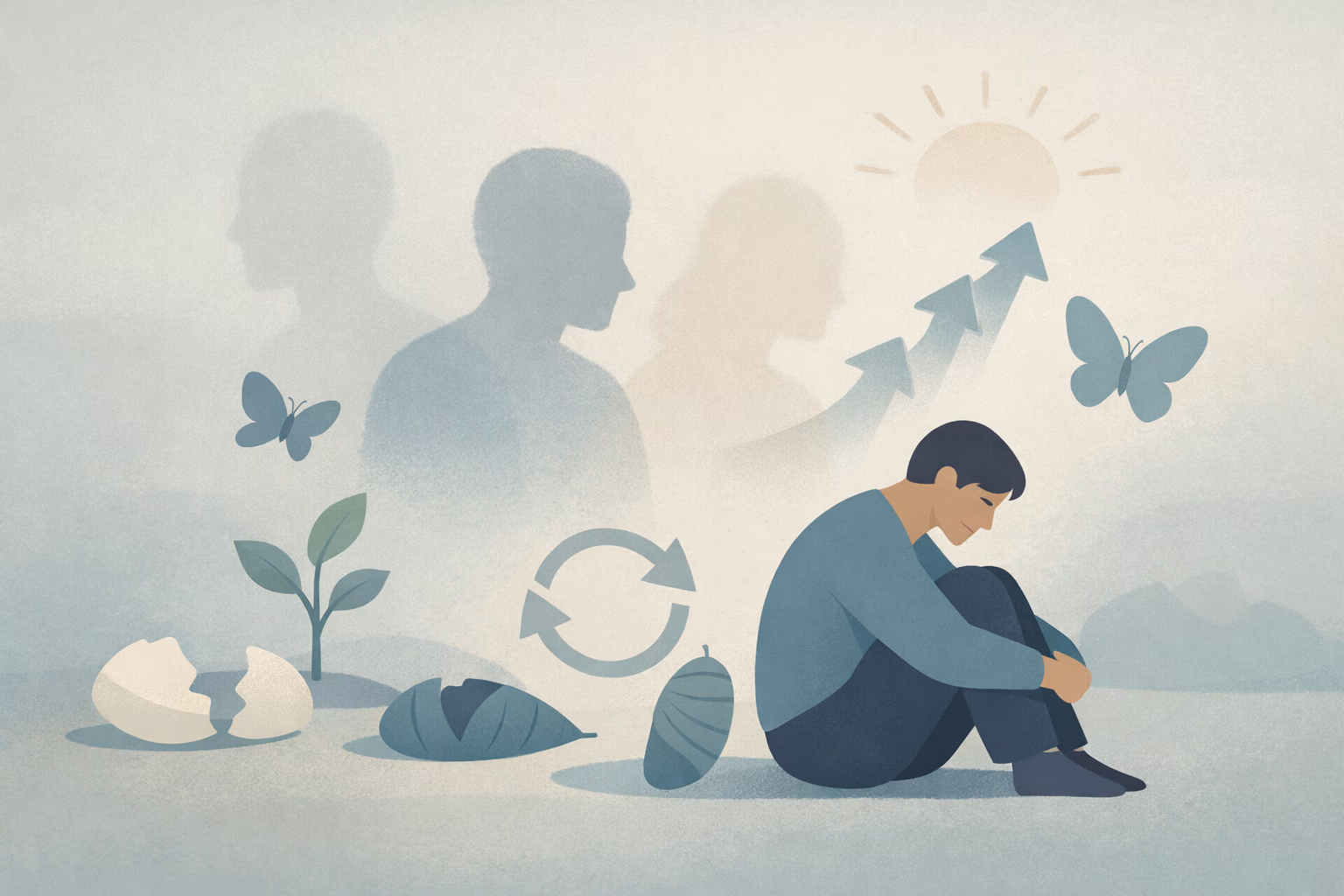
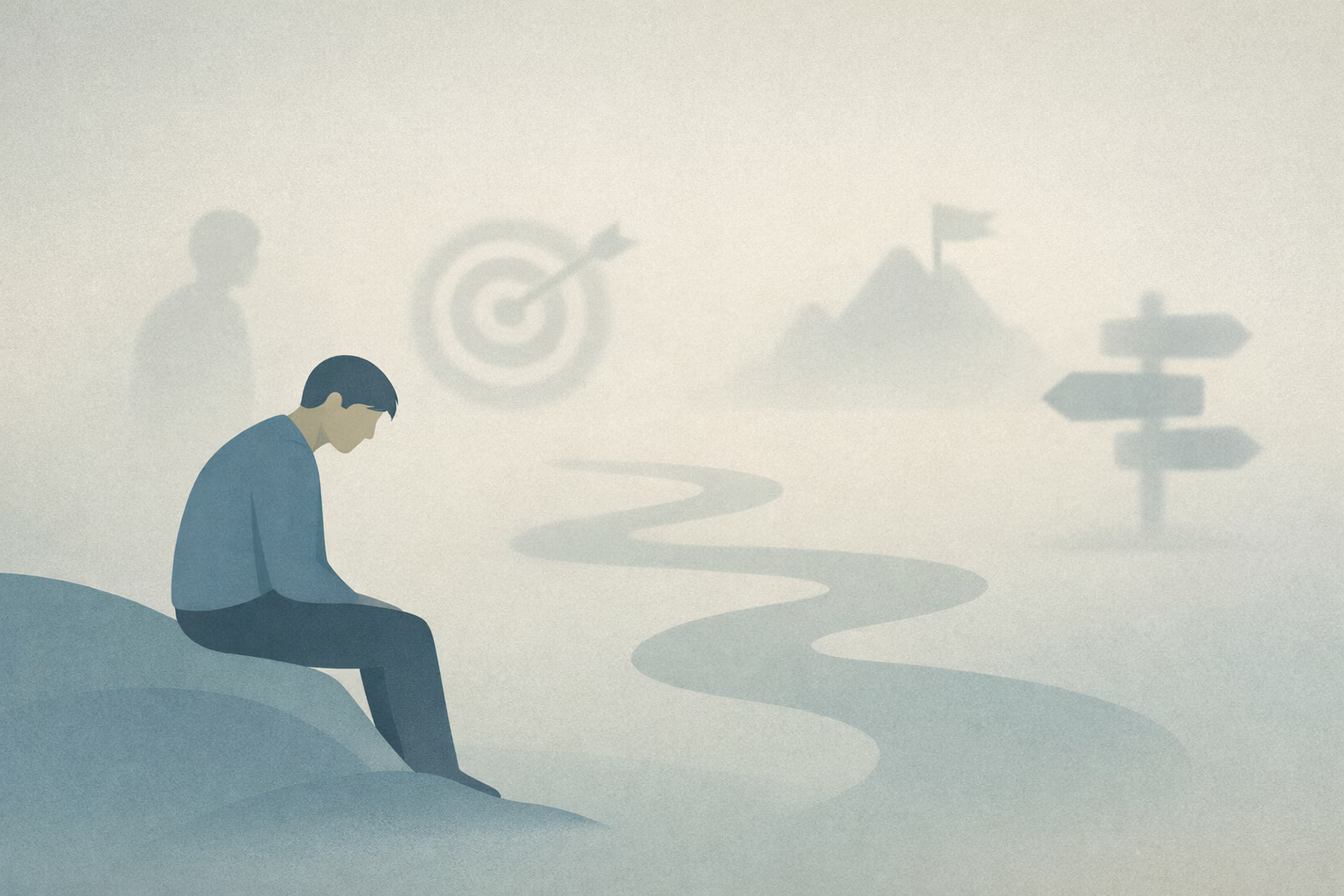
Understanding explains what is happening. Art allows you to feel it—without fixing, judging, or naming. Pause here. Let the images work quietly. Sometimes meaning settles before words do.
One Quiet Window, one insight, one reflection — every Sunday