Emotional Release: Letting Go Without Falling Apart
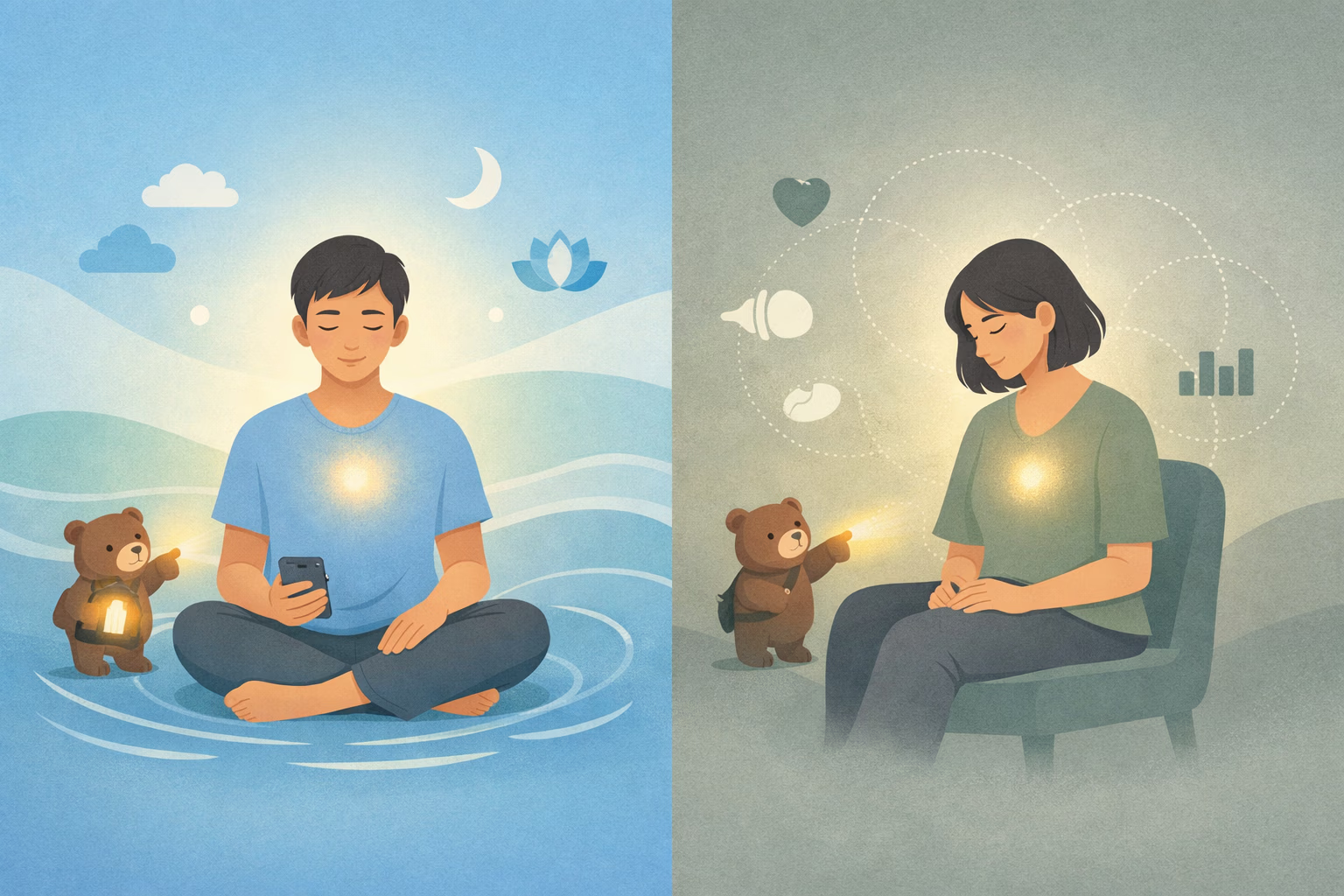
In short: They can slow breathing, soften urgency, and create a few minutes where your body finally gets a “stand down” signal. For many people, that relief is not imagined—it is measurable.
Inner peace apps can be genuinely helpful: they can slow breathing, soften urgency, and create a few minutes where your body finally gets a “stand down” signal. For many people, that relief is not imagined—it is measurable.
And still, a confusing thing often happens: the session ends, life resumes, and the same internal tension reappears. Not because you did it wrong, but because calm is a state change, while healing is a completion process—something that settles into identity and updates what your system expects from the world.
If an app can calm you down, why doesn’t it make you feel done?
Many people recognize the arc: you press play, your shoulders drop, your chest feels less tight, your thoughts slow down. Then you close the app and a subtle pressure returns—sometimes within minutes, sometimes later that day.
This doesn’t mean the calm “didn’t work.” It often worked exactly as designed: it reduced acute activation. But if the original strain came from unfinished loops—unresolved conversations, chronic overload, a role you can’t sustainably occupy, a life direction that doesn’t feel coherent—your system may keep tagging those areas as “still open.”
In studies of app-based mindfulness, people can show reduced stress and improved physiological markers during and shortly after practice, even when deeper patterns remain unchanged. [Ref-1]
Most inner peace apps work by shifting the autonomic nervous system toward parasympathetic dominance—slower breathing, lower heart rate, and a felt sense of safety cues returning. Heart rate variability (HRV), one marker associated with flexible regulation, can increase during mindful breathing and meditative practice. [Ref-2]
That’s meaningful. It’s like lowering the volume on an alarm so you can hear yourself think. But it’s also specific: the app is often changing the intensity of the signal, not necessarily the conditions generating the signal, and not necessarily the internal story your system has built about what is safe, possible, or expected.
So you can feel calmer without having updated the narrative that organizes your choices, relationships, and self-trust.
When a nervous system is carrying load, it looks for the fastest available downshift. That’s not weak willpower—it’s a biological preference for reducing threat and restoring workable capacity.
In modern life, many stressors don’t end cleanly. There isn’t a single “done” moment for emails, family tensions, financial uncertainty, or constant evaluation. Calm tools can offer a temporary completion signal—your body briefly experiences, “It’s okay right now.”
Short interventions can even show physiological stress reduction lasting beyond the session. [Ref-3] But if the larger loop remains incomplete, the system often returns to scanning and bracing, because it’s still tracking unfinished business.
It matters to name what these apps do well. A guided meditation, breathing track, or sleep story can create a pocket of decreased arousal—less perseverative thinking, less physical tension, more internal quiet. [Ref-4]
For a nervous system living in chronic activation, that pause can be the difference between spiraling and making it through the day. It can also restore enough capacity for signals to return—hunger, fatigue, boundaries, and the sense that you exist in a body rather than only in a problem.
Calm isn’t fake. It’s just not the same category of change as integration.
Because calm feels better, it’s easy to assume that repeating calm equals resolving the underlying strain. And app-based mindfulness can reduce perceived stress in the short term. [Ref-5]
But healing is not the accumulation of good states. Healing is when an experience completes in a way that updates identity: what you believe you can carry, what you can refuse, what you can repair, what you can grieve, what you can stand for. That kind of completion changes your baseline—how your system anticipates the future.
If the deeper loop is still open, calm can become a reset button you press repeatedly, rather than an endpoint you reach.
Reliance on calming tools doesn’t have to be framed as denial or fear. Often it’s structural: a fast, reliable downshift is available, while the slower work of completion has no clear container, no supportive witness, and no obvious finish line.
Many apps explicitly offer “SOS” moments—quick exercises for immediate anxiety relief and sleep support. [Ref-6] That design is compassionate. But it can also train the system to route every spike of discomfort into immediate relief, even when the spike is a signal that something in life needs closure, renegotiation, or alignment.
In that loop, regulation becomes externalized: “I’m okay when the app is on,” instead of “I’m okay because my life is making sense to my nervous system.”
There’s no moral scorecard here. These are simply patterns that can emerge when a tool is asked to do more than it was built to do—especially in a marketplace full of short, soothing tracks designed for quick relief. [Ref-7]
These patterns often indicate that the nervous system is managing load, not completing it.
When relief is immediate and repeatable, it can mask the need for completion. Not because you’re avoiding your “feelings,” but because the consequence signal gets muted: the system stops pushing for change once it can downshift on demand.
Over time, that can reinforce a split: the part of life that generates strain remains structurally unchanged, while a separate digital ritual provides temporary safety. Reviews of digital wellness note a risk of apps addressing surface symptoms while encouraging overreliance and delaying deeper care. [Ref-8]
This is one reason someone can be “good at calming down” and still feel stuck in the same identity tension.
Human systems learn from what works quickly. A gentle voice, a timer, a streak, a reassuring message—these are powerful cues that say, “You’re safe now.” When the brain gets that signal reliably, it will reach for it again.
The risk is not the cue itself; it’s the learning pathway it can create: discomfort → app → relief, without the middle steps that help an experience reach closure. In clinical discussions of mobile mental health tools, a recurring concern is symptom management replacing deeper, individualized work—especially when engagement and safety are not embedded in a broader support system. [Ref-9]
“Relief is a real need. But relief alone doesn’t always update what your life is asking your nervous system to carry.”
It can help to separate two different outcomes. Calm changes your state: it lowers activation so you can function. Integration changes your baseline: it’s the settling that happens after an experience completes and becomes part of who you are—without constant reactivation.
This is not the same as insight, understanding, or a new perspective. A person can intellectually “get it” and still have the body respond as if nothing is resolved. Integration is more like a finished loop: the system stops re-issuing the same signal because it has received a real-world completion cue—repair, ending, grieving, choosing, being met, being protected.
Research on mental health applications highlights that when apps are positioned as self-management solutions, there can be unintentional harms through overreliance or misplaced confidence about what the tool can resolve. [Ref-10]
So what if calm isn’t the destination—what if it’s the doorway?
Many unresolved loops are relational or identity-based. They involve belonging, protection, consent, role expectations, or long-standing scripts about what you’re allowed to need. These are the kinds of loops that often complete through contact: being understood accurately, having reality reflected back, and finding a pace that the nervous system can tolerate.
This is where guidance, therapy, and relational attunement can change what calm apps cannot: they provide calibration. They help differentiate “I’m activated because I’m unsafe” from “I’m activated because I’m overloaded” from “I’m activated because something is unfinished and needs a true ending.”
There are also safety concerns with consumer-facing mental health apps, including inappropriate responses, false reassurance, and missed escalation when someone needs higher-level support. [Ref-11] That doesn’t make apps bad—it highlights their limits as standalone containers for complex human material.
When deeper loops begin to complete, calm often becomes less dramatic. It looks like fewer internal emergencies, less rebound activation after a soothing practice, and more reliable access to ordinary signals—tiredness, appetite, “no,” “I need help,” “this matters.”
Reactivity reduces not because you’re better at suppressing it, but because the system is no longer spending as much energy keeping unfinished material held apart from daily life. Identity starts to feel more continuous: your choices match your values more often, and the consequences of those choices feel metabolized rather than endlessly pending.
There’s a cultural recognition, too, that wellness tools can’t replace structural realities—load, environment, and context. [Ref-12] Sustainable calm tends to arise when the nervous system has fewer contradictions to manage, not when relaxation is perfectly performed.
Inner peace apps can still belong in a healing-oriented life. They can provide a predictable downshift, a language for pacing, and a consistent reminder that your body can return from activation.
What changes is the role they play in the overall system. Instead of being the place where discomfort goes to disappear, they can be a temporary holding environment—one that makes room for completion elsewhere: in relationships, in guided work, in decisions that reduce contradiction, and in lived alignment that becomes identity.
Reviews of mental health apps repeatedly note both potential (access, convenience) and pitfalls (lack of individualized, empathic interaction; engagement issues), underscoring that apps are best viewed as supports rather than replacements for deeper care. [Ref-13]
It’s okay to want relief. In a high-velocity world, a few minutes of regulated breathing or a soothing voice can be a real scaffold for getting through the day.
But it’s also dignifying to name the limit: most popular meditation and relaxation apps are designed primarily for stress relief and soothing experiences. [Ref-14] That’s valuable support, and it’s different from the kind of completion that reshapes identity and reduces repeated reactivation.
When you stop treating calm as proof that everything is handled, you can treat it as something simpler and kinder: a pause that helps your system regain capacity—so the parts of life that need closure can eventually reach it.
Calm can be a real physiological shift, and it can be worth protecting. Healing, though, tends to be quieter and slower: a baseline that changes after enough experiences reach a true endpoint—internally and in the world.
Digital mental health tools can expand access and reduce distress, while still being limited in depth when they stand alone. [Ref-15] Your need for more than symptom relief isn’t a failure of motivation; it’s a sign that your nervous system is asking for coherence—where your life, your values, and your sense of self finally line up enough to feel finished.
From theory to practice — meaning forms when insight meets action.
Inner peace apps work by shifting the autonomic nervous system toward parasympathetic dominance — slower breathing, lower heart rate, returning safety cues. That's a real physiological change, not an illusion. But calm is a state change; healing is a baseline change. If the original strain came from unfinished loops — unresolved conversations, chronic overload, a role that doesn't fit, a life direction that feels incoherent — the app can lower the volume on the alarm without addressing what's generating the signal. So the session ends and the same internal tension returns, not because the calm 'didn't work,' but because completion didn't happen.
It can become one — without anyone choosing it consciously. The structure is familiar: discomfort rises, the app delivers reliable downshift, the nervous system learns to route every spike of activation into immediate relief. That's a fast loop that closes cleanly. The slower work of completion — repair, ending, renegotiation, lived alignment — has no clear container and no obvious finish line. Reliance becomes structural, not moral. Calm gets externalized: 'I'm okay when the app is on,' instead of 'I'm okay because my life is making sense to my nervous system.' That subtle shift is what makes calm tools a bridge for some people and a substitute Avoidance Loop for others.
Because most stressors in modern life don't end cleanly. There's no single 'done' moment for emails, family tensions, financial uncertainty, or constant evaluation. A guided session offers a brief, manufactured Done Signal — your body briefly experiences 'it's okay right now.' But when the signal switches off and the larger context is unchanged, the system returns to scanning and bracing because it's still tracking unfinished business. The app is changing the intensity of the signal, not the conditions generating it, and not the internal story your system has built about what's safe, expected, and possible. Sustainable calm comes from coherence in life, not just regulated breathing.
It can support healing without being healing. A predictable downshift is genuinely useful — it preserves enough capacity for body cues, boundaries, and ordinary signals to come back online. The role it plays in the larger system is what matters. As a temporary holding environment that makes room for completion elsewhere — in relationships, in guided work, in decisions that reduce contradiction — the app earns its place. As the only place where discomfort goes to disappear, it can quietly delay the integration that updates identity. Many unresolved loops are relational and require contact with another nervous system to complete; an app, by design, can't supply that calibration.
From Science to Art.
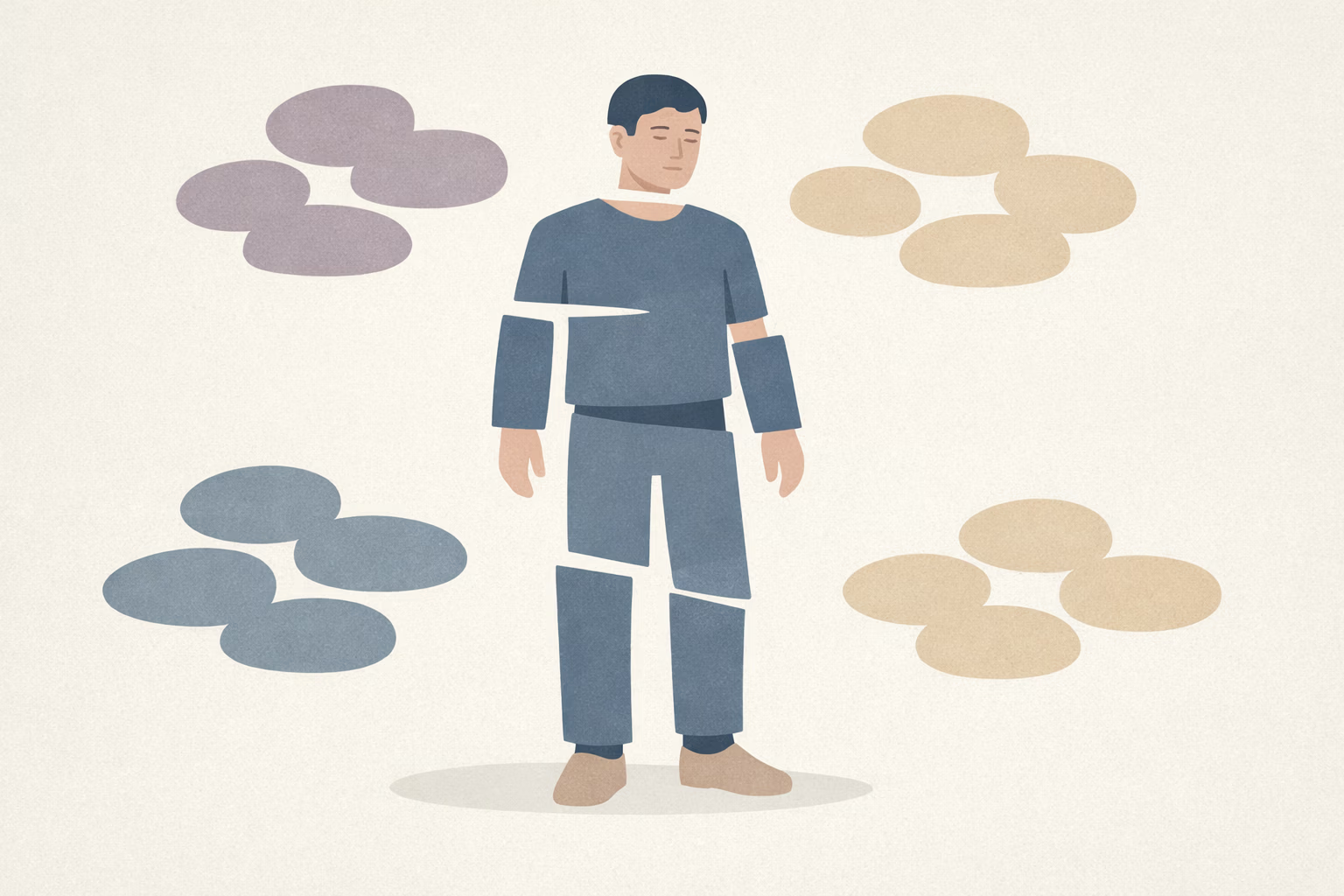
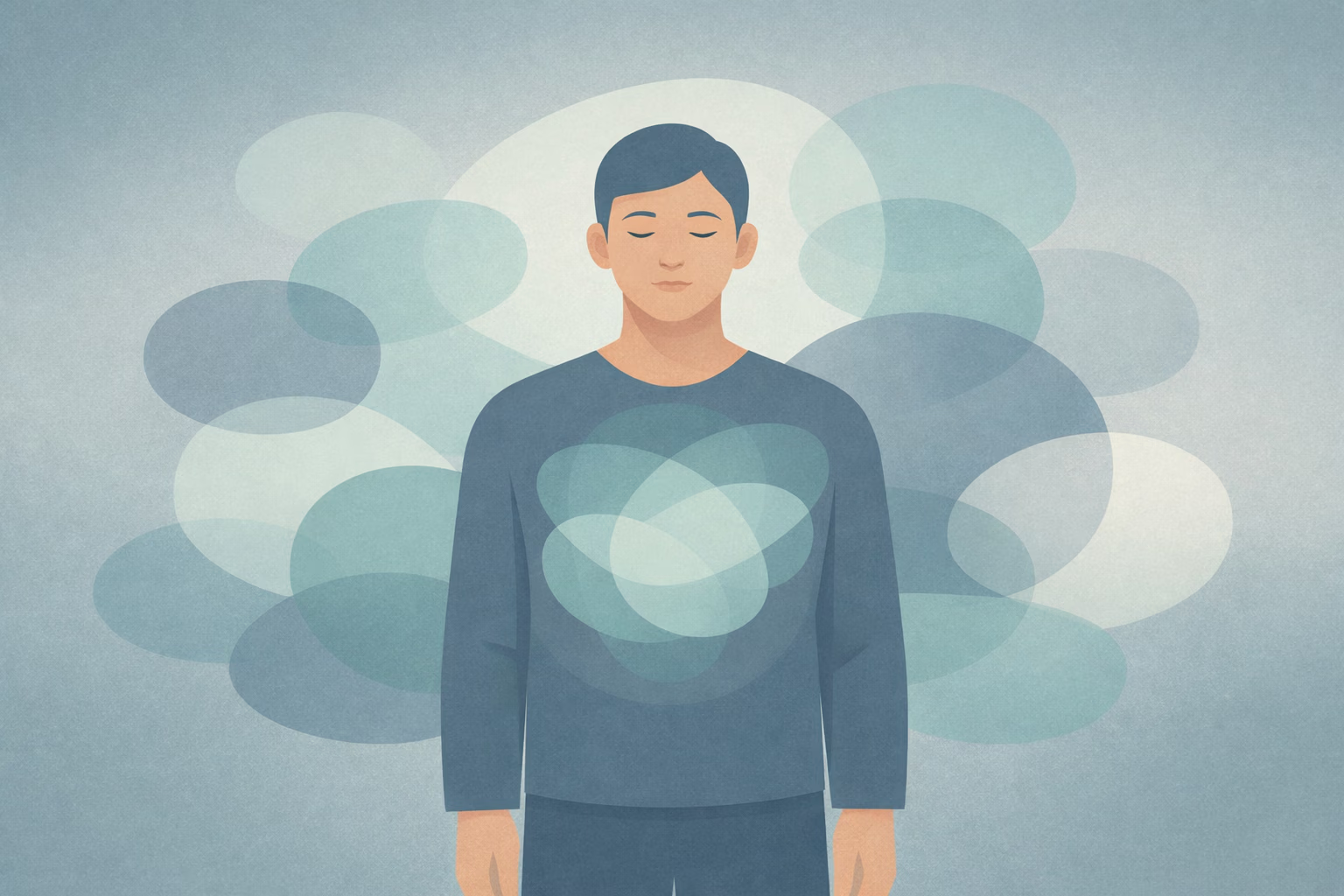
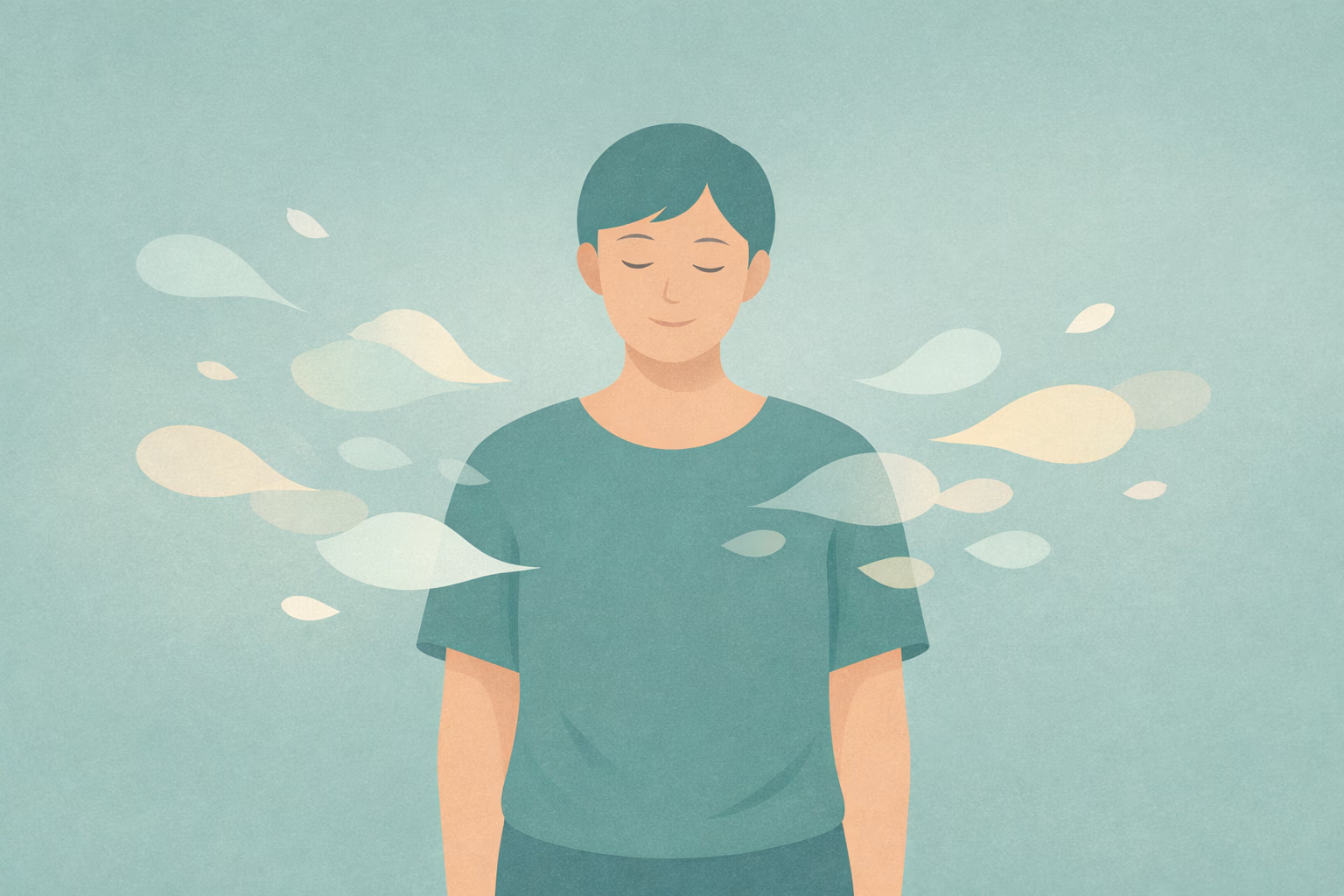
Understanding explains what is happening. Art allows you to feel it—without fixing, judging, or naming. Pause here. Let the images work quietly. Sometimes meaning settles before words do.
One Quiet Window, one insight, one reflection — every Sunday